


.png)


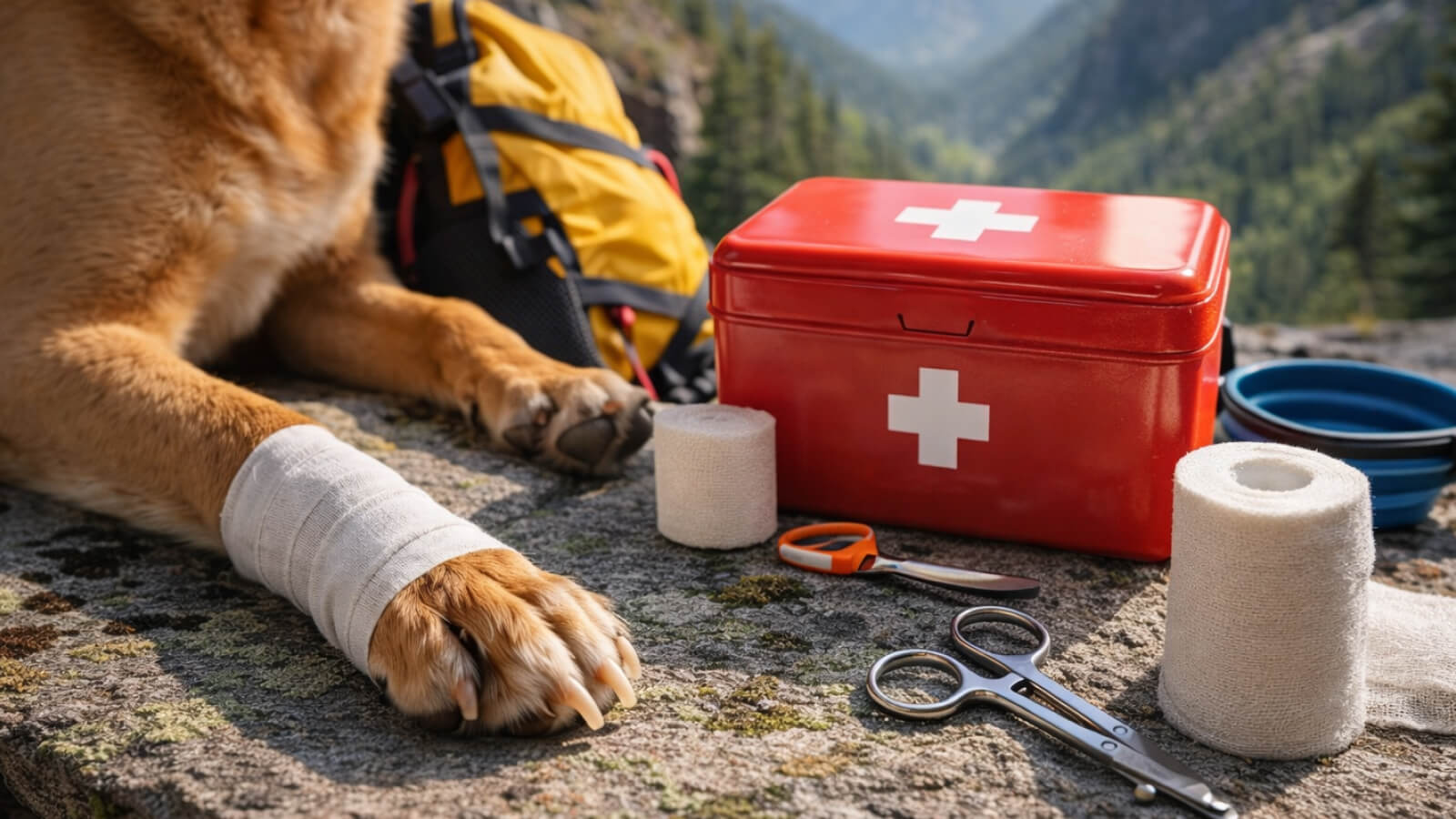
Your dog cuts a paw on a trail, tangles with a snake in the backyard, or swallows something suspicious at the park. A proper first aid kit won't replace your vet — but it buys you time, and in some situations, that's everything.
In Short:
Every Australian dog owner should have a first aid kit at home and a compact version in the car or hiking pack.
The most important consideration in Australia isn't wound care — it's snake bite response. A proper compression bandage setup can slow venom spread significantly while you get your dog to a vet.
Every Dog Owner Should Have a First Aid Kit
Most dog owners don't think about first aid until they need it. By then, it's too late to order online.
A dog first aid kit is not about replacing veterinary care — it's about having the tools to stabilise your dog, manage pain and bleeding, and keep a situation from getting worse while you get to a clinic. A vet can do a lot more for a dog who arrives in stable condition than one who's been left to manage an untreated wound for two hours.
The good news is that a solid kit doesn't need to be expensive or complicated. The basics — wound cleaning, bandaging, and a thermometer — cover the vast majority of everyday emergencies. What you add on top of that depends on your lifestyle and where you live.
For most Australian dog owners, there are two scenarios worth preparing for: minor injuries (cuts, grazes, embedded objects, burns) and snake bite. The latter changes everything about how you kit up.
Snake Bite Kits — The Australian Essentials
Australia is home to some of the most venomous snakes in the world, and dogs have a much higher chance of encountering one than most people realise. It happens in backyards in suburban areas, on bush walks, at the beach, on camping trips, and on any property with grass or bush scrub nearby.
The problem is that by the time a dog shows symptoms of envenomation — weakness in the hindquarters, excessive salivation, vomiting, collapse, dilated pupils — the venom has already been circulating for a while. The window for action is short.
The approach for dogs mirrors standard human snake bite first aid — immobilisation and compression bandaging to slow lymphatic flow and restrict venom spread, not cutting, sucking, or applying a tourniquet to the bite site. Australia's leading vet emergency resources recommend the same pressure immobilisation technique outlined by ANZCOR.
A proper snake bite first aid kit for dogs includes wide conforming bandages (enough to bandage the entire affected limb from paw to body), cohesive bandage to secure them, and ideally a rigid splint to immobilise the leg. You will need multiple rolls — one is never enough for a full limb.
If you hike, camp, live on a rural property, or simply spend time outdoors with your dog in Australia, a dedicated snake bite kit is not optional. It belongs in your car, your day pack, and your home.
What Should be in a Dog First Aid Kit
A well-stocked dog first aid kit covers three categories: wound care, monitoring, and mobility.
Wound care is the core of any kit. You need a way to clean a wound (saline solution or wound irrigation), something to cover it (sterile gauze pads, non-stick dressings), and something to secure the dressing (conforming bandage, cohesive wrap, and medical tape). A pair of blunt-nosed scissors and tweezers round this out.
Monitoring means being able to assess your dog's condition. A digital rectal thermometer is the most useful tool here — a dog's normal temperature is between 38°C and 39.2°C, and fever or hypothermia are important signals for your vet. A small torch is useful for checking pupils, the mouth, and ears.
Mobility refers to anything that helps you move an injured dog safely. A folded space blanket can double as a stretcher for small to medium dogs. For larger dogs, knowing how to use a jacket or tarp as a makeshift carry is more practical than any piece of equipment.
For snake bite specifically, add wide conforming bandages (10 cm width), a cohesive bandage, and a folded SAM splint or similar rigid support. Keep a permanent marker in the kit to draw a circle around any visible bite site, with the time noted — this helps the vet assess the progression.
Best for Dog Owners Who Head Outdoors
Support text: When you're out on a trail or at the beach, getting your dog to a vet quickly isn't always possible — having the right kit on hand means you can manage cuts, ticks, snake bites, and overheating on the spot, before professional help is within reach.
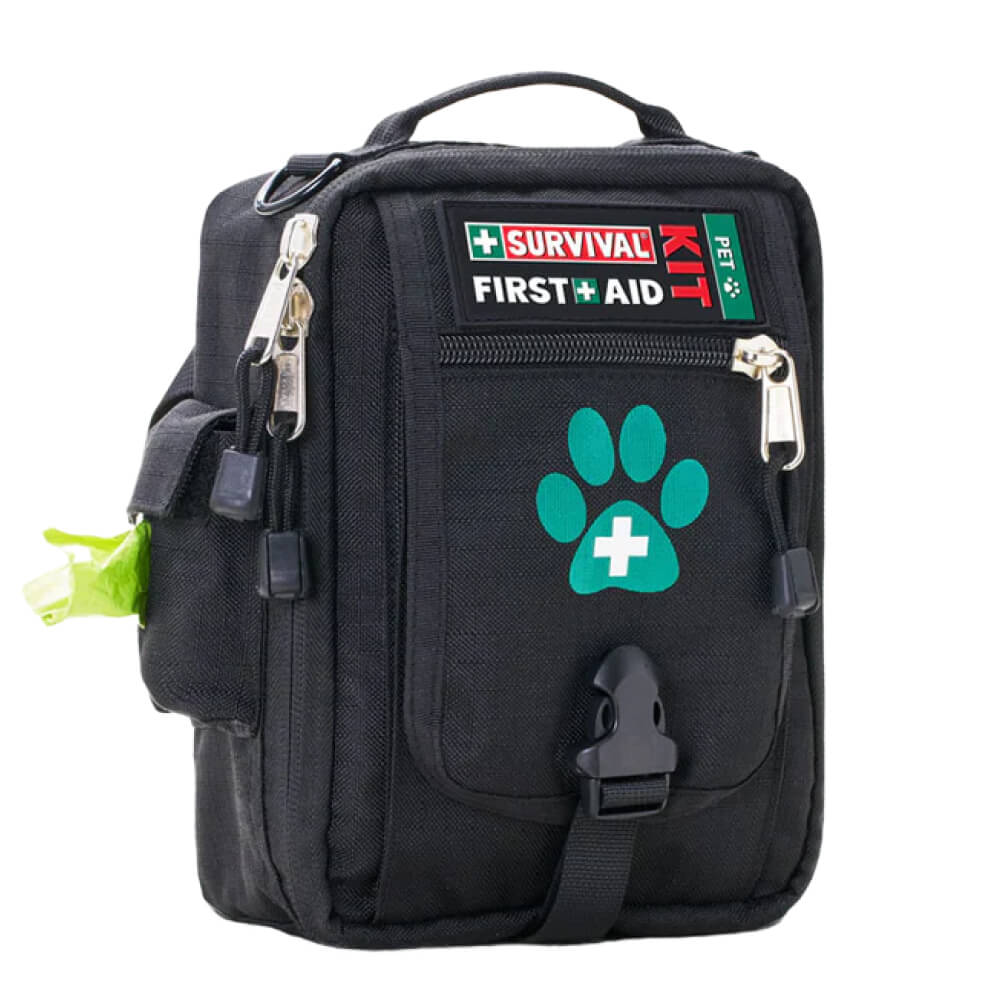
Pet First Aid Kit
SURVIVALA vet-designed kit built around the needs of active dog owners, the SURVIVAL Pet First Aid KIT covers everything from wound care and tick removal to snake bite management.
It comes in a colour-coded carry case with waist and shoulder straps, and includes a silicone pet bowl, digital thermometer, eco-friendly poop bags, and the brand's SMART Snake Bandage with instruction card — all packaged into a compact 1.05kg kit that works as a first aid solution for both dogs and humans.
Pros
- Vet-designed with a colour-coded layout that makes it fast to use when you're panicking SMART Snake Bandage and instruction card included — genuinely essential kit for Australian conditions
- Goes beyond basic first aid: tick removal spoon, digital thermometer, silicone pet bowl, and poop bags make it a practical everyday carry, not just an emergency kit
Cons
- It's one of the pricier pet first aid options on the market
- A muzzle pocket is included but no muzzle comes with the kit — you'll need to buy one separately
- At 1.05kg it's on the heavier side for shorter suburban walks where you'd rather travel light
Best for Camping, Hiking, and Heading Off-Road
Australia's venomous snake population is most active during warmer months and in exactly the kind of terrain dogs love to explore — long grass, bush trails, and rural paddocks are all high-risk zones, making a dedicated snake bite kit worth having on hand any time you head outdoors.
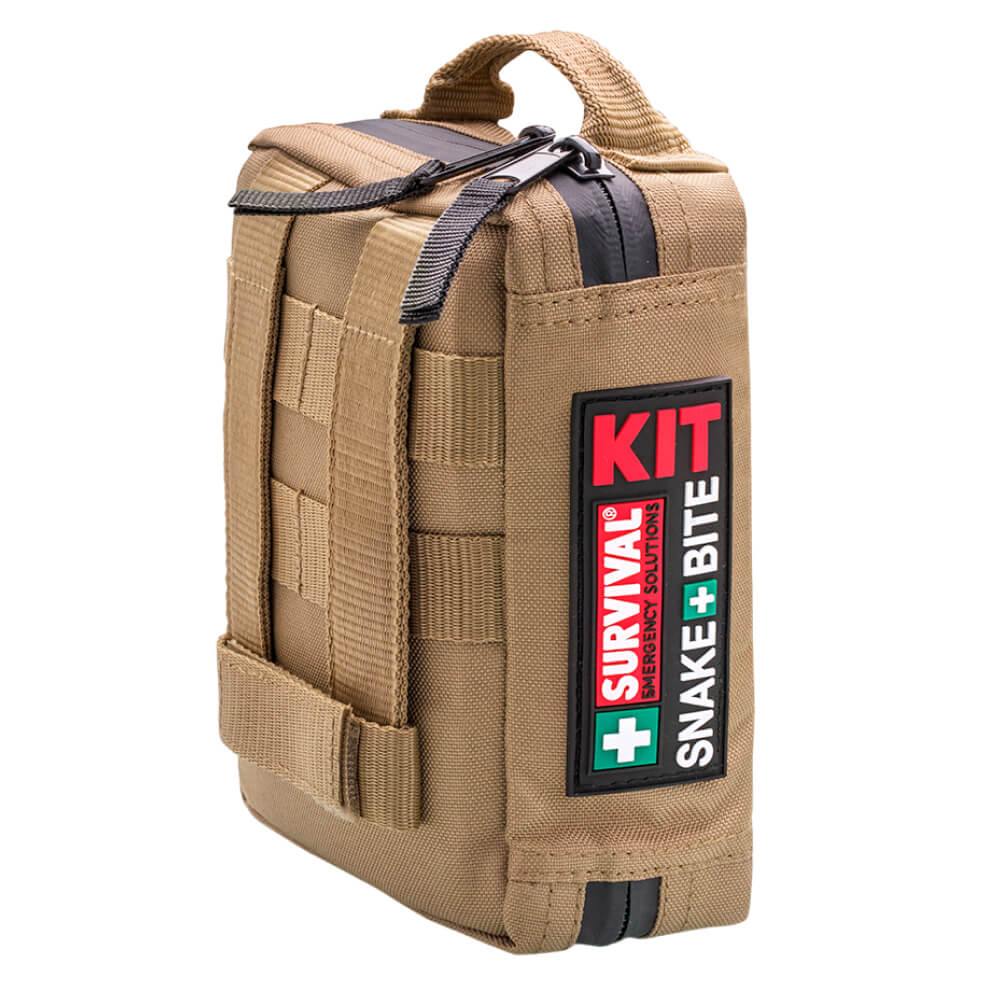
Snake Bite First Aid Kit
SURVIVALDesigned in collaboration with snake safety experts SSSafe, the SURVIVAL Snake Bite KIT is built around the brand's signature SMART Bandage — a pressure bandage with a built-in tension indicator that tells you when you've applied the right pressure, removing the guesswork in a high-stress situation.
The kit covers venomous snake and funnel-web spider bites, plus blue-ringed octopus and cone shell stings, and doubles as a solution for sprains, fractures, and major bleeds. At 555g it's compact enough to clip to a backpack or car interior and forget about until you actually need it.
Pros
- SMART Bandage tension indicator takes the guesswork out of applying correct pressure — critical when you're panicking
- Extremely compact and lightweight at 555g with MOLLE straps for attaching to a backpack, belt, or car interior
- Covers more than just snake bites — useful for sprains, fractures, and major bleeds, making it a versatile outdoor emergency kit
Cons
- Focused specifically on bite and trauma emergencies — doesn't replace a general pet first aid kit for cuts, ticks, or overheating
- No pet-specific items included — if your dog is bitten, you'd use the same kit but it's not designed with animals in mind
- Only 10 items total, so it works best alongside a broader first aid kit rather than as a standalone solution
Home Kit vs Outdoors Kit — Choosing the Right Setup
Most dog owners benefit from having two kits: a more comprehensive one at home, and a compact version for travel.
A home kit can be larger and more thorough. It's where you keep your thermometer, a wider range of dressings, antiseptic solution, tick removal tools, an eye wash, and any prescription medications your vet has recommended. It doesn't need to be carried anywhere, so weight and size aren't constraints.
An outdoors or travel kit needs to be portable. For casual day trips, a small pouch with the basics — gauze, bandage, blunt scissors, tweezers, and a space blanket — fits in a jacket pocket or the front pocket of a daypack. For hikers, trail runners with dogs, or anyone spending extended time in the bush, a dedicated snake bite kit is the priority.
If you travel with your dog frequently, a car kit is worth keeping separately from your home kit. Emergencies happen away from home, and having to remember to grab the kit before every trip creates a point of failure.
How to Use a Dog First Aid Kit Effectively
Having a kit matters less than knowing how to use it calmly under pressure. A few things worth knowing before you need them:
For wounds: Clean the area with saline before applying any dressing. Don't use hydrogen peroxide or iodine directly on wounds — they damage tissue. Apply a non-stick dressing, then a layer of gauze, then bandage over the top. The dressing should be snug but not cutting off circulation; you should be able to slide a finger under the bandage.
For suspected snake bite: Don't try to identify the snake. Keep your dog as still and calm as possible — movement speeds venom spread. Apply compression bandaging from the paw up, as firmly as you would bandage a sprained ankle. Immobilise the limb with a splint if you have one. Get to a vet immediately — call ahead so they can prepare antivenom.
For splinters or embedded objects: Tweezers are fine for objects you can clearly see at the surface. Don't probe or dig. If the object is deep, cover the area and get to a vet.
For burns: Cool running water for at least 20 minutes. Don't apply butter, oil, or any home remedy. Cover loosely and go to the vet.
Knowing basic dog CPR is also worth doing once — your vet clinic or a pet first aid course can walk you through it in under an hour.
When to Use Your Kit vs When to Call the Vet Immediately
A first aid kit is a bridge, not a destination. These situations need a vet immediately, even if you've applied first aid:
Suspected snake bite — always, regardless of symptoms. Suspected toxin ingestion. Difficulty breathing or a dog that won't settle. Wounds that are deep, won't stop bleeding after 5 minutes of direct pressure, or involve the eye, face, or joint. A dog that can't bear weight on a limb. Any collapse, seizure, or loss of consciousness.
These situations are safe to manage at home with basic first aid and a vet call for guidance: small surface cuts that stop bleeding quickly, minor grazes, ticks removed fully and promptly, a minor burn treated immediately with cool water, or a mildly upset stomach without vomiting or lethargy.
When in doubt, call the vet. Most clinics are happy to take a quick call and tell you whether you need to come in — and that conversation takes two minutes.
Frequently Asked Questions
What should be in a dog first aid kit in Australia?
Do I need a separate snake bite kit for my dog?
What is the correct first aid for a dog snake bite in Australia?
What is the best first aid kit for dogs that go hiking?
How often should I check and replace my dog's first aid kit?


Comments
0 comments
Login to Join the Conversation 💬