












More Australian dog owners are making the switch to raw feeding — and the market has responded. From frozen patties and pre-made mince blends to freeze-dried options you can store in the pantry, there's never been more choice. But not all raw dog food is created equal. This guide breaks down what to look for, what to avoid, and how to choose the right option for your dog — without the guesswork.

In Short:
The best raw dog food in Australia contains human-grade or equivalent meat, ground bone for calcium, organ meat for essential vitamins, and vegetables or fruit for fibre and antioxidants. Look for products that follow the BARF (Biologically Appropriate Raw Food) model — a balanced ratio of muscle meat, bone, offal, and plant matter — and meet Australian pet food manufacturing standards.
Choose based on your dog's age, size, and any health conditions, and always handle raw food with the same care you would use for raw meat in your own kitchen.
What is a BARF diet for dogs
BARF stands for Biologically Appropriate Raw Food — sometimes also called Bones and Raw Food. It's a feeding philosophy built on the idea that dogs thrive on a diet closer to what their ancestors evolved to eat: raw meat, bones, organs, and a small amount of plant matter.
The model was popularised in the 1990s by Australian veterinarian Dr Ian Billinghurst, who argued that commercially processed kibble — while convenient — doesn't reflect the nutritional profile dogs are biologically designed to process. His work helped launch an entire category of raw dog food that's now widely available across Australia.
A standard BARF diet typically follows a ratio of roughly 70 percent muscle meat, 10 percent raw edible bone, 10 percent organ meat (half of which should be liver), and 10 percent vegetables, fruit, or other plant-based additions. The specifics vary by brand and by dog, but that framework is the foundation most raw feeding guidelines are built on.
It's worth understanding that "raw dog food" and "BARF" aren't quite the same thing. BARF is one approach to raw feeding. Another — the prey model raw (PMR) diet — excludes plant matter entirely and aims to replicate a whole prey animal. Most commercial raw dog food products in Australia follow the BARF model because it's easier to formulate as a complete and balanced diet.
Is raw dog food actually better than kibble
This is the question that divides the pet nutrition world — and the honest answer is that the evidence is mixed.
Owners who switch to raw feeding commonly report improvements in coat condition, dental health, energy levels, smaller and firmer stools, and reduced skin irritation. These are consistent, widely observed benefits, and many holistic and integrative veterinarians recommend raw feeding based on the clinical improvements they see in practice.
On the other side, major veterinary bodies — including the World Small Animal Veterinary Association — take a cautious position. Their concerns centre on two things: the bacterial contamination risk of handling raw meat, and the potential for nutritional imbalance in homemade or poorly formulated raw diets.
A 2025 review summarised the current state of research: owner-reported benefits are consistent and significant, but large-scale, peer-reviewed clinical trials comparing raw diets to processed food over long periods are still limited. The evidence for certain specific benefits — particularly improved dental health and stool quality — is stronger than for others.
The practical takeaway is this: a well-formulated, commercially prepared raw diet from a reputable manufacturer is nutritionally complete and safe when handled correctly. A poorly balanced homemade raw diet, or a cheap product that cuts corners on ingredient quality, carries genuine risk. The quality of the specific food matters far more than whether it's raw or cooked.
Types of raw dog food available in Australia
The Australian raw dog food market has matured significantly. There are now several distinct formats, each with practical trade-offs.
Frozen Raw Patties and Mince
This is the most common format. Pre-portioned patties or tubs of minced raw food are sold frozen and thawed before serving. They're convenient, widely available at pet retailers, and typically the most affordable commercial raw option. The trade-off is freezer space — you'll need room to store bulk orders.
Frozen Raw Bones and Whole Pieces
Raw meaty bones — chicken frames, lamb necks, kangaroo tails — are a staple of BARF feeding. They provide dental benefits (the gnawing action cleans teeth mechanically) and a natural source of calcium. These are supplementary, not a complete diet on their own.
Freeze-Dried Raw
Freeze-drying removes moisture while preserving nutrients. The result is a lightweight, shelf-stable product that can be rehydrated with water or served as-is. Freeze-dried raw is significantly more expensive per serve than frozen, but it's ideal for travel, as a topper on kibble, or for owners who don't have the freezer space for bulk frozen orders.
Chilled Fresh Raw
Some Australian brands offer chilled (not frozen) raw meals delivered to your door on a subscription basis. These tend to be the premium end of the market — freshly prepared, often customised to your dog's weight and life stage, with shorter shelf lives than frozen products.
DIY Raw
Some owners prefer to source and prepare raw meals themselves using butcher-quality meat, bones, organs, and vegetables. This gives you full control over ingredients but requires careful planning to ensure nutritional balance. If you go this route, work with a veterinary nutritionist to formulate a complete diet — guesswork is where most raw feeding problems start.
Before You Go Raw — Consider This First
Raw feeding comes with genuine benefits, but it also carries real risks — from bacterial contamination to the challenge of ensuring every meal is nutritionally complete. If you're exploring raw because you want the best possible nutrition for your dog, it's worth knowing that gently cooked fresh food delivers many of the same whole-food benefits without the food safety concerns that come with handling raw meat daily.
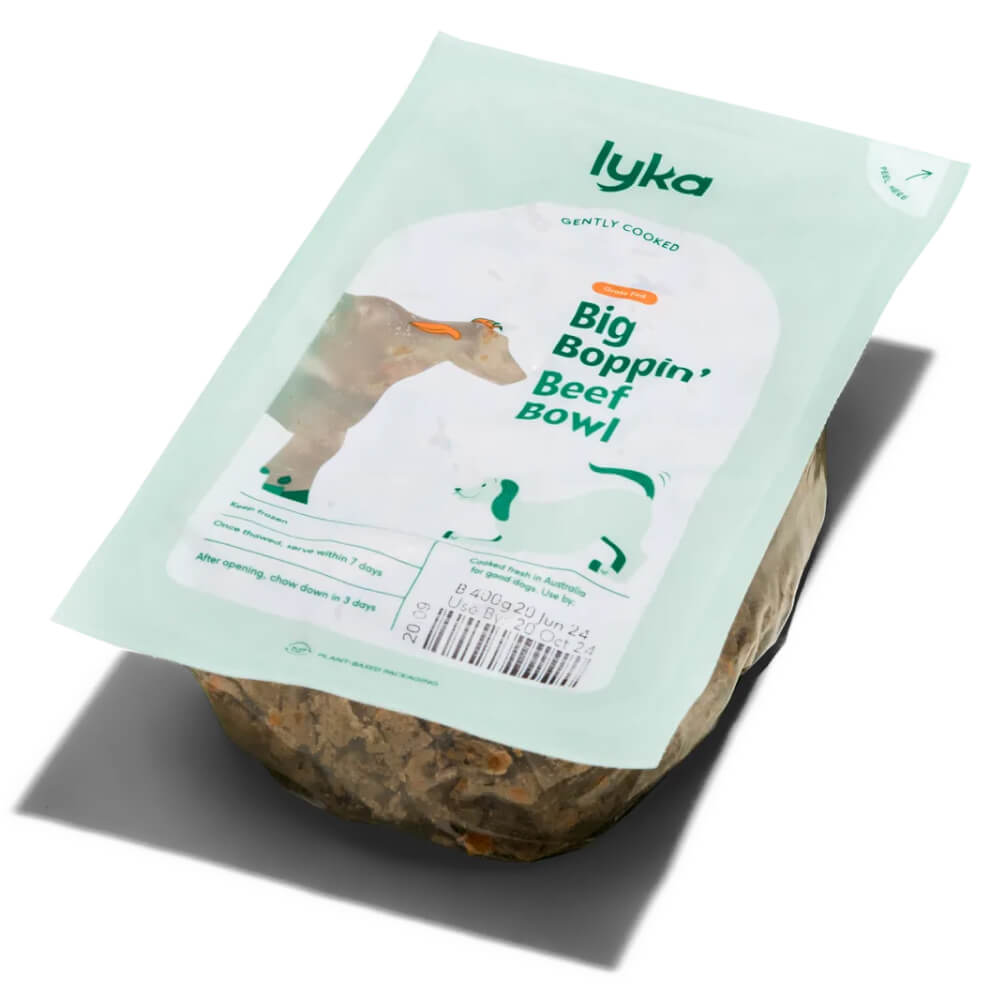
Grass Fed Beef Cooked Dog Food
LykaLyka's Grass Fed Beef Bowl is a gently cooked, human-grade meal built around Australian grass-fed beef mince, beef heart, and beef liver — delivering 55% crude protein on a dry matter basis. It's AAFCO formulated for all life stages, uses functional ingredients like psyllium husk, wild-caught sardines, kelp, and ginger, and arrives pre-portioned to your dog's specific calorie needs via a flexible subscription with free delivery. If you're considering raw for the nutritional quality, Lyka offers a compelling alternative that removes the guesswork and the risk.
Pros
- Vet-formulated by an in-house integrative veterinarian and board-certified veterinary nutritionists, exceeding AAFCO standards for all life stages
- Gently cooked below 90°C to retain nutrients while eliminating the bacterial risks associated with raw feeding
- Functional superfoods built into every recipe — kelp, spirulina, ginger, flaxseed oil — providing antioxidant, anti-inflammatory, and dental support
- Pre-portioned pouches customised to your dog's individual needs, removing the guesswork from feeding
Cons
- Only available through Lyka's own subscription service — not stocked at any retail pet stores
- Moderate-high fat content means it may not suit dogs with a history of pancreatitis or those requiring a lower-fat diet
- Contains sardines alongside beef, so it's a limited-protein rather than true single-protein meal — not ideal for dogs needing strict elimination diets
Best Overall Raw Dog Food
For owners committed to raw feeding, the priority is a BARF diet that uses human-grade ingredients, includes a proper balance of muscle meat, organ meat, and crushed bone, and is backed by a recognised nutritional standard. A brand with a long track record and wide retail availability makes the transition to raw as straightforward as possible.

Beef Raw Dog Food
Big Dog Pet FoodBig Dog has been producing BARF diets in Australia since 2000 and remains one of the most trusted names in raw feeding. The Beef recipe is built around human-grade beef meat, washed tripe, crushed bone and cartilage, liver, kidney, and spleen, combined with RSPCA-approved chicken, Tasmanian salmon, and a broad mix of seasonal fruits and vegetables. It's complete and balanced by AAFCO standards for both puppies and adult dogs, with zero synthetic vitamins — all nutrition comes from whole food ingredients.
Pros
- One of Australia's longest-established raw food brands, manufacturing in their own Queensland facility since 2000
- 100% whole food nutrition with no synthetic vitamins, artificial colours, or preservatives — AAFCO compliance achieved entirely through natural ingredients
- Widely available in pet stores across Australia including Pet Stock and Pet Circle — no subscription required
- Includes prebiotics, probiotics, goats whey, and organic fulvic acid for digestive and immune support
Cons
- Not a single-protein diet — contains chicken and salmon alongside beef, which won't suit dogs on elimination diets
- Requires freezer storage and must be used within 2–3 days once thawed, which demands more planning than cooked or shelf-stable options
- Woolworths acquired a 50% stake in Big Dog in late 2025, and some consumer feedback has raised concerns about potential changes to product quality
Best Raw Dog Food for Easy Feeding
The hardest part of raw feeding is usually the daily hassle — thawing, handling raw meat, and the mess. A raw diet you can serve straight from the freezer removes that barrier and makes raw something you can actually keep up.

RAW01 Frozen Dog Food
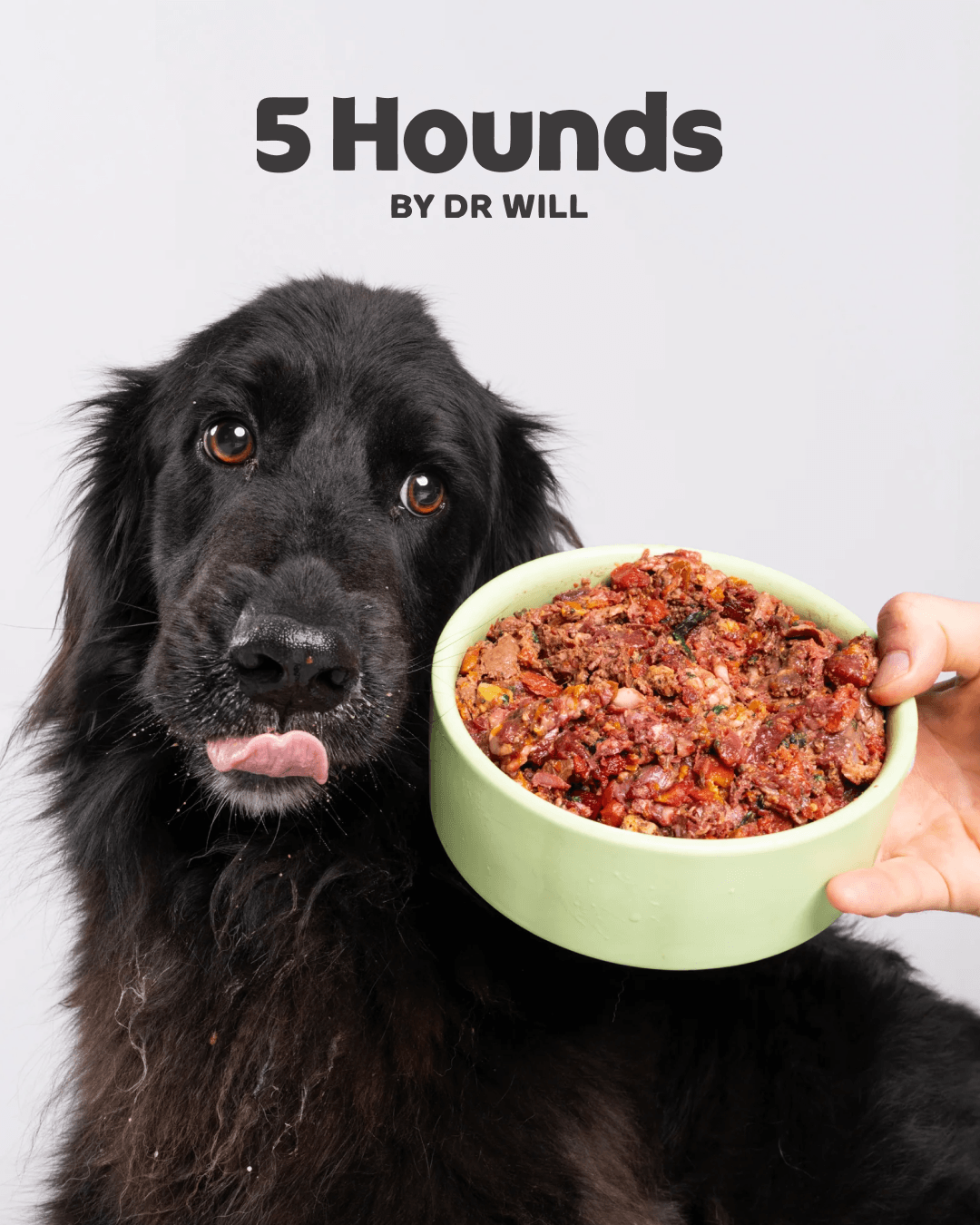
ScratchMade in Scratch's own Melbourne facility, RAW01 is 70% human-grade meat — Australian beef and organs with Atlantic salmon — at 45% protein (dry matter). It's complete and balanced beyond AAFCO for all life stages, and the diced cubes are served frozen straight from the freezer, with no thawing, handling, or mess.
Pros
- Scooped straight from the freezer like kibble — no defrosting, handling, or smell
- 70% human-grade meat and 45% protein, with no fillers or synthetic supplements
- Exceeds AAFCO for all life stages, made in Scratch's own facility
- Gentle beef-and-salmon recipe with portions personalised to your dog
Cons
- Only delivers to Victoria and New South Wales for now
- Subscription-based, frozen, with a minimum three-bag order
Best Raw Dog Food for Weight Management
Overweight dogs need a diet that's high in protein to maintain lean muscle but low enough in fat to support gradual, healthy weight loss. Kangaroo is one of the leanest commercially available proteins in Australia — naturally low in fat, high in iron, and rich in essential amino acids — making it an ideal foundation for a weight-conscious raw diet.

Kangaroo Raw Royalty Dog Food
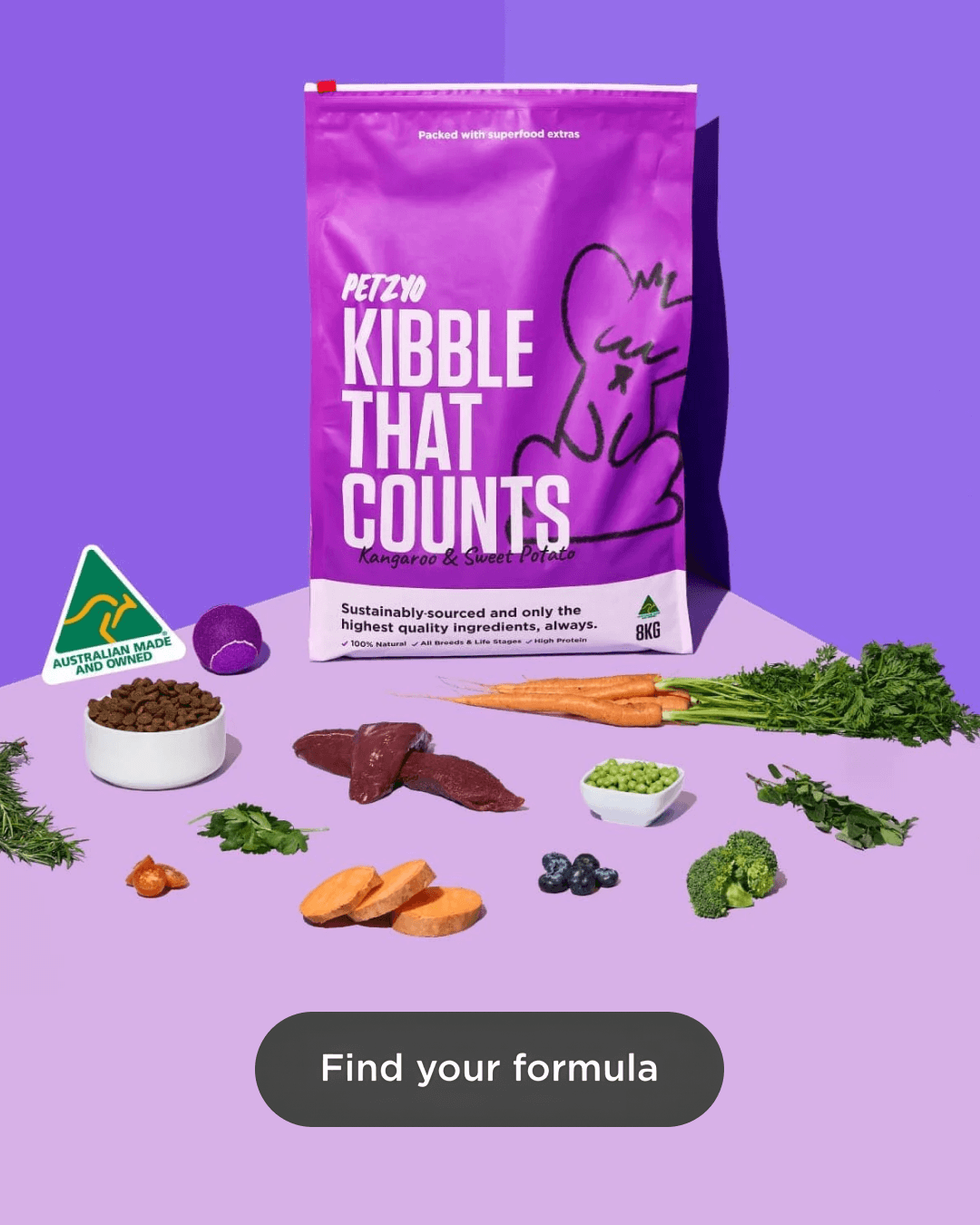
PetzyoPetzyo's Roo's Clues is a single-protein BARF patty made with 65% wild-harvested Australian kangaroo — including meat, crushed bone and cartilage, heart, lung, liver, and kidney — combined with sweet potato, green beans, apple, Tasmanian salmon, berries, and superfoods like turmeric, chia seeds, and kelp. At just 5% fat, it's the leanest raw option on this list while still delivering 15% protein. Each 5.4kg box contains 12 individually portioned 225g patties for easy serving.
Pros
- One of the lowest-fat raw diets available in Australia at just 5% fat — purpose-built for dogs needing weight management
- Single primary protein (kangaroo) makes it a strong option for dogs with sensitivities to common proteins like chicken or beef
- Loaded with functional superfoods including turmeric, chia seeds, cold-pressed flaxseed oil, and kelp
- Preservative-free and 100% natural with no fillers or artificial additives
Cons
- Raw patty delivery is currently limited to greater Melbourne only — not available nationally for the raw range
- Kangaroo meat is wild-harvested and not classified as human-grade, unlike Petzyo's chicken and beef patties
- Contains chicken eggs and Tasmanian salmon as secondary ingredients, so not a true strict single-protein diet for elimination purposes
Best Raw Dog Food for Small Dogs
Small dogs have unique feeding challenges — their smaller jaws and faster metabolisms mean they benefit from finer textures, smaller portion sizes, and calorie-dense recipes that deliver maximum nutrition in a compact serve. A raw diet designed specifically for small breeds takes these factors into account rather than simply cutting a standard patty in half.

Combo Raw Dog Food for Small Dogs
Big Dog Pet FoodBig Dog's Combo for Small Dogs takes their popular multi-protein recipe — RSPCA-approved chicken, Australian beef, pork, Tasmanian salmon, and pasture-raised lamb — and minces it more finely with smaller portion sizes tailored for small breed dogs. It includes the full spectrum of muscle meat, organ meat, crushed bone, and seasonal fruits and vegetables, plus Big Dog's signature blend of probiotics, prebiotics, goats whey, and organic fulvic acid. Complete and balanced by AAFCO standards for all life stages.
Pros
- Specifically designed for small dogs with a finer mince texture and smaller portion sizes to reduce waste
- Multi-protein recipe provides maximum variety and a broader nutritional profile in a single meal
- AAFCO complete and balanced for all life stages — suitable for small breed puppies through to seniors
- Available in pet stores across Australia with no subscription commitment
Cons
- Multi-protein recipe means it's not suitable for dogs with known food allergies or those requiring an elimination diet
- Contains chicken as a primary protein, which is one of the more common allergens in dogs
- Still requires freezer storage and careful thawing — small portions can dry out quickly once defrosted
What to look for in a raw dog food
Not all raw dog food products are equal. The difference between a good one and a questionable one comes down to ingredients, formulation, and manufacturing standards.
Named Protein Sources. The product should clearly state which animal proteins are used — chicken, beef, lamb, kangaroo, turkey. Vague terms like "meat" or "animal by-products" without further specification are a red flag, just as they would be in kibble.
Balanced Bone and Organ Content. A complete raw dog food should include ground bone (for calcium and phosphorus) and organ meat (for vitamins A, B, D, and essential minerals). Liver should always be part of the organ component. Without these, the diet is nutritionally incomplete.
Human-Grade or Equivalent Ingredients. The best raw dog food brands in Australia use meat sourced from the same supply chain as human food. This isn't a legal requirement for pet food, but it's a strong indicator of quality and safety. Products labelled as "pet-grade meat" may come from lower-quality sources with less rigorous handling.
Compliance with Australian Standards. Look for products manufactured under the Australian Standard for the Manufacturing and Marketing of Pet Food (AS 5812). This standard covers ingredient sourcing, processing, labelling, and recall procedures. Not all raw food brands comply — those that do are generally more trustworthy.
No Unnecessary Fillers or Additives. A good raw dog food shouldn't need artificial preservatives, colours, or flavour enhancers. The ingredients list should be short and recognisable. Some products include functional additions like kelp (for iodine), flaxseed/linseed (for omega-3), or turmeric (for anti-inflammatory properties) — these are fine and often beneficial.
How to transition your dog to raw food
Switching from kibble to raw isn't something you do overnight. Your dog's digestive system needs time to adapt to a fundamentally different type of food.
The safest approach is a gradual transition over seven to fourteen days. Start by replacing about 25 percent of your dog's kibble with raw food for the first three to four days. Move to 50/50 for the next three to four days, then 75 percent raw, before switching fully.
Some dogs handle the switch faster than others. Younger dogs and dogs with robust digestion often transition in a week without issues. Older dogs or those with sensitive stomachs may need two weeks or longer.
During the transition, expect some changes in your dog's stools. They may become softer or slightly different in colour as the gut microbiome adjusts. This is normal. Persistent diarrhoea, vomiting, or complete refusal to eat is not normal — if this happens for more than two days, slow the transition down or speak to your vet.
One practical tip: feed raw and kibble as separate meals rather than mixing them in the same bowl. Raw food and kibble digest at different rates, and some dogs do better when they're not combined.
Storage, handling, and food safety
Raw dog food is raw meat. It needs to be handled with the same hygiene practices you'd use when preparing chicken or mince for your own meals.
Store frozen raw dog food at minus 18 degrees Celsius or below. Thaw portions in the fridge — not on the bench — and serve within 48 hours of thawing. Never refreeze thawed raw food.
Wash your hands thoroughly after handling raw dog food. Clean your dog's bowl after every meal with hot soapy water. Wipe down any surfaces the raw food has touched. These are the same food safety principles you already follow in your kitchen.
The bacterial risk is real but manageable. Studies have found that commercially prepared raw pet food can carry pathogens including Salmonella and E. coli. However, dogs have shorter, more acidic digestive tracts than humans, which makes them significantly more resistant to these bacteria. The primary risk is to human household members — particularly young children, elderly people, and immunocompromised individuals — through cross-contamination during handling.
If anyone in your household is immunocompromised, discuss raw feeding with your vet before starting. The risk can be managed with good hygiene, but it's worth a conversation.
How much raw food should you feed your dog
As a general guideline, most adult dogs need between 2-3% of their ideal body weight in raw food per day, split across two meals.
A 25 kg dog would eat roughly 500 to 750 grams of raw food daily. A 10 kg dog would eat 200 to 300 grams. These are starting points — the right amount depends on your dog's age, activity level, metabolism, and the calorie density of the specific food you're using.
Puppies need more relative to their body weight because they're growing. Puppies up to four months typically need six to eight percent of body weight daily, reducing to four to five percent from four to eight months, and settling to the adult range from about twelve months.
Active working dogs and highly energetic breeds may need closer to four or five percent. Senior dogs or less active dogs may do well on closer to two percent.
Monitor your dog's body condition rather than relying strictly on a formula. You should be able to feel your dog's ribs without pressing hard, and they should have a visible waist when viewed from above. Adjust the quantity up or down based on what you see and feel.
Most commercial raw dog food brands include feeding guidelines on the packaging based on body weight. Use these as your starting point and adjust from there.
Choosing by life stage
Raw feeding works for dogs at every life stage, but the requirements shift as your dog ages.
Puppies need higher protein and fat to support growth, and carefully balanced calcium and phosphorus for skeletal development. Large breed puppies are especially sensitive to calcium levels — too much can be as harmful as too little, contributing to developmental bone disorders. If you're raw feeding a puppy, choose a product specifically formulated for growth, or work with a vet to ensure the diet is correctly balanced.
Adult Dogs in good health do well on a standard maintenance raw diet. Match the protein source to your dog's preferences and any known sensitivities. Rotate proteins where possible — feeding the same single protein long-term can increase the risk of developing an intolerance.
Senior Dogs may benefit from slightly reduced fat content and added joint-supporting ingredients. Some senior dogs also have reduced appetite or dental issues that make softer raw food formats — finely ground mince rather than large chunks or raw bones — a better practical choice.
Pregnant and Nursing Dogs have significantly increased calorie and nutrient needs. If you're raw feeding a breeding dog, consult your vet to adjust quantities and ensure the diet supports the demands of pregnancy and lactation.
What about the cost
Raw feeding is generally more expensive than kibble, but the gap has narrowed as the market has grown and more brands have entered the space.
Frozen raw patties and mince — the most common format — typically cost between $8 and $15 per kilogram in Australia, depending on the brand and protein source. Kangaroo and chicken tend to be the most affordable proteins. Lamb, beef, and novel proteins like venison or duck sit at the higher end.
Freeze-dried raw is the most expensive format, often two to three times the per-serve cost of frozen. It's a premium convenience product.
Buying in bulk reduces the per-kilogram cost significantly. Many Australian raw food brands offer bulk boxes — 10 to 20 kilograms — at a meaningful discount. If you have the freezer space, bulk buying is the most cost-effective way to feed raw.
For context, feeding a 25 kg dog on mid-range frozen raw food costs roughly $15 to $25 per week in Australia. That's more than mid-range kibble (roughly $8 to $15 per week for the same dog), but less than many owners expect.
DIY raw feeding can reduce costs further if you source meat from butchers, buy offcuts, or purchase in bulk from wholesale suppliers. The trade-off is time — sourcing, portioning, and ensuring nutritional balance takes effort.
References
Frequently Asked Questions
Is raw dog food safe for dogs in Australia?
What does BARF stand for in dog food?
Can puppies eat raw dog food?
How much does raw dog food cost in Australia?
Do vets recommend raw dog food?
Can you mix raw dog food with kibble?
Does raw dog food need to be frozen?
Is raw feeding suitable for all dog breeds?
How do I know if my dog is getting a balanced raw diet?
Where can I buy raw dog food in Australia?

Comments
0 comments
Login to Join the Conversation 💬