












Choosing the right dry dog food shouldn't require a degree in animal nutrition. But walk into any pet store or scroll through any retailer's website and you'll face hundreds of options — all claiming to be the best. This guide cuts through the noise. We've reviewed what's actually available in Australia, looked at ingredients, nutritional standards, and what vets consistently recommend, so you can make a confident decision for your dog.

In Short:
The best dry dog food in Australia uses named animal proteins as the first ingredient, avoids filler grains and artificial preservatives, and meets AAFCO or equivalent nutritional standards for your dog's life stage. Australian-made options have become significantly stronger in recent years, and many now outperform imported brands on ingredient transparency and quality.
Choose based on your dog's age, breed size, and any specific health needs — then check the ingredient panel, not the marketing.
Our Picks:
What makes a good dry dog food
Not all kibble is created equal. The difference between a good dry dog food and a mediocre one comes down to three things: the protein source, the quality of supporting ingredients, and whether the formula actually meets your dog's nutritional needs.
A good quality dry dog food will list a named animal protein — chicken, lamb, beef, fish — as the first ingredient. Not "meat meal" or "animal derivatives." Named proteins tell you exactly what your dog is eating.
After protein, look at what fills the rest of the bag. Whole grains, vegetables, and healthy fats are signs of a well-formulated food. Corn, wheat, and soy used as primary ingredients are cheap fillers that add calories without much nutritional value.
Finally, the food should meet AAFCO (Association of American Feed Control Officials) Nutritional Standards — or the Australian equivalent, the Australian Standard for the Manufacturing and Marketing of Pet Food (AS 5812). This is non-negotiable. If a dry dog food doesn't meet these standards, it's not nutritionally complete regardless of what the packaging says.
How to read an ingredients list
The ingredients list is the single most useful thing on any bag of dry dog food. It tells you more than the brand name, the price tag, or the marketing copy ever will.
Ingredients are listed by weight in descending order. Whatever appears first makes up the largest proportion of the food. This is why a named animal protein in the first position matters — it means meat is the primary component, not grain or vegetable filler.
Watch out for ingredient splitting. Some brands list corn in multiple forms — corn gluten, corn starch, ground corn — to push each one further down the list. If you added them together, corn might actually be the number one ingredient.
Preservatives matter too. Natural preservatives like mixed tocopherols (vitamin E) and rosemary extract are fine. BHA, BHT, and ethoxyquin are synthetic preservatives that many pet owners and vets prefer to avoid.
Ignore the front of the bag. Phrases like "premium," "holistic," and "vet-formulated" are unregulated marketing terms in Australia. They don't mean anything specific. The ingredients panel on the back is where the truth lives.
Best High-Protein Kibble
Dogs thrive on protein-rich diets that reflect the way their ancestors ate — high in quality animal ingredients and low in unnecessary fillers. A kibble that prioritises whole meat and organs as its primary ingredients delivers the amino acids, fatty acids, and micronutrients your dog needs for sustained energy, lean muscle, and long-term health.
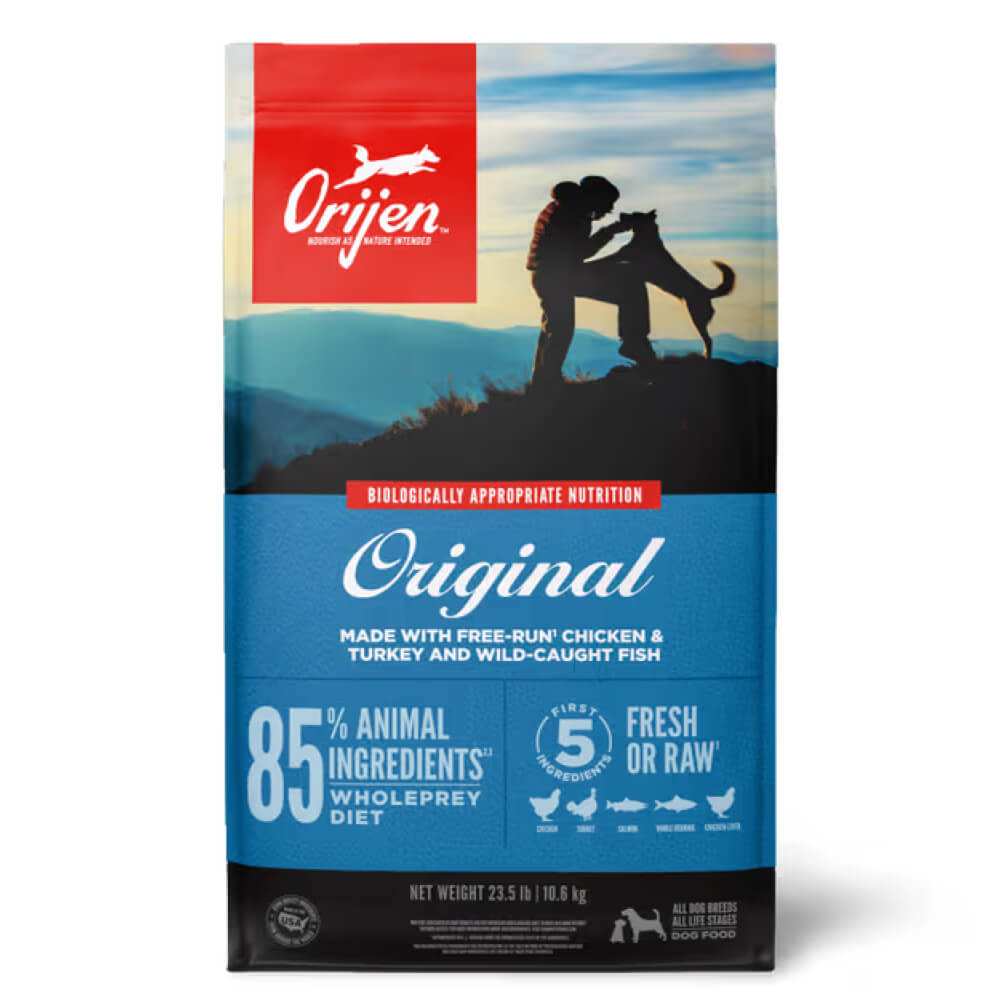
Original Poultry and Fish Dry Food
OrijenOrijen Original is built around 85% quality animal ingredients — including fresh or raw free-run chicken and turkey and wild-caught fish — making it one of the most protein-dense kibbles available in Australia. The recipe uses a WholePrey approach, incorporating organs and bone alongside muscle meat to deliver nutrients in a form that closely mirrors a natural diet. With 38% minimum crude protein, added pre- and probiotics for digestive health, and naturally occurring Omega-3 and Omega-6 fatty acids for skin and coat support, it's formulated as a complete and balanced diet for all life stages including large breed puppies.
Pros
- 85% animal ingredient inclusion with the first five ingredients being fresh or raw poultry and fish — significantly higher than most kibbles on the market
- WholePrey philosophy includes organs and bone for a broader nutrient profile without relying heavily on synthetic supplementation
- Formulated for all life stages including growth of large size dogs, so it works across multi-dog households
- Grain-free, gluten-free, dairy-free, and soy-free — suitable for dogs with common ingredient sensitivities
Cons
- Premium price point places it at the higher end of the kibble market, which can add up for larger dogs
- Made in the USA rather than locally — some Australian pet owners prefer locally manufactured products
- High protein and calorie density means careful portioning is needed to avoid overfeeding, especially for less active dogs
Best Australian-Made Kibble for Sensitivities
When a dog reacts to common proteins like chicken or beef, finding a kibble that avoids these triggers without sacrificing nutritional quality can be a challenge. A novel protein source — one that a dog's immune system hasn't been repeatedly exposed to — can significantly reduce the risk of adverse food reactions while still delivering a complete and balanced diet.

Kangaroo, Sweet Potato Dry Dog Food
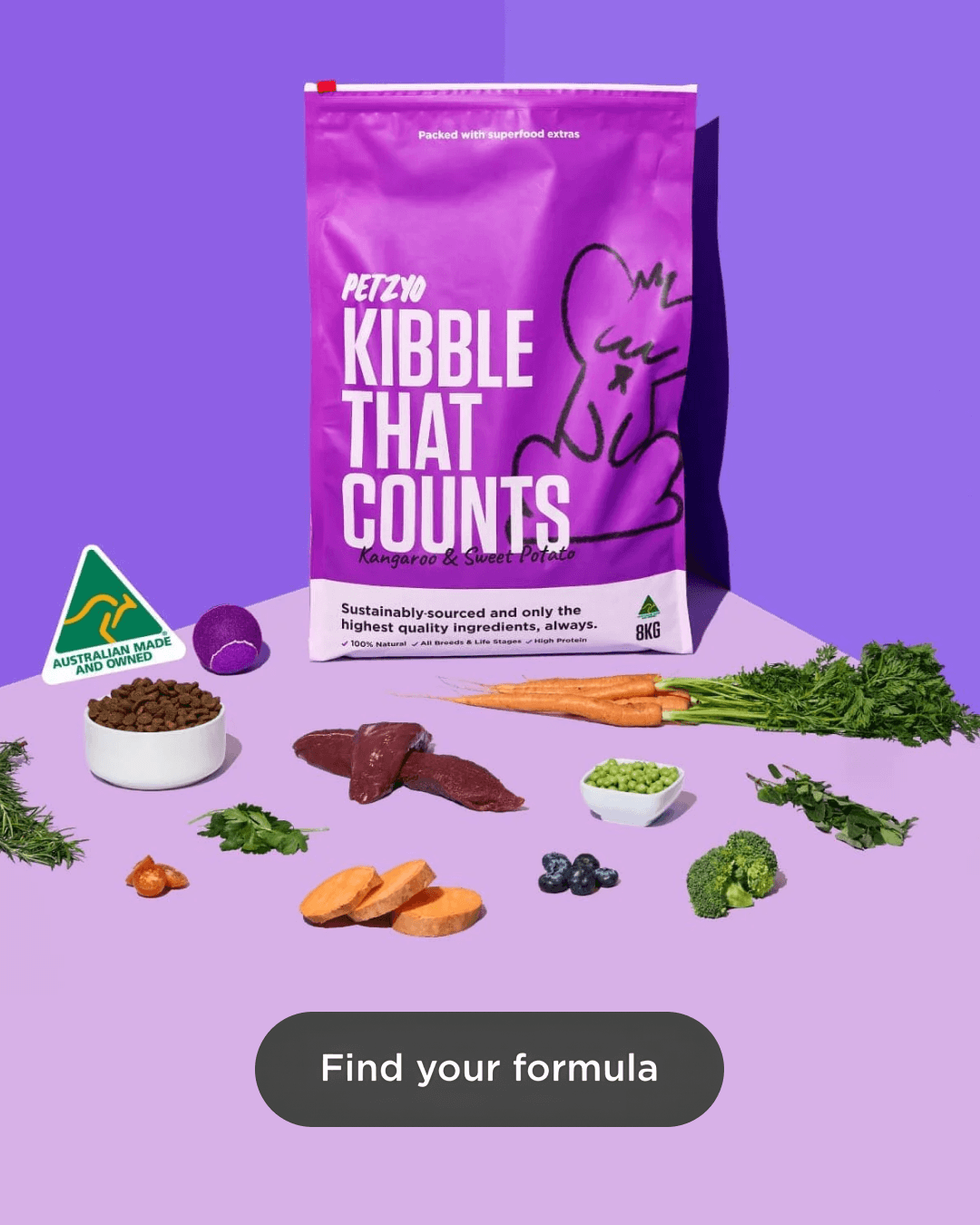
PetzyoPetzyo's Kibble That Counts uses ethically sourced Australian kangaroo as its primary protein — a lean, iron-rich novel protein that's naturally low in fat and less likely to trigger food sensitivities compared to chicken or beef. The grain-free formula is loaded with 14 superfoods including turmeric, blueberries, kelp, and green tea, and includes prebiotic fibre from chicory root extract to support gut health. Formulated by Board Certified Veterinary Nutritionists to exceed both AAFCO and FEDIAF nutritional requirements, it's suitable for all life stages from post-weaning puppies through to adults.
Pros
- Australian-made with ethically sourced kangaroo — a sustainable, lean novel protein ideal for dogs with chicken, beef, or lamb sensitivities
- Grain-free formula packed with 14 superfoods for antioxidant, anti-inflammatory, and digestive support
- Exceeds both AAFCO and FEDIAF standards — formulated by Board Certified Veterinary Nutritionists
- Small-batch production for freshness, with free samples available so dogs can try before you commit to a full bag
Cons
- Uses poultry fat as an ingredient — while filtered to remove chicken protein, some owners of severely allergic dogs may prefer to avoid poultry-derived ingredients entirely
- Relies on kangaroo meat meal rather than fresh or raw kangaroo as the first ingredient
- Primarily sold direct-to-consumer through Petzyo and select retailers like Pet Stock and Pet Post — not as widely stocked as major supermarket brands
Best Single Protein Air-Dried Diet
For dogs dealing with skin issues, digestive sensitivities, or suspected food intolerances, a single protein diet can be a game-changer. By limiting the recipe to one animal protein source, it becomes easier to identify triggers and manage reactions — while air-drying the food locks in nutrients and natural flavour without the heavy processing of traditional kibble.
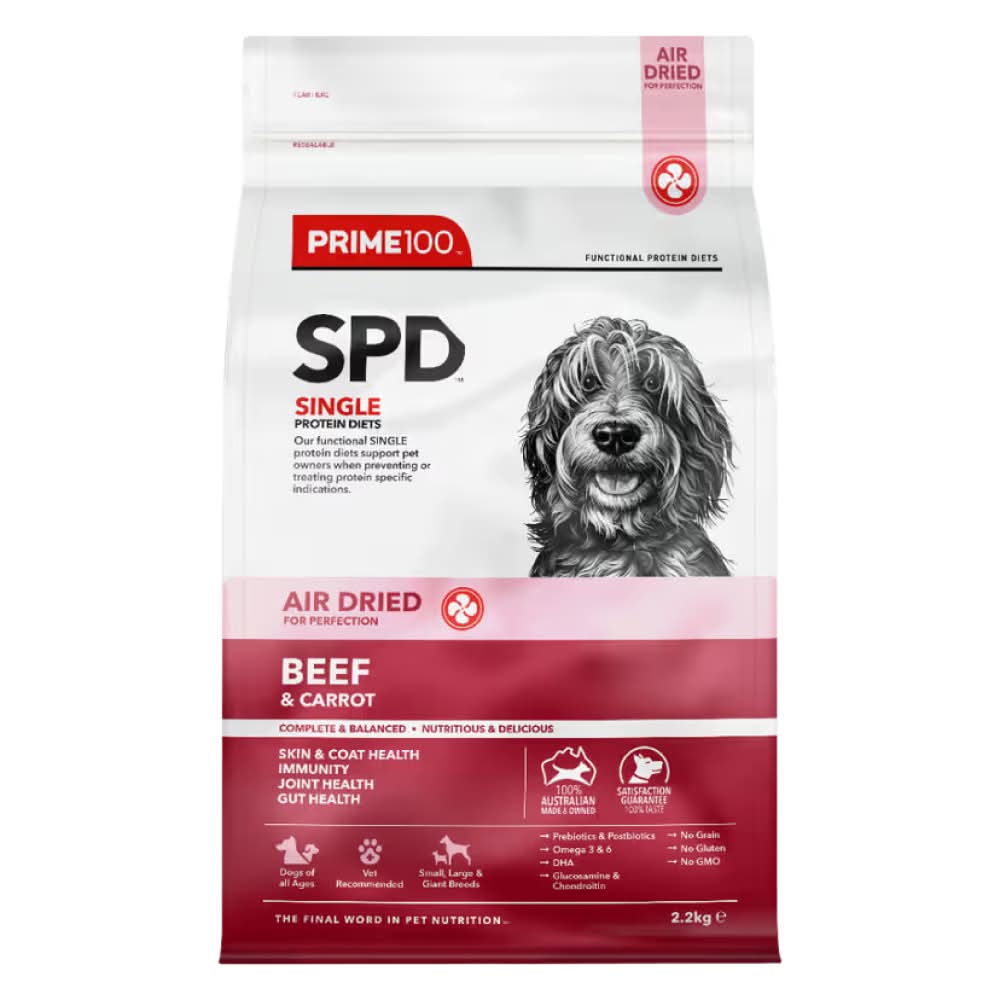
SPD™ Air Dried Beef and Carrot
Prime100PRIME100's SPD Air Dried Beef and Carrot is built around Australian beef — whole meat and selected organs — in a gently air-dried format that preserves essential nutrients while delivering naturally enhanced palatability and aroma. With 40% minimum crude protein and a completely poultry-free ingredient list, it's a scientifically formulated single protein diet designed to support muscle growth, skin and coat health, and digestive function through the inclusion of postbiotics, chicory root extract, and pumpkin. Complete and balanced for dogs of all ages including large breed puppies, it also includes glucosamine, chondroitin, and algae-derived functional oil — making it suitable as a standalone meal, a nutrient-dense topper, or a high-value treat.
Pros
- 100% poultry-free single protein diet — ideal for dogs with confirmed chicken or turkey sensitivities who still need a nutrient-dense, high-protein food
- Includes glucosamine, chondroitin, and algae-derived functional oil for joint, cardiovascular, and immune support
- 100% Australian made, designed in collaboration with leading veterinary specialists and nutritionists
- Versatile use as a complete meal, a topper, or a training treat — no refrigeration required and suitable for all life stages including large breed puppies
Cons
- Significantly more expensive per kilogram than traditional kibble, making it a bigger investment for larger dogs fed exclusively on air-dried
- Available in smaller pack sizes (120g, 600g, 2.2kg) which don't suit bulk buying for bigger breeds
- High fat content requires careful portioning
Best Premium Raw Alternative
Some dog owners want the nutritional benefits of a raw diet — high meat content, minimal processing, whole-prey organ inclusions — without the mess, preparation time, and food safety concerns that come with handling raw meat every day. A premium air-dried food bridges that gap, gently removing moisture from raw ingredients while preserving their nutritional integrity in a convenient, shelf-stable format.

Beef Air Dried Dog Food
ZIWI PeakZIWI Peak Beef delivers 96% grass-fed, free-range New Zealand beef including heart, kidney, tripe, liver, lung, and ground bone — essentially a whole-prey raw diet in a scoop-and-serve format. Every portion of dry food is made from three portions of raw beef and organs, resulting in an exceptionally nutrient-dense product with 38% protein and naturally occurring glucosamine and chondroitin from New Zealand Green Mussel for joint support. Free from grains, potatoes, legumes, and rendered meals, it's formulated as a complete and balanced diet for all life stages and can be used as a full meal, a nutritious topper, or a training reward.
Pros
- 96% meat, organs, bone, and New Zealand Green Mussel — one of the highest whole-prey inclusions of any commercially available dog food
- Ethically sourced from grass-fed, free-range, hormone-free New Zealand farms with full traceability
- Ultra-low carbohydrate content with no grains, potatoes, legumes, or glycerin — ideal for dogs that do best on a meat-dominant diet
- Extremely versatile — works as a complete meal, a high-value topper to boost any bowl, or a convenient raw alternative for travel
Cons
- One of the most expensive dog foods on the market — the cost can be prohibitive for medium to large breed dogs fed exclusively on ZIWI
- Very high fat content (30% minimum) and calorie density (4,900 kcal/kg) means significantly smaller serving sizes that may not satisfy dogs who prefer volume in their bowl
- Not suitable for growth of large size dogs
Best Everyday Value Kibble
Not every dog needs the most expensive food on the shelf to thrive. A well-formulated, nutritionally complete kibble that uses quality ingredients at an accessible price point can deliver everything an adult dog needs for strong muscles, healthy digestion, and a shiny coat — without stretching the household budget. The key is finding a product that balances cost with genuine nutritional quality rather than cutting corners with cheap fillers.

Lamb and Rice Adult All Breed Dry Food
Black HawkBlack Hawk Lamb and Rice is an Australian-made kibble built around lamb meal as its primary protein, with rice and Australian-grown oats providing a steady source of energy for both body and brain. The recipe includes emu oil to support joint health, chicory root as a natural prebiotic for gut health, and blueberries and cranberries as antioxidant-rich additions for immune support. Developed by an in-house team of pet nutritionists and veterinarians with over 59 years of collective experience, it delivers complete and balanced nutrition at a price point that makes premium feeding achievable for dogs of all breed sizes.
Pros
- Australian-made and formulated in-house by qualified pet nutritionists and veterinarians — not outsourced or white-labelled
- Includes emu oil for Omega-3 and Omega-6 fatty acid support, plus glucosamine and chondroitin for joint health
- Available in 3kg, 10kg, and 20kg bags — the larger sizes bring the per-kilogram cost down significantly for bigger dogs
- Widely stocked at Pet Barn, Pet Stock, and independent pet retailers across Australia
Cons
- Contains chicken meal and poultry fat alongside the lamb — not a single protein diet, so unsuitable for dogs with confirmed chicken sensitivities
- 25% minimum protein is lower than many premium competitors, which may not suit highly active or working dogs
- Formulated for adult maintenance only — not suitable for puppies or senior dogs with specific life stage requirements
Australian-made vs imported — does it matter?
It used to be that the best dry dog food brands in Australia were all imported. That's no longer true.
Australian-made dog food has improved dramatically in the last five to ten years. Several local manufacturers now produce kibble that matches or exceeds imported brands on protein content, ingredient transparency, and nutritional formulation. Many use locally sourced proteins — Australian lamb, chicken, and kangaroo — which reduces the supply chain and generally means fresher ingredients.
Imported brands still have a place. Some of the most heavily researched formulas come from the US and Canada, with decades of feeding trials behind them. The trade-off is a longer supply chain, and in some cases, ingredients that don't reflect what's available locally.
The best Australian-made dog food brands tend to be transparent about their sourcing and manufacturing. If a brand won't tell you where the food is made and where the ingredients come from, that's worth noting — regardless of where they're based.
For most Australian dog owners, buying Australian-made is a practical choice. It supports local industry, reduces transport time, and often means the product was formulated with Australian conditions and ingredient availability in mind.
Choosing by life stage and breed size
Dogs have different nutritional needs depending on their age and size. A dry dog food labelled "all life stages" can technically meet the minimum requirements, but a formula designed for your dog's specific stage will do a better job.
Puppies need higher protein, fat, and calcium to support growth. Large breed puppies specifically need controlled calcium and phosphorus ratios to prevent skeletal issues — growing too fast is a real risk for breeds like Great Danes, Labradors, and German Shepherds. Look for a kibble labelled for large breed puppies if your dog will exceed 25 kg as an adult.
Adult dogs in good health do well on a maintenance formula matched to their size. Small breed dogs benefit from smaller kibble sizes and calorie-dense formulas because they have faster metabolisms relative to their body weight. Large breed adults benefit from added joint support ingredients — glucosamine and chondroitin are common in better-quality large breed formulas.
Senior dogs generally need fewer calories but maintained or increased protein to preserve muscle mass. Joint health becomes more important, and some senior formulas add omega-3 fatty acids for coat and joint support. If your dog is over seven (or over five for giant breeds), it's worth moving to a senior-specific formula.
How much should you spend
Dry dog food in Australia ranges from under $3 per kilogram for supermarket brands to over $15 per kilogram for premium and super-premium options. The price difference is real, and in most cases, it reflects genuine differences in ingredient quality.
Budget kibble typically relies on grain-heavy formulas with lower protein content and more fillers. It meets minimum nutritional standards, but it's the nutritional equivalent of a basic diet — technically adequate, but not optimal.
Mid-range dry dog food — roughly $5 to $10 per kilogram — is where the value sweet spot sits for most dog owners. At this price point, you'll find named proteins, fewer fillers, and formulas that have been designed with more care. Many of the best Australian-made brands sit in this range.
Premium and super-premium kibble often includes higher meat content, novel proteins, functional ingredients like probiotics, and smaller batch manufacturing. Whether the extra cost is justified depends on your dog. Dogs with allergies, sensitivities, or specific health conditions often do better on premium formulas. Healthy dogs with no issues may do perfectly well in the mid-range.
The most expensive dry dog food is not automatically the best. Read the ingredients list and judge on content, not price.
What to avoid in dry dog food
Some ingredients and practices show up regularly in lower-quality dry dog food. They're worth knowing so you can spot them quickly.
Avoid foods where the first ingredient is a grain or a vague protein source like "meat meal" with no animal specified. You should know what protein your dog is eating.
Avoid artificial colours. Dogs don't care what colour their kibble is — coloured kibble is designed to appeal to owners, not dogs. Artificial colours serve no nutritional purpose.
Be cautious of foods with very long ingredients lists full of things you can't identify. A good dry dog food doesn't need twenty additives to be nutritionally complete.
Avoid brands that are not transparent about their manufacturing. If you can't find out where the food is made or what quality controls are in place, there are better options available.
Added sugars or syrups have no place in dog food. Some cheaper brands use them to boost palatability. If your dog needs sugar to eat their food, the food isn't good enough.
How to switch your dog to a new dry food
Switching dry dog food too quickly is one of the most common causes of digestive upset. Even if the new food is significantly better, your dog's gut needs time to adjust.
The standard approach is a seven to ten day transition. Start with roughly 25 percent new food mixed with 75 percent old food for the first two to three days. Move to 50/50 for the next two to three days. Then 75 percent new food for two to three days before switching fully.
If your dog has a sensitive stomach, stretch the transition to two weeks. Some dogs need the slower approach — there's no downside to taking it gradually.
Watch for loose stools, vomiting, or refusal to eat during the transition. Minor changes in stool consistency are normal. Persistent diarrhoea or vomiting for more than a day or two means the food may not suit your dog, and it's worth speaking to your vet.
Store dry dog food in a sealed container in a cool, dry place. Don't pour new food on top of old — clean the container between bags to prevent oils from going rancid.
Frequently Asked Questions
What is the best dry dog food in Australia?
Is Australian-made dog food better than imported?
How do I know if a dry dog food is good quality?
What is the healthiest dry dog food for dogs?
Is grain-free dry dog food better for dogs?
How much dry dog food should I feed my dog per day?
Can I mix dry dog food with wet food?
How long does dry dog food last once opened?
What's the difference between premium and supermarket dry dog food?
Should I change my dog's dry food regularly or stick with one brand?

Comments
0 comments
Login to Join the Conversation 💬