











If your dog's coat has lost its shine, their skin is dry or flaky, or they're shedding more than usual — a targeted skin and coat supplement can help. We've reviewed the most widely available options in Australia to help you find what actually works for your dog's skin health, without the guesswork.

In Short:
The best skin and coat supplements for dogs deliver omega-3 fatty acids from marine sources, combined with supporting nutrients like zinc, biotin, or vitamin E that work together to strengthen the skin barrier and promote a healthy coat. Choose based on what you're seeing — general dullness and mild shedding respond well to a broad-spectrum omega-3 formula, while persistent dryness, flaking, or itching may need a higher-dose or condition-specific product.
For most dogs, a liquid oil mixed into food or a daily chew is the most practical way to supplement consistently. See our reviewed products below.
Do Skin and Coat Supplements Actually Work?
Yes — but the results depend on the cause of the problem and the quality of the supplement. If your dog's skin or coat issues stem from a nutritional gap — which is more common than most owners realise — a well-formulated supplement can produce visible improvement within four to six weeks. Dull coats regain shine, dry or flaky skin settles, and excessive shedding often reduces noticeably.
Where supplements won't help is when the underlying cause is medical — parasites, bacterial infections, hormonal conditions like hypothyroidism, or contact allergies. If your dog's skin issues are severe, worsening, or accompanied by hair loss in patches, a vet visit should come before any supplement. But for the majority of dogs with mild to moderate skin and coat concerns, the right supplement makes a genuine difference.
What Ingredients Should You Look For?
Not all skin and coat supplements contain the same active compounds, and some are significantly more effective than others. Here's what the research and veterinary community consistently recommend.
Omega-3 Fatty Acids (EPA & DHA)
The single most important ingredient for skin and coat health. EPA has a direct anti-inflammatory effect on skin tissue, reducing itching, redness, and flaking. DHA supports skin cell membrane integrity, which translates to a stronger moisture barrier and a shinier, more resilient coat. Marine-sourced omega-3 — from fish oil, salmon oil, or green-lipped mussel — is far more bioavailable for dogs than plant-based sources like flaxseed. Look for products that specify EPA and DHA levels individually, not just total omega-3 content. For a 25 kg dog, a therapeutic skin dose is roughly 2,000 to 3,000 mg of combined EPA and DHA daily. If your dog is already on an omega-3 supplement for joint support, you may already be covering this — check the dose before doubling up.
Green-Lipped Mussel (Perna Canaliculus)
A standout ingredient in Australian and New Zealand products. Green-lipped mussel contains a unique omega-3 fatty acid called ETA (eicosatetraenoic acid) that is not found in standard fish oil, plus glycosaminoglycans that support tissue repair. For skin specifically, the combination of ETA and standard EPA/DHA makes green-lipped mussel a more complete anti-inflammatory than fish oil alone. Several well-regarded Australian supplements use green-lipped mussel as their primary active compound, and it features across both skin and coat and joint health formulas.
Zinc
Zinc is essential for skin cell turnover and repair. Dogs with zinc deficiency develop a characteristic pattern of dry, crusty skin — particularly around the nose, eyes, and paw pads — and a dull, brittle coat. Certain breeds are more prone to zinc-responsive skin conditions, including Huskies, Malamutes, and other northern breeds. Even in breeds that aren't predisposed, zinc supplementation alongside omega-3 has been shown to improve coat density and reduce flaking. Most quality skin and coat supplements include zinc, but if yours doesn't, it's worth checking your dog's diet to ensure they're getting adequate levels through food.
Biotin (Vitamin B7)
Biotin supports keratin production — the structural protein that forms the foundation of your dog's coat and skin. Biotin deficiency is uncommon in dogs on a complete commercial diet, but supplementation at moderate doses has been associated with improved coat texture and reduced shedding in several veterinary studies. It's a common inclusion in skin and coat formulas and works best in combination with omega-3 and zinc rather than as a standalone supplement.
Vitamin E
A fat-soluble antioxidant that protects skin cells from oxidative damage and supports the skin's moisture barrier. Vitamin E works synergistically with omega-3 fatty acids — it helps prevent the oxidation of EPA and DHA in the body, which means the omega-3 you're supplementing remains effective for longer. Many quality fish oil and skin supplements include vitamin E for this reason.
When Should You Start a Skin and Coat Supplement?
You don't need to wait for visible problems. Dogs on kibble-only diets are the most common candidates for skin and coat supplementation, because the high-heat processing involved in dry food manufacturing degrades omega-3 fatty acids. Even premium kibble rarely delivers therapeutic levels of EPA and DHA by the time it reaches your dog's bowl.
If your dog is already showing signs — a dull or rough coat, visible dandruff or flaking, dry skin, excessive shedding, or persistent mild itching that your vet has ruled out as allergies or parasites — start as soon as possible. Most owners report visible improvement within four to six weeks of consistent daily supplementation.
For dogs on a raw or fresh food diet that includes oily fish, supplementation may be less necessary — but it's still worth assessing, particularly if the diet doesn't include marine omega-3 sources at every meal.
Choosing the Right Format
Skin and coat supplements are available in several forms, and the best one is whichever your dog will actually take consistently.
Liquid oils are the most common format for skin and coat supplements and for good reason — they deliver a high concentration of omega-3 per dose, are easy to pour over food, and most dogs find the taste appealing. They're particularly well suited to dogs on wet or raw diets where the oil mixes in naturally.
Chews and soft treats are convenient and palatable, making them ideal for fussy dogs or households where ease of administration matters. The trade-off is that chews typically contain a lower concentration of active ingredients per dose than liquid oils, so check the EPA/DHA levels rather than assuming equivalence.
Powders mix directly into food and can deliver higher doses than chews. They work best for dogs on a consistent diet who aren't sensitive to texture changes in their bowl.
Capsules offer precise dosing and are easy to open and mix into food if your dog won't take them whole. Less commonly available in dog-specific formulations but some quality products use this format.
Best Liquid Oil for Broad Omega Support
Omega fatty acids — particularly the 3, 6, and 9 group — each play a different role in skin health. Omega-3s help manage inflammatory responses, Omega-6 supports the structural integrity of the skin barrier, and Omega-9 contributes to moisture retention.
A balanced liquid oil that delivers all three can offer broader nutritional support than a single-source supplement, especially for dogs on a dry food diet that may lack sufficient healthy fats.

Omega Oil Skin and Coat
Natural Animal SolutionsNatural Animal Solutions Omega Oil is a liquid blend of Flaxseed Oil, Cod Liver Oil, Sunflower Oil, Extra Virgin Olive Oil, and Vitamin E, delivering a balanced ratio of Omega 3, 6, and 9 fatty acids. Available in four sizes — 200ml, 500ml, 1L, and 5L — it's suitable for both dogs and cats.
NAS has been formulating natural pet health products in Australia for over 20 years and this oil is widely stocked at major pet retailers.
Pros
- Balanced blend of Omega 3, 6, and 9 from multiple oil sources for broad nutritional coverage
- Available in sizes up to 5L — excellent value for multi-pet households or large breeds
- Widely stocked at major Australian pet retailers including Petbarn, Pet Circle, and independent stores
- Suitable for both dogs and cats at all life stages
Cons
- Liquid oil format requires refrigeration after opening and has a six-month use-by once opened
- Not suitable for dogs with a history of pancreatitis or seafood allergies
- Lower EPA/DHA concentration per serve (~79mg EPA, ~82mg DHA per 5ml) compared to pure salmon oils
Best for Everyday Coat Maintenance
A dull, brittle coat or persistent shedding is often one of the first visible signs that a dog's nutrition isn't covering all the bases. Daily coat maintenance supplements work by delivering key nutrients — typically Omega-3 fatty acids, Biotin, and Zinc — that support the skin barrier from within, helping to reduce flaking, improve fur texture, and promote a healthier shine over time.

Skin and Coat Powder Supplement
Petz ParkPetz Park Skin and Coat is a vet-formulated Australian-made powder combining Omega-3s (EPA and DHA), Biotin, Zinc, and Vitamins C and E to support healthier skin and a shinier coat. It comes in 45, 90, and 180 scoop packs with weight-based dosing, and is backed by a 40-day money-back guarantee.
Suitable for all breeds and life stages with over 500 verified reviews averaging 4.8 stars.
Pros
- Vet-formulated with a well-rounded ingredient profile (EPA, DHA, Linseed Oil, Biotin, Zinc, Vitamins C & E)
- Easy powder format with weight-based dosing — no syringes or messy oils
- Free from common allergens (grain, gluten, dairy, soy, and poultry free)
- Three pack sizes available so you can trial a smaller pouch before committing
Cons
- Powder format won't suit dogs who are fussy about texture changes in their food
- Lower EPA content per scoop (38mg) compared to dedicated fish oil supplements
Best for Allergy-Related Skin Issues
Not all skin and coat problems are purely nutritional — many dogs suffer from persistent itching, redness, and scratching triggered by environmental allergens such as pollen, grasses, dust mites, or certain foods.
These allergy-driven conditions require a different approach than a standard Omega supplement, one that combines anti-inflammatory ingredients with immune support to help reduce the severity of allergic skin reactions and provide ongoing relief.
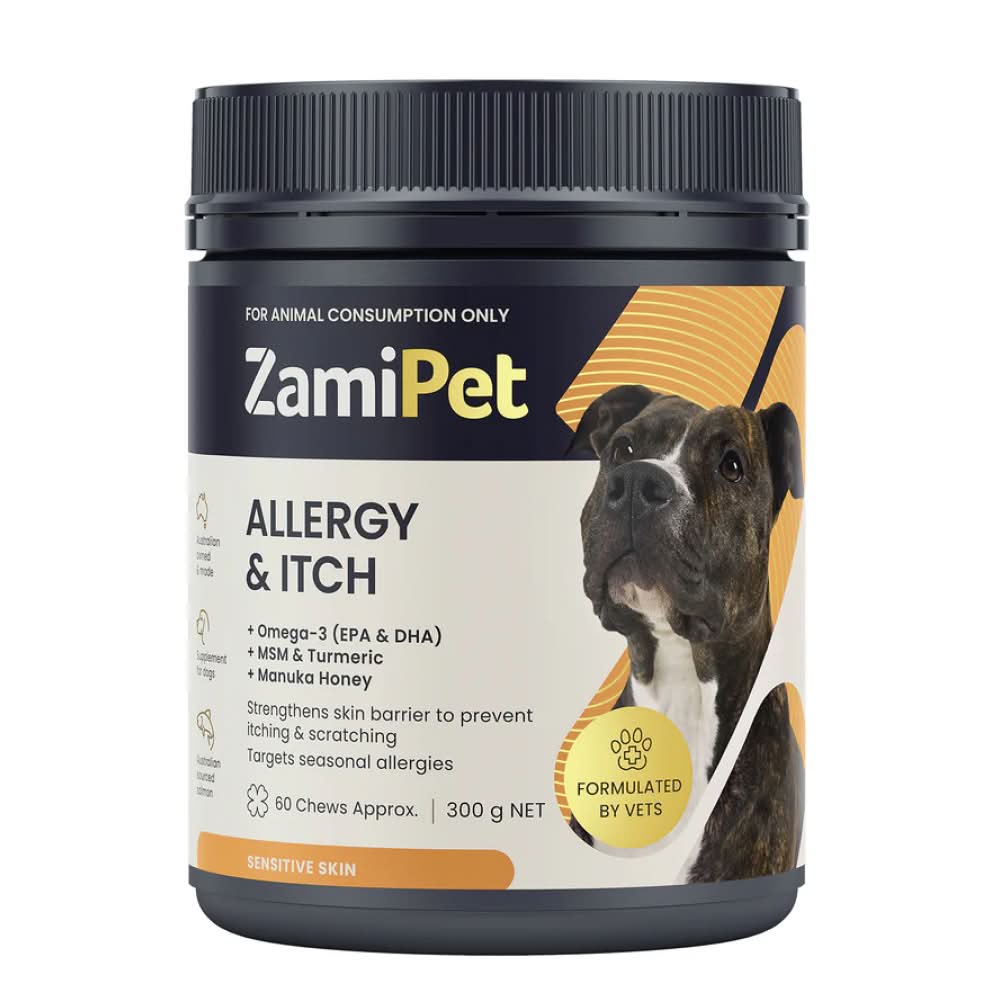
Allergy and Itch Supplement
ZamiPetZamiPet Allergy & Itch is a vet-formulated chewable supplement specifically designed to target allergy-related skin conditions in dogs, including itching, scratching, redness, and inflammation caused by atopic dermatitis and environmental allergens.
Its formula combines Australian-sourced salmon (Omega-3 EPA & DHA), MSM, Turmeric, Vitamin E, and natural prebiotics to help soothe irritated skin while supporting the immune system.
Pros
- Purpose-built for allergy sufferers — targets itching, scratching, redness, and inflammation specifically
- Combines anti-inflammatory ingredients (Omega-3, MSM, Turmeric) with prebiotics for immune support
- Chewable format that dogs find palatable — no mixing into food required
- Backed by published scientific references for key ingredients on the product page
Cons
- Higher price point for a single pack compared to powder alternatives
- Designed to manage allergy symptoms rather than general coat improvement — may not be the best pick if allergies aren't the primary concern
Best Pure Salmon Oil for Coat Shine
When it comes to Omega-3 supplementation, ingredient purity matters. Single-source salmon oils offer a concentrated, unblended profile of EPA and DHA without the dilution that comes from mixing in plant-based or lower-potency oils. For dogs whose coats simply need a boost in shine, softness, and overall condition, a high-purity salmon oil can deliver visible results relatively quickly — often within two to three weeks of daily use.

Salmon Omega Oil
WonderfurWonderfur Super Omega Oil is a 99.95% pure Tasmanian Atlantic Salmon oil with just 0.05% natural antioxidant (Naturox), delivering approximately 12.5g of Omega-3 per 100g including 5.0g DHA and 3.5g EPA.
It comes in a 250ml bottle with a pump dispenser for mess-free, measured dosing. Australian-made, vet-developed, and suitable for dogs and cats of all ages, breeds, and sizes.
Pros
- Exceptionally pure formula — 99.95% single-source Tasmanian Atlantic Salmon with no fillers or blended oils
- High Omega-3 concentration (12.5g per 100g) with strong DHA and EPA levels for visible coat results
- Pump dispenser makes daily dosing clean and consistent — no measuring cups or syringes needed
- Appealing taste that works well even with fussy eaters
Cons
- Only available in a single 250ml size — larger dogs on 4–6 pumps daily will go through a bottle quickly
- Liquid oil requires refrigeration after opening and careful storage to prevent oxidation
- Narrower ingredient profile — delivers Omega fatty acids only, without the added Biotin, Zinc, or anti-inflammatory ingredients found in multi-ingredient formulas
Best for Dogs (and Cats) with Sensitive Skin
Some skin and coat issues go beyond a simple Omega deficiency — dry, irritated skin can stem from poor hydration at the cellular level, and dogs or cats with sensitivities may react to heavily flavoured or fish-based supplements. In these cases, a supplement that focuses on skin hydration and barrier repair through ingredients like MCTs and Lecithin can offer a gentler alternative while still delivering visible improvements to coat quality.
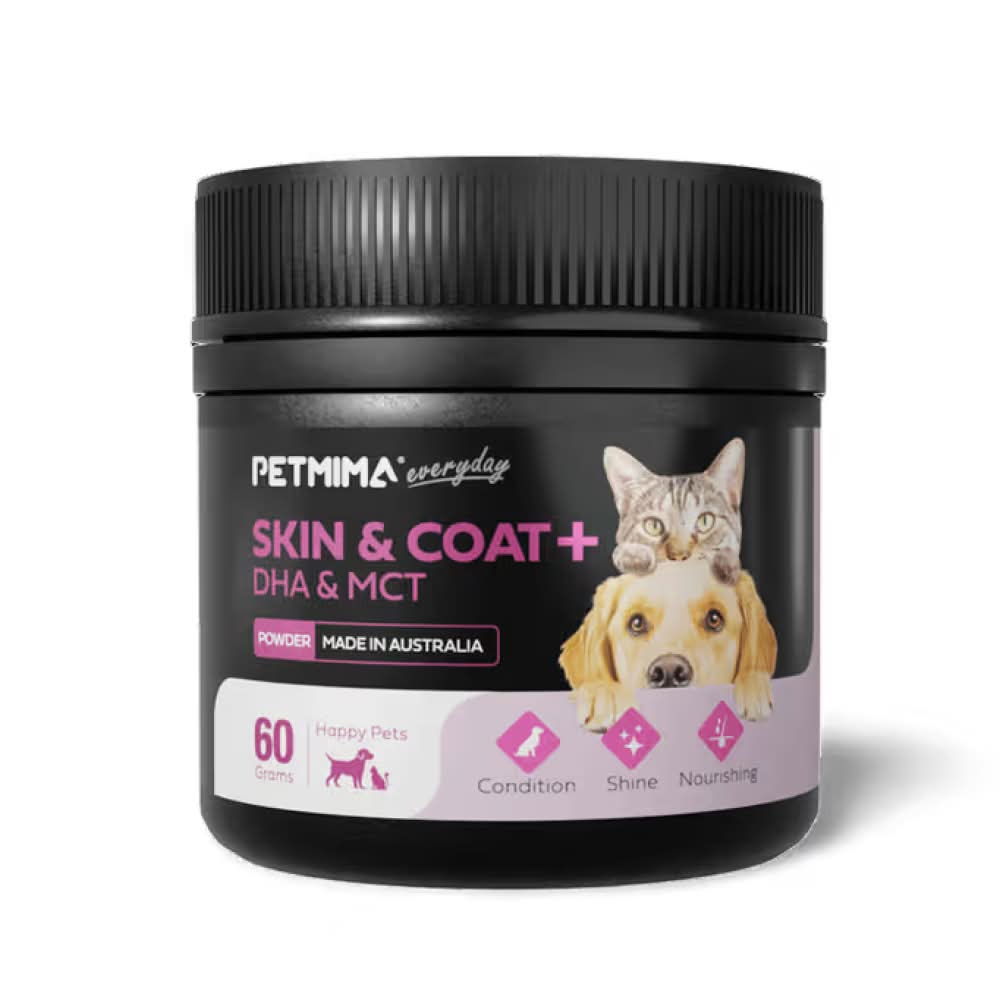
Skin and Coat + DHA/MCT Supplement
PetMimaPetMima Skin & Coat is a vet-recommended Australian-made powder supplement formulated with DHA, MCT, Lecithin Powder, Pea Protein, and Tapioca Starch to support skin hydration and coat shine from the inside out. It's unflavoured, making it a strong option for fussy eaters, and is suitable for both dogs and cats.
Rated 4.9 stars across 228 reviews with a 100% recommendation rate and a 30-day guarantee.
Pros
- Unique DHA and MCT formula that targets skin hydration and barrier function — not just a standard fish oil
- Unflavoured powder that mixes easily into food — ideal for fussy eaters who reject flavoured supplements
- Suitable for both dogs and cats, making it practical for multi-pet households
- Strong customer satisfaction with a 4.9-star rating and 100% recommendation rate
Cons
- Smaller serving count per box — larger dogs (10kg+) get only 25 servings per box at one scoop daily
- Does not contain Biotin or Zinc, which are commonly included in other skin and coat formulas
- Relatively newer brand compared to more established competitors in the Australian market
How to Choose: A Quick Decision Guide
Not every skin and coat supplement suits every dog. Here's a simple way to narrow it down:
My dog's coat is dull but their skin seems fine — A general omega-3 supplement with EPA and DHA from fish oil or salmon oil is usually all you need. This is the most common scenario and the easiest to address. Look for a liquid oil format for the highest concentration per dose.
My dog has dry, flaky skin or visible dandruff — Look for a formula that combines omega-3 with zinc and biotin. The omega-3 addresses inflammation and moisture, while zinc and biotin support skin cell turnover and repair. Persistent dandruff that doesn't improve after six to eight weeks of supplementation warrants a vet check to rule out seborrhea or other underlying conditions.
My dog is itching but my vet has ruled out allergies and parasites — An anti-inflammatory omega-3 supplement with a therapeutic dose of EPA is a reasonable first step. Green-lipped mussel-based products are particularly well suited here because of the additional ETA fatty acid. If itching persists, revisit your vet — chronic itch can have complex causes.
My dog is shedding excessively — Some shedding is normal and seasonal, particularly in double-coated breeds. But if your dog is shedding year-round or more than usual, omega-3 supplementation combined with biotin often reduces excess shedding within four to eight weeks. Make sure the underlying diet is also adequate — no supplement can compensate for a genuinely poor-quality food.
My dog is already on an omega-3 supplement for joints — Check the EPA and DHA dose. If your dog is on a therapeutic joint dose, they're likely already getting skin and coat benefits as a secondary effect. Adding a separate skin supplement on top could mean over-supplementing omega-3, which can cause digestive upset at very high doses. Talk to your vet about whether a single higher-dose product could serve both purposes.
Understanding Common Skin and Coat Problems in Dogs
A dog's skin and coat are often the first visible indicators that something is off — whether that's a dietary gap, an environmental irritant, or an underlying health condition. Understanding what you're looking at helps you choose the right response.
Dry, flaky skin is one of the most common issues Australian dog owners notice, particularly during winter or in air-conditioned homes where humidity is low. In most cases, dry skin responds well to omega-3 supplementation because the fatty acids directly support the skin's moisture barrier. If dryness is concentrated around the nose, eyes, or paw pads, zinc deficiency is worth investigating — especially in northern breeds like Huskies and Malamutes.
Dandruff in dogs works similarly to dandruff in humans — it's the visible shedding of dead skin cells, often caused by dry skin, poor nutrition, or an imbalance in the skin's natural oil production. Mild dandruff usually resolves with consistent omega-3 and zinc supplementation. Severe or greasy dandruff may indicate seborrhea, which is a medical condition that needs veterinary treatment.
Excessive shedding beyond what's normal for the breed and season can indicate nutritional deficiency, stress, hormonal imbalance, or skin disease. A supplement can help when the cause is dietary — particularly a lack of essential fatty acids — but persistent abnormal shedding should be investigated by your vet.
A dull or rough coat is often the earliest sign of inadequate omega-3 intake. Dogs on high-quality diets rich in marine omega-3 sources tend to have noticeably shinier, softer coats than dogs on standard kibble. This is one of the quickest improvements owners notice after starting a skin and coat supplement — often within three to four weeks.
Itching without an obvious cause can be frustrating. Once your vet has ruled out fleas, mites, food allergies, and environmental allergies, omega-3 supplementation is a reasonable next step. EPA's anti-inflammatory action can reduce low-grade skin inflammation that causes persistent mild itch.
Are There Any Side Effects?
Skin and coat supplements are generally very well tolerated. The most common side effects are mild and digestive — loose stools or a slightly oily stool when first introducing a fish oil or omega-3 supplement, particularly at higher doses. Starting at a half-dose for the first week and building up to the full dose usually avoids this.
Dogs with fish or shellfish allergies should avoid marine-sourced omega-3 and green-lipped mussel products. If your dog has a known fish allergy, look for plant-based omega alternatives or discuss options with your vet — though plant-based omega-3 (ALA from flaxseed) is significantly less effective for skin health because dogs convert it poorly to the active EPA and DHA forms.
Very high doses of omega-3 over extended periods can have a mild blood-thinning effect. If your dog is on any prescription medication — particularly blood thinners or NSAIDs — check with your vet before starting or increasing omega-3 supplementation.
Zinc supplementation at appropriate doses is safe, but excessive zinc can interfere with copper absorption. Stick to products formulated for dogs with appropriate zinc levels rather than using human zinc supplements.
Otherwise, the risk profile for well-formulated skin and coat supplements is low. This is a category where consistent supplementation delivers compounding benefits over time, and the potential upside comfortably outweighs the downside for the vast majority of dogs.
Supplements vs Diet: Do You Need Both?
The honest answer for most dogs is yes — a quality diet provides the foundation, but supplementation fills the gap that even good diets leave.
Here's why: omega-3 fatty acids are fragile. They degrade with heat, light, and time. Dry dog food (kibble) is manufactured at high temperatures, and even products that add omega-3 post-processing lose potency during storage. By the time your dog eats it, the EPA and DHA levels are often a fraction of what's listed on the bag. Wet food retains slightly more, but still not at therapeutic levels for skin health.
Raw and fresh diets that include oily fish (sardines, mackerel, salmon) come closest to delivering adequate omega-3 through food alone. But unless marine protein is a consistent part of every meal, supplementation is still the most reliable way to ensure your dog is getting enough.
The other key nutrients — zinc, biotin, vitamin E — are present in most complete commercial diets at maintenance levels. Supplementation pushes these above maintenance into a range that actively supports skin repair and coat quality, which is particularly useful for dogs with existing skin concerns or breeds predisposed to skin issues.
Where to Buy Skin and Coat Supplements in Australia
All products reviewed on this page are available online and in-store at major Australian pet retailers including Petstock and Petbarn. Some formulas are also stocked through veterinary clinics, often at a slight premium but with the benefit of professional guidance on dosing. Buying online is generally cheaper — use the price comparison links in each product card above to find the best current price.
Frequently Asked Questions
What is the best skin and coat supplement for dogs in Australia?
How long does it take for skin and coat supplements to work in dogs?
Can skin and coat supplements help with my dog's itching?
Do I need a separate skin supplement if my dog already takes omega-3 for joints?
Are human skin supplements safe for dogs?
What causes poor skin and coat condition in dogs?
Is fish oil or salmon oil better for dogs' skin and coat?

Comments
0 comments
Login to Join the Conversation 💬