


.png)


As dogs age, their nutritional needs shift in ways that food alone often can’t cover. Whether your dog is approaching their senior years or already showing signs of slowing down, the right supplement — or combination of supplements — can make a genuine difference to their comfort, mobility, and quality of life. We’ve reviewed the most widely available options for senior dogs in Australia to help you cut through the noise.

In Short:
The best supplements for senior dogs target the most common age-related changes: joint stiffness, cognitive decline, digestive slowdown, and coat condition. No single product covers all of these well — the right choice depends on what your dog needs most.
For most senior dogs, a joint-focused formula with omega-3 and glucosamine is the logical starting point, with additional targeted support layered in as needed.
Do Senior Dogs Actually Need Supplements?
The short answer is yes — but it depends on your dog’s age, breed, and individual condition. As dogs enter their senior years, their bodies become less efficient at producing certain compounds on their own. Cartilage repair slows. The brain’s ability to use glucose as energy decreases. The gut microbiome shifts. Coat and skin condition often deteriorates. Supplements don’t reverse ageing, but the right ones can slow its visible effects and meaningfully improve a dog’s day-to-day comfort.
Supplements are not a substitute for veterinary care. If your dog has a diagnosed condition — arthritis, canine cognitive dysfunction, inflammatory bowel disease — treatment should come first. But for most senior dogs, a well-chosen supplement is a low-risk, evidence-supported addition to their routine. Many Australian vets now recommend starting a targeted supplement plan from the moment a dog crosses into their senior years, rather than waiting for symptoms to appear.
The key is consistency. Supplements work over weeks and months, not days. Owners who see the best results are those who commit to a daily routine and give the product sufficient time to take effect before drawing conclusions.
What Changes When a Dog Gets Older?
Understanding what actually changes as a dog ages is the most useful starting point for choosing the right supplement. There are four main areas where nutritional support can make a real difference.
Joints and Mobility
Joint deterioration is the most common reason dog owners start researching senior supplements. As dogs age, cartilage thins, synovial fluid — the lubricant inside the joint — reduces in volume and quality, and low-grade inflammation becomes a persistent background condition. The result is stiffness after rest, reluctance to use stairs, a shortened stride, and a general reduction in exercise tolerance.
Glucosamine, chondroitin, omega-3 fatty acids, and green-lipped mussel are the four most evidence-backed ingredients for joint support in dogs. For senior dogs already showing mobility changes, these are the supplements to start with.
Cognitive Function
Canine cognitive dysfunction — often described as doggy dementia — is more common than many owners realise. Studies suggest it affects a significant proportion of dogs over the age of eleven, and signs are frequently missed or mistaken for normal ageing. Disorientation in familiar spaces, changes in sleep patterns, reduced interaction with family, and house training accidents that were previously uncharacteristic are all worth discussing with a vet.
The ageing brain becomes less efficient at using glucose as its primary fuel source. Supplements that provide an alternative energy pathway — particularly medium-chain triglycerides (MCT oil), which the brain can convert to ketones — have shown genuine promise in slowing cognitive decline. Omega-3 DHA supports brain cell membrane integrity, and antioxidants including vitamins E and C help protect against oxidative stress in neural tissue.
Digestive Health
Gut function changes considerably with age. Motility — the rate at which food moves through the digestive tract — slows, increasing the risk of constipation and gas. The gut microbiome shifts toward less beneficial bacterial populations, which can affect immunity, nutrient absorption, and stool consistency. Senior dogs often struggle more with dietary changes than younger dogs, and their ability to extract nutrients from food becomes less efficient over time.
Probiotic supplementation helps re-establish a balanced gut microbiome, while prebiotic fibre feeds the beneficial bacteria already present. For senior dogs with irregular stools, reduced appetite, or a history of digestive sensitivity, this is often the most immediately noticeable category of supplement.
Coat and Skin Condition
A dull, dry coat and flaky or itchy skin are among the most visible signs of ageing in dogs, and they’re often the first thing owners notice. The underlying cause is usually a change in the balance of fatty acids available to the skin — specifically, a decrease in the omega-3 to omega-6 ratio as the body prioritises other functions. Omega-3 supplementation — from fish oil, salmon oil, or krill oil — directly addresses this and typically produces visible results within four to six weeks of consistent use.
Key Ingredients to Look For
Not all senior supplements are created equal. Here’s what the evidence and the veterinary community consistently support.
Glucosamine & Chondroitin
The most widely used pairing in joint-focused supplements. Glucosamine supports the production of cartilage-building compounds, while chondroitin helps retain moisture in cartilage tissue and inhibits the enzymes responsible for breaking it down. The combination is considered safe, cost-effective, and beneficial for long-term joint maintenance — particularly in large breeds and dogs already showing early signs of stiffness.
Omega-3 Fatty Acids (EPA & DHA)
The most evidence-backed anti-inflammatory ingredient available in over-the-counter supplements. Marine-sourced omega-3 — from fish oil, salmon oil, or green-lipped mussel — has a direct anti-inflammatory effect on joint tissue and also supports brain health through DHA, which is a structural component of brain cell membranes. Look for products that specify EPA and DHA levels, not just “fish oil” — the dose matters. For a 25 kg dog, a therapeutic dose for joint inflammation is roughly 2,000–3,000 mg of combined EPA and DHA daily.
Green-Lipped Mussel (Perna Canaliculus)
A standout ingredient in many Australian and New Zealand products. Green-lipped mussel contains a unique omega-3 fatty acid — eicosatetraenoic acid (ETA) — that is not found in standard fish oil, along with glycosaminoglycans that directly support cartilage structure. Several well-regarded Australian supplements use green-lipped mussel as their primary active compound, and the research supporting its use in dogs is among the most consistent in this category.
Phosphatidylserine
The most studied ingredient for canine cognitive support. Phosphatidylserine is a phospholipid that forms a critical part of brain cell membranes. Supplementation has been shown to support cognitive function in ageing dogs, particularly in dogs showing early signs of canine cognitive dysfunction. It is commonly found in cognitive support formulas alongside DHA and antioxidants.
MCT Oil (Medium-Chain Triglycerides)
An emerging but promising ingredient for brain health in senior dogs. The ageing brain becomes less efficient at using glucose as fuel, but can readily use ketones — which MCT oil provides as an alternative energy source. Research in both humans and dogs suggests MCT supplementation can support cognitive function and slow the progression of cognitive decline. It is increasingly found in senior-specific supplement formulas in Australia.
Probiotics & Prebiotics
Probiotic bacteria — particularly strains of Lactobacillus and Bifidobacterium — help restore and maintain a balanced gut microbiome. Prebiotic fibres feed these beneficial bacteria and help them establish. For senior dogs with digestive irregularity, reduced appetite, or a history of antibiotic use, a combined probiotic and prebiotic supplement is often the most immediately impactful addition to their routine.
Antioxidants (Vitamins E & C, CoQ10)
Oxidative stress — the accumulation of cellular damage caused by free radicals — plays a significant role in the ageing process, including cognitive decline and immune function. Vitamins E and C are the most common antioxidants in senior dog supplements. Coenzyme Q10 (CoQ10) supports mitochondrial energy production and has additional antioxidant properties. These are rarely the primary ingredients in a supplement but provide meaningful supporting benefits when included in a broader formula.
Best for Senior Dogs Showing Signs of Cognitive Decline
As dogs move into their senior years, cognitive changes — including disorientation, disrupted sleep patterns, and reduced responsiveness — are increasingly common, and an omega oil specifically formulated to support brain health can make a meaningful difference to quality of life in their later years.

Omega Oil Senior Cognitive
Natural Animal SolutionsNAS Omega Oil Senior Cognitive is a specialised omega blend formulated to address the unique neurological and physical demands of ageing dogs, combining fatty acids known to support brain function, memory, and cognitive clarity alongside anti-inflammatory joint support.
Unlike a standard fish oil, the senior-specific formulation is calibrated to target the areas of health most likely to deteriorate with age, making it a more purposeful choice for owners managing the complexities of caring for an older dog.
Pros
- Specifically formulated for cognitive decline — goes beyond standard omega oils to target brain health directly
- Anti-inflammatory omega fatty acids support joint comfort alongside neurological function, addressing two of the most common senior dog concerns in one supplement
- Liquid format is easy to pour over food, making daily administration straightforward for owners of older dogs who may have reduced appetite or dental sensitivities
Cons
- Senior-specific focus makes it less versatile as an all-life-stage supplement
- May need to be used alongside a dedicated joint supplement for dogs with more advanced mobility issues
Best for Comprehensive Senior Health Support in One Formula
For owners who want to address multiple aspects of their ageing dog's health without managing a complex stack of individual supplements, finding a senior dog supplement that covers joints, immunity, coat, and organ health in a single daily serve is often the most practical and sustainable long-term approach.
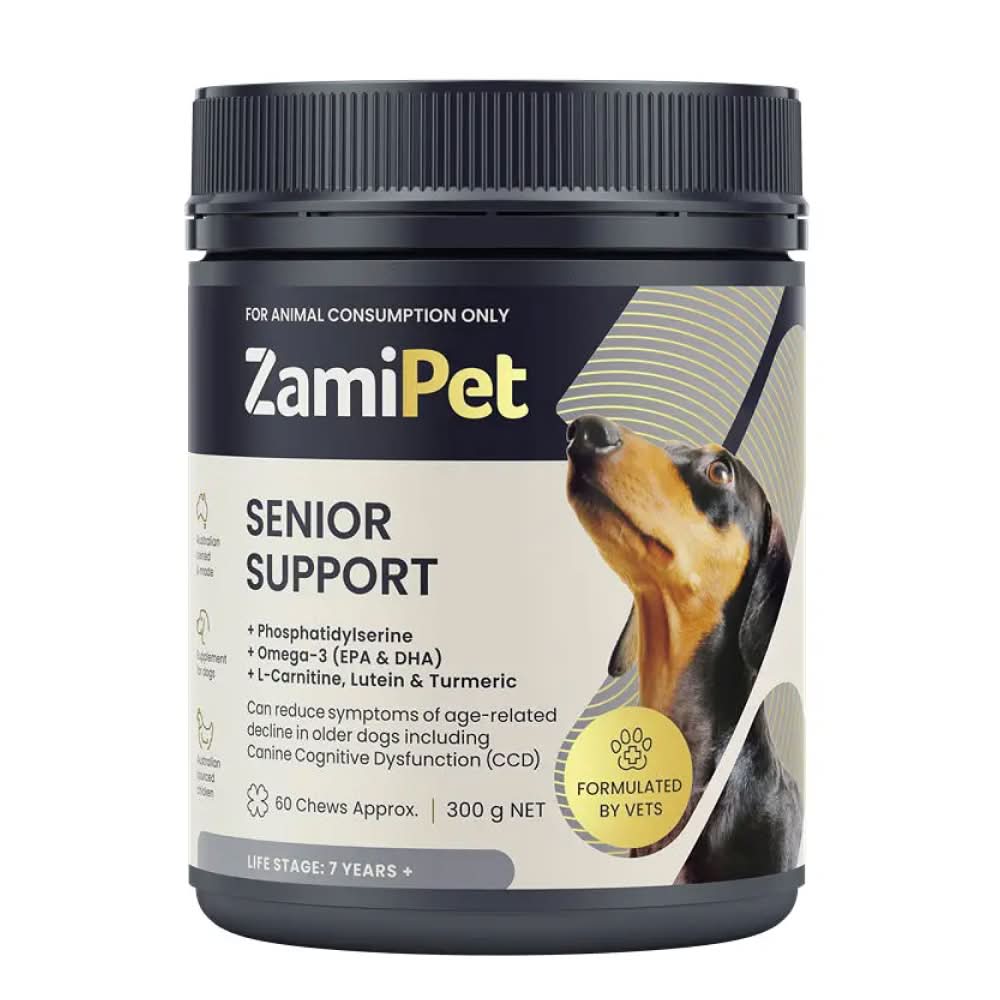
Senior Support Supplement
ZamiPetZamiPet Senior Support is an Australian-made multifunctional supplement specifically formulated for the changing nutritional needs of dogs aged seven and over, combining key vitamins, minerals, and active compounds to support joint mobility, immune resilience, cognitive function, and overall vitality in one comprehensive formula.
The targeted senior formulation takes the guesswork out of supplementation, giving owners confidence that the most common age-related health concerns are being addressed in a single, easy-to-administer daily dose.
Pros
- All-in-one senior formula reduces the need for multiple supplements, simplifying the daily routine for owners managing an ageing dog's health
- Australian-made and widely available through major Australian pet retailers including Petstock and Petbarn
- Specifically calibrated for dogs aged seven and over, meaning the nutrient ratios reflect the actual physiological needs of senior dogs rather than a generic adult formula
Cons
- Broad-spectrum formula may not deliver the same therapeutic intensity as a dedicated single-focus supplement for dogs with a specific diagnosed condition
- Not suitable as a sole intervention for dogs with advanced joint disease or significant cognitive decline requiring veterinary-grade treatment
Best for Senior Dogs Needing Immune and Longevity Support
As dogs enter their senior years, immune function naturally declines alongside other physiological systems — and for owners who want to take a proactive, whole-body approach to healthy ageing, a longevity-focused supplement for senior dogs that supports immune resilience alongside broader vitality is one of the most forward-thinking investments in their dog's long-term health.
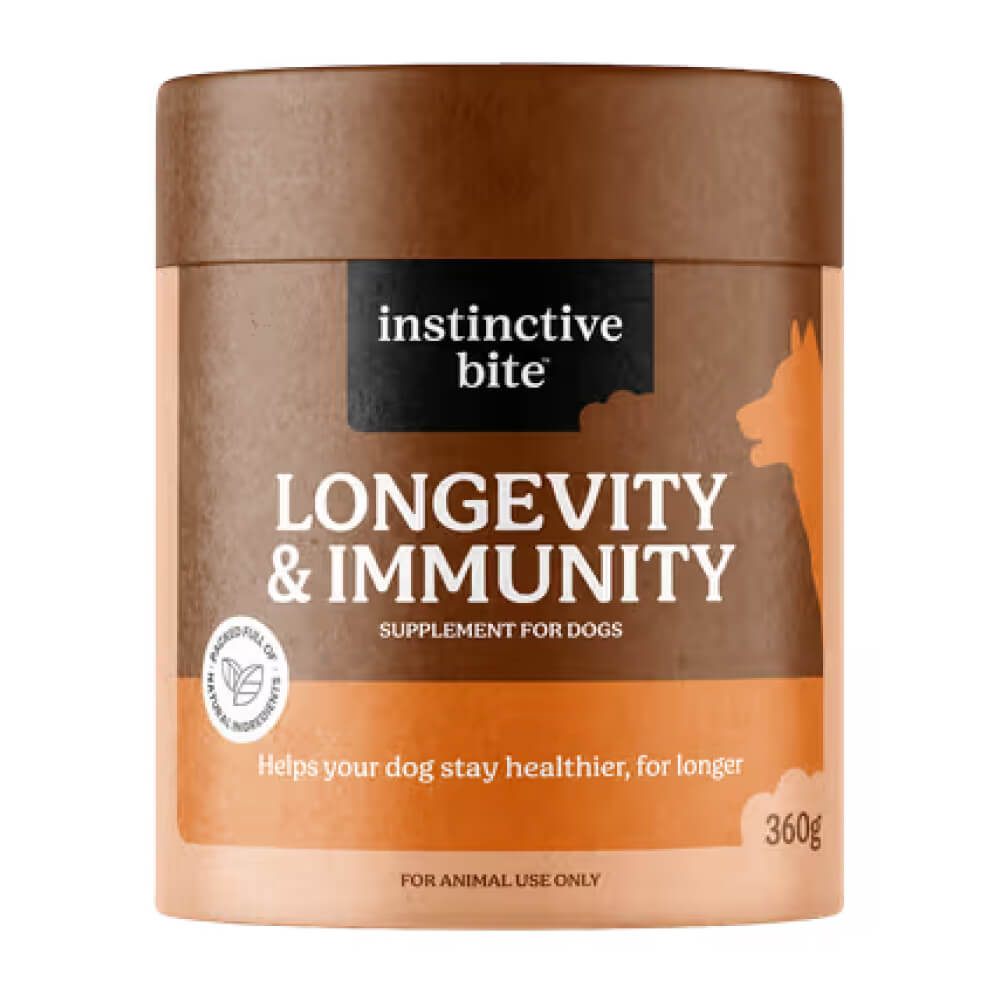
Longevity and Immunity Support Powder
Instinctive BiteInstinctive Bite Longevity and Immunity Support Powder is a whole-food aligned formula designed to support healthy ageing from the inside out, combining immune-boosting compounds, antioxidants, and nutritional actives that work together to reduce the cellular impact of ageing and support sustained vitality in older dogs.
The clean, species-appropriate ingredient profile makes it particularly well suited to owners already following a raw or whole-food feeding philosophy who want their supplement choices to reflect the same commitment to ingredient quality and integrity.
Pros
- Longevity-focused formulation addresses the root causes of age-related decline rather than simply managing symptoms, making it a more proactive approach to senior dog health
- Clean, whole-food aligned ingredient profile is free from artificial additives and unnecessary fillers, making it suitable for long-term daily use
- Immune support component is particularly valuable for senior dogs, whose reduced immune function can make them more susceptible to illness and slower to recover
Cons
- Whole-food formulations may deliver lower concentrations of specific active compounds compared to more clinically focused alternatives, which may be a consideration for dogs with advanced health conditions
- Less widely available than mainstream senior supplement brands, so owners may need to purchase online rather than through local pet retailers
Best for Senior Dogs Experiencing Cognitive and Memory Changes
Canine cognitive dysfunction — sometimes referred to as dog dementia — affects a significant proportion of dogs over the age of ten, and for owners noticing changes in their dog's awareness, sleep patterns, or responsiveness, a brain support supplement for senior dogs that directly targets neurological health can be one of the most impactful additions to their care routine.
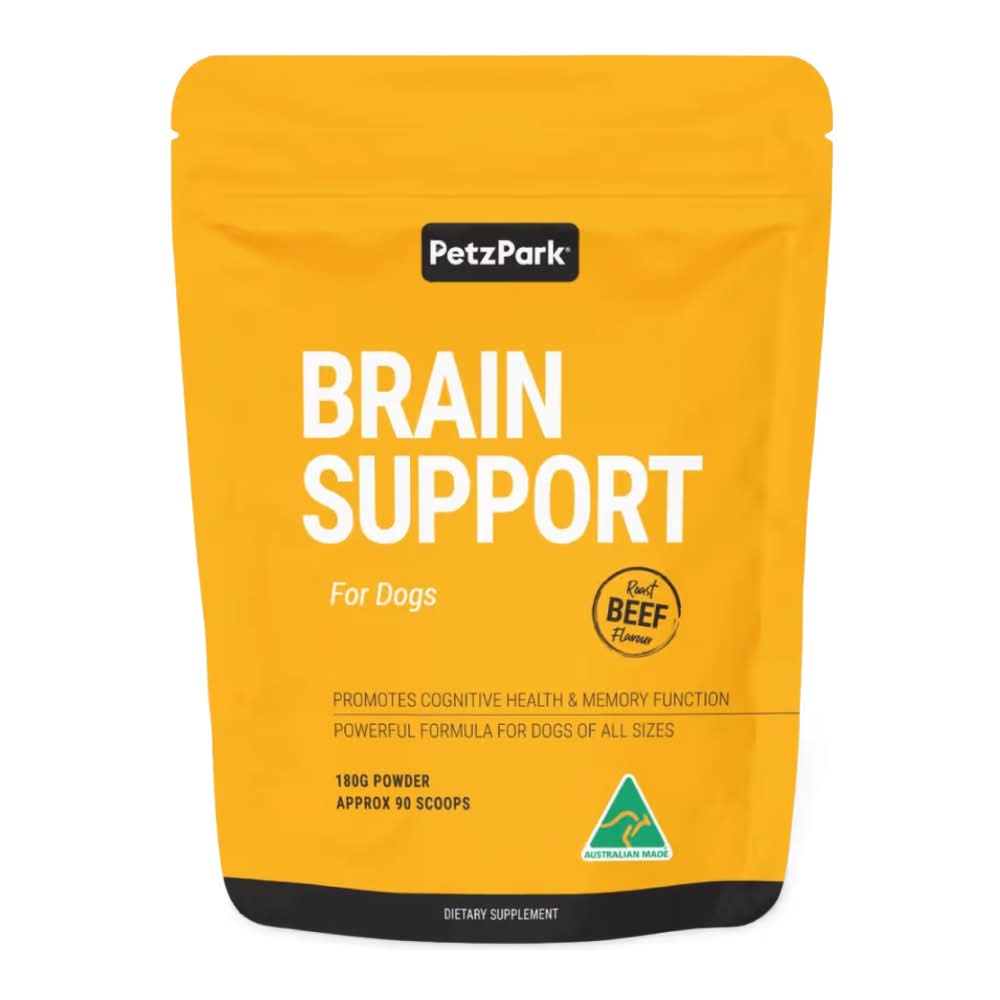
Brain Support Powder Supplement
Petz ParkPetz Park Brain Support Powder is formulated with ingredients specifically chosen to support cognitive function, neurological health, and mental clarity in ageing dogs, helping to slow the progression of age-related cognitive changes and maintain quality of life in the senior years.
The formula draws on nutrients with established roles in brain health — including antioxidants that reduce oxidative stress in neural tissue — making it a purposeful and considered choice for owners navigating the emotional challenges of cognitive decline in an older dog.
Pros
- One of the few Australian supplements specifically targeting canine cognitive dysfunction rather than general senior health, making it a more purposeful choice for owners dealing with this specific concern
- Antioxidant-rich formulation helps to reduce oxidative stress in brain tissue, which is one of the primary drivers of age-related cognitive decline in dogs
- Powder format integrates easily into daily meals, making consistent administration straightforward even for senior dogs with reduced enthusiasm for food
Cons
- Focused cognitive formula means it does not address joint or mobility issues, so owners managing multiple age-related conditions may need an additional supplement
- Results may take several weeks of consistent daily use to become noticeable, which can be a consideration for owners whose dogs are experiencing rapidly progressing symptoms
Best for Senior Dogs with Stiff Joints and Reduced Mobility
As dogs age, the gradual breakdown of cartilage and connective tissue is one of the most common causes of reduced mobility and discomfort — and for owners searching for a joint supplement for senior dogs that addresses ligament integrity alongside joint health, a comprehensive powder formula offers some of the most meaningful day-to-day relief.

Joint and Ligament Powder
Natural Animal SolutionsNAS Joint and Ligament Powder is a natural formula designed to support ageing dogs experiencing stiffness, reduced range of motion, and the general wear and tear that accumulates across a lifetime of activity.
Beyond targeting the joints themselves, the inclusion of ligament-specific support makes it a more complete solution for senior dogs whose connective tissue health has begun to deteriorate alongside their joint function.
Pros
- Addresses both joint and ligament health simultaneously — particularly valuable for senior dogs whose connective tissue integrity is declining alongside cartilage
- Natural ingredient profile makes it suitable for long-term daily use without concern over synthetic compounds or harsh additives
- Powder format allows for precise weight-based dosing, which is especially important for senior dogs whose ideal dosage may change as their condition progresses
Cons
- Some senior dogs with reduced appetite or food sensitivities may be reluctant to accept a powder added to their meals
- May need to be paired with an omega oil or anti-inflammatory supplement for dogs with more advanced joint deterioration
When Is a Dog Considered a Senior?
The age at which a dog is considered senior varies considerably by size. As a general guide:
- Small breeds (under 10 kg): from around 10–12 years
- Medium breeds (10–25 kg): from around 8–10 years
- Large breeds (25–45 kg): from around 7 years
- Giant breeds (over 45 kg): from around 5–6 years
Larger dogs age faster in terms of physiological decline, which is why many vets recommend starting joint supplementation in large and giant breeds earlier than the conventional “senior” threshold. If you have a four-year-old Great Dane or Rottweiler, starting a maintenance-level supplement now is a reasonable and well-supported approach.
Should You Give Your Senior Dog a Stack or a Single Product?
This is the question most senior supplement pages don’t address, and it’s the most practically useful one. The honest answer is: it depends on your dog, but most senior dogs benefit more from a purposeful combination than from a single broad-spectrum product.
Broad-spectrum senior formulas exist and are convenient — one product, one daily dose, covering joints, cognition, and digestion. The trade-off is that these products typically deliver lower doses of each active ingredient than a targeted single-category supplement. For a dog with mild generalised ageing, a broad-spectrum formula may be entirely appropriate. For a dog with significant joint stiffness or clear cognitive symptoms, a targeted product at a therapeutic dose will generally outperform a multi-benefit formula.
A practical starting point for most senior dogs: a joint supplement as the foundation — covering glucosamine, chondroitin, and omega-3 — with an omega oil added separately if coat or cognitive concerns are present, and a probiotic introduced if digestion is an issue. Build the stack gradually rather than introducing multiple new supplements at once, which makes it difficult to identify what’s working.
Choosing the Right Format
Senior supplements come in several formats, each with practical trade-offs that matter more for older dogs than they might for younger ones.
- Soft Chews: The most popular format and easiest to administer. Most dogs take them willingly as a treat. Important note for senior dogs — check the chew texture, as some older dogs have dental sensitivity or reduced jaw strength that makes hard chews uncomfortable.
- Powder: High-dose delivery, mixes directly into food. Best for dogs on a consistent diet. Some senior dogs become more sensitive to changes in their food’s smell or texture, so introduce gradually.
- Liquid/Oil: Excellent for fussy eaters and dogs with dental issues. Liquids are absorbed efficiently and are easy to drizzle over food. A good option for dogs who refuse chews or are sensitive to additives in formulated products.
- Capsules: Precise dosing, easy to open and mix into food if your dog won’t take them whole. Less commonly formulated specifically for dogs but a useful format when available.
How to Choose: A Quick Decision Guide
Not every supplement suits every senior dog. Here’s a practical way to narrow it down based on what you’re seeing.
- My dog is stiff after rest, slowing on walks, or reluctant to use stairs → Start with a joint-focused formula containing glucosamine, chondroitin, and omega-3. Green-lipped mussel is a strong addition if available. This is the right starting point for the majority of senior dogs.
- My dog seems disoriented, restless at night, or less engaged than usual → Look for a cognitive support formula featuring DHA, phosphatidylserine, or MCT oil. Speak with your vet first to rule out other causes — these symptoms overlap with several medical conditions.
- My dog has irregular stools, reduced appetite, or a sensitive stomach → Add a probiotic with a prebiotic fibre component. This is often the most immediately noticeable category of senior supplementation — many owners report visible digestive improvement within two to three weeks.
- My dog has a dull, dry coat or scratches more than usual → An omega oil supplement — fish, salmon, or krill — is the most targeted fix. It can be added alongside a joint supplement without issue.
- I want one product that covers multiple areas → A broad-spectrum senior formula is a reasonable choice for dogs with mild generalised ageing rather than specific symptoms. Understand that the dose per ingredient will be lower than a targeted product — it’s a convenience trade-off.
- My dog has a shellfish allergy → Avoid products containing green-lipped mussel or glucosamine derived from shellfish. Look for plant-derived or synthetic glucosamine alternatives, and choose a fish oil without shellfish cross-contamination risk.
Are There Any Side Effects?
Senior supplements are generally very well tolerated, and the risk profile is low for well-formulated products. The most common side effects are mild and digestive — loose stools or mild stomach upset when first introducing a supplement, particularly omega-3 at higher doses. Starting at half the recommended dose for the first two weeks and building up usually avoids this.
Probiotics may cause temporary flatulence or loose stools in the first week of use as the gut microbiome adjusts. This typically settles without intervention.
Dogs with fish or shellfish allergies should avoid marine-sourced omega-3 and green-lipped mussel products. If your dog is on any prescription medication — particularly blood thinners or NSAIDs — check with your vet before starting high-dose omega-3 supplementation, as it has mild blood-thinning properties at therapeutic doses. This interaction is well understood and manageable, but worth discussing with your vet before starting.
Otherwise, the risk profile for senior supplements is low relative to the potential benefit. This is a category where the evidence supports acting rather than waiting.
Where to Buy Senior Dog Supplements in Australia
All products reviewed on this page are available online and in-store at major Australian pet retailers including Petstock and Petbarn. Some formulas — particularly those with a clinical focus — are also stocked through veterinary clinics, often at a slight premium but with the benefit of professional guidance on dosing and suitability. Buying online is generally the most cost-effective option — use the price comparison links in each product card above to find the best current price.
Frequently Asked Questions
What is the best supplement for senior dogs?
Should you give senior dogs supplements?
What age is a dog considered a senior?
What should I be giving my senior dog every day?
Can you give a senior dog too many supplements?

Comments
0 comments
Login to Join the Conversation 💬