












Whether your dog is a picky eater who turns their nose up at kibble, recovering from dental work, or just getting on in years and needs something softer — wet dog food might be the answer you've been looking for. We've compared the most popular options available in Australia to help you find what's actually worth buying.

In Short:
The best wet dog food in Australia uses named animal proteins as the first ingredient, has a high meat content with minimal fillers, and is formulated to meet AAFCO or Australian nutritional standards for complete and balanced meals.
Wet food is especially useful for dogs who need extra hydration, struggle with dry kibble, or have reduced appetites. Look for products with transparent ingredient lists and avoid anything that leads with cereals or unnamed meat by-products. The products below are the top-rated options available in Australia right now.
Why choose wet dog food
Wet dog food has been around for decades, and for good reason. It's not just a backup option for fussy dogs — for a lot of dogs, it's genuinely the better choice.
The biggest advantage is moisture content. Wet dog food typically contains 70 to 80 percent water, compared to around 10 percent in dry kibble. For dogs who don't drink enough on their own — and a surprising number don't — that extra hydration matters. It supports kidney function, urinary health, and overall digestion. Dogs fed predominantly wet diets often have better hydrated skin and coat, and less concentrated urine, which reduces the risk of urinary crystals and stones.
Then there's palatability. Wet food smells and tastes stronger than dry food, which makes it far more appealing to picky eaters, senior dogs with a declining sense of smell, and dogs recovering from illness. If you've ever tried to get a reluctant dog to eat bland kibble after a vet visit, you'll know the difference a good wet food can make.
Wet food is also softer and easier to chew, which makes it the natural choice for dogs with dental issues, missing teeth, or jaw pain. Puppies transitioning from milk to solids often take to wet food more easily than dry as well.
The trade-off is cost. Wet dog food is almost always more expensive per serve than dry. It also has a shorter shelf life once opened and takes up more storage space. But for dogs who genuinely do better on it — and plenty do — the benefits outweigh the convenience factor of kibble.
What to look for in a wet dog food
Not all wet dog food is the same. The range in quality between a premium product and a budget supermarket tin is significant, and the label won't always make it obvious.
- Named protein as the first ingredient
The ingredients list is ordered by weight, so whatever appears first makes up the largest portion of the food. You want to see a specific named protein — chicken, beef, lamb, kangaroo, turkey — not vague terms like "meat" or "animal derivatives." Named protein means you know what your dog is eating and can manage sensitivities or allergies accordingly. - High meat content
A good wet dog food should be mostly meat. Look for products with 60 percent or higher meat content. Some premium Australian brands sit above 70 percent. Products that lead with cereals, wheat, rice, or thickeners are using cheap fillers to bulk out the food — your dog needs protein, not padding. - Minimal fillers and artificial additives
Avoid products with artificial colours, artificial flavours, or chemical preservatives like BHA and BHT. Some thickeners (guar gum, xanthan gum, cassia gum) are common in wet food and generally considered safe, but the fewer unnecessary ingredients the better. - Complete and balanced formulation
Look for a statement on the label confirming the food meets AAFCO (Association of American Feed Control Officials) nutritional standards for complete and balanced nutrition, or that it's been formulated to meet the requirements of the Australian Standard for Pet Food (AS 5812). This means the food is designed to be fed as a sole diet — not just a topper or treat. - Compliance with Australian standards
Products manufactured under AS 5812 follow stricter guidelines around ingredient sourcing, processing, and labelling. Not all brands comply, but those that do are generally a safer bet. - Appropriate for your dog's life stage
Puppies, adults, and senior dogs have different nutritional needs. Make sure the product is formulated for your dog's life stage, or labelled as "all life stages" — which means it meets the higher nutritional requirements for growth and reproduction.
Best Premium Wet Dog Food
When it comes to canned wet food, the gap between budget options and genuine premium is enormous. Most supermarket cans are padded with fillers, unnamed meat by-products, and artificial gelling agents. A truly premium wet food should read more like a whole-prey diet — high meat content, identifiable organ meats, and functional superfoods — in a convenient, shelf-stable can.

Beef Canned Wet Dog Food
ZIWI PeakZIWI Peak's Beef recipe delivers 91% free-range, grass-fed New Zealand beef — including muscle meat, lung, kidney, tripe, liver, and ground bone — in a single-protein, grain-free canned format. The remaining 10% is their Z-BOOST superfood blend featuring cold-washed green tripe for digestive health and 3% New Zealand Green Mussel as a natural source of glucosamine and chondroitin. It's AAFCO formulated for all life stages including large breed puppies, and works as a complete meal, a topper, or a treat.
Pros
- 91% meat, organs, bone, and seafood — one of the highest meat-content canned dog foods available in Australia
- Single protein recipe with natural glucosamine and chondroitin from New Zealand Green Mussel for joint support
- Free from grains, potatoes, glycerin, carrageenan, and rendered meat or meals — no artificial binders or fillers
- Available at Pet Barn, Pet Circle, Pet Stock, and Pet Post — widely accessible across all major Australian retailers
Cons
- Premium pricing makes it one of the most expensive canned wet foods on the market — feeding as a sole diet for larger dogs becomes costly quickly
- Sourced and manufactured in New Zealand, not Australia — a consideration for owners prioritising Australian-made products
- Contains chickpeas as a minor ingredient, which some owners on strict grain-free or legume-free protocols may want to avoid
Best Single Protein Wet Dog Food Roll
Dogs with food sensitivities or those on elimination diets need a wet food option that keeps the ingredient list short, uses a single identifiable protein source, and avoids common triggers like chicken, grains, and dairy. A fresh roll format offers the convenience of slice-and-serve feeding straight from the fridge without the mess of defrosting.
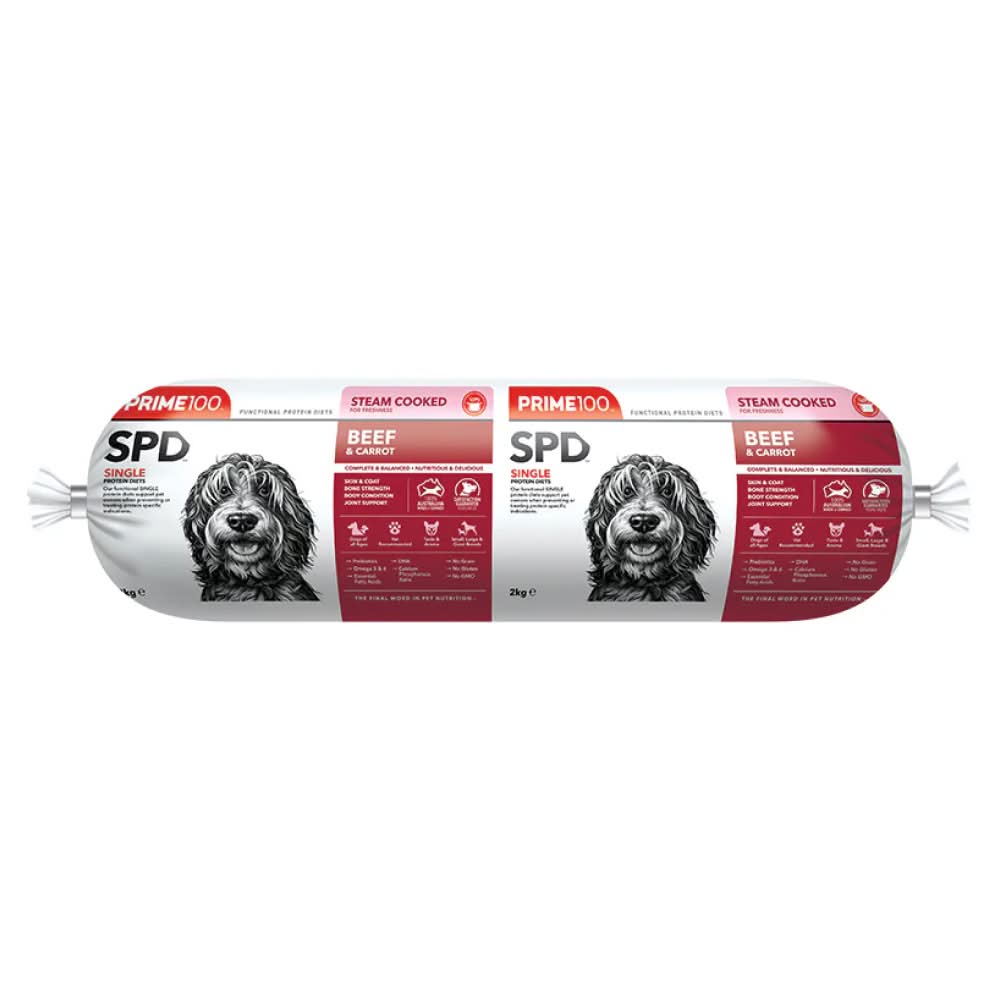
SPD™ Fresh Roll Beef and Carrot Roll
Prime100PRIME100's SPD Beef and Carrot Fresh Roll is a single protein diet built around Australian beef (including ground beef bone) with tapioca, bamboo fibre, flaxseed, and functional oils from algae, sunflower, and evening primrose. It includes chicory root extract as a prebiotic, taurine, celery seed powder, and natural digestive enzymes. Steam cooked in its final packaging, it's ready to serve straight from the fridge and is AAFCO formulated for all life stages (excluding large and giant breed puppies).
Pros
- True single protein diet with a short, transparent ingredient list — ideal for elimination diets and dogs with confirmed food intolerances
- Steam cooked in-pack and served from the fridge — no freezer required, no defrosting, minimal prep
- Includes functional oils (algae, sunflower, evening primrose) providing EPA and DHA for skin, coat, and joint support
- Widely available at Pet Barn, Pet Circle, Pet Stock, and Vets Love Pets in 800g and 2kg rolls
Cons
- Not suitable for large or giant breed puppies
- Contains tapioca as the primary carbohydrate, which while novel and low-allergen, provides less nutritional value than sweet potato or quinoa
- Must be refrigerated after opening and used within a few days — the 2kg roll may be too large for small breed dogs to get through before spoiling
Best Budget-Friendly Wet Dog Food
Not every dog owner can justify premium wet food pricing, but that doesn't mean settling for supermarket cans packed with unnamed meat by-products and wheat fillers. A well-made, grain-free canned food from a trusted Australian manufacturer can deliver genuine nutritional value at a price point that works for everyday feeding or as a regular topper alongside kibble.

Beef Grain Free Adult Wet Dog Food Can
Black HawkBlack Hawk's Grain Free Beef is a 400g canned wet food made in regional Australia (Parkes, NSW) with beef as the first ingredient, supported by chicken, carrots, potato, and oils including emu oil for Omega-3 and Omega-6 fatty acids. It includes chondroitin and glucosamine for joint support and is AAFCO formulated for adult maintenance. Available in both 400g cans and 100g trays, it works as a complete meal on its own or as a topper for dry food.
Pros
- Proudly manufactured in regional Australia using Australian-sourced meats, vegetables, and fruits
- Grain-free formula with emu oil — a uniquely Australian ingredient providing Omega-3 and Omega-6 for skin, coat, and joint health
- Competitive price point makes it one of the most affordable quality wet food options for daily feeding or topping
- Widely available at Pet Barn, Pet Stock, Pet Circle, and Pet Post — easy to find at any major Australian pet retailer
Cons
- Contains chicken as a secondary protein alongside beef — not a single-protein option and not suitable for dogs with poultry sensitivities
- Formulated for adult maintenance only — not suitable for puppies or growing dogs
- Includes gelling agents and added flavours, which while not artificial, indicate a higher level of processing than fresh or raw alternatives
Best Wet Dog Food for Novel Protein Diets
Some dogs exhaust the common protein options — beef, chicken, and lamb have all triggered reactions, and finding something genuinely different becomes the priority. A novel protein like wild boar offers a lean, rarely encountered meat source that most dogs have never been exposed to, making it a strong candidate for ongoing feeding after an elimination diet has identified common triggers.
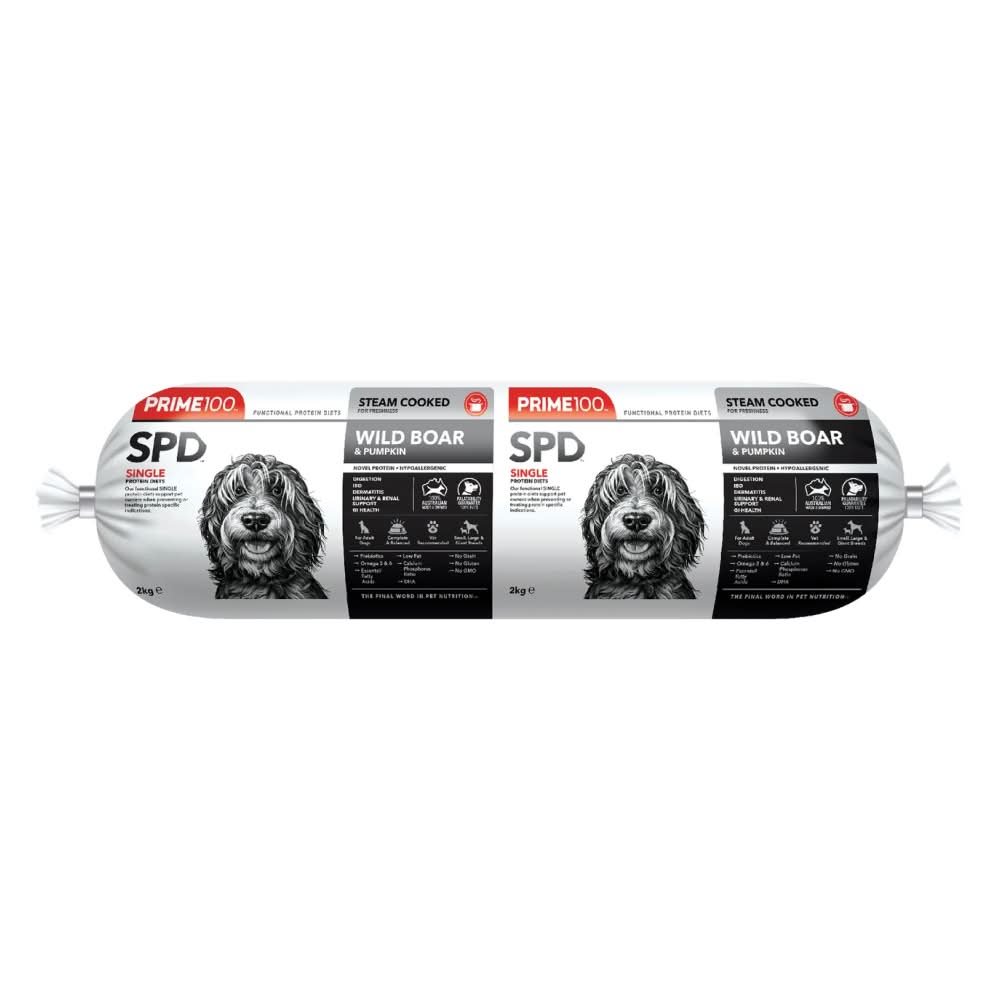
SPD™ Fresh Roll Wild Boar and Pumpkin
Prime100PRIME100's Wild Boar and Pumpkin Fresh Roll uses Australian wild boar as its single protein source — a genuine novel protein that sits outside the standard rotation of beef, chicken, lamb, and turkey. Combined with pumpkin, bamboo fibre, flaxseed, and functional oils, it's poultry-free, grain-free, and AAFCO formulated for adult and senior dogs. Like all PRIME100 SPD rolls, it's steam cooked in-pack for slice-and-serve convenience.
Pros
- Wild boar is one of the most genuinely novel proteins available in Australian pet food — unlikely to trigger reactions in dogs with established sensitivities
- Poultry-free, grain-free, gluten-free, dairy-free, and soy-free — suitable for dogs with multiple confirmed intolerances
- Pumpkin provides natural prebiotic fibre for digestive support alongside the bamboo fibre and flaxseed
- Same convenient slice-and-serve fresh roll format — no freezing, no defrosting, no mess
Cons
- Formulated for adult and senior dogs only — not suitable for puppies of any size
- Wild boar as a protein source comes at a higher price point than standard beef or chicken rolls
One Worth Watching — Insect Protein Wet Dog Food
This isn't a traditional recommendation — it's a spotlight on an emerging category that we think is worth paying attention to. Insect-based protein is gaining serious traction globally as a sustainable, hypoallergenic alternative to conventional meat sources. Whether you're looking for a novel protein for a sensitive dog, want to reduce your pet's environmental footprint, or are just curious about where pet nutrition is heading, this Australian startup is doing something genuinely different.
A January 2025 study tested BSF larvae as a protein substitute in dogs with adverse food reactions/dermatitis. Sixteen dogs (including eight with diagnosed AFRs) were fed a BSF larvae-based diet for four weeks, with no significant gastrointestinal side effects observed, and both groups maintained stable body weights with consistent stool quality. Read Study
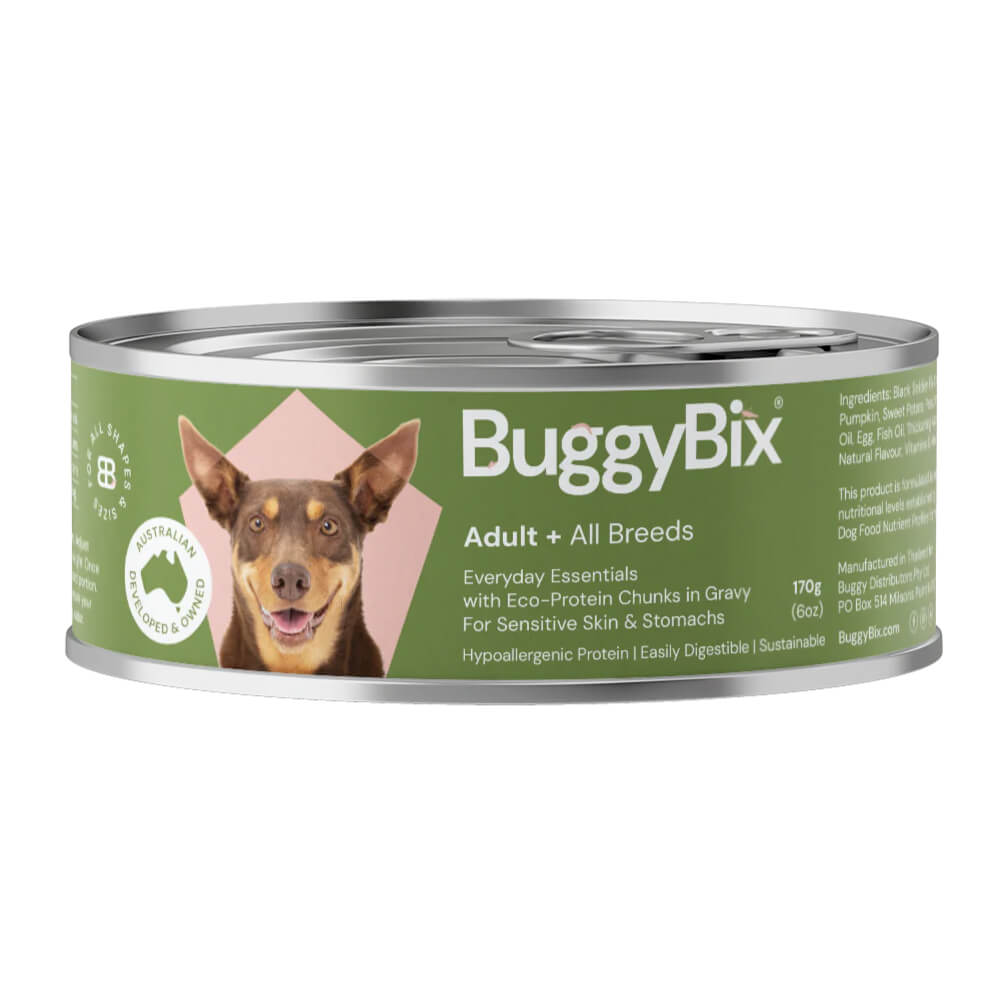
Eco-Protein Everyday Complete Wet Food
BuggyBixBuggy Bix is an Australian-developed brand using black soldier fly larvae (BSFL) as the primary protein source in a complete and balanced 170g canned wet food. The recipe combines BSFL with tapioca, carrot, pumpkin, sweet potato, pea, sunflower oil, dried egg, and fish oil — formulated in partnership with a university to deliver a nutritionally complete daily diet. BSFL is naturally hypoallergenic, highly digestible, and contains a balanced amino acid profile with all essential fatty acids, vitamins, and minerals.
Pros
- Uses black soldier fly larvae as a truly novel, hypoallergenic protein — ideal for dogs with sensitivities to all conventional meat proteins
- University-developed formula designed to be nutritionally complete and balanced for daily feeding
- Significantly lower environmental footprint than traditional meat-based pet food — less land, water, and greenhouse gas emissions per kilogram of protein
- Australian-developed and owned, using locally farmed insects with HACCP and GMP quality assurance
Cons
- At $2.99 per 170g can, the cost adds up quickly for larger dogs — a 15kg+ dog would need 7+ cans per day as a sole diet, making it more practical as a topper or mixer
- Relatively low protein (5% as-fed) and fat (1.5% as-fed) compared to meat-based wet foods, partly due to the high moisture content (85%)
- Still a very new product in an emerging category — limited long-term feeding data compared to established wet food brands with decades of track record
Types of wet dog food available in Australia
The Australian market offers several wet food formats, and the differences go beyond packaging.
Canned Dog Food
The classic tin. Canned dog food has a long shelf life unopened (typically two to three years) and is widely available at supermarkets, pet retailers, and vet clinics. Once opened, it needs to be refrigerated and used within two to three days. Cans come in a range of sizes — 400g tins are the most common, but you'll also find larger 700g and smaller 100g options. The environmental downside is obvious, but aluminium is infinitely recyclable if your council accepts it.
Pouch or Sachet
Single-serve pouches are convenient and portion-controlled, making them popular for smaller dogs or as toppers on kibble. They tend to be slightly more expensive per gram than cans but produce less waste per serve. Most pouches contain a loaf, chunks in gravy, or chunks in jelly.
Tray or Tub
Some brands — particularly premium and veterinary lines — use sealed trays. These are easy to open, easy to portion, and easy to store in the fridge with a snap-on lid. They're typically the premium end of the format spectrum.
Tetra Pak or Carton
A newer format in the Australian market. Shelf-stable, lightweight, and recyclable. You'll see these mostly from brands positioning themselves as modern or environmentally conscious. The food inside is often a smoother pâté or gently cooked style.
Fresh/Chilled
Subscription-based chilled meals — similar to fresh dog food but softer and higher in moisture. These sit at the top of the market in terms of price and quality. They need to be refrigerated at all times and have a shorter shelf life than shelf-stable options.
Wet food vs dry food — when wet makes more sense
This isn't a binary choice. Plenty of Australian dog owners feed a mix of wet and dry, and there are good reasons for that.
Wet food makes more sense when your dog has specific needs that dry food doesn't fully address. The most common scenarios include dogs with dental pain or missing teeth who can't comfortably chew kibble, senior dogs with reduced appetite or sense of smell, dogs prone to urinary issues who benefit from higher moisture intake, picky eaters who refuse dry food but eat wet food willingly, and dogs recovering from surgery or illness who need calorie-dense, palatable food.
Dry food has its own strengths — it's more convenient, cheaper per serve, has a longer shelf life once opened, and the chewing action can provide some dental benefit. Many owners use a "mixed feeding" approach: dry kibble as the base with wet food added for flavour, hydration, and variety.
If you're feeding a combination, make sure you're accounting for the total calorie intake across both. It's easy to overfeed when you're adding wet food on top of a full serve of kibble. Most brands include calorie information on the label — use it.
How much wet food to feed your dog
Wet food is less calorie-dense than dry food because of the high water content. That means your dog needs a larger volume of wet food to get the same energy as a comparable amount of kibble.
As a rough guide, most adult dogs need about two to three percent of their body weight in food per day when fed exclusively on wet food. But the actual amount depends on the specific product's calorie content, your dog's weight, age, activity level, and metabolism.
A 10 kg adult dog eating a typical wet food (around 80–100 kcal per 100g) would need roughly 400 to 600 grams per day, split across two meals. A 25 kg dog would need roughly 800 to 1200 grams. These are starting points — always check the feeding guide on the specific product you're using and adjust based on your dog's body condition.
Puppies need more calories relative to their body weight because they're growing. Senior dogs and less active dogs generally need less. If you're unsure, your vet can help you calculate the right amount based on your dog's ideal weight.
Monitor your dog's body condition rather than relying on a fixed number. You should be able to feel your dog's ribs without pressing hard, and they should have a visible waist when viewed from above. If they're gaining weight, reduce the portion. If they're losing condition, increase it.
Choosing by life stage
The nutritional needs of a puppy, an adult dog, and a senior dog are genuinely different, and the wet food you choose should reflect that.
Puppies need higher protein and fat to fuel rapid growth. They also need carefully balanced calcium and phosphorus for skeletal development — particularly large breed puppies, where excess calcium can contribute to developmental bone problems. Choose a wet food labelled for growth or "all life stages." Puppies also tend to do well on wet food because the softer texture is easier on developing teeth and gums.
Adult Dogs in good health do well on any complete and balanced adult maintenance formula. Match the protein source to your dog's preferences and any known sensitivities. Rotating between two or three protein sources can help reduce the risk of developing food intolerances over time.
Senior Dogs often benefit most from wet food. As dogs age, appetite tends to decrease and sense of smell declines — both of which make the higher palatability of wet food a real advantage. Senior formulas typically have slightly lower calorie content (to account for reduced activity), added joint-supporting nutrients, and adjusted mineral levels to support kidney health. The softer texture is also gentler on ageing teeth.
Storage and shelf life
Unopened canned and pouch wet dog food has a long shelf life — typically two to three years from the date of manufacture. Store it in a cool, dry place away from direct sunlight.
Once opened, wet dog food must be refrigerated. Transfer unused portions to a sealed container (or cover the tin with a fitted lid) and use within two to three days. Don't leave opened wet food out at room temperature for more than two hours — bacteria multiply rapidly in moist, protein-rich environments.
Fresh chilled wet food has a much shorter shelf life and must be kept refrigerated at all times. Follow the use-by date on the packaging and don't freeze unless the manufacturer specifically says it's safe to do so.
If your dog doesn't finish a meal within 30 minutes, pick up the bowl and refrigerate the leftovers or discard them. Leaving wet food sitting in a bowl for hours is a hygiene issue, especially in warmer Australian climates.
What about the cost
Wet dog food is more expensive per serve than dry food. That's the reality, and it's the main reason most owners don't feed exclusively wet.
In Australia, a standard 400g tin of mid-range wet dog food costs between $3 and $6. Premium brands and veterinary-grade products run from $5 to $10 or more per 400g. Budget supermarket brands start from around $1.50 to $2.50 per tin.
For a 25 kg adult dog fed exclusively on mid-range canned food, expect to spend roughly $30 to $50 per week. The same dog on premium wet food could run $50 to $80 per week. By comparison, good quality dry food for the same dog would cost roughly $12 to $25 per week.
Mixed feeding — using dry kibble as the base and adding wet food for one meal or as a topper — is the most common approach and the most cost-effective way to get the benefits of wet food without the full cost. A lot of Australian owners find that feeding wet food once a day and kibble once a day strikes the right balance between nutrition, palatability, and budget.
Buying in bulk helps. Multi-packs and larger can sizes are cheaper per gram. Most pet retailers offer ongoing discounts for subscription or auto-delivery orders.
Which Wet Food Is Right for Your Dog
Not every wet food suits every dog. The best choice depends on your dog's age, health, temperament, and your household budget. Use the scenarios below to narrow it down.
My dog is a picky eater who won't touch kibble. Look for a wet food with chunks in gravy or casserole-style texture — the stronger aroma and richer flavour profile is what gets fussy dogs eating again. Named proteins like chicken or beef tend to be the most universally accepted. Try two or three different proteins to find what your dog responds to. Avoid pâté if your dog prefers texture — some picky eaters want to chew, not just lick.
My dog has dental issues, missing teeth, or is recovering from dental surgery. Choose a smooth pâté or finely ground loaf-style wet food. Avoid chunky formats with large pieces that require chewing. Wet food is significantly gentler on sore gums and inflamed mouths than kibble, and it doesn't require the jaw strength that raw meaty bones demand.
My dog has a sensitive stomach or food allergies. Go for a limited-ingredient or single-protein wet food. Novel proteins like kangaroo, duck, or venison are less likely to trigger a reaction than common proteins like chicken or beef. Avoid products with multiple protein sources, wheat, corn, or soy. Veterinary-grade wet foods designed for digestive sensitivity are available at most pet retailers and vet clinics in Australia — these are formulated specifically for dogs with gut issues.
My senior dog has lost interest in food. Wet food with a strong aroma is your best tool here — gravy-based formulas or those with added bone broth tend to work well. Choose a senior-specific formula with adjusted calorie content, joint-supporting nutrients like glucosamine, and kidney-friendly mineral levels. The extra moisture also supports ageing kidneys, which is a common concern in older dogs.
My dog is prone to urinary issues or needs more hydration. Feed wet food as the primary diet rather than just a topper. Products with 75 to 80 percent moisture content deliver the most hydration per serve. For dogs with a history of urinary crystals, stones, or kidney concerns, an exclusively wet diet can meaningfully reduce the concentration of their urine. Check with your vet about whether this approach suits your dog's specific condition.
I want the benefits of wet food but I'm on a budget. Mixed feeding is your friend. Use quality dry kibble as the base and add wet food as a topper for one meal per day. Buy canned wet food in multi-packs or larger tin sizes for better value per gram — the 700g cans are almost always cheaper per serve than the 100g pouches. Australian pet retailers like Petstock and Petbarn offer subscription discounts, and supermarket own-brands from Coles and Woolworths are a surprisingly decent option for the price.
I'm feeding a growing puppy. Choose a wet food labelled for puppies or "all life stages" — these have higher protein and fat to support growth, and carefully balanced calcium-to-phosphorus ratios. Large breed puppies especially need controlled calcium levels to avoid developmental bone issues. The softer texture of wet food is also easier on developing teeth and gums during the teething phase.
My dog is overweight and needs to lose condition. Wet food can actually help here. Because it's lower in calorie density than kibble, your dog can eat a satisfying volume without the same calorie load — which means they feel full without overeating. Look for "light" or "weight management" wet food formulas. Portion control is still essential — weigh the food and follow the feeding guide based on your dog's target weight, not their current weight.
How to Read a Wet Dog Food Label
Understanding what's on the label is the fastest way to tell a quality wet food from a filler-heavy one. Here's what to look for.
The ingredients list is ordered by weight. The first ingredient should be a named animal protein — chicken, beef, lamb, kangaroo — not "meat" or "animal derivatives." Because wet food contains so much water, the protein source appearing first means it genuinely makes up a large proportion of the dry matter.
The guaranteed analysis (sometimes called the "typical analysis") tells you the minimum protein and fat content and the maximum fibre and moisture content. For wet dog food, a minimum crude protein of 8 percent and minimum crude fat of 5 percent are reasonable baselines. But these numbers can be misleading at a glance because they include the water content. To compare wet food to dry food on a like-for-like basis, you need to calculate the dry matter percentage — divide the nutrient percentage by (100 minus the moisture percentage).
Look for an AAFCO nutritional adequacy statement or confirmation that the food meets AS 5812 (the Australian Standard for Pet Food). This tells you the food is formulated to be complete and balanced — meaning your dog doesn't need anything else. Products without this statement may be intended as toppers or complementary food only.
Check the life stage the product is formulated for. "All life stages" means the food meets the higher nutritional requirements for growth and reproduction, which also covers adult maintenance. A product labelled "adult" only meets adult maintenance requirements and shouldn't be fed to puppies.
Frequently Asked Questions
What is the best wet dog food in Australia?
Is wet dog food better than dry dog food?
How much wet food should I feed my dog per day?
What wet dog food do vets recommend?
Can I mix wet and dry dog food together?
Is canned dog food the same as wet dog food?
How long does wet dog food last once opened?
Is wet dog food good for puppies?
Is wet food healthier for dogs than dry food?
What is the best wet dog food at the supermarket?


Comments
0 comments
Login to Join the Conversation 💬