






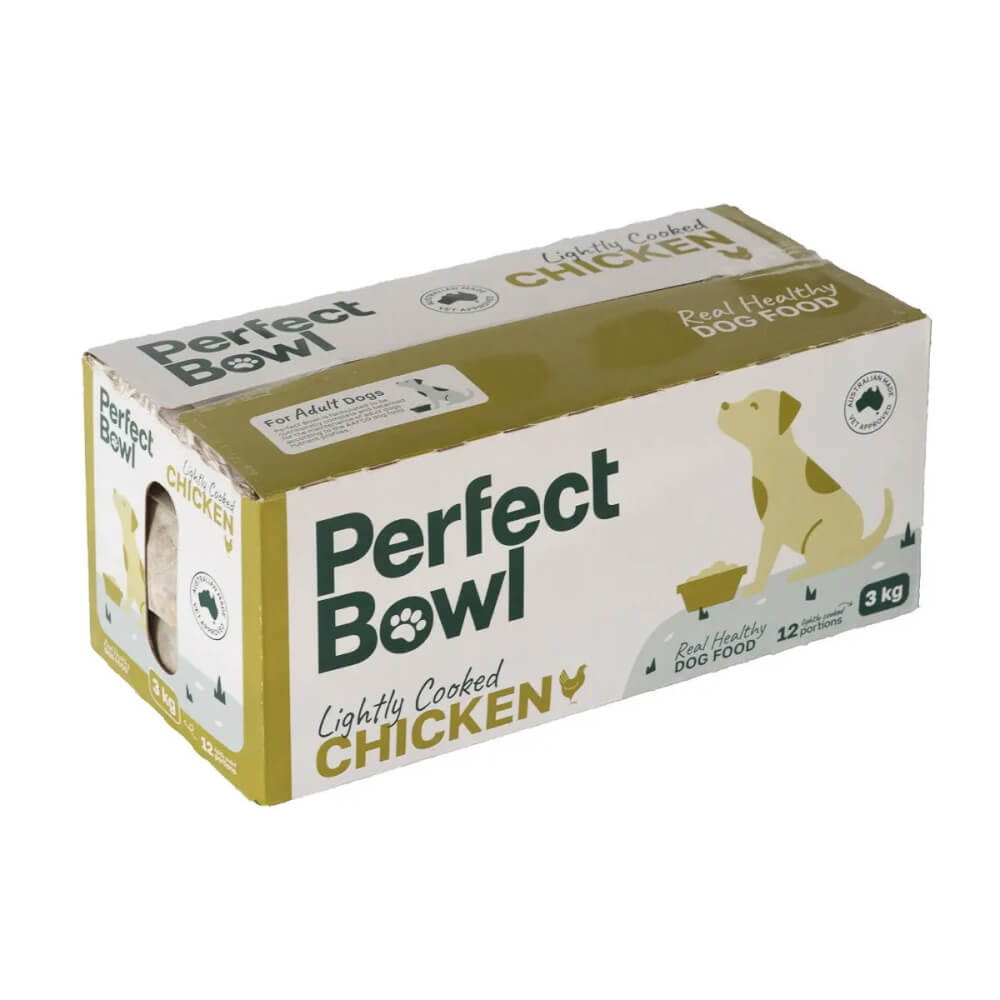
Lightly Cooked Aussie Chicken Dog Food
Overview
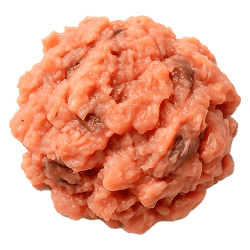
Perfect Bowl Lightly Cooked Aussie Chicken Dog Food is a snap-frozen meal for adult dogs, built on Australian chicken with pork and salmon. Made from at least 98% natural Australian ingredients, it's a complete and balanced diet that meets AAFCO standards for adult maintenance. The mild flavour and soft, gently cooked texture suit fussy eaters. It's a multi-protein recipe of chicken, pork and salmon, so it isn't suitable for elimination trials or dogs sensitive to poultry, pork or fish.
Nutritional Analysis
Ingredients
Chicken (Meat, Liver), Pork Meat, Rice, Pumpkin, Green Beans, Carrot, Lettuce, Apple, Salmon Meat, Vitamins and Minerals, Turmeric, Psyllium, Kelp, Parsley.

Gallus Gallus Domesticus Meat, Poultry Meat, Broiler Meat, Fowl Meat
Chicken meat is a high-quality animal-derived ingredient sourced from the muscle tissue of chickens. It serves as a rich source of essential proteins and amino acids, supporting muscle development and overall health in pets. In pet food, chicken meat is used in its natural form, providing highly digestible nutrients and palatability, making it a favoured protein choice in premium formulations.
Chicken meat is included as a high-quality, animal-based protein source to support muscle development and overall health in pets. Its presence also enhances palatability and serves as a label-friendly ingredient appealing to consumers seeking recognisable protein sources.

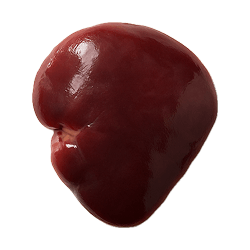
Poultry Liver, Gallus Gallus Domesticus Liver, Chicken Offal, Chicken Hepatic Tissue
Chicken liver is an animal-derived organ meat sourced from chickens. It is included in pet food primarily for its rich content of high-quality protein, essential amino acids, and vital micronutrients such as vitamin A, iron, and B vitamins. Chicken liver is used in its natural, whole food form, providing both palatability and nutritional density to support overall pet health.
Chicken liver is included as a highly palatable and nutrient-dense protein source, providing essential vitamins and minerals to enhance the nutritional profile of the product. Its inclusion can also support marketing claims related to quality animal ingredients.

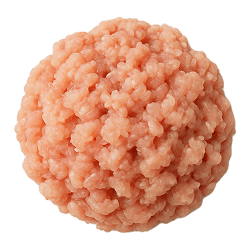
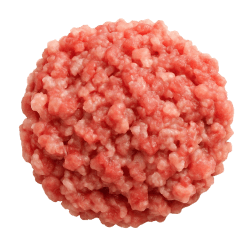
Sus Scrofa Domesticus, Porcine Meat, Swine Meat, Domestic Pig Meat
Pork meat is the muscle tissue derived from pigs and is classified as an animal-based ingredient. It serves as a high-quality source of protein and essential amino acids, supporting muscle maintenance and overall health in pets. In pet food, pork meat is used in its natural form, providing highly digestible nutrients and contributing to palatability and energy content.
Pork meat is included as a primary animal protein source to support muscle development and overall nutrition in pet food formulations. Its use can also enhance palatability, making the product more appealing to pets.

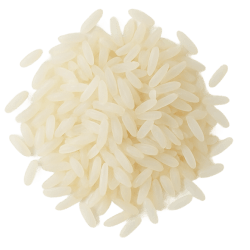
Oryza Sativa, Paddy, Oryza Sativa Grain, Oryza Spp.
Rice is a cereal grain derived from the seeds of the Oryza sativa plant, making it a plant-based ingredient. It serves primarily as a highly digestible source of carbohydrates, providing energy for pets. In pet food, rice is typically used in its natural, whole or milled form, rather than as a processed extract, to optimise digestibility and nutrient availability.
Rice is included as a cost-effective carbohydrate source that provides energy and helps create a desirable texture in pet food. It is also easily digestible, making it suitable for sensitive digestive systems and appealing for marketing as a familiar, label-friendly ingredient.

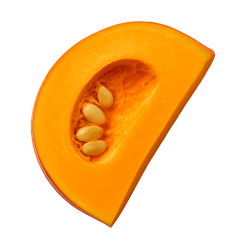
Cucurbita Pepo, Cucurbita Maxima, Cucurbita Moschata, Pepo
Pumpkin is a plant-derived ingredient sourced from the fruit of the Cucurbita pepo species. It is primarily included in pet food for its dietary fibre content, which supports digestive health and regularity. Pumpkin is used in its natural form, either as fresh, cooked, or dehydrated flesh, providing a source of vitamins, minerals, and antioxidants beneficial to overall wellbeing.
Pumpkin is included as a label-friendly ingredient that appeals to consumers seeking natural and recognisable components, while also serving as a cost-effective source of fibre and moisture to support digestive health and product texture. Its inclusion can enhance marketing appeal without significantly increasing formulation costs.

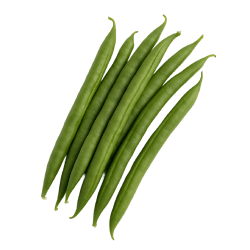
Phaseolus Vulgaris, String Beans, Snap Beans, Haricot Vert
Green beans are the immature pods of the common bean plant (Phaseolus vulgaris), originating from a plant source. They are included in pet food primarily for their dietary fibre content, which supports digestive health, and as a source of vitamins and minerals. Green beans are used in their natural, whole form, providing a minimally processed, nutrient-rich ingredient for balanced pet nutrition.
Green beans are included as a label-friendly vegetable ingredient to appeal to pet owners seeking recognisable, whole-food components. They also provide a cost-effective source of fibre and bulk, supporting digestive health and satiety in pet food formulations.

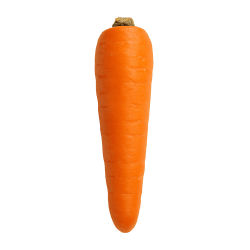
Daucus Carota, Daucus Carota Root, Daucus Carota Sativa, Wild Carrot
Carrot is a root vegetable of plant origin, widely recognised for its vibrant orange colour and natural sweetness. In pet food, carrot is included in its natural, whole form to provide dietary fibre, beta-carotene (a precursor to vitamin A), and antioxidants. Its primary benefit is supporting digestive health and immune function, while also contributing to overall palatability and nutritional diversity.
Carrot is included as a label-friendly ingredient to appeal to consumers seeking recognisable, natural components and to enhance the product’s perceived nutritional value. It may also provide a modest source of fibre and vitamins, supporting marketing claims of added health benefits.

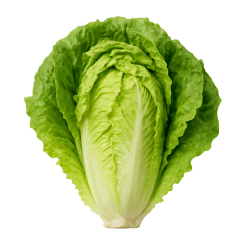
Lactuca Sativa, Garden Lettuce, Head Lettuce, Cos Lettuce
Lettuce is a leafy green vegetable of plant origin, commonly included in pet foods for its fibre content and low-calorie profile. It primarily supports digestive health and hydration due to its high water content. In pet food formulations, lettuce is used in its natural, whole form, providing a source of vitamins and minerals while contributing to overall dietary variety.
Lettuce is included as a label-friendly ingredient to appeal to consumers seeking recognisable vegetables in pet food formulations. It provides minimal nutritional value to dogs but can serve as a low-cost bulk-adding agent.

Malus Domestica, Pyrus Malus, Malus Pumila, E Malus
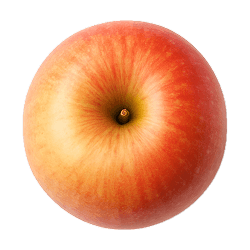
Apple is a fruit derived from the Malus domestica tree, classified as a plant-based ingredient. It is primarily included in pet food for its dietary fibre, natural antioxidants, and vitamins, supporting digestive health and immune function. Apple is used in its natural, whole form, ensuring pets benefit from its inherent nutrients without synthetic alteration or processing into extracts or concentrates.
Apple is included as a label-friendly ingredient to appeal to consumers seeking recognisable, natural components in pet food. It may also provide a modest source of fibre and natural sweetness to enhance palatability.

Salmon Flesh, Salmo Spp., Salmon Fillet, Salmon Muscle
Salmon meat is the muscle tissue derived from the salmon fish, an animal-based ingredient valued for its high-quality protein and rich omega-3 fatty acid content. Its primary nutritional benefit is supporting healthy skin, coat, and cognitive function in pets. Salmon meat is incorporated in its natural form, ensuring optimal nutrient availability and palatability in premium pet food formulations.
Salmon meat is included as a high-quality protein and omega-3 fatty acid source to support pet health and enhance the nutritional profile of the product. Its presence also serves as a premium, label-friendly ingredient that appeals to health-conscious consumers.
Micronutrients, Essential Micronutrients, Vital Nutrients, Accessory Food Factors
Vitamins are organic compounds derived from both plant and animal sources, essential for numerous metabolic and physiological functions in pets. Their primary purpose is to support immune health, vision, bone development, and cellular processes. In pet food, vitamins are not used in their natural, raw forms but are instead incorporated as stabilised compounds or premixes to ensure safety, stability, and optimal bioavailability.
Vitamins are included to ensure nutritional adequacy and meet regulatory requirements for complete and balanced pet food. They may also be added to compensate for nutrient losses during processing and storage.
Dietary Minerals, Inorganic Nutrients, Essential Minerals, Bulk Elements
Minerals are essential inorganic nutrients derived from the earth, not produced by animals or plants. They play a critical role in supporting various physiological functions, such as bone development, nerve transmission, and enzyme activity. In pet food, minerals are not used in their natural raw or metallic state; instead, they are incorporated as specific compounds (such as sulphates or chelates) to optimise safety and bioavailability.
Minerals are included to meet essential nutritional requirements for pets, supporting overall health and proper bodily functions. They are often added in precise amounts to ensure the product complies with regulatory standards and nutrient profiles.

Curcuma Longa, Indian Saffron, Jiang Huang, E100
Turmeric is a vibrant yellow spice derived from the root of the Curcuma longa plant, making it a plant-based ingredient. It is primarily included in pet food for its natural antioxidant and anti-inflammatory properties, supporting overall health and wellbeing. Turmeric is used in its natural powdered form, ensuring pets benefit from its active compound, curcumin, in a safe and bioavailable manner.
Turmeric is included as a label-friendly ingredient to appeal to health-conscious consumers due to its association with natural antioxidants and anti-inflammatory properties. Its presence may also support marketing claims related to holistic or functional pet foods, despite being used in small quantities with minimal direct nutritional impact for pets.

Ispaghula, Ispaghula Husk, Plantago Ovata, Blond Psyllium
Psyllium is a plant-derived ingredient sourced from the husks of Plantago ovata seeds. It is primarily included in pet food for its high soluble fibre content, which supports digestive health and helps regulate bowel movements. Psyllium is used in its natural husk form, allowing pets to benefit from its gentle bulking and water-absorbing properties to optimise gastrointestinal function.
Psyllium is included as a functional fibre source to support digestive health and promote regular bowel movements in pets. It also serves as a bulk-adding agent, helping to optimise stool quality and moisture content.

Laminaria Spp., Macrocystis Pyrifera, Ascophyllum Nodosum, Brown Seaweed
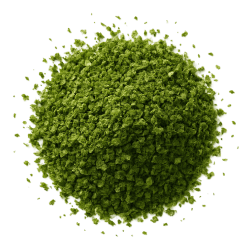
Kelp is a type of large, edible seaweed sourced from marine environments and classified as a plant-based ingredient. It is primarily included in pet food for its rich supply of natural iodine, which supports healthy thyroid function. Kelp is used in its dried, ground natural form, allowing pets to benefit from its trace minerals, vitamins, and antioxidants in a bioavailable manner.
Kelp is included as a label-friendly ingredient to appeal to health-conscious consumers and enhance product marketing, as it is associated with natural sources of vitamins and minerals. It may also serve as a trace mineral supplement to support nutritional completeness in pet food formulations.

Petroselinum Crispum, Garden Parsley, Common Parsley, E461
Parsley is a leafy herb of plant origin, commonly used in pet food for its natural antioxidant properties and as a source of vitamins such as vitamin K and C. It is primarily included to support immune health and freshen breath. In pet food formulations, parsley is used in its natural, whole form, ensuring the retention of its beneficial phytonutrients and fibre content.
Parsley is included as a label-friendly ingredient to appeal to pet owners seeking natural or recognisable components in pet food. It may also be added for its perceived breath-freshening properties, though its functional impact on canine nutrition is minimal.

.png)


Comments
0 comments
Login to Join the Conversation 💬