






Calming Chews

Overview
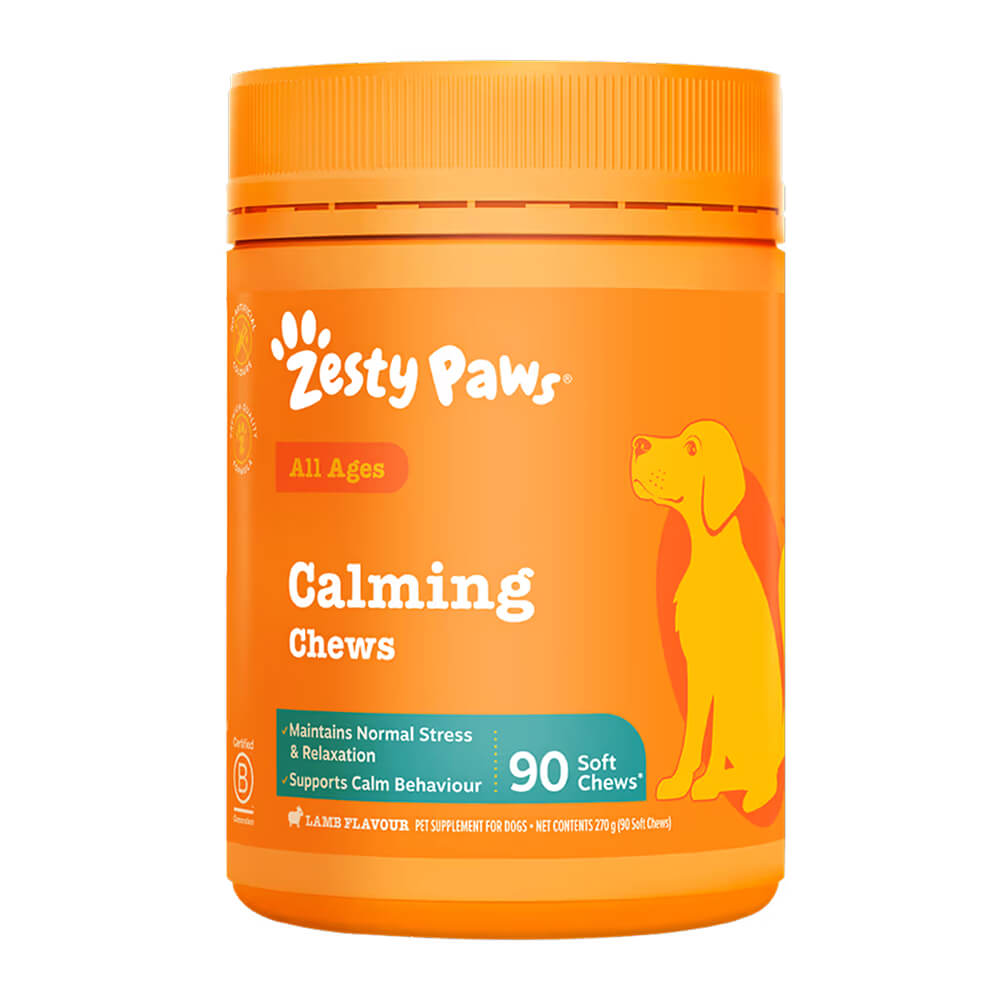
Zesty Paws Calming Chews are a soft chew supplement for everyday stress and situational anxiety in dogs — covering thunderstorms, fireworks, vet visits, car rides and separation. The Australian-made formula combines a botanical calm blend of chamomile, valerian root and passionflower with L-theanine, L-tryptophan and magnesium for behavioural support, plus ginger root to settle nervous stomachs during travel. The flavour base is Australian lamb and sweet potato. Contains lamb; not suitable for dogs with lamb sensitivities. Suitable for all ages, breeds and sizes.
Ingredients
Glycerin, White Sweet Potato Flour, Tapioca Starch, Calm Blend (Chamomile Flower Powder, Valerian Root Powder, Passionflower Herb Powder, L-Theanine, Ginger Root Powder, Tryptophan, Magnesium), Palatant (Pea Protein, Sodium), Rapeseed Lecithin, Linseed Powder, Rice Bran Oil, Carob, Antimicrobial (Buffered White Distilled Vinegar, Citric Acid, Mixed Tocopherols, Natural Flavours), Lamb Meat Powder, Cellulose Fibre, Antioxidant (Vegetable Oil, Mixed Tocopherols, Lecithin, Rosemary Extract), Xanthan Gum.

Glycerol, 1,2,3-Propanetriol, E422, Propane-1,2,3-Triol
Glycerine is a colourless, odourless liquid derived from plant or animal fats. In pet food, it serves primarily as a humectant, helping to retain moisture and improve texture. Glycerine is not used in its natural, raw state but is refined and purified for food-grade applications to ensure safety and optimal absorption. It also aids in palatability and shelf-life extension.
Glycerine is included as a humectant to retain moisture and improve the texture of pet food products, helping to prevent them from drying out. It also acts as a mild sweetener to enhance palatability for pets.

Ipomoea Batatas Flour, White Sweet Potato Powder, Ipomoea Batatas Root Flour, White Kumara Flour
White sweet potato flour is a finely milled powder made from dried white sweet potatoes (Ipomoea batatas). It is used as a carbohydrate source and functional ingredient in dog food formulations. This flour provides dietary fibre, energy, and essential nutrients such as vitamins and minerals. When included at appropriate levels, it supports digestive health and can serve as a gluten-free alternative to grain-based flours, with no known risks for most dogs.
White sweet potato flour is included in dog food formulations primarily as a cost-effective carbohydrate source and to improve kibble texture and binding during processing, rather than for any unique nutritional benefit to dogs. Its use also helps manufacturers meet product labelling requirements for grain-free or novel ingredient diets.

Cassava Starch, Manioc Starch, Yucca Starch, Manihot Esculenta Starch
Tapioca starch is a carbohydrate extracted from the root of the cassava plant, a tropical tuber native to South America. Primarily, it serves as a highly digestible energy source and a natural thickening agent in pet food. Tapioca starch is used in its natural, processed form, not as a whole food, to optimise texture and palatability while supporting digestive health.
Tapioca starch is included as a cost-effective carbohydrate source that provides bulk and texture to pet food formulations. It also serves as a binding agent, helping to improve kibble structure and stability.
Matricaria Recutita Powder, Matricaria Chamomilla Powder, German Chamomile Powder, Dried Matricaria Recutita
Chamomile powder is a plant-derived ingredient made from the dried and finely ground flowers of the chamomile plant (Matricaria chamomilla). It is primarily included for its natural calming properties and potential to support digestive health in pets. Chamomile powder is used in its natural, whole form, ensuring the preservation of its beneficial bioactive compounds for optimal efficacy.
Chamomile powder is included as a label-friendly ingredient to appeal to pet owners seeking natural or calming additives. Its presence may also support marketing claims related to relaxation or digestive health, despite limited evidence of significant functional impact for dogs.

Valeriana Officinalis Root Powder, Valeriana Officinalis Powder, Valerian Root Extract Powder, Valerian Powder
Valerian root powder is derived from the root of the Valeriana officinalis plant, a botanical ingredient traditionally used for its calming properties. In pet food, its primary benefit is to support relaxation and help manage mild anxiety. Valerian root is included in its natural, powdered form, ensuring pets receive its active compounds as found in the whole plant root.
Valerian root powder is included as a label-friendly ingredient to appeal to pet owners seeking natural calming or anxiety-reducing additives. Its presence supports marketing claims related to stress relief, though its functional impact on dogs may be limited.

Passiflora Incarnata Powder, Passiflora Powder, Passiflora Incarnata Extract Powder, Passiflora Herb Powder
Passionflower Powder is derived from the dried and ground aerial parts of the passionflower plant (Passiflora incarnata), a botanical ingredient. It is primarily included in pet food for its natural calming properties, supporting relaxation and stress management. Passionflower Powder is used in its natural, powdered form, ensuring pets benefit from its bioactive compounds as they occur in the whole plant.
Passionflower powder is included as a label-friendly ingredient to appeal to consumers seeking botanicals associated with calming or wellness benefits. Its presence supports marketing claims rather than providing significant nutritional or functional value for pets.

L-Theanine, Gamma-Glutamylethylamide, N5-Ethyl-L-Glutamine, Eglumegad
Theanine is an amino acid naturally found in tea leaves (plant origin), valued for its calming properties and potential to support stress management in pets. In pet food, theanine is typically utilised in a purified, supplement form rather than as part of whole tea leaves, ensuring consistent dosage and optimal absorption. Its inclusion aims to promote relaxation without causing drowsiness.
Theanine is included as a functional ingredient to promote calmness and reduce stress in pets, supporting claims of behavioural health benefits. Its presence allows manufacturers to market the product as addressing anxiety or stress-related issues, appealing to pet owners seeking holistic wellness solutions.

Zingiber Officinale Powder, Ground Ginger Root, Zingiber Officinale Rhizome Powder, Dried Ginger Root Powder
Ginger root powder is a plant-derived ingredient made by drying and finely grinding the root of the ginger plant (Zingiber officinale). It is primarily included in pet food for its natural antioxidant and digestive support properties. Ginger root powder is used in its natural, powdered form, allowing pets to benefit from its bioactive compounds without chemical alteration.
Ginger root powder is included as a label-friendly ingredient to appeal to health-conscious consumers and enhance product marketability. It may also be used for its natural flavouring properties to improve palatability.

L-Tryptophan, L-α-Aminoindole-3-Propionic Acid, 2-Amino-3-(Indol-3-yl)Propanoic Acid, EAA 10
Tryptophan is an essential amino acid derived from animal or plant protein sources. It plays a crucial role in pet nutrition by supporting protein synthesis and serving as a precursor for serotonin, which influences mood and behaviour. Tryptophan is not used in its isolated, natural form but is instead incorporated as a purified amino acid to optimise dietary balance and bioavailability in pet food formulations.
Tryptophan is included as an essential amino acid to support complete and balanced nutrition, meeting regulatory requirements for canine dietary adequacy. Its addition ensures the product can be marketed as providing all necessary amino acids for dogs’ health.

Epsom Salt, Mg, Elemental Magnesium, Magnesium Metal
Magnesium is an essential mineral element sourced from the earth, commonly included in pet food formulations to support muscle function, nerve transmission, and bone health. It is not used in its natural metallic state; instead, magnesium is utilised as a safe, bioavailable compound such as magnesium sulphate or magnesium oxide to optimise absorption and ensure dietary adequacy for pets.
Magnesium is included as an essential mineral to support metabolic and neuromuscular functions in pets, fulfilling nutritional requirements for complete and balanced pet food. Its addition ensures compliance with regulatory standards and appeals to consumers seeking scientifically formulated diets.

Pisum Sativum Protein, Pea Isolate, Pea Protein Isolate, Pisum Sativum Isolate
Pea protein is a plant-derived ingredient extracted from yellow peas (Pisum sativum). It serves as a concentrated source of protein, supporting muscle maintenance and overall health in pets. Rather than using whole peas, pea protein is utilised in its isolated form to maximise protein content and digestibility. This functional ingredient is valued for its hypoallergenic properties and amino acid profile.
Pea protein is included as a cost-effective, plant-based protein source to boost overall protein content and support product labelling claims. It also serves as a functional ingredient to improve kibble texture and binding.

Natrium, Na, E524
Sodium is an essential mineral element sourced from the earth, commonly included in pet food as sodium chloride (table salt) or other safe, bioavailable compounds. It plays a vital role in maintaining fluid balance, nerve transmission, and muscle function. Sodium is not used in its natural metallic form but is instead utilised as a compound to ensure safety and optimal absorption.
Sodium is included as an essential mineral to support normal physiological functions in pets and to help maintain electrolyte balance. It may also be used to enhance palatability and preserve product stability by inhibiting microbial growth.

Canola Lecithin, Brassica Napus Lecithin, E322 (Rapeseed), Brassica Napus Seed Lecithin
Rapeseed lecithin is a phospholipid-rich substance derived from the processing of rapeseed oil. In dog food manufacturing, it is typically supplied as a purified lecithin extract rather than in its raw seed form. Rapeseed lecithin acts as an emulsifier, helping to blend fats and water-based ingredients for improved texture and consistency in dog food. It also provides a source of choline, which supports normal cell function and liver health. When used at appropriate levels, rapeseed lecithin is considered safe for dogs, with no known adverse effects.
Rapeseed lecithin is included in dog food formulations primarily as an emulsifier to improve texture and processing efficiency, benefiting manufacturers by stabilising mixtures and extending shelf life, with minimal direct nutritional benefit for dogs.

Flaxseed Powder, Linum Usitatissimum Powder, Flax Powder, Linum Usitatissimum Seed Powder
Linseed powder is a plant-derived ingredient made from finely ground flaxseeds. It is primarily included in pet food for its rich content of omega-3 fatty acids, dietary fibre, and protein, supporting skin, coat, and digestive health. Linseed powder is used in its natural, ground form, allowing pets to benefit from its nutrients in a readily digestible and bioavailable manner.
Linseed powder is included as a cost-effective source of omega-3 fatty acids and dietary fibre, supporting nutritional claims and digestive health. Its presence also enhances the product’s label appeal by highlighting natural plant-based ingredients.

Oryza Sativa Bran Oil, Oryza Sativa Oil, Oryza Spp. Bran Oil, Oryza Spp. Oil
Rice bran oil is an edible vegetable oil extracted from the outer layer of rice grains, known as the bran. In dog food manufacturing, it is used in its refined form to ensure safety and stability. Rice bran oil provides a source of unsaturated fatty acids, including omega‑6 linoleic acid, and contains natural antioxidants such as tocopherols and oryzanol. When included at appropriate levels, it supports skin and coat health and contributes to overall dietary fat content; excessive inclusion may lead to an imbalance in fatty acid ratios or excess caloric intake.
Rice bran oil is included in dog food formulations primarily as a cost-effective source of fat and energy, offering processing advantages and helping to improve the texture and palatability of the product, while also contributing some beneficial fatty acids for dogs.

St John's Bread, Locust Bean, Ceratonia Siliqua, Locust Bean Gum
Carob is a plant-derived ingredient sourced from the pods of the Ceratonia siliqua tree. It is primarily included in pet food as a natural source of dietary fibre and antioxidants, supporting digestive health and overall wellbeing. Carob is used in its natural form, with the pods ground into a fine powder, ensuring the retention of its nutritional properties and palatability for pets.
Carob is included as a label-friendly ingredient to appeal to consumers seeking natural or chocolate-alternative treats for pets. It also functions as a palatability enhancer, providing a sweet flavour without the risks associated with chocolate.

Buffered Acetic Acid Solution, Neutralised White Vinegar, pH-Adjusted Distilled Vinegar, E260 Buffered
Buffered white distilled vinegar is a liquid ingredient derived from the fermentation of plant-based sources, typically grains. It is primarily used as a natural preservative and pH regulator, helping to inhibit microbial growth and maintain product stability. In pet food, buffered white distilled vinegar is utilised in its processed, buffered form rather than as raw vinegar, ensuring consistent acidity and safety for consumption.
Buffered white distilled vinegar is included as a preservative to help inhibit the growth of bacteria and mould, thereby extending the product’s shelf life. Its use also allows for a more label-friendly alternative to synthetic preservatives, appealing to consumers seeking natural-sounding ingredients.

2-Hydroxypropane-1,2,3-Tricarboxylic Acid, E330, 3-Carboxy-3-Hydroxypentanedioic Acid, Monohydrate Citric Acid
Citric acid is an organic compound derived primarily from citrus fruits, though it is commonly produced via fermentation for commercial use. Its main purpose in pet food is as a natural preservative and acidity regulator, helping to maintain freshness and inhibit spoilage. Citric acid is not used in its raw, crystalline form but is incorporated as a purified, food-grade compound to ensure safety and efficacy.
Citric acid is included as a preservative to enhance product stability and extend shelf life by inhibiting microbial growth. It may also be used to adjust acidity, optimising flavour and maintaining the quality of the final product.

Tocopherols, E306, Natural Tocopherols Concentrate, D-Alpha Tocopherol Concentrate
Mixed tocopherols are a blend of compounds derived from plant oils, primarily functioning as a source of vitamin E. Their main purpose in pet food is to act as natural antioxidants, helping to preserve the freshness of fats and oils. Rather than being used in their isolated, pure form, mixed tocopherols are incorporated as stabilised extracts to optimise safety, efficacy, and nutrient retention.
Mixed tocopherols are included as a natural preservative to extend shelf life by slowing the oxidation of fats and oils in pet food. They are often used as a label-friendly alternative to synthetic preservatives to appeal to consumer preferences for natural ingredients.

Natural Flavouring, Flavouring Substance, Flavouring Preparation, Flavouring Complex
Natural flavour is a food additive derived from animal or plant sources, designed to enhance the palatability of pet food. Its primary purpose is to improve taste and encourage consistent consumption. Rather than being used in its original raw form, natural flavour is typically processed and concentrated to ensure safety, stability, and uniformity in pet food formulations, while maintaining its natural origin.
Natural flavour is included to enhance palatability, encouraging pets to consume the product. It also allows manufacturers to improve taste without specifying individual flavouring agents, supporting flexible formulation and label-friendly marketing.

Rendered Lamb Meal, Ovis Aries Meal, Dehydrated Lamb Protein, Ovis Aries Rendered Meal
Lamb meat meal is a concentrated protein ingredient derived from lamb, an animal source, by rendering and drying lamb meat. It serves as a rich source of high-quality protein and essential amino acids, supporting muscle maintenance and overall health in pets. Unlike fresh lamb, lamb meat meal is not used in its natural form but is processed to optimise nutrient density and digestibility.
Lamb meat meal is included as a concentrated protein source to support muscle maintenance and overall nutrition in pet food formulations. Its use also allows manufacturers to market the product as containing a novel or premium animal protein, appealing to consumers seeking alternative or hypoallergenic options.

Microcrystalline Cellulose, E460, Powdered Cellulose, Alpha-Cellulose
Cellulose fibre is a plant-derived ingredient sourced primarily from wood pulp or plant cell walls. It serves as an insoluble dietary fibre, supporting digestive health and promoting optimal stool quality in pets. Rather than being used in its raw plant form, cellulose fibre is processed and purified to ensure consistency, safety, and effective functionality in premium pet food formulations.
Cellulose fibre is included as a cost-effective bulking agent to increase dietary fibre content and promote digestive health. It also helps manage calorie density in pet food formulations.

Edible Vegetable Oil, Edible Plant Oil, Plant Oil, Oleum Vegetabile
Vegetable oil is a plant-derived fat extracted from various seeds or fruits, such as sunflower, canola, or soybean. It serves primarily as an energy source and supports the absorption of fat-soluble vitamins in pet food. Vegetable oil is used in its refined, edible form rather than as raw plant material, ensuring safety, palatability, and optimal nutrient availability for pets.
Vegetable oil is included as a cost-effective source of dietary fat and energy, supporting palatability and contributing to the texture of the final product. It may also be used to deliver essential fatty acids and improve the appearance of the kibble.

Phosphatidylcholine, E322, Soybean Phospholipid, Egg Phospholipid
Lecithin is a naturally occurring compound derived from plant or animal sources, commonly soybeans or egg yolks. It serves as an emulsifier, helping to blend fats and water in pet food, thereby improving texture and nutrient absorption. Lecithin is not used in its raw form; instead, it is processed and purified to ensure safety, stability, and optimal functionality in pet nutrition.
Lecithin is included as an emulsifier to improve the texture and consistency of pet food, ensuring fats and water-based ingredients blend smoothly. It may also be used to enhance product stability and shelf life.

Rosmarinus Officinalis Extract, E392, Rosemary Oleoresin, Rosmarinus Officinalis Leaf Extract
Rosemary extract is a plant-derived ingredient obtained from the leaves of the rosemary herb (Rosmarinus officinalis). It is primarily included in pet food as a natural antioxidant, helping to preserve fats and oils and extend shelf life. Rosemary extract is used in its natural form, ensuring the retention of its beneficial compounds without chemical alteration.
Rosemary extract is included as a natural preservative to help extend shelf life by inhibiting oxidation of fats and oils. It also serves as a label-friendly ingredient that appeals to consumers seeking natural additives.

Corn Sugar Gum, E415, Polysaccharide B1459, Xanthomonas Campestris Fermentation Product
Xanthan gum is a polysaccharide derived from the fermentation of plant-based sugars by the bacterium Xanthomonas campestris. It serves primarily as a thickening and stabilising agent in pet food, helping to maintain texture and consistency. Xanthan gum is not used in its natural microbial form; instead, it is purified and dried into a fine powder for safe and effective utilisation in formulations.
Xanthan gum is included as a stabilising and thickening agent to improve the texture and consistency of pet food formulations. It also helps maintain product uniformity and shelf stability during storage.

.png)


Comments
0 comments
Login or Register to Join the Conversation