











Whether your dog struggles with loose stools, a sensitive stomach, or you simply want to support their overall health from the inside out — a quality probiotic supplement can make a real difference. We’ve reviewed the most widely available options in Australia to help you find what actually works for your dog’s gut health, without the guesswork.

In Short:
The best probiotic supplements for dogs contain clinically studied bacterial strains — particularly Enterococcus Faecium, Bacillus Coagulans, or Lactobacillus Acidophilus — at a colony-forming unit (CFU) count high enough to survive digestion and colonise the gut.
Choose based on your dog’s needs: a general maintenance probiotic suits healthy dogs, while a higher-potency or multi-strain formula is better for dogs recovering from antibiotics, dealing with chronic digestive issues, or transitioning between diets. A powder mixed into food is the most common and effective format. See our reviewed products below.
Do Probiotics Actually Work for Dogs?
Yes — and the evidence is stronger than many owners expect. Probiotics are live microorganisms that, when given in adequate amounts, provide a measurable health benefit to the host. In dogs, this means supporting the gut microbiome — the community of bacteria, fungi, and other organisms that live in your dog’s digestive tract and influence everything from nutrient absorption to immune function.
Where probiotics are especially effective is in three scenarios: recovery after antibiotic treatment (which disrupts the natural gut flora), supporting dogs during dietary transitions, and managing chronic low-grade digestive issues like intermittent loose stools, gas, or inconsistent appetite. For healthy dogs on a stable diet, a maintenance-level probiotic can still offer benefits — particularly for immune support and nutrient absorption — but the effects are more subtle.
What to Look For in a Dog Probiotic
Not all probiotic supplements contain the same strains or deliver them effectively. Here’s what the veterinary research community consistently recommends.
Strain Specificity
The most important factor in choosing a probiotic is the bacterial strain, not just the species. Different strains within the same species can have very different effects. Look for products that name specific strains on the label — this indicates a level of formulation rigour that generic “probiotic blend” labels don’t. The most well-studied strains for dogs include Enterococcus faecium (SF68), which has the strongest evidence base for canine digestive health and is the strain used in many veterinary-grade products. Bacillus coagulans is a spore-forming probiotic that survives stomach acid and heat exceptionally well, making it reliable across storage and administration conditions. Lactobacillus acidophilus and Bifidobacterium animalis are widely used in both human and canine probiotics and support general gut flora balance.
CFU Count
CFU stands for colony-forming units — the number of viable bacteria per dose. For dogs, a therapeutic dose typically ranges from 1 billion to 10 billion CFU per day, depending on the dog’s size and the specific strain. Products that don’t disclose their CFU count should be treated with scepticism. More isn’t always better — what matters is that the count is high enough to survive the journey through stomach acid and reach the intestine in adequate numbers. Look for products that guarantee CFU count at the time of expiry, not just at the time of manufacture, as bacterial viability decreases over the shelf life.
Prebiotics
Many quality probiotic supplements include prebiotics — non-digestible fibres that feed the beneficial bacteria already present in your dog’s gut. Common prebiotics include inulin, fructooligosaccharides (FOS), and chicory root. A product that combines probiotics with prebiotics is sometimes called a synbiotic, and the combination is generally more effective than probiotics alone because you’re both introducing beneficial bacteria and giving them the fuel to thrive.
Strain Survivability
Not all probiotic bacteria survive the manufacturing process, storage, or the highly acidic environment of your dog’s stomach. Spore-forming strains like Bacillus coagulans are inherently more robust — they form a protective shell that allows them to survive heat, moisture, and stomach acid. Non-spore-forming strains like Lactobacillus require more careful manufacturing, typically freeze-drying, and should be stored in a cool, dry place. Check whether the product specifies any storage requirements — if it claims shelf stability, verify that this is backed by the strain type or packaging technology.
Absence of Unnecessary Fillers
A quality probiotic should be straightforward in its formulation. Avoid products that list artificial colours, flavours, or preservatives as primary ingredients. Some chew-format probiotics include binding agents and palatability enhancers that are fine in small amounts, but the active probiotic strains and prebiotics should be the focus of the formulation, not the fillers.
When Should You Give Your Dog a Probiotic?
Probiotics are useful in a range of situations, and you don’t need to wait for a digestive crisis to start.
After antibiotic treatment is the single most common and well-supported reason to give a probiotic. Antibiotics kill harmful bacteria but also wipe out beneficial gut flora. Supplementing with a probiotic during and after a course of antibiotics helps restore the microbiome faster and reduces the risk of antibiotic-associated diarrhea, which is one of the most common side effects of antibiotic therapy in dogs.
During dietary transitions is another key moment. Switching your dog’s food — whether from one kibble to another, or from kibble to a raw or fresh diet — can temporarily disrupt digestion. A probiotic during the transition period helps stabilise the gut and reduce the likelihood of loose stools, gas, or decreased appetite.
For dogs with chronic digestive sensitivity — intermittent loose stools, excessive gas, inconsistent appetite, or a history of gastrointestinal issues — a daily maintenance probiotic can provide ongoing support. Many owners of dogs with sensitive stomachs report that consistent probiotic supplementation is the single most effective intervention they’ve found outside of dietary changes.
For healthy dogs as ongoing maintenance, the benefits are more about optimisation than treatment. A healthy gut microbiome supports immune function (roughly 70 per cent of a dog’s immune system is housed in the gut), nutrient absorption, and even mood regulation. If your dog is on a high-quality diet and shows no digestive issues, a maintenance probiotic is optional but not without value.
For puppies, probiotic supplementation can support the developing gut microbiome during the critical first year when the immune system is still maturing. Many vets recommend a gentle probiotic during the weaning period and through the puppy vaccination schedule, when stress and immune challenges are highest.
Signs Your Dog Might Benefit from a Probiotic
Not every dog needs a probiotic, but several common signs suggest the gut microbiome could use support. Frequent loose stools or intermittent diarrhea without an obvious cause is the most common indicator. Excessive or unusually foul-smelling gas is another — it often signals an imbalance in gut bacteria. A dog that eats grass frequently or has a variable appetite may be experiencing low-grade digestive discomfort. Dogs that are prone to ear infections or skin issues may also benefit, because gut health has a direct influence on immune function and inflammatory responses. If your dog has recently finished antibiotics, had a stressful experience (boarding, travel, a new environment), or is in the middle of a food transition, a short course of probiotics is a sensible precaution even if you don’t see obvious symptoms.
Choosing the Right Format
Probiotic supplements for dogs come in several formats, each with practical trade-offs.
Powders are the most popular format in Australia and generally the most effective. They deliver high CFU counts per serve, mix easily into food, and allow precise dosing by weight. Most veterinary-grade probiotics come in powder form. The main drawback is that some dogs notice the addition and may refuse food if they’re particularly fussy.
Chews and soft treats are convenient, palatable, and easy to administer — dogs usually take them willingly as a treat. The trade-off is that the manufacturing process for chews involves heat and moisture, which can reduce the viability of non-spore-forming strains. If you choose a chew format, look for one that uses spore-forming strains or explicitly guarantees CFU at expiry.
Capsules can be given whole or opened and mixed into food. They protect the bacteria well during storage and transit through the stomach, making them a good option for strain viability. Less common in dog-specific products but available through some veterinary suppliers.
Paste or gel formats are available for puppies and small dogs. They’re easy to administer directly into the mouth, which is useful for very young dogs or dogs recovering from illness who may not be eating normally.
Best High-Potency Multi-Strain Probiotic
The potency of a probiotic supplement is measured in CFU — colony-forming units — which indicates how many live beneficial bacteria are delivered per serve. A higher CFU count paired with multiple well-researched strains gives the gut a broader base of support, helping to crowd out harmful bacteria, improve nutrient absorption, and strengthen the immune system.
For dogs with chronic digestive issues or those recovering from illness, a high-potency multi-strain formula can make a meaningful difference.
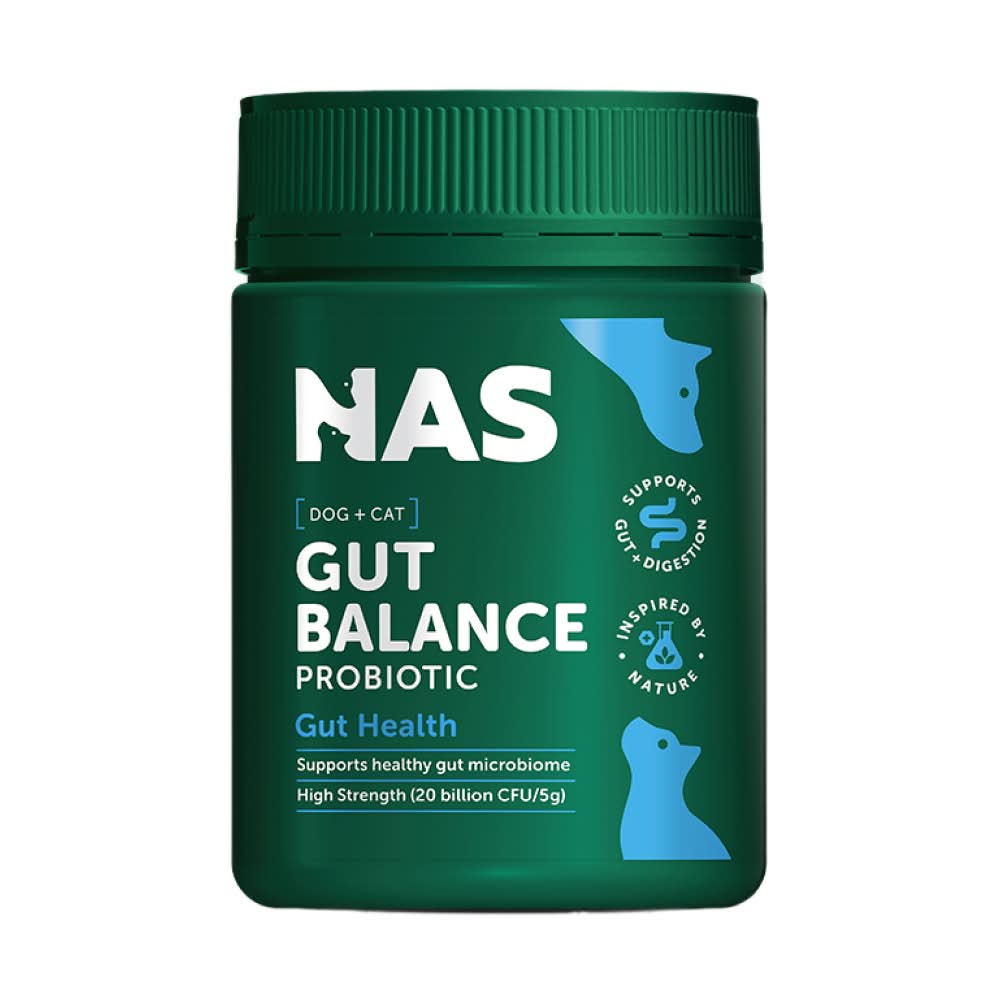
Gut Balance Probiotic Powder
Natural Animal SolutionsNAS Gut Balance is one of the most potent dog probiotics available in Australia, delivering 20 billion CFU per serve from five targeted probiotic strains to support digestive balance, nutrient absorption, and immune health. Backed by over 20 years of natural pet health formulation, it also includes Astragalus Root Extract for added immune support — making it a strong daily option for dogs that need serious gut restoration.
Pros
- Highest CFU count on this list at 20 billion per serve — significantly more potent than competitors
- Five well-researched Lactobacillus and Bifidobacterium strains for broad-spectrum gut support
- Widely stocked at major Australian pet retailers including Petbarn, Petstock, and independent stores
- Suitable for both dogs and cats, making it practical for multi-pet households
Cons
- Must be refrigerated after opening and used within 60 days, which limits convenience
- Not recommended for pregnant or lactating animals
- Larger 5g serving size per scoop means the tub depletes faster for bigger dogs
Best Chewable Probiotic for Fussy Dogs
Getting a dog to take a daily supplement can be a battle, especially with picky eaters who detect and reject powder mixed into their food.
Chewable probiotic formats solve this by delivering beneficial bacteria in a treat-like form that dogs actively enjoy eating. The trade-off is typically a lower CFU count per serve compared to powders, but the consistency of daily intake often outweighs the potency difference — a supplement only works if your dog actually takes it.
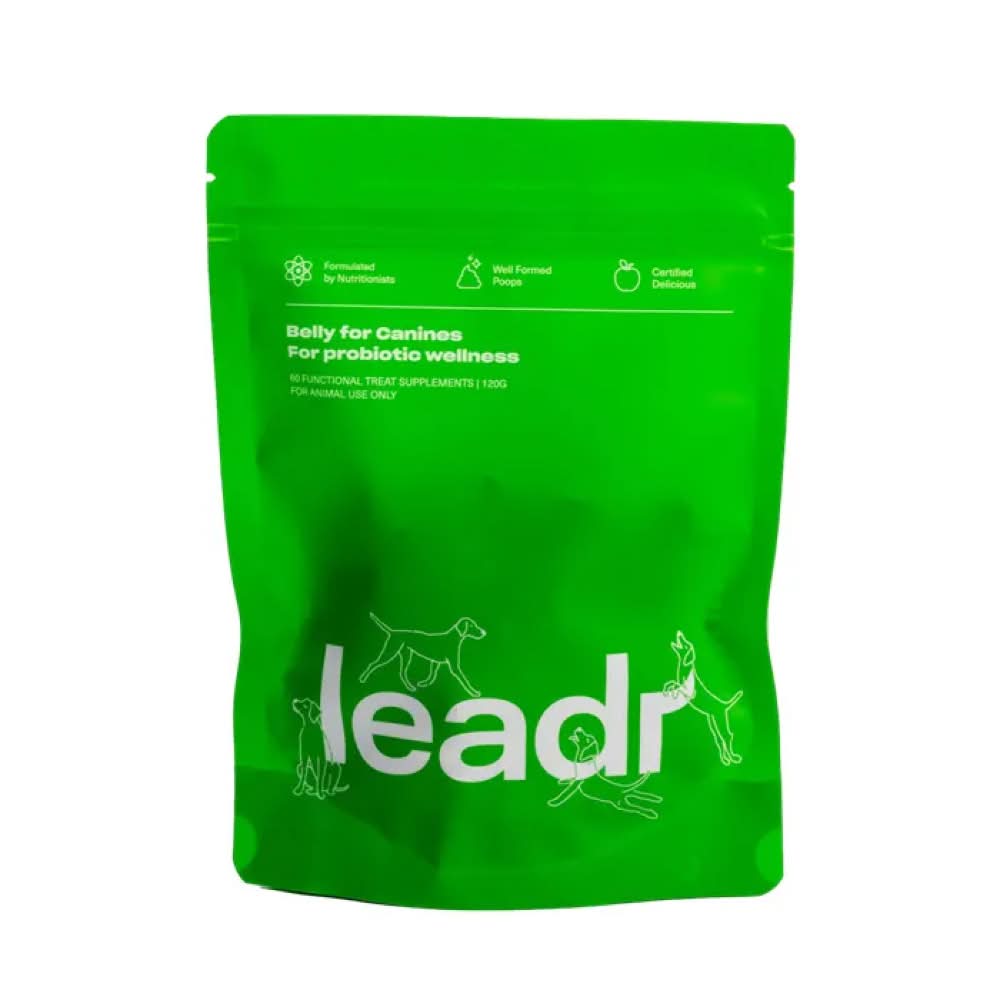
Belly Probiotic Wellness Supplement Chew
LeadrLeadr Belly takes the fight out of daily supplementation — each kangaroo-based chew delivers over 2 billion CFU of clinically trialled probiotic strains in a treat your dog will actually look forward to. Formulated by a qualified nutritionist using human-grade, hypoallergenic ingredients, it supports gut health, immune function, and has even been shown to help reduce stress and anxiety.
Pros
- Chewable treat format that dogs love — no mixing, no mess, no hiding supplements in food
- Hypoallergenic kangaroo base makes it suitable for dogs with common protein sensitivities
- Strains have been clinically trialled in canines, including L. Helveticus which supports both gut health and stress reduction
- 30-day money-back guarantee and available at Petbarn as well as direct
Cons
- Lower CFU count at 2 billion per chew compared to high-potency powder options
- Single pack size only (60 chews) — no bulk or value pack options from the brand directly
- Not suitable for puppies under 12 weeks of age
Best for Gut Recovery and Immune Support
When a dog's gut has been disrupted — whether from antibiotics, dietary changes, stress, or illness — restoring balance requires more than just adding good bacteria. Spore-forming probiotics like Bacillus strains are particularly resilient, surviving stomach acid and heat to reach the intestine where they're needed most.
Combined with prebiotics that feed beneficial bacteria and immune-supporting compounds like Beta Glucans, a recovery-focused formula can help rebuild the gut microbiome more effectively.
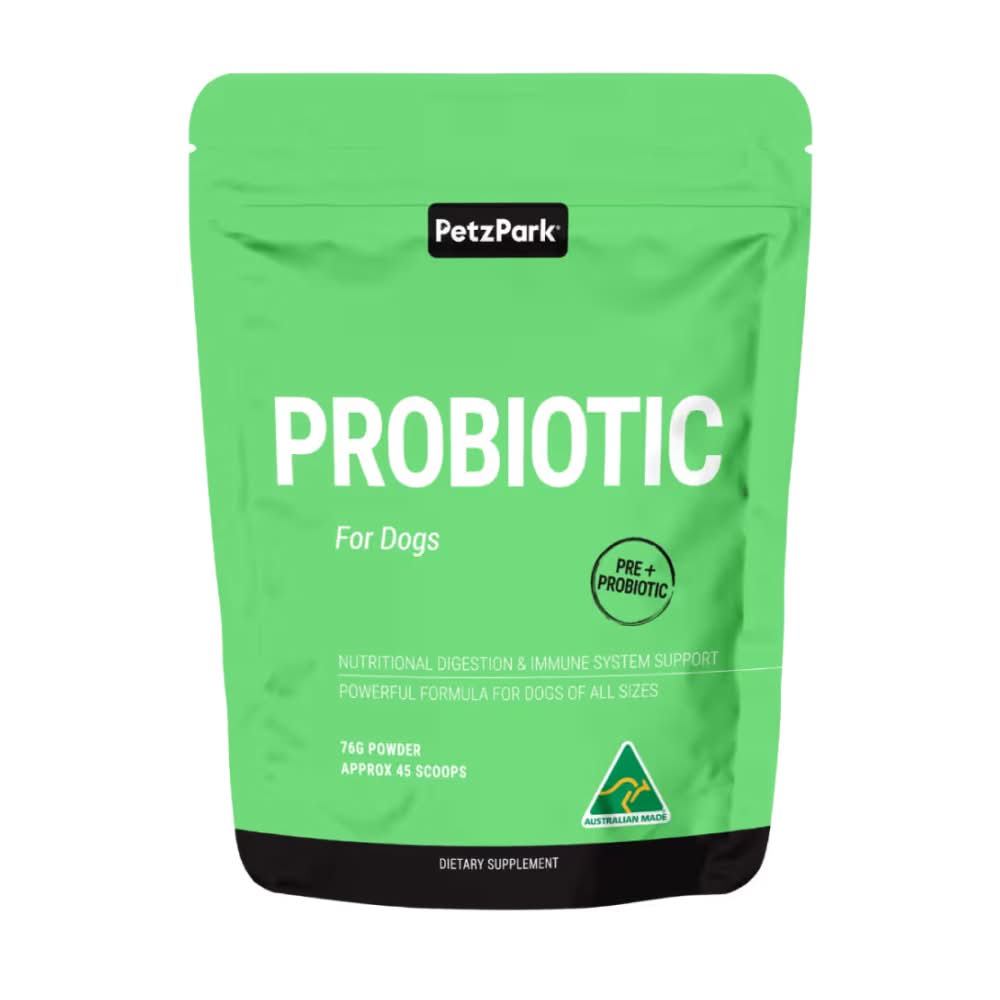
Probiotics Powder Supplement
Petz ParkPetz Park Probiotics uses micro-encapsulated spore-forming strains that survive stomach acid and activate where they're needed most — in the small intestine. The formula includes Saccharomyces Boulardii, a probiotic yeast that's particularly effective at restoring gut balance during and after antibiotic treatment, alongside Beta Glucans for immune support.
Pros
- Micro-encapsulated spore-forming strains (Bacillus) that survive stomach acid and shelf storage without refrigeration
- Includes Saccharomyces Boulardii — a probiotic yeast specifically beneficial for restoring gut balance during and after antibiotic treatment
- Free from grains, gluten, dairy, soy, poultry, GMOs, and artificial additives
- Three pack sizes available with a 40-day money-back guarantee
Cons
- Lower CFU count per scoop (2.2 billion) compared to higher-potency competitors
- Powder format may not suit dogs who are fussy about texture changes in their meals
- Does not contain traditional Lactobacillus strains, which some pet owners may prefer for general maintenance
Best Synbiotic for Sensitive Stomachs
Dogs with chronically sensitive stomachs often need more than probiotics alone — they benefit from a synbiotic approach that combines prebiotics, probiotics, and postbiotics in a single formula. Prebiotics feed the good bacteria already living in the gut, probiotics introduce new beneficial strains, and postbiotics provide the metabolic byproducts of bacterial fermentation that support the gut lining.
This three-pronged approach can be particularly effective for dogs struggling with loose stools, flatulence, or poor nutrient absorption.
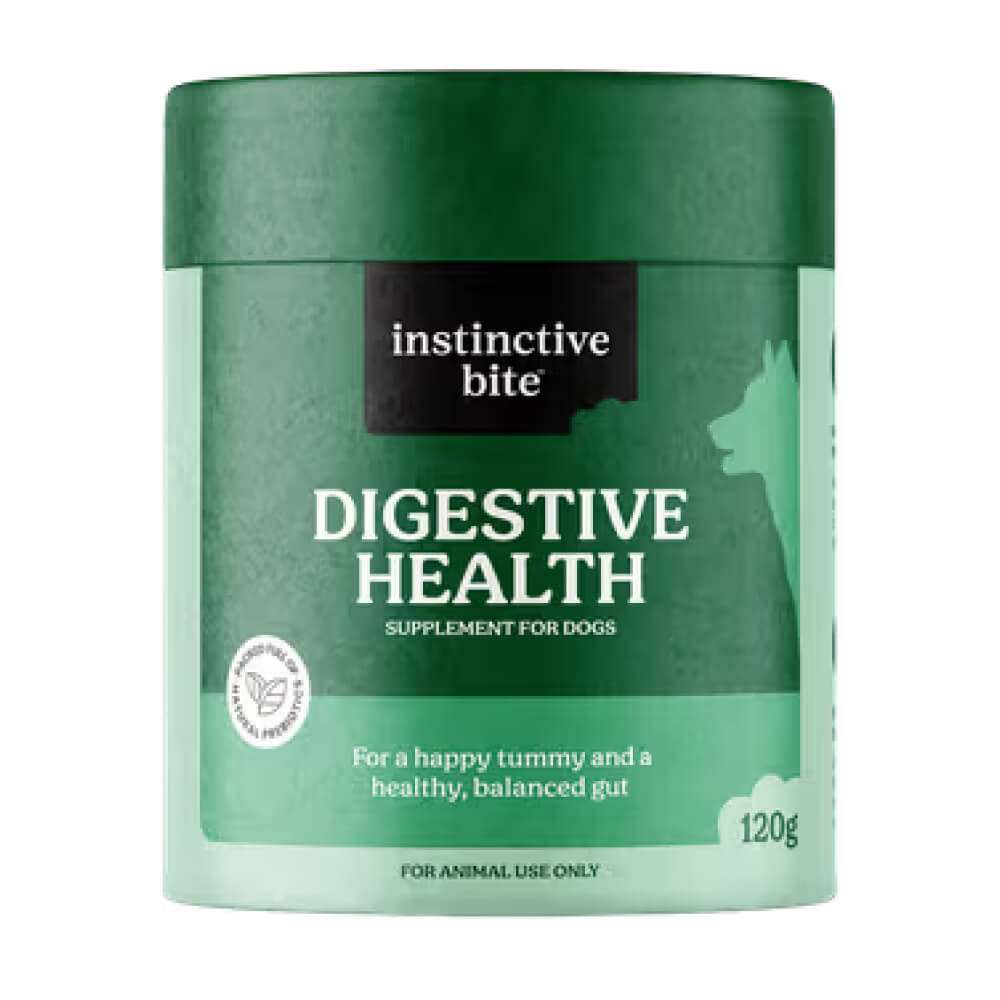
Digestive Health Supplement Powder
Instinctive BiteInstinctive Bite takes a synbiotic approach, combining prebiotics, probiotics, and postbiotics through its Bio-az® complex to support the gut from multiple angles simultaneously. It also includes Bromelain, a natural enzyme that aids protein digestion, and nutrient-dense superfoods like Spirulina and Pumpkin — making it a well-rounded option for dogs with persistently sensitive stomachs.
Pros
- True synbiotic formula combining prebiotics, probiotics, and postbiotics (Bio-az®) in a single supplement
- Includes Bromelain (a natural digestive enzyme) to actively support protein breakdown and nutrient absorption
- Free from grains, gluten, dairy, soy, and poultry — suitable for dogs with multiple sensitivities
- Available in two sizes including a 360g value pack for ongoing daily use
Cons
- Currently exclusive to Pet Circle — not available through independent pet retailers or direct from brand
- Labelled for adult and senior dogs only — not marketed for puppies
- Does not disclose a specific CFU count for the probiotic component, making potency hard to compare
Best Wholefood Prebiotic for Digestive Regularity
Not every dog needs a probiotic supplement — some benefit more from a prebiotic and fibre-focused approach that nourishes the good bacteria already present in their gut. A wholefood prebiotic powder built around natural fibre sources like pumpkin, psyllium husk, and inulin can help regulate bowel movements, firm up loose stools, and support long-term microbiome health without introducing live bacterial strains. This approach suits dogs who respond well to dietary fibre and need everyday digestive regularity rather than targeted microbial intervention.

Digestion Support Wholefood Powder
Field DayField Day Digestion Support focuses on feeding the good bacteria your dog already has, using a clean five-ingredient wholefood blend of prebiotic fibres and natural pumpkin to promote regular, well-formed stools and long-term microbiome health. It's a simpler, food-first approach to gut support — ideal for dogs who don't need live bacterial strains but benefit from better fibre intake in their diet.
Pros
- Clean, minimal five-ingredient formula using only recognisable wholefoods — no synthetic additives or fillers
- Combines soluble and insoluble fibre for both stool-firming and prebiotic gut support
- Human-grade ingredients that are vegan, grain-free, gluten-free, dairy-free, and soy-free
- Vet nutritionist–approved and Australian-made with a pumpkin flavour dogs enjoy
Cons
- Does not contain live probiotic strains — functions as a prebiotic and fibre supplement rather than a true probiotic
- Available in a single 220g size only — approximately one month's supply for dogs under 30kg
- Less targeted than multi-strain probiotic formulas for dogs with acute digestive issues or post-antibiotic recovery
How to Choose: A Quick Decision Guide
Not every probiotic suits every dog. Here’s a simple way to narrow it down:
My dog has occasional loose stools or mild digestive sensitivity — A general-purpose probiotic powder with a moderate CFU count (1 to 5 billion) and a well-studied strain like Enterococcus faecium or Bacillus coagulans is a solid starting point. Give it daily for at least four weeks to assess the effect.
My dog is on or has just finished antibiotics — Use a higher-potency probiotic (5 to 10 billion CFU) and start supplementing from the first day of antibiotic treatment if possible. Continue for at least two weeks after the course finishes to give the gut flora time to re-establish. Choose a product with multiple strains for broader microbial diversity.
My dog is transitioning to a new food — Start a probiotic a few days before the transition begins and continue through the transition period (typically 7 to 14 days). This helps buffer the digestive system against the disruption of a dietary change.
My dog is a puppy — Look for a gentle, puppy-specific or vet-recommended formula with a lower CFU count appropriate for their size. Paste or powder formats are usually easiest for young dogs. Avoid adult-dose products unless your vet advises otherwise.
My dog has chronic digestive issues — If your dog has a diagnosed gastrointestinal condition (IBD, chronic colitis, exocrine pancreatic insufficiency), discuss probiotic supplementation with your vet. A veterinary-grade product with specific strain selection may be more appropriate than a general over-the-counter supplement. Probiotics are a complement to veterinary treatment, not a replacement.
My dog seems healthy but I want to support their overall health — A maintenance-level probiotic with a moderate CFU count given daily or a few times per week is a reasonable approach. Combine with a quality diet and you’re covering both the foundation and the optimisation layer of gut health.
Probiotics and the Gut-Immune Connection
One of the most important reasons to consider a probiotic — even for a healthy dog — is the relationship between gut health and immune function. Approximately 70 per cent of a dog’s immune system is located in the gut-associated lymphoid tissue (GALT), which lines the intestinal wall. The gut microbiome directly influences how this immune tissue develops and responds to threats.
A balanced microbiome helps the immune system distinguish between genuine threats (pathogens, harmful bacteria) and harmless substances (food proteins, environmental particles). When the microbiome is disrupted — by antibiotics, poor diet, stress, or illness — the immune system can become either underactive (leading to increased susceptibility to infections) or overactive (leading to allergies, skin inflammation, and autoimmune responses).
This is why dogs with chronic skin issues, recurring ear infections, or environmental allergies sometimes improve with probiotic supplementation. The gut isn’t just about digestion — it’s a central hub for whole-body health. Supporting it with the right bacteria is one of the most broadly beneficial things you can do for your dog.
Probiotics vs. Digestive Enzymes: What’s the Difference?
These two supplement types are often confused, but they do fundamentally different things.
Probiotics are live bacteria that colonise the gut and support the microbiome. They improve the environment in which digestion happens — maintaining the right balance of bacteria, supporting the gut lining, and modulating immune responses.
Digestive enzymes are proteins that break down food into absorbable nutrients. They act directly on food in the stomach and small intestine — breaking fats, proteins, and carbohydrates into smaller molecules. Dogs with exocrine pancreatic insufficiency (EPI) or other conditions that impair enzyme production may need supplemental enzymes.
Some dogs benefit from both, particularly older dogs whose digestive efficiency naturally declines, or dogs recovering from gastrointestinal illness. Several Australian products combine probiotics with digestive enzymes in a single supplement, which can be convenient if your dog needs both. But if you’re choosing one or the other, start with the one that matches your dog’s primary issue — loose stools and gut imbalance point to probiotics, while undigested food in stools or poor nutrient absorption point to enzymes.
Are There Any Side Effects?
Probiotic supplements are among the safest supplements available for dogs. The most common side effect is a brief period of increased gas or mildly softer stools when first introducing the supplement — this typically resolves within three to five days as the gut adjusts. Starting at a half-dose for the first few days can minimise this.
In very rare cases, dogs with severely compromised immune systems (those on immunosuppressive therapy or with serious underlying illness) should only take probiotics under veterinary supervision, as there is a theoretical risk of bacterial translocation in immunocompromised animals. For the vast majority of dogs — including puppies, seniors, and dogs with chronic conditions — probiotics are well tolerated and carry minimal risk.
There are no known drug interactions with standard probiotic supplements. However, if your dog is on antibiotics, give the probiotic at least two hours apart from the antibiotic dose to avoid the antibiotic immediately killing the probiotic bacteria before they can reach the intestine.
How Long Do Probiotics Take to Work?
The timeline depends on what you’re addressing. For acute digestive upset — loose stools after a dietary change, stress-related diarrhea, or post-antibiotic recovery — most owners see improvement within three to seven days of consistent supplementation. Stool consistency typically firms up first, followed by reduced gas and improved appetite.
For chronic conditions or general maintenance benefits, the effects are more gradual. Meaningful changes to the gut microbiome take two to four weeks of consistent daily supplementation. Immune-related benefits — such as reduced frequency of skin flare-ups or ear infections — may take six to eight weeks to become apparent, because the immune system responds more slowly than the digestive tract.
Consistency is critical with probiotics. Unlike some supplements where the active compounds build up in the body, probiotic bacteria need to be replenished regularly. Most strains don’t permanently colonise the canine gut — they provide their benefit while present and are gradually eliminated. Daily supplementation maintains the population at a beneficial level.
Where to Buy Probiotics for Dogs in Australia
All products reviewed on this page are available online and in-store at major Australian pet retailers including Petstock and Petbarn. Some veterinary-grade formulas are stocked through vet clinics and may require a recommendation from your vet, though no prescription is needed. Buying online is generally cheaper — use the price comparison links in each product card above to find the best current price.
Frequently Asked Questions
What is the best probiotic for dogs in Australia?
How long does it take for probiotics to work in dogs?
Can I give my dog human probiotics?
Do dogs really need probiotics if they eat a good diet?
What are the signs my dog needs a probiotic?
Should I give probiotics during antibiotic treatment or after?
Are probiotics safe for puppies and senior dogs?


Comments
0 comments
Login to Join the Conversation 💬