











Whether you’ve just brought home a new puppy or you’re navigating the rapid growth phase of a large breed — getting nutrition right in the first year sets the foundation for your dog’s entire life. We’ve reviewed the most widely available puppy supplements in Australia to help you understand what’s actually worth adding, what’s unnecessary, and what could do more harm than good.

In Short:
Most puppies on a complete, age-appropriate commercial diet don’t need extensive supplementation — but targeted supplements can fill genuine gaps and support optimal development. The most commonly beneficial additions are a probiotic for gut and immune support during the first year, omega-3 for brain and coat development, and — for large and giant breeds specifically — a joint support formula started early.
Avoid calcium supplements unless directed by a vet, as excess calcium during growth can cause serious skeletal problems. See our reviewed products below.
Do Puppies Actually Need Supplements?
This is the most important question to answer honestly, because the answer for puppies is more nuanced than it is for adult dogs. If your puppy is eating a complete and balanced commercial puppy food — whether kibble, wet, or fresh — from a reputable brand, they are already receiving the vitamins, minerals, and macronutrients required for healthy growth. Quality puppy food is specifically formulated to meet the elevated nutritional demands of the growth phase, and for the average puppy, it does the job.
Where supplements become genuinely useful is in specific situations: puppies on homemade or raw diets that may not be nutritionally complete, large and giant breed puppies whose skeletal development benefits from early joint support, puppies with digestive sensitivity or those going through the stress of rehoming and vaccination, and puppies whose diet may be adequate but not optimal for their breed or growth rate.
The critical distinction with puppy supplementation is that more is not better. Unlike adult dogs, where adding an omega-3 supplement carries very little risk, puppies are in a rapid growth phase where nutritional imbalances — particularly excess calcium and phosphorus — can cause permanent skeletal damage. This makes choosing the right supplements, at the right dose, more important for puppies than for any other life stage.
What Supplements Are Worth Considering for Puppies?
Not every supplement category that benefits adult dogs is appropriate for puppies. Here’s what the veterinary community generally considers safe and beneficial during the growth phase.
Probiotics
A probiotic is arguably the most universally beneficial supplement for puppies. The first 12 months of a puppy’s life is a critical period for gut microbiome development, and the microbiome directly influences immune function — roughly 70 per cent of the immune system is housed in the gut. Puppies face multiple gut stressors during this window: the transition from mother’s milk to solid food, rehoming stress, vaccinations, potential antibiotic courses, and dietary changes as owners find the right food. A gentle, daily probiotic helps stabilise the gut through these disruptions and supports the developing immune system. Look for a puppy-appropriate formula with well-studied strains at a moderate CFU count. Powder format mixed into food is usually the easiest to administer and allows weight-based dosing.
Omega-3 Fatty Acids (EPA & DHA)
DHA (docosahexaenoic acid) plays a direct role in brain and eye development in puppies. Several veterinary nutrition studies have demonstrated that puppies receiving adequate DHA during the growth phase show improved trainability and cognitive function compared to those on DHA-deficient diets. EPA supports anti-inflammatory processes and contributes to coat and skin health during a period when many puppies experience mild skin sensitivity. Marine-sourced omega-3 from fish oil is the most bioavailable form. Most quality puppy foods contain some DHA, but the levels may not be optimal — particularly in kibble, where omega-3 degrades during high-heat processing and storage [LINK: Best Omega Oil Supplements for Dogs]. A small daily dose of fish oil appropriate for your puppy’s weight is a low-risk, high-value addition for most puppies.
Joint Support (Large and Giant Breeds)
For breeds like Labradors, German Shepherds, Golden Retrievers, Great Danes, Rottweilers, and other large or giant breeds, early joint support is a genuine investment in long-term mobility. These breeds are genetically predisposed to hip dysplasia, elbow dysplasia, and other joint conditions, and the rapid growth phase places significant mechanical stress on developing joints. Many veterinarians recommend starting a maintenance-level joint supplement containing glucosamine and omega-3 from 12 to 18 months of age for at-risk breeds. The goal at this stage is prevention and support, not treatment — so the dose is lower than what you’d give an adult dog with active joint disease.
Multivitamins
A puppy multivitamin can be appropriate in specific circumstances: puppies on homemade diets, puppies with poor appetite or inconsistent eating, puppies recovering from illness, or puppies whose growth rate or condition suggests they may not be absorbing nutrients effectively. For puppies on a complete commercial diet, a multivitamin is generally unnecessary and can risk over-supplementation of certain nutrients — particularly fat-soluble vitamins (A, D, E, K) that accumulate in the body. If you’re considering a multivitamin, choose one formulated specifically for puppies (not adult dogs) and discuss the need with your vet first.
What You Should NOT Supplement in Puppies
This section matters as much as the one above. Certain supplements that are safe and beneficial for adult dogs can cause real harm during the puppy growth phase.
Calcium
Do not give calcium supplements to puppies unless specifically directed by your veterinarian. This is one of the most common and potentially harmful supplementation mistakes puppy owners make. Excess calcium during growth disrupts the carefully regulated process of bone development and can cause conditions including hypertrophic osteodystrophy (HOD), osteochondritis dissecans (OCD), and angular limb deformities. Large and giant breed puppies are particularly vulnerable because their growth rate is already placing significant demands on the skeletal system. Quality puppy food — especially formulas designed for large breed puppies — already contains calcium and phosphorus at carefully balanced ratios. Adding calcium on top of this throws the ratio off and can cause permanent damage. The only exception is puppies on homemade diets that have been confirmed by a veterinary nutritionist to be calcium-deficient — and even then, the supplement and dose should be prescribed, not guessed.
Vitamin D
Vitamin D toxicity is a well-documented risk in dogs, and puppies are more susceptible than adults due to their smaller body mass. Complete puppy foods contain adequate vitamin D, and additional supplementation without veterinary guidance can push levels into the toxic range, causing elevated blood calcium, kidney damage, and in severe cases, death. Never give a puppy a human vitamin D supplement or a general-purpose vitamin supplement that contains high levels of vitamin D.
Iron
Iron supplementation is sometimes marketed for puppies, but it is rarely needed when a puppy is eating a complete diet. Excess iron can cause gastrointestinal irritation and, in large doses, toxicity. Unless your vet has diagnosed iron-deficiency anaemia through a blood test, iron supplements are unnecessary.
How to Choose a Puppy Supplement
Choosing the right supplement for a puppy requires more caution than for an adult dog. Here’s how to approach it.
Check the label for “puppy” or life-stage-specific formulation. Adult dog supplements often contain doses that are too high for a growing puppy, and some contain ingredients that are inappropriate during the growth phase. A product formulated for puppies will have age-appropriate doses and exclude problematic ingredients.
Match the supplement to a specific need, not a vague idea of “health.” If your puppy’s coat is dull, omega-3 is the logical choice. If they’re having loose stools after rehoming, a probiotic is appropriate. If they’re a large breed with a family history of joint issues, early joint support makes sense. Avoid the temptation to give a puppy three or four different supplements “just in case” — this increases the risk of interactions and over-supplementation.
Discuss it with your vet. This advice applies to all dog supplements, but it’s especially important for puppies because the margin for error is smaller during rapid growth. Your vet can assess whether your puppy’s diet already covers their needs and recommend a specific product and dose if supplementation is warranted.
Start one supplement at a time. If you introduce multiple supplements simultaneously and your puppy develops digestive upset or any other reaction, you won’t know which product caused it. Add one, give it two weeks, assess, then consider adding another if needed.
Choosing the Right Format
Puppy supplements come in several formats, and practicality matters more than you might think when you’re dealing with a young dog.
Powders are the most versatile option for puppies. They allow precise weight-based dosing (critical when your puppy’s weight is changing weekly), mix into food easily, and most puppies accept them without issue. The majority of veterinary-grade puppy supplements come in powder form.
Pastes and gels are particularly useful for very young puppies (under 12 weeks) or puppies who aren’t eating consistently. They can be administered directly into the mouth, which ensures the puppy receives the full dose even if they’re off their food. Several Australian puppy probiotics are available in paste format for this reason.
Small chews formulated for puppies work well for older puppies (4 months and up) who are teething and enjoy having something to chew. Make sure the chew size is appropriate — an adult-sized chew can be a choking hazard for a small puppy.
Liquid supplements (particularly fish oil) can be drizzled over food and are generally well accepted. Start with a small amount and increase gradually, as some puppies are sensitive to the taste initially.
Best for Brain and Eye Development
The first 12 months of a puppy's life represent a critical window for neurological growth — brain structure, vision, and nervous system pathways are all developing rapidly and rely heavily on adequate DHA intake. While many puppy foods include some DHA, the levels are often insufficient to fully support cognitive development, particularly in breeds with higher neurological demands. A targeted Omega-3 oil rich in DHA from marine sources can help bridge that gap during these formative months.
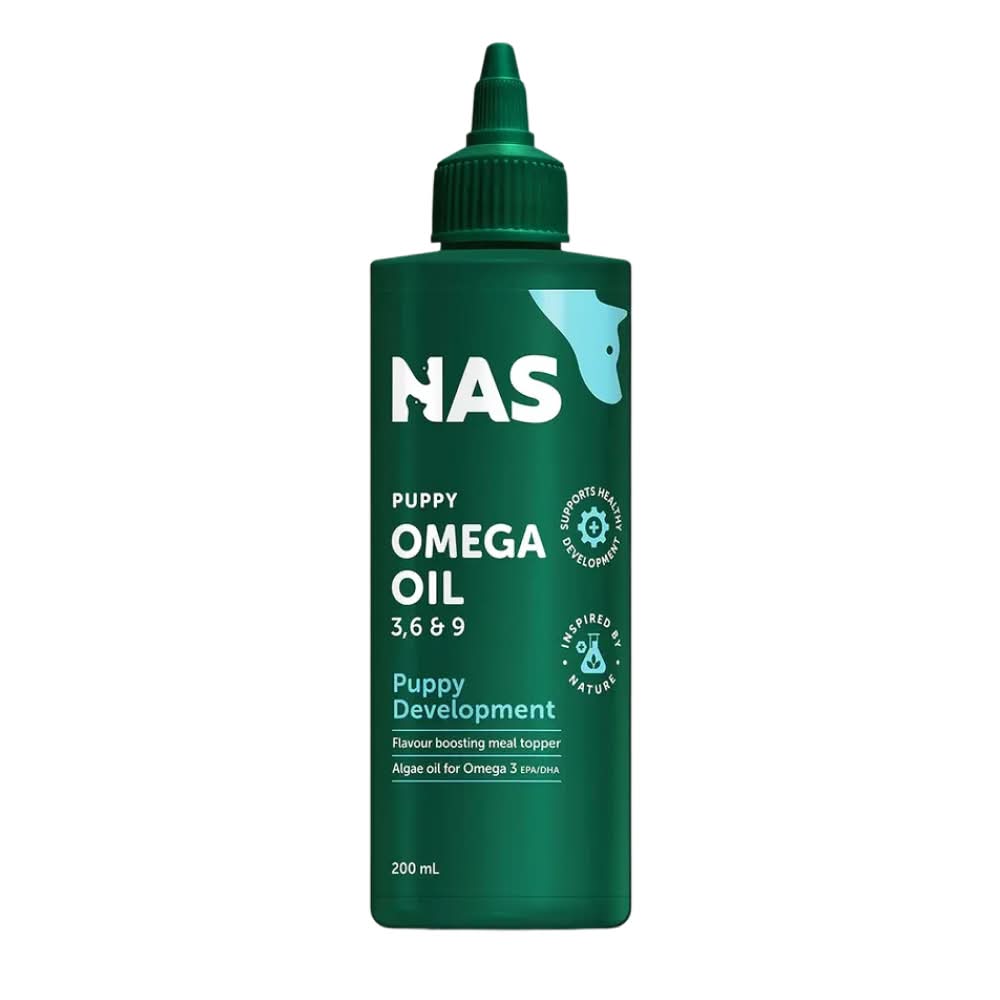
Omega Oil Puppy Development
Natural Animal SolutionsNAS Puppy Development Omega Oil combines Australian Atlantic Salmon Oil with Algae Oil to deliver a DHA-rich formula specifically calibrated for growing puppies.
The inclusion of algae-derived DHA provides a highly bioavailable source of the fatty acid most critical for brain, eye, and nervous system development — giving puppies the neurological foundation they need during their highest-growth phase.
Pros
- Contains Algae Oil alongside Salmon Oil — providing DHA directly from its original source for superior bioavailability
- Purpose-built for puppies rather than being a general all-ages formula with adjusted dosing
- Simple four-ingredient formula (Salmon Oil, Flaxseed Oil, Algae Oil, Vitamin E) with no fillers or additives
- Widely available at major Australian pet retailers including Pet Barn
Cons
- Available in a single 200ml size only — may not last long for larger breed puppies on higher daily doses
- Liquid oil format requires careful storage and refrigeration after opening
- Focused solely on Omega fatty acids — does not provide the broader vitamin and mineral support growing puppies also need
Best All-in-One Puppy Multivitamin
Puppies have elevated nutritional demands across the board — from bone and joint development to immune function, brain health, and gut balance. Even on a quality commercial diet, some puppies can benefit from a comprehensive multivitamin that fills potential gaps, particularly during high-growth phases, dietary transitions, or periods of stress like weaning and socialisation. A well-formulated puppy multivitamin should cover vitamins, minerals, Omega-3s, and gut support in a format that's easy to administer daily.

Best Start Puppy Multi Vitamin
ZamiPetZamiPet Best Start is a purpose-built puppy multivitamin that packs vitamins, minerals, Omega-3s, prebiotic fibre, and Turmeric into a single daily chew — covering brain development, bone and joint health, immune support, and gut balance all at once.
The breakable clover-shaped chew is specifically sized down to 1.8cm for smaller puppy mouths, making it easy to portion for breeds of any size from 6 weeks of age.
Pros
- Genuinely comprehensive formula covering vitamins (A, C, E, B-group), minerals (Calcium, Zinc, Magnesium, Iron, Selenium), Omega-3, prebiotic Inulin, and Turmeric in one chew
- Puppy-specific clover-shaped chew sized at 1.8cm — smaller than the adult version and easily breakable for tiny breeds
- Made with Australian-sourced chicken for palatability — most puppies take it willingly as a treat
- Widely available at Pet Barn, Pet Stock, and Pet Circle
Cons
- Contains skim milk powder, which may not suit puppies with dairy sensitivities
- Not grain-free — includes rice and starch as inactive ingredients
- Doesn't disclose specific quantities of each vitamin and mineral per chew, making it harder to assess exact nutrient levels
Best for Home-Cooked Puppy Diets
Feeding a puppy a home-cooked diet can feel like the most natural choice — fresh ingredients, full control over what goes into the bowl. But the reality is that home cooking alone almost always falls short of meeting a growing puppy's precise nutritional requirements. Without a carefully calibrated vitamin and mineral blend added to each meal, critical nutrients like Calcium, DHA, and trace minerals can be chronically under-supplied, leading to developmental issues that may not show up until months later.

Puppy Nourish²⁷ Balance Home Dog Food Meal Topper
The Nosh ProjectPuppy Nourish²⁷ Balance is a vet-approved, independently tested meal balancer containing 27 essential vitamins, minerals, and nutrients — including DHA for brain development and Calcium for skeletal growth — designed to turn a home-cooked meal into a nutritionally complete and AAFCO-compliant puppy diet.
It's the same nutrient blend used in The Nosh Project's own ready-made puppy meals, now available as a standalone powder so owners who prefer to cook at home can do so with confidence.
Pros
- Bridges the biggest risk of home cooking — ensures 27 essential nutrients are present in every meal, formulated to AAFCO growth standards
- Independently tested by Massey University and developed by pet nutritionists in conjunction with the Greencross Vet Nutrition Panel
- Includes DHA specifically calibrated for puppies' elevated brain and nervous system development needs
- Recipes are freely available on The Nosh Project website, giving full transparency over exactly what goes into each meal
Cons
- Must be used with The Nosh Project's own recipes to ensure nutritional completeness — not designed as a general-purpose sprinkle-on supplement
- Not suitable for large breed puppies, whose specific growth rate and skeletal development requirements aren't addressed by this formulation
- Currently available exclusively through Pet Barn and Greencross Vet clinics — not stocked at other major retailers
How to Choose: A Quick Decision Guide
Not every puppy needs the same supplements. Here’s a simple way to narrow it down based on your situation:
My puppy is on a complete commercial puppy food and seems healthy — A probiotic is the most broadly beneficial addition. It supports gut and immune health during the stressful first year without any risk of nutritional imbalance. Beyond that, a small dose of fish oil for omega-3 is a sensible low-risk option. You likely don’t need anything else.
My puppy is a large or giant breed — In addition to a probiotic and omega-3, consider starting a maintenance-level joint supplement from around 12 months of age (or earlier if your vet recommends it based on breed-specific risk). Make sure your puppy is on a large-breed-specific puppy food with controlled calcium levels — this is more important than any supplement.
My puppy has loose stools or digestive sensitivity — Start with a probiotic. Digestive upset is extremely common in puppies during rehoming, food transitions, and the vaccination period. A quality probiotic powder given daily usually resolves mild digestive issues within one to two weeks. If loose stools persist beyond two weeks, see your vet.
My puppy is on a homemade or raw diet — Consult a veterinary nutritionist to assess whether the diet is complete and balanced for a growing puppy. Homemade diets for puppies carry a higher risk of nutritional gaps than they do for adult dogs, and the consequences of deficiency (or excess) during growth are more severe. You may need a custom supplement protocol rather than a generic over-the-counter product.
My puppy seems healthy but I want to give them the best start — Focus on the food first. A high-quality puppy food appropriate for your breed size is the single most impactful thing you can do. If you’ve got the food right, a probiotic and a small omega-3 supplement are the two additions that offer the highest return for the lowest risk. Resist the urge to add more — with puppies, simplicity is a feature, not a limitation.
Small Breeds vs. Large Breeds: Why It Matters
The supplement needs of a Chihuahua puppy and a Great Dane puppy are fundamentally different, and treating them the same is a common mistake.
Small breed puppies (adult weight under 10 kg) reach skeletal maturity faster — usually by 10 to 12 months — and face less mechanical stress on their joints during growth. Their primary supplement needs, if any, are gut and immune support (probiotic) and general nutritional insurance (omega-3). Joint supplements are rarely necessary for small breeds during puppyhood unless there’s a diagnosed condition.
Large and giant breed puppies (adult weight over 25 kg) grow for much longer — up to 18 to 24 months for giant breeds — and their rapid growth phase places enormous stress on developing bones, joints, and cartilage. This is why large breed puppy foods exist: they contain controlled calcium-to-phosphorus ratios and lower calorie density to moderate growth speed. For these puppies, early joint support with glucosamine and omega-3 is a genuine preventative measure. The key is to support controlled, steady growth rather than trying to accelerate it — faster growth in large breeds is associated with more skeletal problems, not fewer.
Medium breed puppies (adult weight 10 to 25 kg) fall somewhere in between. A probiotic and omega-3 are universally beneficial. Joint support depends on the specific breed and whether there’s a genetic predisposition to joint disease — your vet or breeder can advise.
The Puppy Vaccination Period and Supplement Timing
The first few months of a puppy’s life involve a concentrated schedule of vaccinations, worming treatments, and often a microchipping procedure. This is a period of heightened immune activity and stress, and it’s a particularly good window for probiotic supplementation.
Vaccinations stimulate the immune system, and a well-functioning gut microbiome supports optimal immune responses. While there’s no evidence that probiotics make vaccines more effective, a healthy gut helps the puppy’s body manage the immune challenge with less digestive disruption. Many vets note that puppies on probiotics tend to experience fewer episodes of post-vaccination lethargy and digestive upset.
Worming treatments can temporarily disrupt the gut, particularly if there’s a heavy worm burden being cleared. A probiotic given during and after worming helps restore gut flora balance.
The general principle is: support the gut during any period of physiological stress. The puppy vaccination and worming schedule is exactly that kind of period.
When to Start and When to Stop
Most puppy-specific supplements are designed for the growth phase — roughly from weaning (6 to 8 weeks) through to skeletal maturity. For small breeds, this means supplementation during the puppy phase is relevant for approximately 10 to 12 months. For large and giant breeds, the growth phase extends to 18 to 24 months.
Probiotics can be started from weaning age and continued indefinitely — there’s no need to stop at maturity. Many owners transition from a puppy-specific probiotic to an adult formula and continue long-term.
Omega-3 can also be started early and continued into adulthood. The dose should be adjusted upward as your puppy gains weight — check the product label for weight-based dosing guidelines and reassess monthly during rapid growth phases.
Joint supplements for large breeds are typically started at 12 to 18 months and continued into adulthood as a preventative measure.
Multivitamins should be reassessed once your puppy transitions to an adult diet. If the adult food is complete and balanced, the multivitamin may no longer be necessary.
Are There Any Side Effects?
Puppy supplements that are appropriately formulated and dosed are generally very well tolerated. The most common side effect is mild digestive upset — slightly softer stools or increased gas — when first introducing a new supplement. This usually resolves within a few days. Starting at a half-dose for the first week minimises the risk.
The more serious risks with puppy supplementation come from over-supplementation rather than from the supplements themselves. As noted above, excess calcium, vitamin D, and iron can cause genuine harm during the growth phase. This is why puppy-specific products exist — they’re formulated with appropriate levels for a growing dog.
If you’re ever unsure whether a supplement is safe for your puppy’s age, weight, or breed, check with your vet before starting. The stakes are higher during the growth phase than they are for adult dogs, and a quick conversation can prevent an unnecessary problem.
Where to Buy Puppy Supplements in Australia
All products reviewed on this page are available online and in-store at major Australian pet retailers including Petstock and Petbarn. Some veterinary-grade puppy formulas are available through vet clinics. Buying online is generally cheaper — use the price comparison links in each product card above to find the best current price.
Frequently Asked Questions
Do puppies need supplements if they’re on a good puppy food?
When can I start giving my puppy supplements?
Can I give my puppy calcium supplements?
Are adult dog supplements safe for puppies?
What supplements do large breed puppies need?
How long should I give my puppy supplements?
Should I give supplements to a puppy on a raw diet?


Comments
0 comments
Login to Join the Conversation 💬