






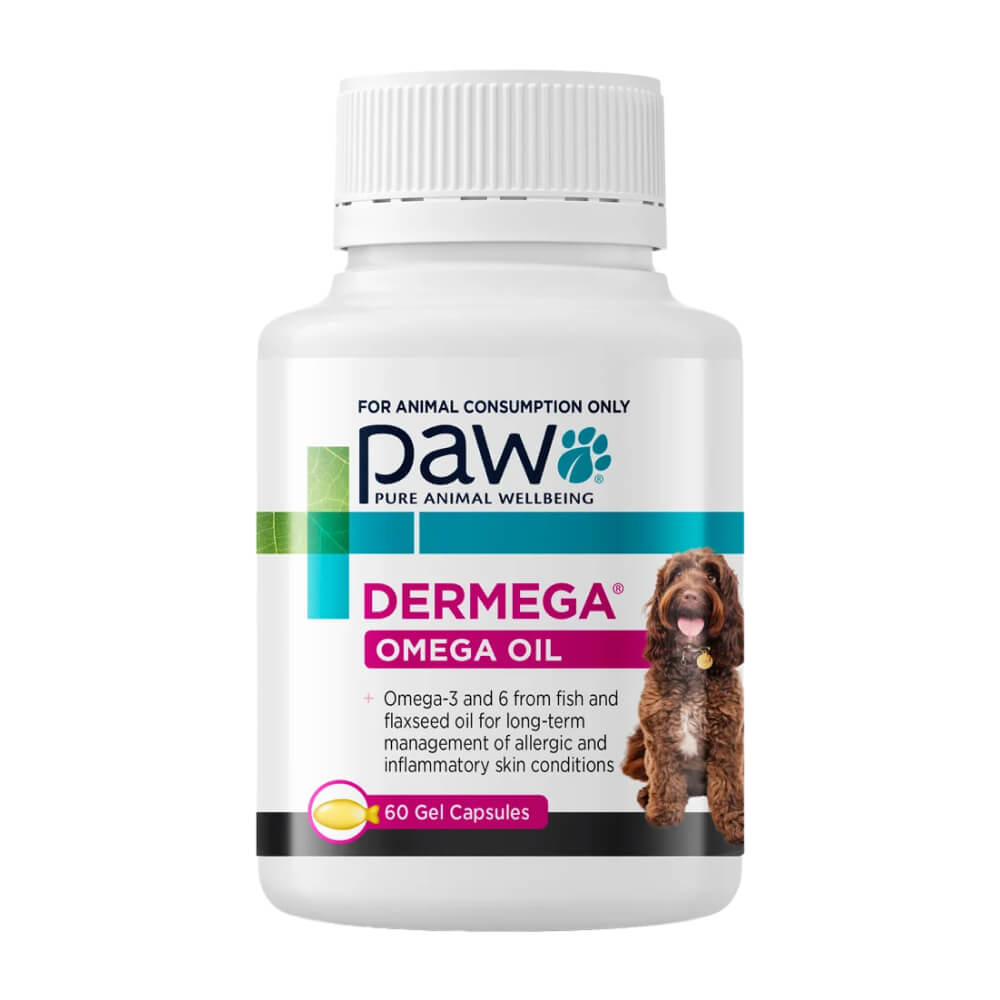
Dermega® Omega Oil Skin Support

Overview
PAW Dermega Omega Oil delivers a high concentration of omega-3 and omega-6 fatty acids — including EPA, DHA, ALA and linoleic acid — sourced from fish and flaxseed oils. Designed for the daily management of itchy, dry and inflamed skin, this palatable gel capsule supports skin barrier health and a glossy coat. Vitamin E adds antioxidant protection. Give the capsule whole or snip and squeeze onto food. Suitable for dogs and cats of all life stages. Developed by vets and made in New Zealand.
Ingredients
Fish Oil, Flaxseed Oil, Linoleic Acid, D-Alpha-Tocopherol, Gelatin, Glycerol

Fish Liver Oil, Oleum Piscis, Oleum Jecoris, Oleum Piscarium
Fish oil is a nutrient-rich oil derived from the tissues of oily fish, making it an animal-based ingredient. It is primarily included in pet food for its high content of omega-3 fatty acids, which support skin, coat, and joint health. Fish oil is utilised in a purified, liquid form rather than as whole fish, ensuring optimal absorption and safety for pets.
Fish oil is included as a source of omega-3 fatty acids to support skin, coat, and joint health, enhancing the nutritional profile of the product. Its presence also serves as a marketing point, appealing to consumers seeking functional health benefits for their pets.

Flaxseed Oil, Oleum Lini, E401, Linum Usitatissimum Oil
Linseed oil, derived from the seeds of the flax plant (Linum usitatissimum), is a plant-based ingredient valued for its high content of omega-3 fatty acids, particularly alpha-linolenic acid (ALA), which supports skin and coat health in pets. In pet food, linseed oil is utilised in its natural, cold-pressed form to optimise nutrient retention and bioavailability.
Linseed oil is included as a source of omega-3 fatty acids to support skin and coat health, providing a plant-based alternative to fish oils. Its presence also allows manufacturers to market the product as containing beneficial oils for overall wellbeing.

Cis-9,12-Octadecadienoic Acid, EFA 18:2, EFA Linoleate, EFA LA
Linoleic acid is an essential omega‑6 polyunsaturated fatty acid required in the diet of dogs. In dog food manufacturing, it is typically supplied through plant oils such as sunflower oil, safflower oil, or corn oil. Linoleic acid plays a critical role in maintaining healthy skin and coat, supporting cell membrane structure, and regulating inflammatory responses. When included at appropriate levels, it is safe and beneficial, but excessive intake may contribute to inflammation or imbalance with omega‑3 fatty acids.
Manufacturers include linoleic acid in dog food formulations to meet essential fatty acid requirements for canine health, as dogs cannot synthesise it themselves; its inclusion ensures nutritional adequacy and regulatory compliance in the Australian market.

Vitamin E, D-Alpha Tocopherol, RRR-Alpha Tocopherol, E307
Alpha tocopherol is a form of vitamin E derived from plant sources, such as vegetable oils and nuts. It functions primarily as an antioxidant, helping to protect pet food fats from oxidation and supporting immune health. Alpha tocopherol is not used in its raw, natural state but is instead utilised as a stabilised compound to optimise safety, efficacy, and absorption in pet food formulations.
Alpha tocopherol is included as a natural antioxidant to help preserve fats and extend the product’s shelf life. It also serves as a label-friendly source of vitamin E, appealing to health-conscious consumers.

Gelatin, E441, Hydrolysed Collagen, Collagen Hydrolysate
Gelatine is a protein derived from animal collagen, typically sourced from the skin, bones, and connective tissues of cattle or pigs. It serves as a gelling agent, providing structure and texture to pet foods while also contributing to protein content. Gelatine is not used in its raw animal form but is processed and purified to ensure safety, digestibility, and optimal functional performance.
Gelatine is included as a functional binding and gelling agent to improve the texture and cohesiveness of pet food products. It also serves as a cost-effective protein source that can enhance palatability.

Glycerol, 1,2,3-Propanetriol, E422, Propane-1,2,3-Triol
Glycerine is a colourless, odourless liquid derived from plant or animal fats. In pet food, it serves primarily as a humectant, helping to retain moisture and improve texture. Glycerine is not used in its natural, raw state but is refined and purified for food-grade applications to ensure safety and optimal absorption. It also aids in palatability and shelf-life extension.
Glycerine is included as a humectant to retain moisture and improve the texture of pet food products, helping to prevent them from drying out. It also acts as a mild sweetener to enhance palatability for pets.

.png)


Comments
0 comments
Login to Join the Conversation 💬