







Dental Toothbrushes Parsley and Mint Medium Breed Dog Treats

Overview
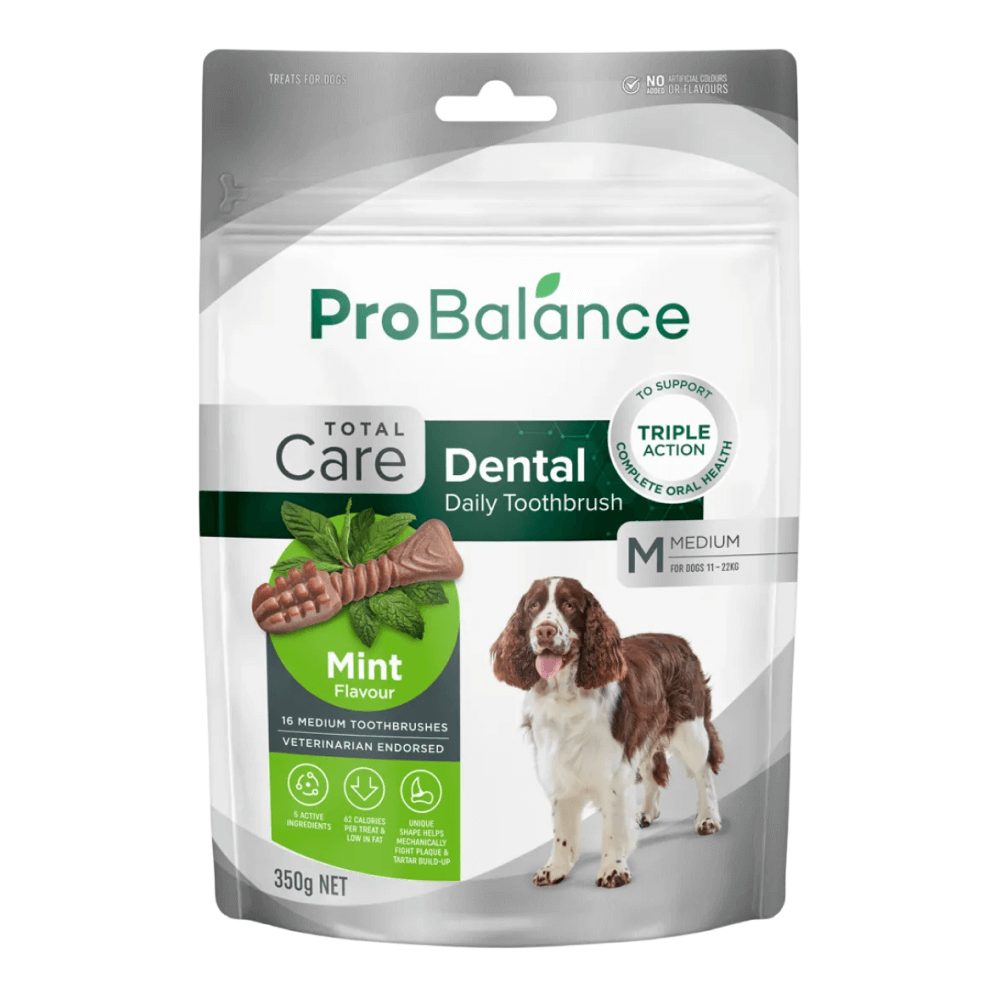
ProBalance Parsley and Mint Flavoured Dental Toothbrush Treats (Medium Breed) are crunchy dental snacks formulated for dogs of all breeds and life stages. They’re designed to help clean teeth and support oral hygiene through firm chewing that reduces plaque and tartar buildup.
These treats are available in Natural or Parsley and Mint flavour, and come in three sizes — Small, Medium and Large — to suit different dog sizes and chewing needs.
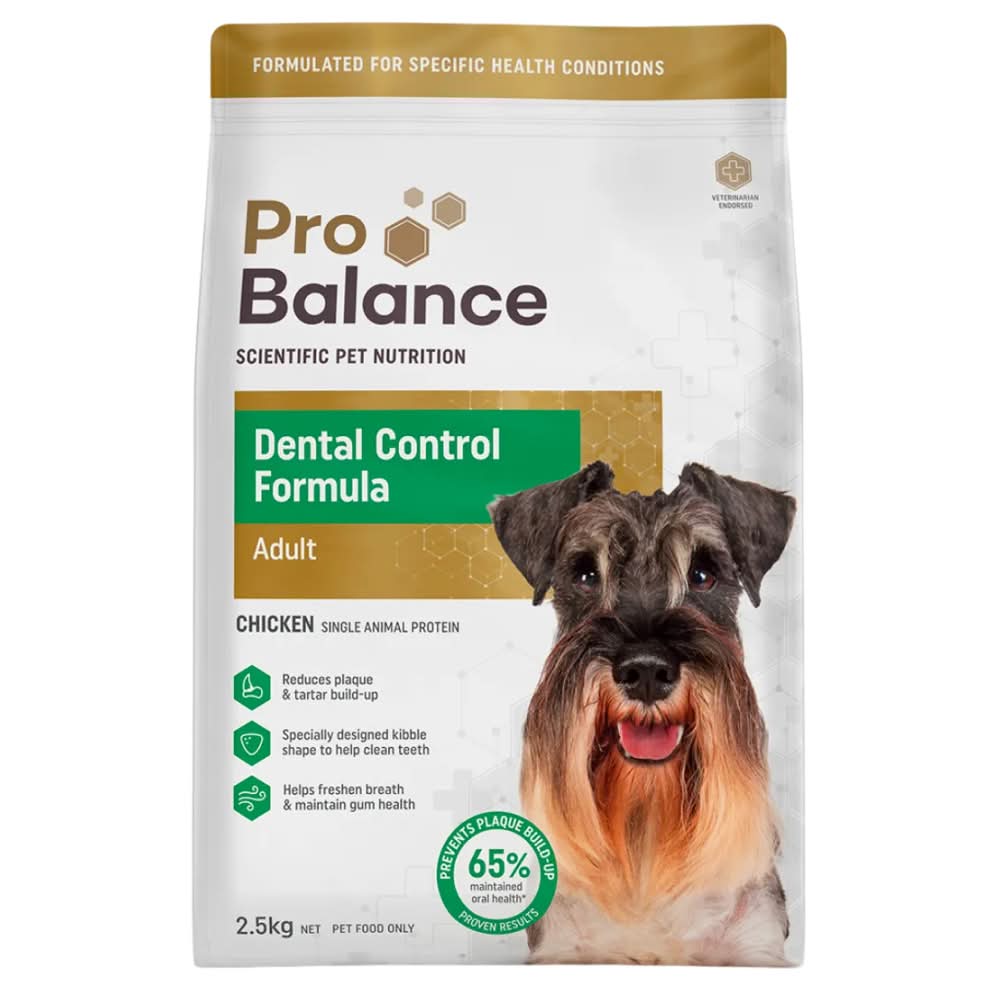
They belong to the ProBalance Dental Treats range, offering a dental care focused treat option that helps maintain clean teeth and fresh breath while giving your dog an enjoyable chew.
Nutritional Analysis
Ingredients
Potato Starch, Tapioca Starch, Vegetable Glycerin, Wheat Gluten, Sunflower Oil, Vegetable Enhancer, Cellulose, Parsley, Calcium Carbonate, Vitamin C, Fructo-Oligosaccharide, Sodium Tripolyphosphate, Sodium Propionate, Turmeric, Peppermint Oil, Bromelain, Zinc Oxide.

Solanum Tuberosum Starch, E1401, Native Potato Starch, Potato Flour
Potato starch is a carbohydrate extracted from the tubers of the potato plant (Solanum tuberosum), a plant-based ingredient. It is primarily included in pet food as a source of easily digestible energy and to improve texture and binding. Potato starch is utilised in its processed, purified form rather than as whole potatoes, ensuring consistency and digestibility in the final product.
Potato starch is included as a cost-effective carbohydrate source and bulk-adding agent, helping to optimise product texture and binding. It also contributes to a label-friendly formulation that appeals to consumers seeking grain-free options.

Cassava Starch, Manioc Starch, Yucca Starch, Manihot Esculenta Starch
Tapioca starch is a carbohydrate extracted from the root of the cassava plant, a tropical tuber native to South America. Primarily, it serves as a highly digestible energy source and a natural thickening agent in pet food. Tapioca starch is used in its natural, processed form, not as a whole food, to optimise texture and palatability while supporting digestive health.
Tapioca starch is included as a cost-effective carbohydrate source that provides bulk and texture to pet food formulations. It also serves as a binding agent, helping to improve kibble structure and stability.

Vegetable Glycerol, Glycerine, E422, Vegetable Glycerin
Vegetable glycerine is a clear, odourless liquid derived from plant oils, typically palm, soy, or coconut. It serves primarily as a humectant, helping to retain moisture in pet food and improve texture. Rather than being used in its raw plant form, vegetable glycerine is extracted and purified for safe consumption and optimal functionality in pet nutrition formulations.
Vegetable glycerine is included as a humectant to retain moisture and improve the texture of pet food products, helping to prevent them from drying out. It also enhances palatability, making the food more appealing to pets.

Vital Wheat Gluten, Seitan, Gluten, Triticum Aestivum Gluten
Wheat gluten is a plant-derived protein extracted from wheat grains. It serves as a concentrated protein source and functional binder in pet foods, enhancing texture and protein content. Wheat gluten is not used in its whole grain form; instead, it is isolated and processed to optimise digestibility and nutritional value for pets, ensuring both safety and effective nutrient absorption.
Wheat gluten is included as a concentrated, cost-effective protein source that helps improve the texture and binding of kibble. It also enhances product consistency and can contribute to the protein content declared on the label.

Helianthus Annuus Seed Oil, Helianthus Annuus Oil, E471, Vegetable Oil (Helianthus Annuus)
Sunflower oil is a plant-derived oil extracted from the seeds of the sunflower (Helianthus annuus). It serves as a valuable source of energy and provides essential fatty acids, particularly linoleic acid, which supports skin and coat health in pets. Sunflower oil is utilised in its refined liquid form, not as whole seeds, to optimise digestibility and nutrient availability in pet food formulations.
Sunflower oil is included as a cost-effective source of unsaturated fats to provide essential fatty acids that support skin and coat health. It also enhances palatability and contributes to the overall energy content of the pet food.

Flavour Enhancer, Flavour Improver, Taste Enhancer, Taste Improver
Vegetable Enhancer is a plant-derived ingredient formulated to boost the nutritional profile and palatability of pet foods. Sourced from a blend of vegetables, it provides essential vitamins, minerals, and phytonutrients that support overall health. Rather than using whole vegetables, Vegetable Enhancer is utilised in a concentrated, processed form to ensure consistent nutrient delivery and improved digestibility for pets.
Vegetable enhancers are included to improve the visual appeal and perceived nutritional value of pet food, supporting marketing claims of added vegetables. They may also contribute minor flavour or textural benefits to optimise palatability.

Beta-Glucan Homopolysaccharide, E460, Microcrystalline Cellulose, Plant Fibre
Cellulose is a plant-derived carbohydrate sourced primarily from the cell walls of fibrous plants. It serves as an insoluble dietary fibre in pet food, supporting healthy digestion and promoting optimal stool quality. Cellulose is not used in its raw plant form but is processed into a purified, food-grade powder to ensure consistency, safety, and effective fibre delivery in formulated diets.
Cellulose is included as a cost-effective fibre source to promote digestive health and regulate stool quality in pet food formulations. It also serves as a bulk-adding agent, helping to control calorie density without significantly impacting palatability.

Petroselinum Crispum, Garden Parsley, Common Parsley, E461
Parsley is a leafy herb of plant origin, commonly used in pet food for its natural antioxidant properties and as a source of vitamins such as vitamin K and C. It is primarily included to support immune health and freshen breath. In pet food formulations, parsley is used in its natural, whole form, ensuring the retention of its beneficial phytonutrients and fibre content.
Parsley is included as a label-friendly ingredient to appeal to pet owners seeking natural or recognisable components in pet food. It may also be added for its perceived breath-freshening properties, though its functional impact on canine nutrition is minimal.

Chalk, Limestone, E170, Marble Dust
Calcium carbonate is a naturally occurring mineral compound derived from sources such as limestone or marine shells. It is primarily included in pet food as a source of calcium, essential for healthy bones, teeth, and metabolic functions. Calcium carbonate is not used in its raw mineral state; instead, it is processed into a purified, food-grade compound to optimise safety and bioavailability for pets.
Calcium carbonate is included as a cost-effective mineral supplement to provide a bioavailable source of calcium, supporting bone health and proper nutritional balance. It also functions as a pH stabiliser, contributing to product consistency and shelf stability.

Ascorbic Acid, L-Ascorbic Acid, E300, L-Threo-Hex-2-Enono-1,4-Lactone
Vitamin C, also known as ascorbic acid, is a water-soluble vitamin of plant origin commonly included in pet food formulations. Its primary purpose is to support immune function and act as an antioxidant, helping to protect cells from oxidative damage. Vitamin C is not used in its natural fruit form but is instead utilised as a synthesised compound to ensure stability and consistent dosage.
Vitamin C is included as an antioxidant to help preserve the freshness and stability of the product by slowing oxidation. It may also be added for its perceived health benefits, supporting marketing claims related to immune support.

Oligofructose, FOS, Oligofructan, E968
Fructooligosaccharides are short-chain carbohydrates derived from plant sources such as chicory root. They serve primarily as prebiotics, supporting digestive health by promoting the growth of beneficial gut bacteria. Fructooligosaccharides are not used in their whole plant form but are extracted and purified for inclusion in pet food, ensuring optimal efficacy and digestibility for companion animals.
Fructooligosaccharides are included as a prebiotic fibre to support digestive health by promoting beneficial gut bacteria. They also serve as a label-friendly functional ingredient that can enhance the perceived nutritional value of the product.

Pentapotassium Triphosphate, STPP, E451(i), Triphosphoric Acid Pentasodium Salt
Sodium tripolyphosphate is a synthetic compound derived from inorganic sources, commonly used in pet food formulations. Its primary function is to act as a preservative and to help maintain the texture and moisture of products. Sodium tripolyphosphate is not used in its natural mineral form; instead, it is utilised as a processed salt to ensure safety, stability, and optimal absorption.
Sodium tripolyphosphate is included as a functional additive to improve product texture and moisture retention, helping maintain palatability and appearance. It also acts as a preservative to extend shelf life and inhibit spoilage.

Propanoic Acid Sodium Salt, E281, Sodium Propanoate, Propionic Acid Sodium Salt
Sodium propionate is a synthetic compound derived from the reaction of propionic acid with sodium hydroxide. It is primarily used as a preservative in pet foods to inhibit the growth of mould and some bacteria, thereby extending shelf life. Sodium propionate is not used in its natural raw form but is utilised as a sodium salt to ensure safety, stability, and effective preservation.
Sodium propionate is included as a preservative to inhibit mould and bacterial growth, thereby extending the product’s shelf life. Its use helps maintain product safety and stability during storage and distribution.

Curcuma Longa, Indian Saffron, Jiang Huang, E100
Turmeric is a vibrant yellow spice derived from the root of the Curcuma longa plant, making it a plant-based ingredient. It is primarily included in pet food for its natural antioxidant and anti-inflammatory properties, supporting overall health and wellbeing. Turmeric is used in its natural powdered form, ensuring pets benefit from its active compound, curcumin, in a safe and bioavailable manner.
Turmeric is included as a label-friendly ingredient to appeal to health-conscious consumers due to its association with natural antioxidants and anti-inflammatory properties. Its presence may also support marketing claims related to holistic or functional pet foods, despite being used in small quantities with minimal direct nutritional impact for pets.

Mentha Piperita Oil, Oil of Mentha Piperita, Mentha Piperita Essential Oil, Peppermint Essential Oil
Peppermint oil is a plant-derived essential oil extracted from the leaves of the peppermint plant (Mentha × piperita). It is primarily included in pet food for its natural flavouring properties and potential digestive support. Peppermint oil is utilised in its extracted oil form, rather than as whole leaves, to ensure consistent potency and safe inclusion levels in formulations.
Peppermint oil is included as a label-friendly ingredient to appeal to pet owners seeking natural additives and to impart a fresh aroma that may enhance product palatability. Its use is primarily for marketing purposes and sensory appeal rather than significant nutritional benefit for dogs.

Ananas Comosus Protease, EC 3.4.22.32, Pineapple Protease, Ananase
Bromelain is an enzyme complex derived from the stem and fruit of the pineapple plant (Ananas comosus), making it a plant-based ingredient. It is primarily included in pet food for its proteolytic activity, aiding in protein digestion and supporting gastrointestinal health. Bromelain is not used in its raw plant form but is extracted and purified to optimise its functional benefits and ensure consistent efficacy.
Bromelain is included as a functional enzyme to aid in protein digestion and improve nutrient absorption in pet food formulations. Its presence may also serve as a marketing differentiator, appealing to consumers seeking added health benefits for their pets.

Zinc White, CI 77947, Calamine, Chinese White
Zinc oxide is an inorganic compound derived from the mineral zinc, commonly used in pet food as a supplemental source of the essential trace mineral zinc. Its primary benefit is to support immune function, skin health, and enzyme activity. Zinc is not used in its natural metallic state; instead, it is utilised as zinc oxide to optimise safety, stability, and bioavailability in pet nutrition.
Zinc oxide is included as a cost-effective and stable source of essential zinc, supporting nutritional adequacy in pet food formulations. Its use ensures compliance with regulatory requirements for trace minerals while maintaining product shelf stability.
Score Card
Every product is assessed using the Dog Directory Integrity Framework, giving dog owners a clear and trustworthy way to compare products. This ensures each review reflects overall quality and formulation integrity, not just marketing claims.
- /40
- /30
- /15
- /10
- /5
- Overall ScoreScore Info
As a pet owner, you naturally want the best for your dog. From regular vet visits to nutritious meals, ensuring your furry friend is healthy and happy is always top of mind. But beyond food and exercise, supplements are becoming an increasingly popular way to support your dog’s overall well-being. In this comprehensive guide, we’ll dive into the world of dog supplements, explaining what they are, why they matter, and how to choose the right ones for your pup.
0/100

About
PRODUCT TAGS
About the Brand
ProBalance
ProBalance offers premium Australian made dog food and functional treats formulated with high strength vitamins to support lifelong health. Explore their range of single protein meals and dental care solutions endorsed by veterinary nutritionists to help your dog thrive.


Comments
0 comments
Login or Register to Join the Conversation