


.png)

Best Calming Supplements for Dogs in Australia
Published
March 7, 2026
Anxiety is one of the most common issues Australian dog owners deal with — whether it's fear of thunderstorms, stress during car trips, or the low-level restlessness that comes with separation. A quality calming supplement won't sedate your dog or change their personality, but it can take the edge off genuine stress and make difficult situations more manageable. We've reviewed the most widely available options in Australia to help you find what actually works.

IN SHORT:
The best calming supplements for dogs contain evidence-backed ingredients like L-theanine, casein hydrolysate, or a combination of calming herbs including valerian and passionflower.
Situational Anxiety — fireworks, travel, vet visits — a fast-acting supplement given one to two hours before the event is most effective.
Ongoing Anxiety or behavioural issues — a daily supplement taken consistently over four to six weeks produces the best results. All products reviewed on this page are available over the counter at leading pet stores without a prescription.
OUR PICKS:
Do Calming Supplements for Dogs Actually Work?
The honest answer is yes — for the right dog, with the right ingredient, at the right dose. Calming supplements are not sedatives. They work by supporting the neurochemical pathways associated with stress and relaxation, rather than forcing drowsiness. A well-formulated calming supplement should produce a noticeably calmer dog that is still alert, engaged, and themselves — just less reactive to the triggers that normally cause distress.
The evidence base varies by ingredient. Some — like L-theanine and alpha-casozepine (a casein hydrolysate derived from milk protein) — have been studied specifically in dogs and show consistent results in controlled trials. Others, like valerian and passionflower, have reasonable traditional and early clinical support but less robust canine-specific data. The supplement category as a whole is more variable in outcome than joint supplements, because anxiety in dogs has multiple causes and not every product suits every anxiety profile.
The most important factor is matching the supplement to the type of anxiety your dog experiences. A product formulated for acute situational anxiety (fireworks, thunderstorms) works differently from one designed for ongoing generalised anxiety or separation-related behaviour.
Types of Dog Anxiety: Matching the Supplement to the Problem
Situational / Event-Based Anxiety
This is the most common category and the most straightforward to address with supplements. Triggers include fireworks, thunderstorms, car travel, vet visits, grooming, and other predictable stressful events. For situational anxiety, you want a fast-acting supplement that can be given one to two hours before the anticipated trigger. Products containing L-theanine, alpha-casozepine, or melatonin are most commonly used for this purpose.
Separation Anxiety
Separation anxiety is more complex and more difficult to resolve with supplements alone. It involves a dog's response to being left alone — typically manifesting as destructive behaviour, vocalisation, house soiling, or self-harm. Supplements can reduce the intensity of the anxiety response and make behaviour modification programmes more effective, but they are rarely sufficient as a standalone solution. If your dog has true separation anxiety, a vet or veterinary behaviourist consultation is worthwhile alongside supplementation.
Generalised / Chronic Anxiety
Some dogs are chronically anxious — always on edge, reactive to multiple triggers, or never fully settled even in familiar environments. This profile typically responds best to daily supplementation over a sustained period (four to eight weeks minimum) rather than as-needed dosing. L-theanine, casein hydrolysate, and some herbal combinations have the best track record for this category.
Noise Phobia
A specific subset of situational anxiety with a particularly intense response to sudden loud sounds. Dogs with true noise phobia (full panic responses to fireworks or thunderstorms) often require veterinary intervention beyond supplementation — prescription medication may be appropriate for severe cases. Supplements can form part of a layered management plan but should not be the only tool for a dog with severe noise phobia.
Key Ingredients to Look For
L-Theanine
An amino acid found naturally in green tea, with a well-documented calming effect in both humans and dogs. L-theanine promotes alpha wave brain activity — associated with a relaxed but alert state — without producing sedation. It has been studied specifically in dogs and shown to reduce anxiety-related behaviours in response to noise and separation. It is fast-acting (typically within 30 to 60 minutes) and safe for long-term daily use. One of the most evidence-backed ingredients in the calming supplement category.
Alpha-Casozepine (Casein Hydrolysate)
A bioactive peptide derived from the digestion of milk protein (alpha-s1 casein). Alpha-casozepine binds to GABA receptors in the brain — the same receptors targeted by benzodiazepine medications — and produces a calming effect without the sedation or dependency risk. Several controlled studies in dogs have shown it to be effective for both situational and chronic anxiety. It is one of the few calming ingredients with a mechanism of action similar to prescription medication but available over the counter.
Melatonin
A hormone naturally produced by the pineal gland to regulate sleep-wake cycles. At supplemental doses, melatonin has a mild calming effect and is commonly used for noise phobia and situational anxiety in dogs — particularly at night or in the evening when thunderstorms or fireworks typically occur. It is fast-acting, well tolerated, and available in several Australian dog supplement products. Less useful for daytime situational anxiety or generalised anxiety, where its sleep-regulating mechanism is less relevant.
Valerian Root
A well-known herbal sedative with a reasonable evidence base in dogs. Valerian acts on GABA receptors and has a mild anxiolytic effect at appropriate doses. It is more sedating than L-theanine or casein hydrolysate — which makes it useful for situations where settling the dog down is the goal (travel, vet visits), but less ideal where you want the dog calm but still engaged. It has a strong smell that some dogs find off-putting; palatability can be a challenge.
Passionflower
A herb with GABA-modulating properties and a gentle calming effect. Commonly combined with valerian in herbal formulations. The canine-specific evidence base is limited but it has a good safety profile and contributes to the combined effect of multi-herb products. Not typically used as a standalone ingredient in Australian dog supplements.
Chamomile
Mild anti-anxiety and digestive-soothing properties. Commonly included in combination calming products at low doses. The calming effect on its own is modest but chamomile is a useful component in a multi-ingredient formula, particularly where anxiety is accompanied by digestive upset — a common stress response in dogs.
Tryptophan
An amino acid precursor to serotonin, the neurotransmitter most associated with mood regulation and wellbeing. Supplemental tryptophan aims to support serotonin production, and there is reasonable evidence for its calming effect in dogs. It is slower-acting than L-theanine and better suited to daily supplementation for chronic anxiety than acute situational use. Often found in combination products alongside other calming ingredients.
Situational vs Daily: Choosing the Right Format
How you use a calming supplement matters as much as what is in it. There are two distinct use cases:
- Situational: Give two hours before a known trigger (fireworks, car travel, vet visit). Products designed for this use case often contain fast-acting ingredients like L-theanine, casein hydrolysate, or melatonin in higher per-dose concentrations. Chews and pastes are most common in this format.
- Daily: For chronic anxiety or ongoing behavioural issues, a daily supplement taken consistently is more appropriate. Lower-dose products designed for regular use often combine multiple calming ingredients at maintenance levels. Powders mixed into food work well for daily protocols.
Some products are formulated for both purposes and include loading-dose instructions for acute situations alongside a maintenance-dose schedule for daily use. These are the most versatile option if your dog has both ongoing anxiety and specific trigger events.
What to Expect and When to Reassess
For situational use, most owners notice a difference within the first one to two uses at the correct dose. If there is no observable effect after three attempts with a product at the full dose, try a different ingredient profile — the mechanism of action may not suit your dog's specific anxiety response.
For daily use, give any new supplement four to six weeks of consistent daily dosing before evaluating. Neurochemical effects from ingredients like tryptophan and casein hydrolysate build over time. Inconsistent supplementation is the most common reason for poor results.
If your dog's anxiety is severe, significantly impacting their quality of life, or not responding to supplementation after a genuine trial period, a vet consultation is the right next step. Prescription anxiolytic medications are appropriate for some dogs, and supplements often work best as a complement to medical treatment rather than a replacement for it.
Best for Situational Anxiety (Fireworks, Travel and Vet Visits)
For dogs that become stressed in specific high-pressure situations, a fast-acting calming supplement in chew form can be far more practical than a daily powder — especially when you need something that's easy to give on the go.
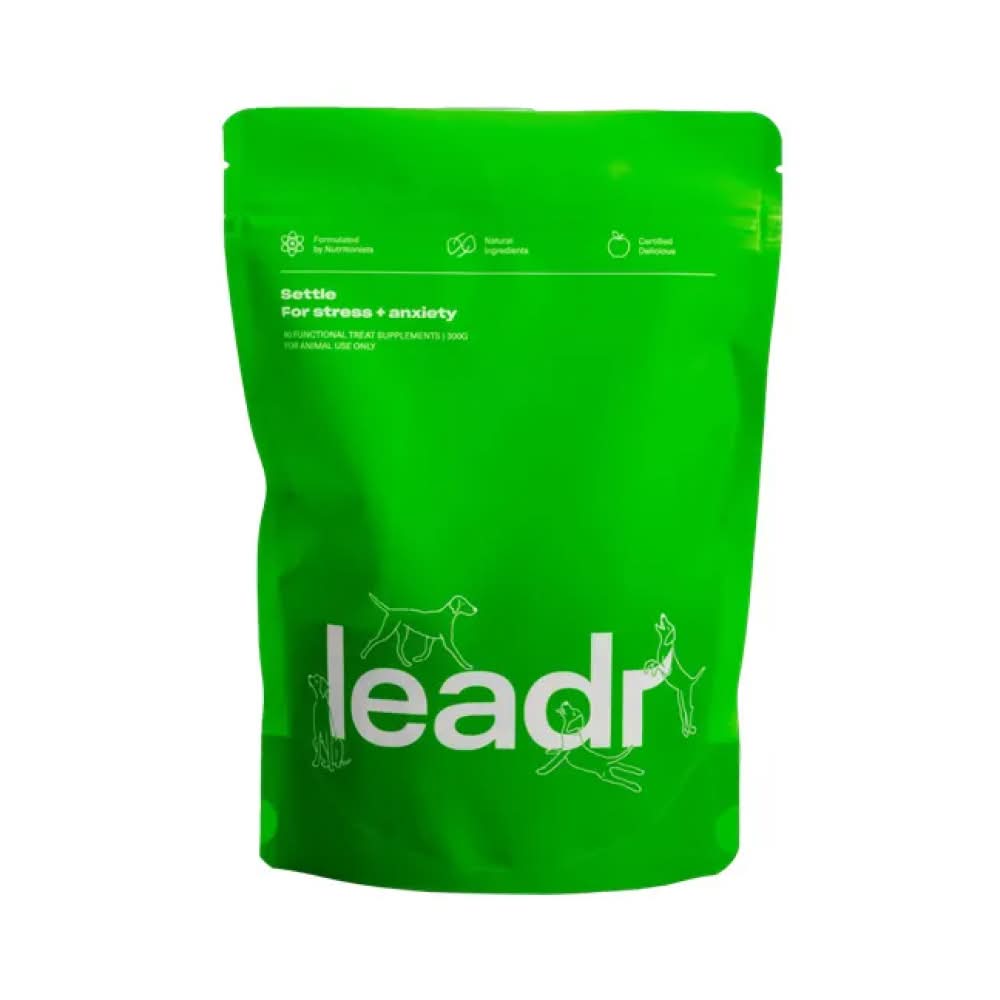
Settle Stress and Anxiety Supplement Chew
Leadr Settle delivers a blend of calming actives in a soft chew designed to take the edge off anxiety-inducing events, without the need for sedation or prescription medication.
Key ingredients typically include L-Theanine and B vitamins, which work together to promote a calm, relaxed state without causing drowsiness or affecting your dog's normal behaviour.
Pros
- Chew format is easy to administer quickly before a stressful event
- No measuring or food mixing required
Cons
- May not be sufficient for dogs with severe anxiety
- Higher cost per serve than powder alternatives
Best for Daily Anxiety Management in Nervous Dogs
For dogs that experience generalised anxiety rather than isolated triggers, finding a calming supplement for dogs that can be given consistently as part of a daily routine is often more effective than relying on situational products alone.

Stress and Anxiety Powder Supplement
Petz Park Stress and Anxiety Supplement is a powder formula designed for ongoing use, combining natural calming ingredients to help regulate your dog's stress response over time.
Commonly used ingredients such as ashwagandha and magnesium work to support the nervous system at a foundational level, making it well suited to dogs that are persistently anxious rather than occasionally unsettled.
Pros
- Designed for daily use, supporting long-term nervous system health
- Powder format is easy to incorporate into existing feeding routines
Cons
- Less practical for acute or situational anxiety
- Results may take several weeks of consistent use to become noticeable
Best for Multi-Dog Households and Everyday Stress
When you have more than one dog to manage — or a dog that faces low-level daily stressors like separation, noise, or changes in routine — a reliable, easy-to-dose calming supplement for dogs that works consistently across different sizes and temperaments is a practical necessity.
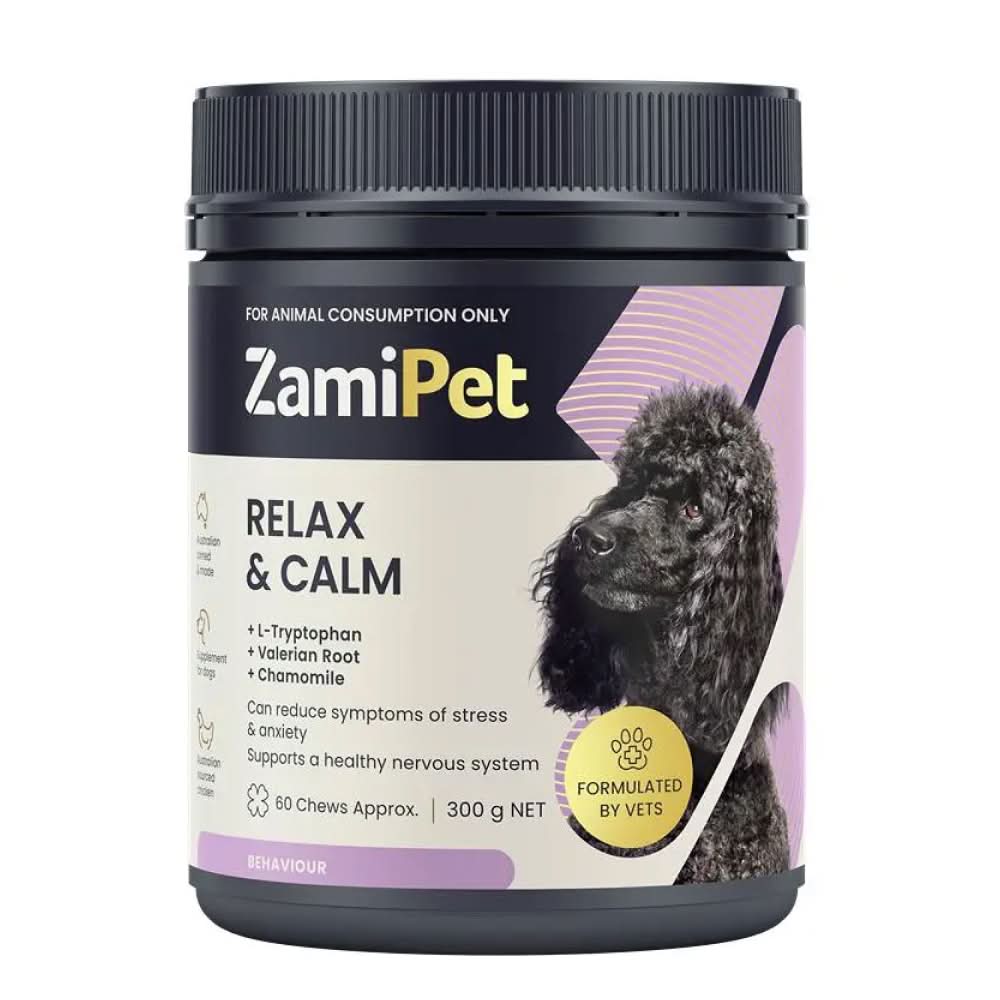
Relax and Calm Supplement for Dogs
ZamiPet Relax and Calm is an Australian-made supplement available in both chew and powder formats, formulated with ingredients including L-Tryptophan and B vitamins to support a calm and settled temperament.
Its flexible dosing and broad suitability make it one of the more versatile calming options available through Australian pet retailers.
Pros
- Australian-made and widely available through major pet retailers
- Versatile format options to suit different dogs and feeding preferences
Cons
- Chew format contains natural flavouring that may not suit all dietary preferences
- Premium pricing compared to some powder-only alternatives
Best for a Natural, Herbal Approach to Calming
For owners seeking a natural calming supplement for dogs that draws on herbal tradition rather than synthetic compounds, a formula built around plant-based actives offers a gentler starting point for managing mild to moderate anxiety.
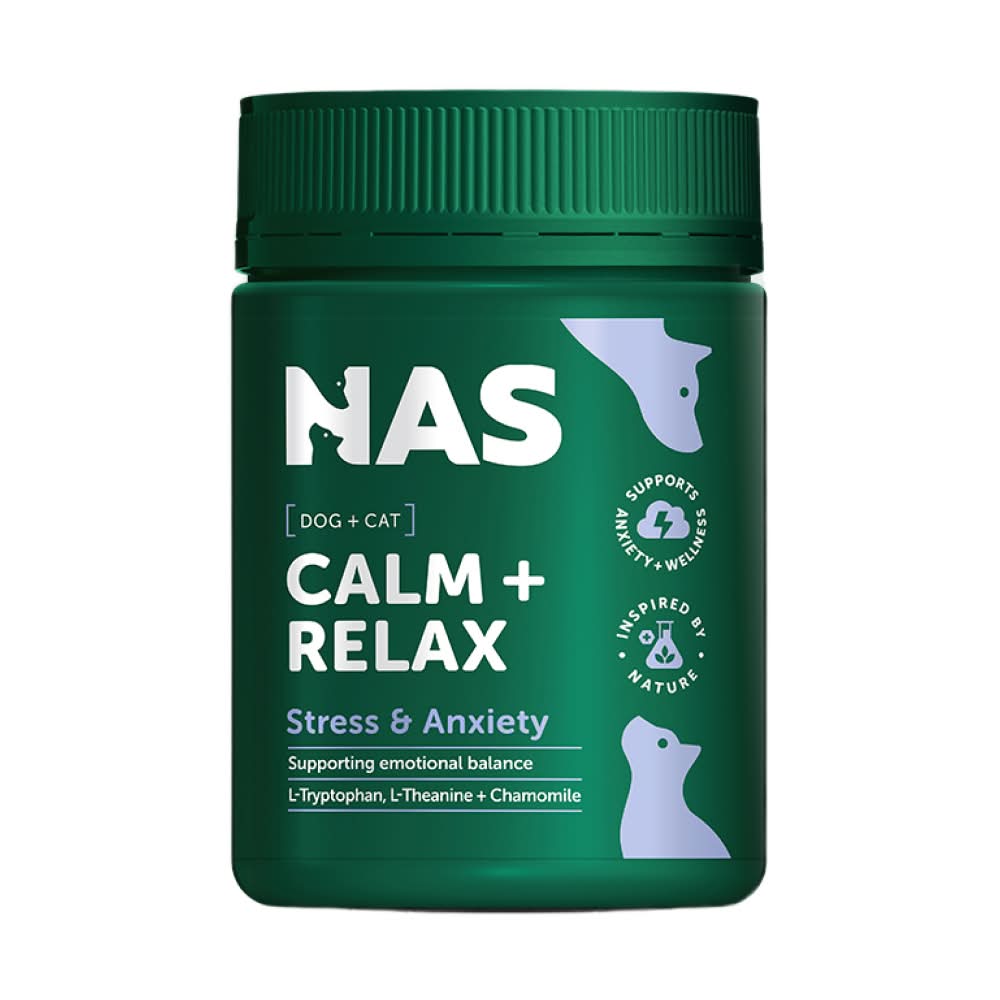
Calm and Relax Powder
NAS Calm and Relax is a herbal powder blend formulated by Natural Animal Solutions, using ingredients such as valerian root and chamomile to support relaxation and reduce stress-related behaviours.
The formula is free from artificial additives, making it a popular choice among owners who prefer a whole-food or integrative approach to their dog's health.
Pros
- Natural, herbal ingredient profile with no artificial additives
- Suitable for long-term daily use
Cons
- Herbal formulations carry less clinical research than amino acid-based alternatives
- May not be potent enough for dogs with severe or complex anxiety
Best for Raw Feeders Dealing with a Stressed Dog
For raw feeding households looking for a calming supplement that aligns with a species-appropriate philosophy, a clean powder with minimal processing and a transparent ingredient list is often the preferred choice.
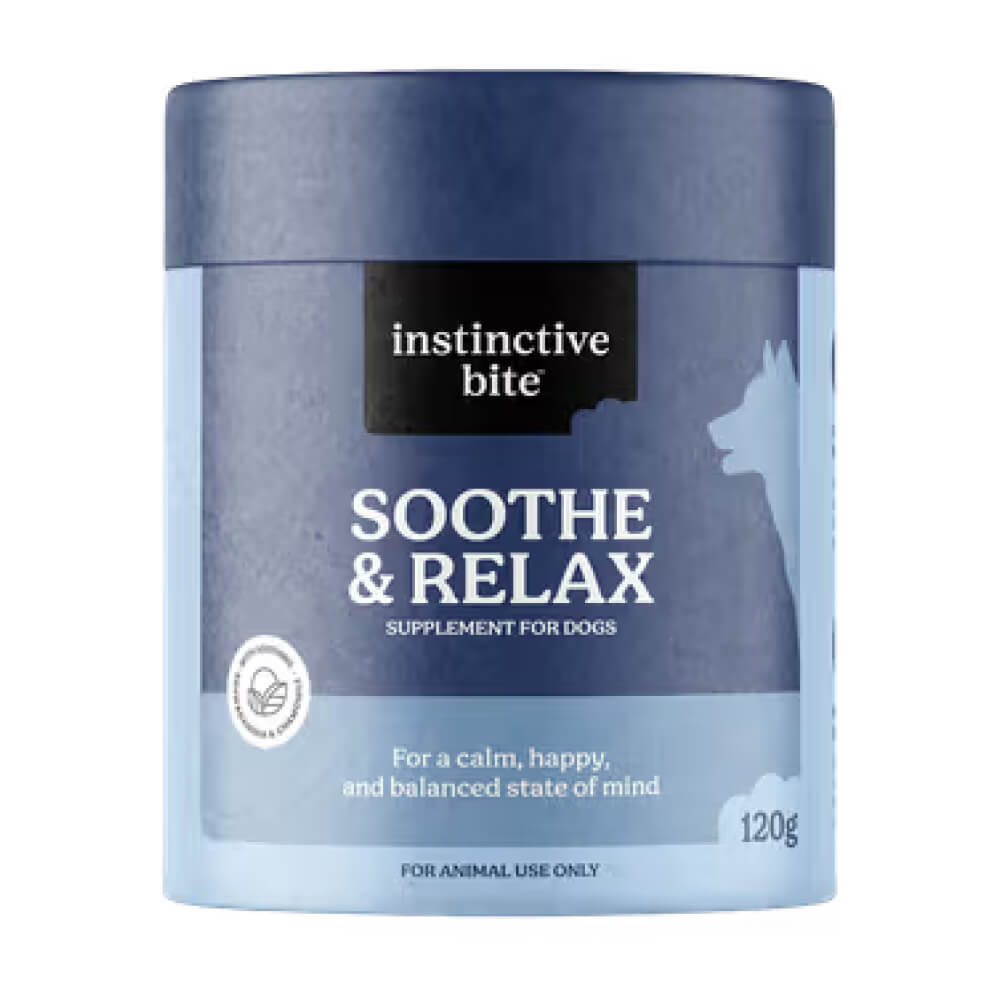
Soothe and Relax Supplement Powder
Instinctive Bite Soothe and Relax is a fine supplement powder designed to support calm behaviour in dogs, using an ingredient profile that sits comfortably alongside a raw or whole-food diet.
Key actives work to ease tension and promote relaxation without disrupting digestion or conflicting with the nutritional balance of a fresh feeding regime.
Pros
- Clean formula that integrates naturally with raw feeding
- Free from artificial fillers or flavours
Cons
- Less widely available than mainstream calming brands
- May require consistent long-term use before behavioural changes become noticeable
How to Choose: A Quick Decision Guide
Not every calming supplement suits every dog or every situation. Here's how to narrow it down:
- My dog panics during fireworks or thunderstorms → Look for a fast-acting product with L-theanine or casein hydrolysate. Give two hours before the event. For severe noise phobia, discuss prescription options with your vet.
- My dog is anxious in the car → Fast-acting chew or paste with L-theanine or melatonin, given 60 to 90 minutes before travel. Ensure the product does not cause drowsiness if your dog is prone to motion sickness — sedation can worsen nausea.
- My dog has separation anxiety → Daily supplement alongside a behaviour modification programme. Casein hydrolysate and tryptophan-based products suit daily protocols. Supplements alone are rarely sufficient for true separation anxiety.
- My dog is generally reactive or hyper → Daily supplementation with a multi-ingredient formula containing L-theanine and tryptophan. Consistency over four to six weeks is essential.
- My dog has a sensitive stomach → Choose a product with minimal added ingredients and avoid high-dose herbal formulas, which can cause digestive upset. Unflavoured powders mixed into food are often the gentlest format.
Are Calming Supplements Safe for Dogs?
Yes, when used as directed and with products formulated for dogs. The most widely used calming ingredients — L-theanine, casein hydrolysate, and melatonin — have a well-established safety profile in dogs. Herbal ingredients like valerian and passionflower are generally well tolerated at recommended doses, though they can cause mild digestive upset in sensitive dogs when first introduced.
A few specific situations require extra care: dogs with liver conditions should have herbal supplements reviewed by a vet before starting. Dogs on prescription anxiolytic or sedative medication should not start a calming supplement without veterinary guidance, as interactions are possible. And dogs with diagnosed hypothyroidism should avoid melatonin supplementation, as it may affect thyroid hormone levels.
Never use human calming or sleep supplements on dogs. Many contain xylitol, which is highly toxic to dogs, or are dosed in ways that are unsafe for canine physiology.
Where to Buy Calming Supplements in Australia
All products reviewed on this page are available over the counter at either Petstock, Petbarn, or major pet retailers. Some products are also available through veterinary clinics, often with the benefit of professional dosing guidance. Buying online is generally cheaper — use the price comparison links in each product card above to find the best current price.
Frequently Asked Questions
What is the best calming supplement for dogs with fireworks anxiety?
For fireworks anxiety, look for a fast-acting product containing L-theanine or alpha-casozepine (casein hydrolysate). These ingredients act on calming neurotransmitter pathways and take effect within 30 to 90 minutes. Give the supplement one to two hours before fireworks are anticipated. For dogs with severe noise phobia that does not respond adequately to supplements, speak to your vet about prescription anxiolytics — this is a genuinely distressing condition that warrants medical support when needed.
How long do calming supplements take to work in dogs?
It depends on the type of supplement and use case. For situational use, fast-acting ingredients like L-theanine typically take effect within 30 to 60 minutes. For daily supplements addressing chronic anxiety, allow four to six weeks of consistent use before evaluating results — neurochemical effects from ingredients like tryptophan and casein hydrolysate build over time. If you see no improvement after six weeks at the correct dose for your dog's weight, the ingredient combination may not be the right match.
Are calming supplements the same as sedatives?
No. Calming supplements support the brain's natural relaxation pathways — they should produce a calmer, less reactive dog that is still alert and engaged, not a sedated or drowsy one. If a supplement noticeably sedates your dog at the recommended dose, it may be too high for their body weight or the product may not be appropriate for regular use. Genuine sedation in dogs requires prescription medication — a supplement should never produce that effect at a correct dose.
Can I use a calming supplement every day long-term?
Yes, for products formulated for daily use. L-theanine, casein hydrolysate, and tryptophan-based products have good long-term safety profiles at recommended doses. Herbal products containing valerian are generally considered safe for ongoing use but are worth reviewing with your vet annually alongside your dog's routine check-up. If you find your dog needs a calming supplement daily and indefinitely, it is also worth discussing with a vet whether behavioural assessment or prescription support is appropriate.
Do I need a prescription for calming supplements for dogs in Australia?
No. All calming supplements reviewed on this page are available over the counter without a prescription at major Australian pet retailers. Prescription anxiolytic medications — which work through different and more potent mechanisms — do require veterinary prescription. If over-the-counter supplements are not producing adequate results for your dog's level of anxiety, a vet consultation to discuss prescription options is a reasonable next step.

JOIN OUR FREE COMMUNITY
Built for dog owners who want better information, better products, and better experiences.












Comments
0 comments
Login or Register to Join the Conversation