


.png)












Your vet has prescribed u/d Urinary Care and you might be confused — especially if you've heard of c/d Multicare and assumed all urinary diets were the same. They're not. u/d exists for a very specific set of urinary stone types that c/d doesn't cover. It's the most specialised urinary diet in the Hill's range. Here's what u/d does, which stones it targets, and why the approach is so different from standard urinary management.
In Short:
Hill's u/d is a prescription urinary diet designed for dogs that form urate, cystine, or calcium oxalate stones. It uses very low protein, restricted purines, and controlled minerals to reduce the building blocks of these specific stone types. u/d is not for struvite stones — that's c/d. It's a highly specialised diet prescribed when standard urinary management isn't enough.
We compare live prices from Petstock, Petbarn, and more — check the product card below for today's best offer.
Featured Products:


What Is Hill's u/d Urinary Care?
u/d is a prescription diet formulated for dogs that form urate, cystine, or calcium oxalate urinary stones. The "u" stands for urinary — specifically the stone types that require purine and protein restriction rather than pH manipulation.
This is a niche diet. Most dogs with urinary issues end up on c/d Multicare. u/d is reserved for the cases where c/d isn't appropriate because the stone chemistry is different.
It comes in dry kibble only. The formula is nutritionally complete for adult dogs.
Understanding Urinary Stones — Why Stone Type Matters
Not all urinary stones are the same. They're made of different minerals, form under different conditions, and require completely different dietary approaches.
Struvite stones form in alkaline urine and are made of magnesium, ammonium, and phosphate. They can often be dissolved with diet (c/d Multicare) and pH management.
Calcium oxalate stones form in acidic urine and can't be dissolved — they need surgical removal. Diet can help prevent recurrence.
Urate stones form from purine metabolism. Purines break down into uric acid, which crystallises in the urinary tract. These are strongly linked to genetics — Dalmatians are the classic example.
Cystine stones form when the kidneys leak an amino acid called cystine into the urine. This is also genetic and affects specific breeds.
u/d targets the last three types. Its approach — restricting protein and purines rather than manipulating pH — is fundamentally different from struvite management.
How u/d Works
The formula reduces stone formation by limiting the raw materials the body uses to create these specific stone types.
Very low protein (13.8% on a dry matter basis) is the foundation. Less protein means less purine metabolism, which means less uric acid in the urine. It also means fewer amino acids like cystine being filtered through the kidneys.
Low purine content specifically reduces uric acid production. Purines are found in high concentrations in organ meats, certain fish, and legumes. u/d avoids these ingredients.
Controlled mineral levels — including low calcium, low phosphorus, and low sodium — reduce the building blocks available for all stone types.
The formula also promotes an alkaline urine pH. Urate and cystine stones are more soluble in alkaline urine, so this helps both dissolve existing crystals and prevent new ones from forming.
When Do Vets Prescribe u/d?
u/d is prescribed for specific stone types that don't respond to standard urinary diets.
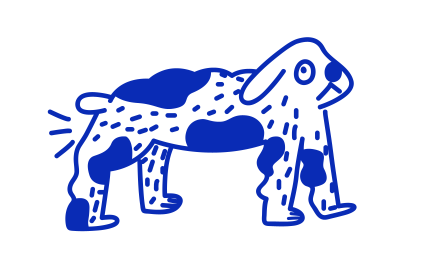
Urate stones (ammonium urate urolithiasis) are the most common reason. Dalmatians have a genetic mutation that causes them to excrete high levels of uric acid in their urine, making them extremely prone to urate stones. English Bulldogs, Black Russian Terriers, and some other breeds are also predisposed.
Dogs with portosystemic liver shunts also commonly develop urate stones. The liver shunt impairs uric acid metabolism, leading to elevated urinary uric acid regardless of breed.
Cystine stones are prescribed u/d when a dog has cystinuria — a genetic condition affecting certain breeds including Newfoundlands, Dachshunds, and English Bulldogs. The kidneys can't properly reabsorb cystine, so it builds up in the urine and crystallises.
Calcium oxalate stone prevention is another use, particularly in dogs that have had surgical removal and need to reduce recurrence risk.
u/d vs c/d Multicare — Critical Differences
This is the most important distinction to understand.
c/d Multicare is designed primarily for struvite stones and general urinary health. It dissolves struvite by acidifying urine and controlling magnesium and phosphorus. It also offers some calcium oxalate prevention.
u/d takes the opposite approach in several ways. It promotes alkaline urine rather than acidic. It restricts protein far more aggressively. It specifically targets purine metabolism.
Feeding c/d to a dog that needs u/d won't help — and could make things worse. Acidifying urine actually increases the risk of urate and cystine stone formation.
Your vet prescribes u/d specifically because your dog's stone type demands this particular nutritional strategy.
Breeds Most Commonly Prescribed u/d
Dalmatians are the breed most strongly associated with u/d. Their genetic uric acid metabolism issue means many Dalmatians need lifelong purine restriction. Some Dalmatian owners feed u/d preventatively even before stones develop.
English Bulldogs are prone to both urate and cystine stones, making them frequent u/d candidates.
Newfoundlands and Dachshunds are predisposed to cystinuria and the cystine stones that result.
Black Russian Terriers have an elevated urate stone risk similar to Dalmatians.
If your dog belongs to any of these breeds and has a history of urinary issues, u/d may be part of their long-term management plan.
The Low Protein Question — Is u/d Enough Nutrition?
At 13.8% protein, u/d has significantly less protein than standard dog food (which typically runs 25–30%). This raises a reasonable concern.
The protein in u/d is high quality and highly digestible. Your dog gets fewer grams of protein, but absorbs a higher percentage of what's there. The amino acid profile is carefully balanced to meet adult maintenance requirements.
u/d is not suitable for puppies, pregnant dogs, or lactating dogs — they need more protein for growth and development. It's also not ideal for highly active working dogs.
For the average adult dog with a urinary stone condition, u/d provides adequate nutrition. Your vet will monitor your dog's body condition and blood work to confirm they're thriving on it.
u/d and Liver Shunts — The Connection
Dogs with portosystemic shunts often develop urate stones because their liver can't properly metabolise uric acid. This makes u/d relevant for liver shunt patients alongside l/d Liver Care.
In some cases, vets prescribe u/d instead of l/d when urate stones are the primary concern. In others, l/d is chosen when liver function is the priority. The decision depends on which issue poses the greater immediate risk.
If your dog has a liver shunt and urate stones, your vet will weigh up the priorities and may alternate between the two diets or choose the one that best covers both needs.
Feeding u/d — Practical Tips
Transition over 7 to 10 days. Dogs switching to u/d often notice the lower protein content — some find it less palatable initially. Patience during the transition period pays off.
Feed the recommended amount for your dog's ideal body weight. u/d has a moderate fat content (20.7%), so it's not a low-calorie diet. Monitor weight and adjust portions if needed.
Absolutely no high-purine treats. This means no liver treats, no jerky, no sardine-based snacks. These can undo the entire purpose of the diet. Small pieces of the u/d kibble are the safest reward option.
Ensure fresh water is always available. Increased water intake dilutes the urine, which reduces crystal concentration regardless of stone type. Some vets recommend adding water to the dry kibble to boost fluid intake.
Your vet will schedule regular urine tests to monitor crystal levels and pH. These check-ups confirm the diet is working and catch any issues early.
Where to Buy Hill's u/d in Australia
Hill's u/d requires a vet recommendation before purchase. Available through veterinary clinics and authorised online retailers including Pet Circle, Budget Pet Products, and Vet Supply. Compare current prices on the Dog Directory to find the best deal.
Frequently Asked Questions
What types of urinary stones does u/d treat?
u/d is designed for urate, cystine, and calcium oxalate stones. These are stone types that require protein and purine restriction rather than the pH-based approach used for struvite stones. If your dog has struvite stones, c/d Multicare is the appropriate diet — not u/d.
Is u/d the same as c/d?
No. They target completely different stone types through different mechanisms. c/d acidifies urine and controls magnesium for struvite management. u/d alkalinises urine and restricts protein and purines for urate, cystine, and oxalate management. They are not interchangeable.
Does my Dalmatian need u/d even without stones?
Possibly. Dalmatians have a genetic predisposition to high urinary uric acid levels. Some vets recommend u/d preventatively for Dalmatians, especially those with a family history of urate stones. Discuss your individual dog's risk factors with your vet.
Can u/d dissolve existing stones?
u/d can help dissolve urate crystals and cystine uroliths over time. Calcium oxalate stones cannot be dissolved by any diet — they require surgical removal. u/d then helps prevent new oxalate stones from forming.
Is the low protein in u/d safe long-term?
Yes, for adult dogs. The protein is high quality and meets adult maintenance requirements. Your vet will monitor body condition and blood work to ensure your dog maintains healthy muscle mass. u/d is not suitable for puppies, pregnant dogs, or highly active working dogs.
Can I give my dog treats while they're on u/d?
Be extremely careful. Most commercial treats contain purines that directly undermine the diet. Liver treats, jerky, and meat-based snacks are off-limits. Small pieces of the u/d kibble are the safest option. Always check with your vet before introducing any treat.
My dog doesn't seem to like u/d. What can I do?
The lower protein content can make u/d less appealing initially. Try warming the kibble slightly with warm water to release more aroma. Ensure a gradual 10-day transition from the old food. If your dog consistently refuses it after two weeks, talk to your vet about strategies.
How often does my dog need urine checks on u/d?
Your vet will typically schedule urine analysis every 3 to 6 months, depending on the severity of your dog's stone history. These tests monitor crystal levels, urine pH, and concentration to confirm the diet is working effectively.
Can u/d be used alongside medication for stones?
Yes. u/d is often prescribed alongside medications such as allopurinol (for urate stones) or potassium citrate (for oxalate prevention). The diet and medication work through complementary mechanisms. Your vet will determine whether your dog needs both.
Why is u/d only available as dry food?
u/d is currently only available in dry kibble format in Australia. If your dog prefers wet food or has difficulty eating dry food, adding warm water to the kibble can soften it and increase palatability. Your vet may also suggest hydration strategies to compensate for the lack of a wet formula.




Comments
0 comments
Login to Join the Conversation 💬