
























You're chopping capsicum for dinner and a piece falls on the floor. Your dog grabs it. Here's whether that's a problem.
In Short:
Yes, all colours of capsicum — red, green, yellow, and orange — are safe for dogs. Serve it raw or cooked, plain, and cut into small pieces. Red capsicum is the most nutritious variety.
The critical thing to know: capsicum (bell pepper) contains no capsaicin and is completely harmless, but chilli peppers are toxic to dogs and should never be fed.

The Short Answer
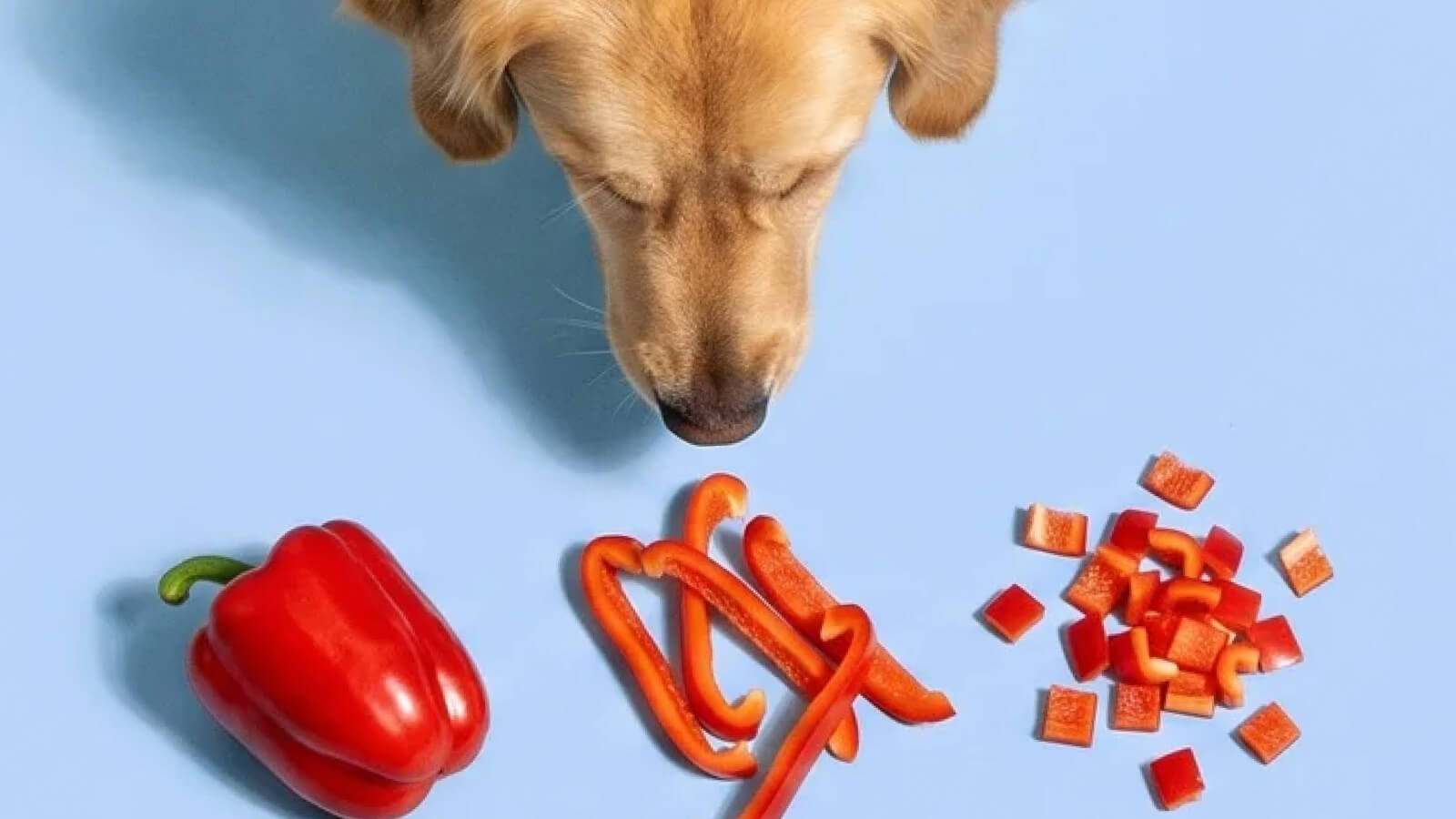
Yes, capsicum is safe for dogs. It's non-toxic in all its varieties — red, green, yellow, and orange. The flesh, skin, and even the seeds are not harmful, though most dogs prefer it without the seeds.
Capsicum is low in calories and packed with vitamins A, C, and E, plus antioxidants. Red capsicum has the highest nutritional value of the bunch because it's the most mature.
How to Serve Capsicum to Your Dog
Raw or cooked, both are fine. Raw capsicum has a satisfying crunch that some dogs enjoy. Cooked capsicum is softer and easier to digest, which may suit older dogs or those with sensitive stomachs.
Keep it plain. Don't share capsicum that's been cooked in oil, butter, garlic, or onion. Stir-fried capsicum from your dinner is not the same as a plain piece offered as a treat.
Cut it into small, bite-sized pieces to prevent choking, especially for smaller breeds. Remove the stem and core, and scrape out the seeds if your dog seems to dislike them.
A few pieces as a treat or mixed into their food is plenty. There's no need to serve large amounts.

Capsicum vs Chilli: An Important Distinction
This is where it gets crucial. Capsicum (bell pepper) and chilli peppers are related but very different.
Capsicum contains no capsaicin — the compound that makes chilli peppers hot. It's mild, sweet, and perfectly safe for dogs.
Chilli peppers, on the other hand, contain high levels of capsaicin. This can cause significant irritation to a dog's mouth, throat, stomach, and intestines. Symptoms of chilli ingestion include drooling, pawing at the mouth, vomiting, diarrhoea, and obvious discomfort.
Never feed your dog chilli peppers, jalapeños, habaneros, or any hot pepper variety. If your dog accidentally eats something spicy, offer water and monitor them. If symptoms persist, contact your vet.
Nutritional Benefits of Capsicum for Dogs
Capsicum is more nutritious than many common dog treats.
Vitamin A supports eye health, skin health, and immune function. Vitamin C acts as an antioxidant, though dogs produce their own and don't strictly need it from food. Vitamin E supports skin and coat health.
The high water content also makes capsicum a hydrating snack, which is a bonus during Australian summers.
Red capsicum has the most beta-carotene and vitamin C of all the colours. Green capsicum is slightly more bitter and less nutrient-dense but still perfectly safe.
For complete daily nutrition, a quality dry food covers all the essentials. Check out our guide to the Best Dry Dog Food in Australia.
Frequently Asked Questions
Can dogs eat red capsicum?
Can dogs eat capsicum seeds?
How much capsicum can I give my dog?
Can capsicum upset my dog's stomach?
Is cooked capsicum better than raw for dogs?









Comments
0 comments
Login to Join the Conversation 💬