



































What Is Hill’s Prescription Diet?
Hill’s Prescription Diet is a line of clinical nutrition made by Hill’s Pet Nutrition. These aren’t regular dog foods with a premium label — they’re formulated to manage diagnosed health conditions, and they require a recommendation from your vet before purchase.
Each formula targets a specific condition by adjusting protein levels, mineral content, fat ratios, or fibre types. The idea is straightforward: the right nutrient profile can slow disease progression, manage symptoms, or in some cases resolve the condition entirely.
You’ll see each formula labelled with a letter code — k/d for kidney, i/d for digestive, c/d for urinary, and so on. The letter system can feel confusing at first, so this guide maps each code to its condition in plain language.
Digestive Health — i/d and Gastrointestinal Biome
Two product lines sit in this space, and they work differently.
i/d Digestive Care is the go-to for acute digestive upset — vomiting, diarrhoea, or recovery after a gut episode. It comes in a standard formula and a low fat version. The low fat variant is commonly prescribed for dogs with pancreatitis, where fat intake needs to stay minimal. There’s also a puppy-specific formula for young dogs with early digestive issues.
Gastrointestinal Biome takes a different approach. Rather than calming the gut short-term, it targets the microbiome — the balance of bacteria in your dog’s digestive system. Vets tend to reach for this one when a dog has recurring or fibre-responsive digestive problems.
If your vet has said i/d, they’re managing an active issue. If they’ve said GI Biome, they’re working on the underlying balance.
Urinary Care — c/d Multicare and u/d
Urinary diets are prescribed after bladder stones or crystals are diagnosed, and the formula depends entirely on the stone type.
c/d Multicare handles the most common types — struvite and calcium oxalate. It works by adjusting mineral levels to dissolve existing struvite stones and prevent new ones forming. There’s also a c/d + Metabolic version for dogs that need urinary support and weight management at the same time.
u/d is a separate formula for less common stone types — urate, cystine, and xanthine. These require a low-purine, low-protein diet, which is a different nutritional approach to c/d. Dalmatians and a handful of other breeds are genetically predisposed to urate stones, so u/d comes up more often in those breeds.
Your vet will tell you which stone type your dog has. That determines which formula is right.
Kidney Care — k/d
Chronic kidney disease (CKD) is one of the most common reasons dogs end up on a prescription diet long-term. k/d is formulated with reduced phosphorus and controlled protein to ease the workload on compromised kidneys.
Most dogs start k/d when blood work shows elevated kidney markers, typically around IRIS Stage 2 or 3. The diet doesn’t reverse kidney damage — nothing does — but it can slow progression and improve quality of life.
k/d is available in dry and wet formats. The wet option is often preferred for kidney dogs because hydration matters significantly with this condition. There’s also a k/d + j/d variant for dogs dealing with both kidney disease and joint problems — a common combination in older dogs.
Weight Management — Metabolic and r/d
Two distinct approaches here, and your vet will choose based on how much weight your dog needs to lose.
Metabolic is the more common prescription. It’s designed for moderate, sustained weight loss and long-term weight maintenance. The formula works by influencing your dog’s metabolism at a cellular level — it’s not just a low-calorie food. There’s a Metabolic + j/d combination for overweight dogs with joint issues, which is a frequent pairing since excess weight accelerates joint wear.
r/d is the more aggressive option — prescribed when a dog is significantly obese and needs rapid, supervised weight reduction. It’s typically a short-term diet before transitioning to Metabolic for maintenance.
Dental Care — t/d
t/d works mechanically. The kibble is oversized and has a fibre matrix that doesn’t shatter on contact — it forces the tooth to sink into the kibble, creating a scrubbing action that reduces plaque and tartar buildup.
It holds the Veterinary Oral Health Council (VOHC) seal, which means the cleaning effect has been independently verified. Available in regular and small bites for smaller breeds.
t/d doesn’t replace dental cleans or daily brushing, but it’s a practical daily addition for dogs prone to dental buildup.
Skin and Food Sensitivities — z/d and Derm Complete
Allergies in dogs fall into two broad categories, and Hill’s has a formula for each.
z/d uses hydrolysed protein — the protein molecules are broken down small enough that the immune system can’t recognise and react to them. This is the diet vets use for elimination trials when they suspect a food allergy. It comes in a chicken-based and a low fat soy-based version.
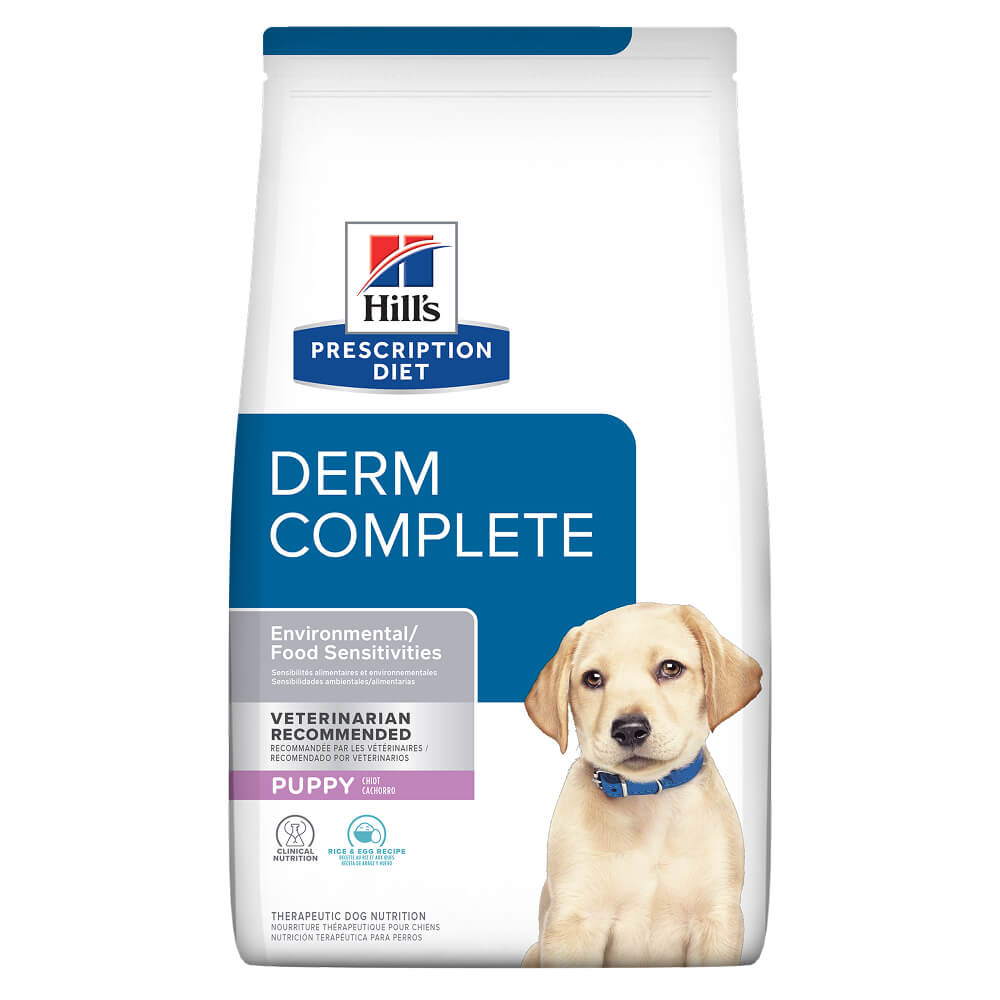
Derm Complete targets environmental allergies — things like dust mites, pollen, and grasses. It strengthens the skin barrier from the inside rather than eliminating a food trigger. There’s also a puppy version for early intervention.
If your vet suspects food is the problem, you’ll likely start with z/d. If the triggers are environmental, Derm Complete is the usual pick.
Joint and Mobility — j/d
j/d is formulated with elevated levels of EPA (an omega-3 fatty acid) and other joint-supporting nutrients. It’s prescribed for dogs with arthritis, hip dysplasia, or general mobility decline.
You’ll notice j/d appears in several combination products — Metabolic + j/d for overweight dogs with joint pain, k/d + j/d for kidney dogs with mobility issues, and Brain Care + j/d for cognitive decline alongside joint problems. This reflects how common joint issues are as a secondary condition.
Liver Care — l/d
Liver disease requires careful dietary management — specifically controlled copper and adjusted protein levels. l/d is formulated to support liver function without overloading it.
This is a less common prescription compared to kidney or digestive diets, but it’s critical when it’s needed. Available in wet and dry.
Cancer Support — ONC Care
ONC Care is one of Hill’s newer additions. It’s designed for dogs undergoing cancer treatment or living with a cancer diagnosis. The formula addresses the specific nutritional shifts that happen with cancer — altered metabolism, muscle wasting, and reduced appetite.
It won’t treat the cancer itself, but it supports the dog’s body through treatment and helps maintain condition.
Recovery and Critical Care — a/d
a/d is a high-calorie, high-protein wet food used for short-term recovery — post-surgery, critical illness, or any situation where a dog isn’t eating normally. It’s soft enough to syringe-feed if needed.
This isn’t a long-term diet. It bridges the gap until the dog is well enough to transition back to their regular or prescribed food.
Multi-Benefit — w/d
w/d sits at the intersection of digestive health, weight management, and blood glucose control. It’s commonly prescribed for diabetic dogs or dogs that need moderate support across multiple areas without being on a condition-specific formula.
Think of it as the maintenance option when a dog’s needs don’t fit neatly into one category.
Senior Cognitive Health — Brain Care + j/d
The newest addition to the range. Brain Care + j/d combines nutrients that support cognitive function with the joint care benefits of j/d. It’s aimed at senior dogs showing signs of cognitive decline — disorientation, altered sleep patterns, or changes in behaviour.
Search volume for this product is still low, which suggests awareness is building. If your vet has mentioned it, they’re ahead of the curve.
How to Transition to a Prescription Diet
Don’t switch overnight. Mix the new food with the current food over 7 to 10 days, gradually increasing the prescription diet and reducing the old food. This gives your dog’s gut time to adjust and reduces the chance of digestive upset — particularly important if the prescription diet itself is for a digestive condition.
Your vet may suggest a faster or slower transition depending on the condition being treated.
Where to Buy Hill’s Prescription Diet in Australia
Hill’s Prescription Diet requires a vet recommendation before purchase. In Australia, you can buy it through veterinary clinics, authorised online retailers, and selected pet stores that verify prescriptions.
Prices vary between retailers, so it’s worth comparing — but make sure you’re buying from an authorised seller to avoid expired or grey-market stock.
Frequently Asked Questions
Do I need a prescription to buy Hill’s Prescription Diet in Australia?
You need a veterinary recommendation, not a formal prescription in the pharmaceutical sense. Some Australian retailers require a vet authorisation on file before they’ll sell it to you.
Can I mix Hill’s Prescription Diet with regular dog food?
Generally no. The formulas are designed to work as a complete diet with specific nutrient ratios. Mixing with regular food can dilute the therapeutic effect. Always check with your vet first.
How long will my dog need to be on a prescription diet?
It depends on the condition. Some diets like a/d are short-term (days to weeks). Others like k/d for kidney disease are lifelong. Your vet will advise based on your dog’s diagnosis.
Is Hill’s Prescription Diet worth the cost?
It’s significantly more expensive than regular dog food, but the formulas are backed by clinical research and designed to manage specific conditions. For many conditions, the right diet reduces vet visits and medication costs over time.
What’s the difference between Hill’s Prescription Diet and Hill’s Science Diet?
Science Diet is their retail range — available without a vet recommendation and designed for general health and life stage. Prescription Diet is their therapeutic range for diagnosed medical conditions.
Can I buy Hill's Prescription Diet online in Australia?
Yes. Several authorised retailers sell it online with vet verification. Prices vary between stores, so it's worth comparing — you can check current prices across retailers on the Dog Directory to find the best deal.
Are there alternatives to Hill’s Prescription Diet?
Royal Canin Veterinary Diet is the main competitor. Some conditions also have options from Purina Pro Plan Veterinary Diets. Your vet can advise which brand suits your dog’s condition.
Can puppies eat Hill’s Prescription Diet?
Specific puppy formulas exist for i/d (digestive) and Derm Complete (skin). Other formulas aren’t designed for puppies, so check with your vet before feeding any prescription diet to a young dog.
What if my dog won’t eat the prescription food?
Try the wet version if you’ve been using dry, or warm the food slightly to increase aroma. Some dogs take a few days to accept a new food. If they’re still refusing after a week, talk to your vet about alternatives within the same condition category.
Does Hill’s Prescription Diet have grain-free options?
Most formulas contain grains as they serve a functional role in the therapeutic formula. If your dog has a confirmed grain sensitivity, z/d hydrolysed soy is one option to discuss with your vet.


Comments
0 comments
Login to Join the Conversation 💬