





























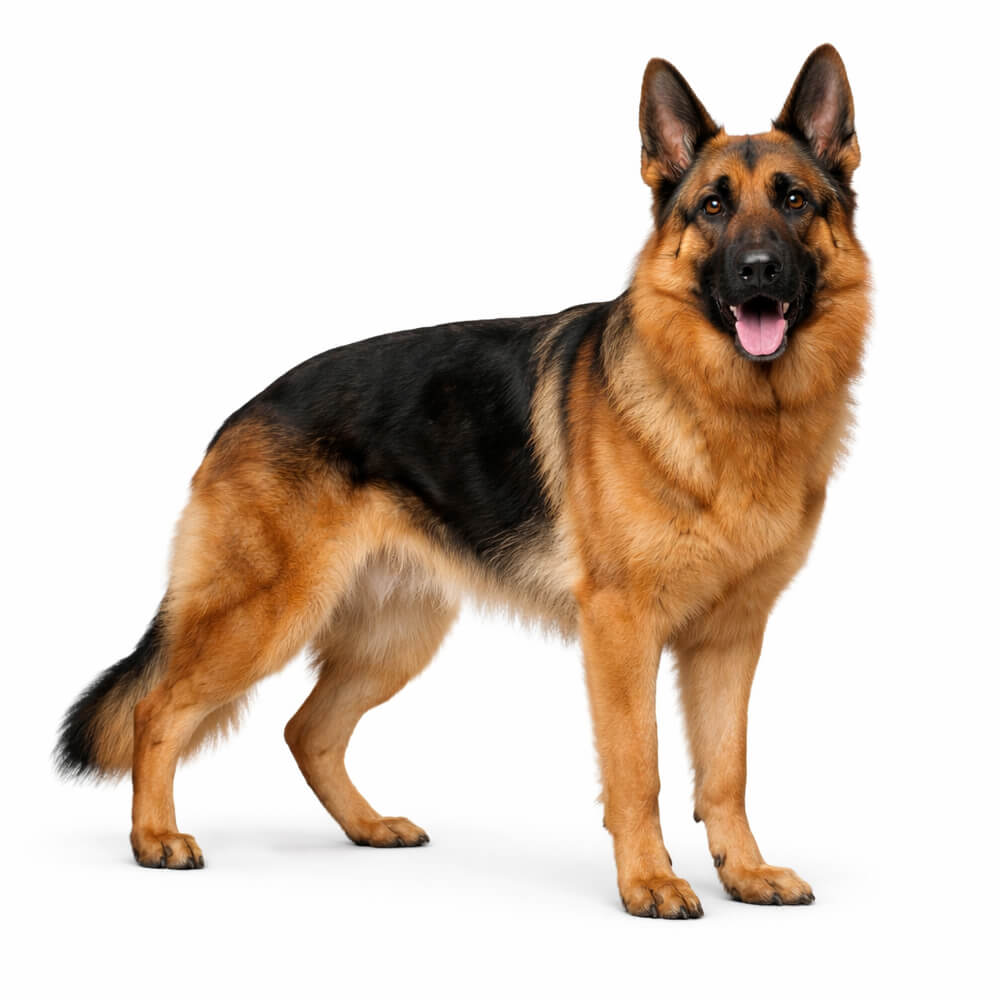

The German Shepherd is a large, athletic working breed known for its intelligence, versatility and unwavering loyalty to its handler. Originally developed as a herding dog in Germany, it has since become one of the most widely used breeds in police, military, search and rescue, and service work worldwide.
German Shepherds are confident, trainable and deeply bonded to their family. They're protective without being aggressive when properly raised, and they bring a level of focus and capability that few breeds can match. What many first-time owners don't expect is the shedding — German Shepherds drop coat constantly and heavily, earning them the nickname "German Shedders" among owners who've learned to live with fur on every surface.
History and Origin
The German Shepherd was created in 1899 by Captain Max von Stephanitz, a former German cavalry officer who set out to breed the ideal working dog. He purchased a dog named Hektor Linksrhein at a dog show, renamed him Horand von Grafrath, and founded the breed from that single sire.
Von Stephanitz's vision was a dog that combined intelligence, physical endurance, obedience and a strong work ethic. The breed was originally a sheep herder, but its capabilities quickly attracted the attention of police and military organisations across Europe. By World War I, German Shepherds were serving as messenger dogs, sentries and medical carriers.
The breed arrived in Australia in the early 1900s but faced a controversial importation ban from 1929 to 1972, driven by fears that the breed would crossbreed with dingoes and threaten the livestock industry. That ban is long lifted, and the German Shepherd is now one of the most popular breeds in Australia. The discipline, loyalty and protectiveness that made the breed a military asset are the same traits that make it a formidable family guardian today.
Temperament and Personality
German Shepherds are intelligent, alert and deeply loyal to their household. They take their role as protector seriously and are naturally watchful of their environment without being neurotic about it.
With family, they're affectionate and surprisingly gentle. They bond strongly with all members of the household but often orient most closely to whoever does the training and spends the most time with them. They're not typically aloof — German Shepherds want to be near their people and involved in daily life.
Around children, they're generally good. They're patient, tolerant and protective. The main consideration is their size and energy during puppyhood — an exuberant young German Shepherd can easily knock over a small child. Supervise interactions with toddlers and teach both the dog and the child to respect boundaries.
With other dogs, German Shepherds need proper socialisation. Some individuals develop same-sex aggression or reactivity toward unfamiliar dogs, particularly if under-socialised during the critical window. Early, consistent exposure to other dogs and environments is essential — not a nice-to-have.
They're confident and calm in experienced hands, but German Shepherds are not a "set and forget" breed. Under-stimulated or poorly socialised dogs can become anxious, reactive or overly protective. The breed's intelligence demands engagement — they need a job, a purpose, or at minimum structured daily activity.
Common Health Conditions
German Shepherds carry a number of well-documented genetic predispositions. The breed's popularity has unfortunately widened the gene pool for certain conditions, making health screening critical when choosing a breeder.
Hip Dysplasia
The most well-known health issue in the breed. The hip joint develops abnormally, leading to arthritis, pain and reduced mobility. German Shepherds have one of the highest prevalence rates of any breed. Always insist on hip scores from both parents before purchasing a puppy. Maintain a lean body weight and avoid high-impact exercise during growth.
Elbow Dysplasia
A developmental condition affecting the elbow joint, causing lameness and stiffness. It often presents alongside hip dysplasia. Screening is available and should be standard for all breeding stock.
Degenerative Myelopathy (DM)
A progressive spinal cord disease that causes gradual hindquarter weakness and eventual paralysis. It typically appears after age seven and has no cure. A DNA test identifies carriers, and responsible breeders screen for it. The condition is painless but devastating to watch.
Exocrine Pancreatic Insufficiency (EPI)
The pancreas fails to produce enough digestive enzymes, leading to malnutrition, chronic diarrhoea and weight loss despite a normal appetite. German Shepherds are the most commonly affected breed. It's manageable with enzyme supplementation and dietary adjustment, but requires lifelong treatment.
Gastric Dilatation-Volvulus (Bloat/GDV)
A life-threatening emergency where the stomach fills with gas and rotates. Large, deep-chested breeds like German Shepherds are at elevated risk. Feed smaller meals, avoid exercise immediately after eating, and know the signs: restlessness, unproductive retching, distended abdomen. This is a veterinary emergency.
Pet insurance is strongly recommended given the breed's orthopaedic and digestive predispositions. Twice-yearly vet check-ups help catch early signs of joint deterioration and pancreatic issues.


Exercise
German Shepherds need one to two hours of exercise daily. They thrive on a mix of physical activity and mental engagement — running, fetch, tracking, obedience work and scent games all suit the breed. A walk alone won't satisfy them. In Australian heat, exercise early morning or late evening and ensure constant access to water and shade. Avoid intensive exercise with puppies under 18 months to protect developing joints.

Grooming
German Shepherds shed heavily year-round and blow their undercoat twice a year in spring and autumn. Daily brushing during coat changes is a necessity, not a suggestion. Outside of those periods, two to three times a week keeps things manageable. Long-haired German Shepherds need more frequent attention. Invest in a quality undercoat rake and accept that fur will be a permanent feature of your home.



Nutrition
A high-quality, protein-rich diet suits the German Shepherd's active metabolism. Large-breed formulas with controlled calcium and phosphorus ratios support healthy skeletal development in puppies. Joint supplements (glucosamine, omega-3 fatty acids) are a sensible addition given the breed's hip and elbow predispositions. Dogs with EPI require enzyme supplementation at every meal. Avoid overfeeding — excess weight accelerates joint degeneration. See our recommended foods for German Shepherds below.


Training
German Shepherds are one of the most trainable breeds in existence. They learn quickly, retain well and thrive on structured sessions with a clear handler. Use positive reinforcement and build training into daily life rather than treating it as a separate activity. Early socialisation is critical — expose puppies to a wide range of people, dogs, environments and sounds before 16 weeks. The breed's protective instinct needs to be channelled through training, not left to develop unchecked.



Suitability
German Shepherds suit experienced, active owners who have the time and space to manage a large, intelligent working breed. A house with a secure yard is the minimum. They're excellent for families with older children, active couples and anyone looking for a loyal, trainable companion that doubles as a natural home guardian.
This breed is not for first-time owners who want something easy, sedentary households or anyone who works long hours away from home. German Shepherds need daily exercise, mental stimulation and consistent leadership. Apartment living is not suitable. The financial commitment is also real — between quality food for a large dog, potential health costs (especially orthopaedic), and regular grooming, German Shepherds are not a budget breed.
Frequently Asked Questions
How much does a German Shepherd cost in Australia?
Do German Shepherds shed a lot?
Are German Shepherds good family dogs?
What is degenerative myelopathy in German Shepherds?
How long do German Shepherds live?

Comments
0 comments
Login to Join the Conversation 💬