





























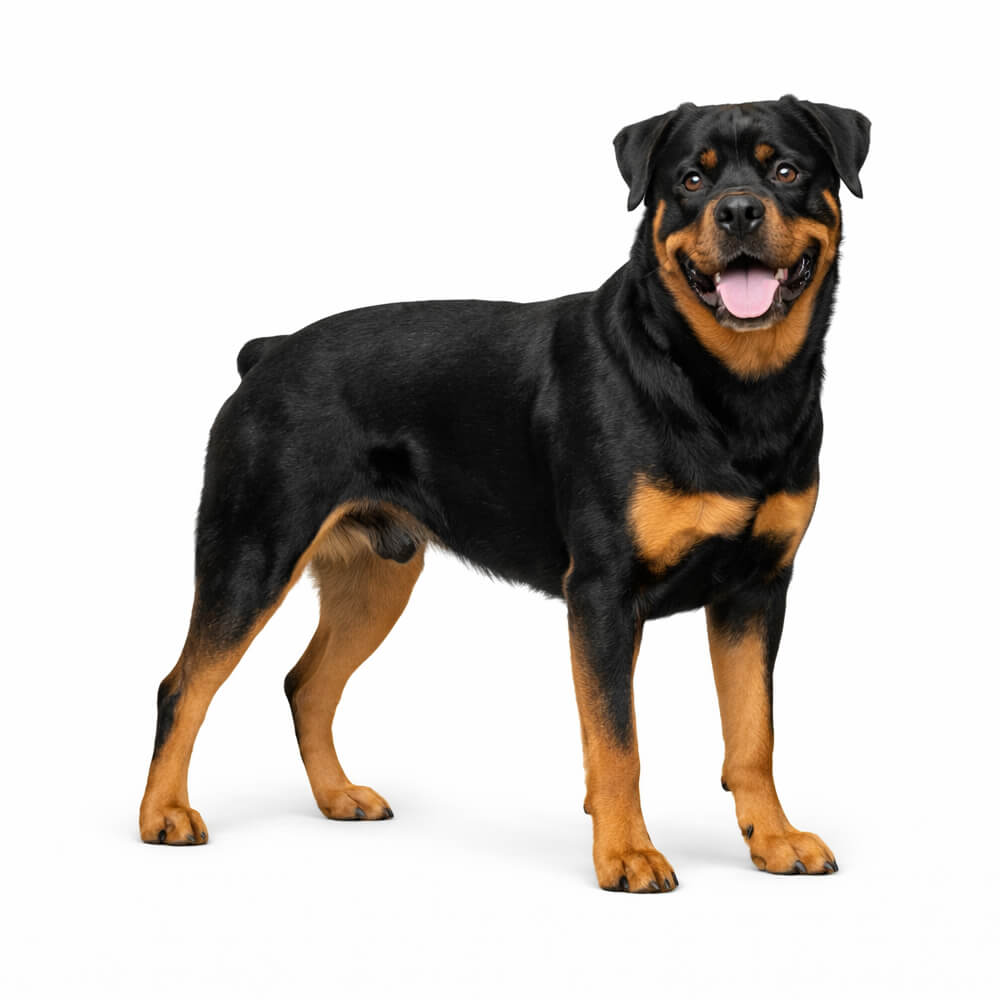

The Rottweiler is a large, powerful breed from Germany’s Utility group, originally developed to drive cattle and pull carts for butchers. Known for its strength, confidence and calm loyalty, the Rottweiler is one of the most capable guardian breeds in the world.
Rottweilers are steady, intelligent dogs that bond deeply with their family. They’re protective by nature but not aggressive when properly raised and socialised. What many people don’t realise is how affectionate Rottweilers are at home — behind the imposing build is a dog that leans into its owner for attention and genuinely enjoys being close. Australian owners should also be aware that Rottweilers are classified as a restricted breed in some states and territories, which carries specific ownership requirements.
History and Origin
The Rottweiler traces its origins to the Roman Empire, where large mastiff-type dogs accompanied Roman legions across Europe, herding the cattle that fed the troops on the march. When the Romans settled in what is now southern Germany, those dogs remained and bred with local stock.
The breed takes its name from the town of Rottweil in Baden-Württemberg, where it became the working dog of choice for butchers and cattle traders. Rottweilers drove livestock to market, guarded the proceeds on the journey home, and pulled carts loaded with meat. They were known locally as "Rottweiler Metzgerhund" — the butcher’s dog of Rottweil.
When railways replaced cattle drives in the late 1800s, the breed nearly disappeared. Police and military interest revived it, and by the early 20th century the Rottweiler had found a permanent role in protection, search and rescue, and service work. That guardian instinct is the defining trait of the modern breed — calm, watchful and deeply territorial when it counts.
Temperament and Personality
Rottweilers are confident, calm and quietly observant. They don’t bark without reason, they don’t panic easily, and they assess situations before reacting. This measured temperament is what makes them effective working dogs and reliable family guardians.
With family, Rottweilers are affectionate and surprisingly gentle. They’re known for leaning their full body weight into their people — a behaviour owners call the "Rottie lean" — and they thrive on close physical contact. They’re not aloof or independent; they want to be near their household and involved in daily life.
With children, Rottweilers are generally patient and protective. The caveat is their size and strength — even a well-intentioned Rottweiler can easily knock over a small child during play. Supervision is essential with young children. Older kids who understand how to interact with large dogs do well with the breed.
With other dogs, Rottweilers need early and ongoing socialisation. Some individuals show same-sex aggression, and their size and confidence can create tension with other dominant breeds. They’re not inherently dog-aggressive, but they won’t back down from a challenge. Careful introductions and consistent socialisation make a significant difference.
Energy-wise, Rottweilers are moderate. They’re active and enjoy exercise, but they’re not hyperactive. A couple of good walks, a play session and some mental stimulation satisfy most adult Rottweilers. They settle well indoors and are calmer around the house than many breeds of similar size.
Common Health Conditions
Rottweilers carry several significant health predispositions, particularly relating to joints and cancer. The breed’s size and growth rate make early health management critical.
Hip Dysplasia
A developmental condition where the hip joint forms improperly, leading to arthritis and pain. Rottweilers have a high prevalence rate. Always insist on hip scores from both parents. Controlled growth through appropriate nutrition, maintaining lean body weight and avoiding high-impact exercise in puppies all reduce risk.
Elbow Dysplasia
Frequently occurs alongside hip dysplasia in the breed. Signs include front-leg lameness, stiffness and reluctance to exercise after rest. Screening is available and should be standard for breeding stock.
Osteosarcoma (Bone Cancer)
Rottweilers have one of the highest rates of osteosarcoma of any breed. It typically affects the long bones of the legs and presents as sudden lameness, swelling or pain in a limb. It’s aggressive and often diagnosed late. Any unexplained lameness in a Rottweiler, particularly in middle age or older, should be investigated by a vet promptly.
Aortic Stenosis / Sub-Aortic Stenosis
A congenital heart condition where the area below the aortic valve narrows, restricting blood flow. Severity ranges from mild (no symptoms) to life-threatening. Cardiac screening by a veterinary cardiologist is recommended, particularly for breeding dogs.
Cruciate Ligament Rupture
The breed’s size and weight put significant strain on the cruciate ligaments in the knee. Rupture causes sudden hind-leg lameness and typically requires surgery. Maintaining lean body weight is the best prevention.
Gastric Dilatation-Volvulus (Bloat/GDV)
A life-threatening emergency common in large, deep-chested breeds. Feed multiple smaller meals, avoid exercise immediately after eating, and learn the signs: restlessness, unproductive retching, swollen abdomen.
Pet insurance is strongly recommended for Rottweilers. Orthopaedic surgeries and cancer treatment are expensive, and the breed’s predisposition to both makes early cover a wise investment. Twice-yearly vet check-ups help catch joint and cardiac issues before they escalate.


Exercise
Rottweilers need one to two hours of exercise daily. Walks, swimming, fetch and structured play sessions suit the breed well. They enjoy working activities like tracking and obedience trials. Avoid high-impact exercise with puppies under 18 months — their heavy frame puts significant stress on developing joints. In Australian heat, exercise early morning or late evening and watch for overheating. Rottweilers carry a dense coat and a lot of muscle mass, which makes them less heat-tolerant than their short coat suggests.

Grooming
The short, dense double coat is straightforward to maintain. A weekly brush removes loose hair and distributes skin oils. Shedding is moderate year-round with heavier periods in spring and autumn. Rottweilers don’t need professional grooming, but regular nail trimming is important — their weight means overgrown nails cause more discomfort than in lighter breeds. Ears and teeth should be checked weekly.



Nutrition
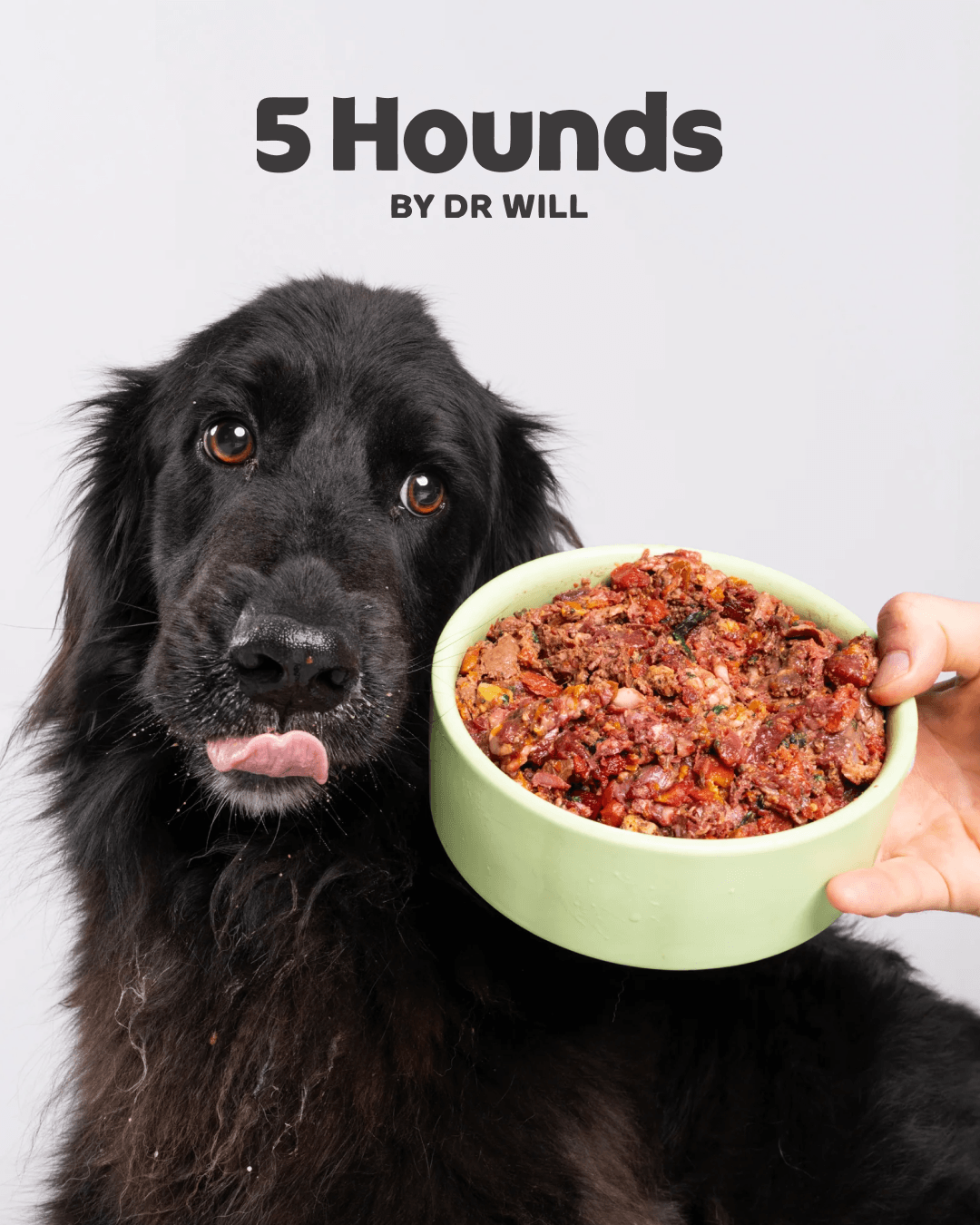
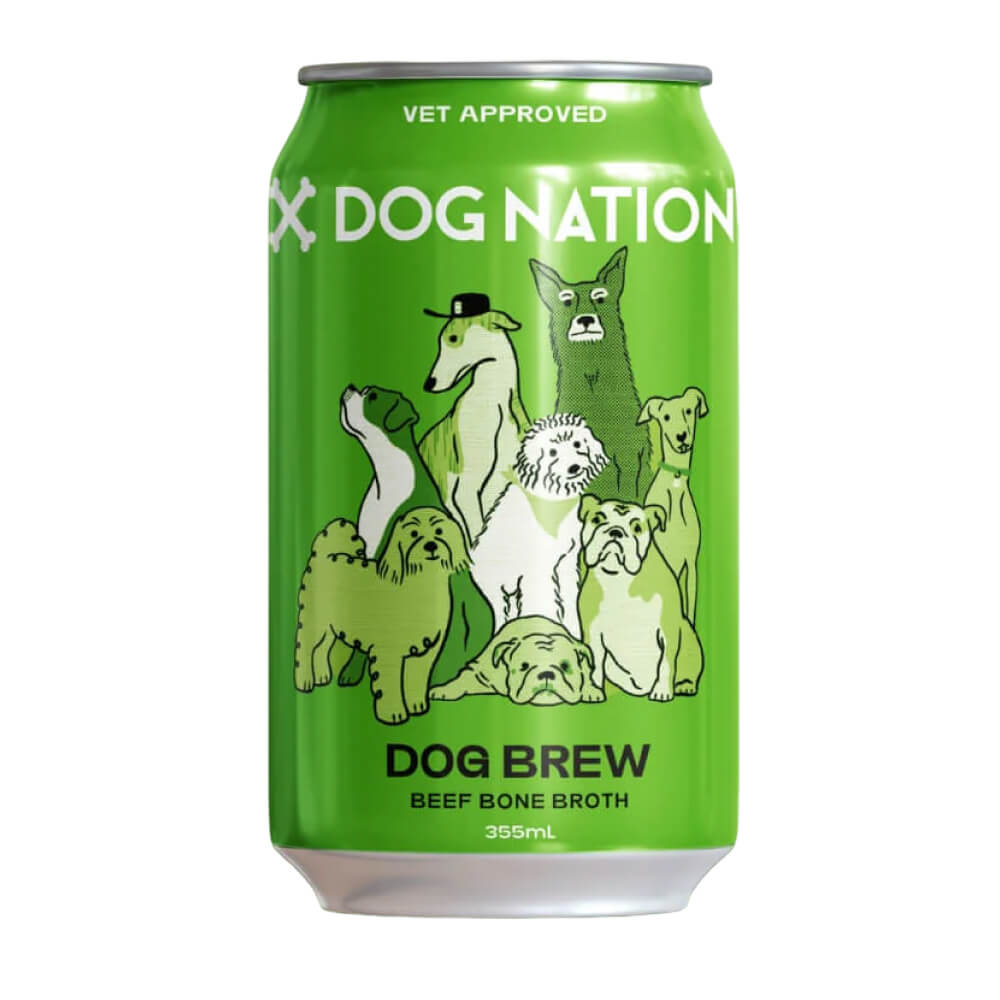
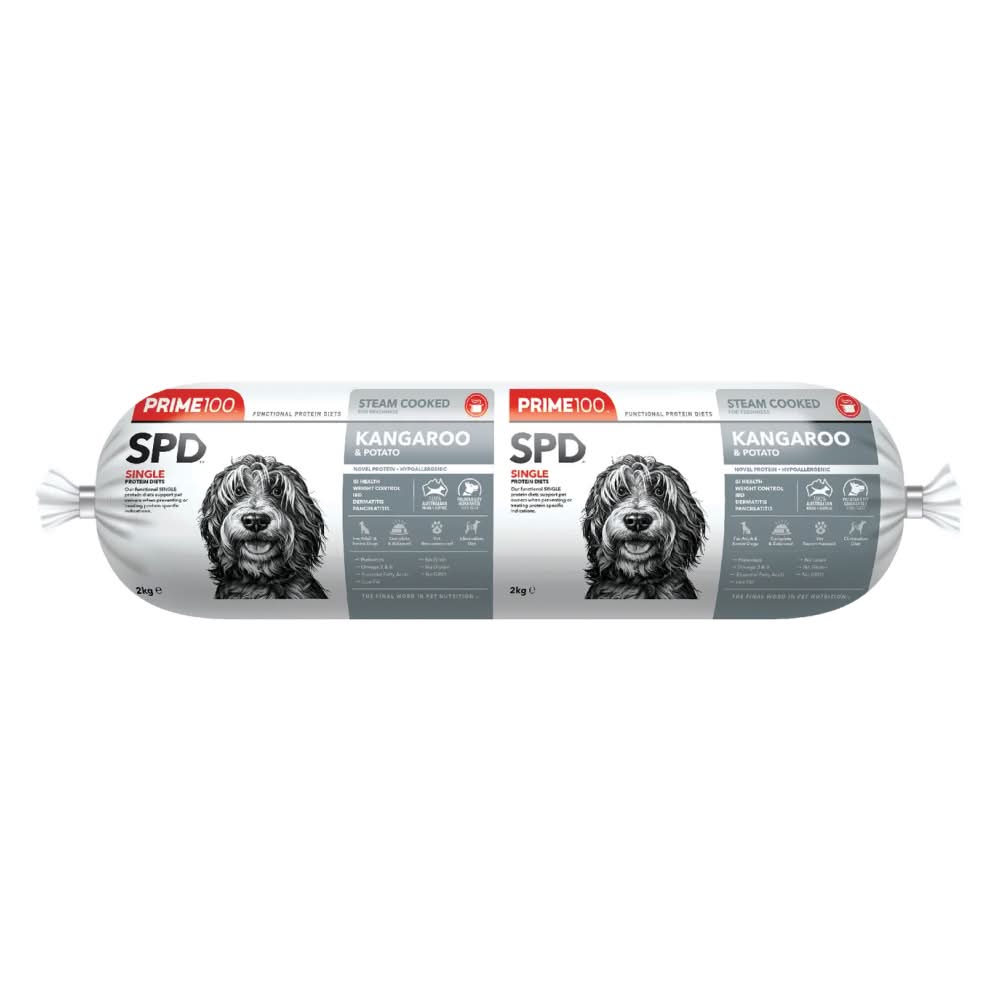
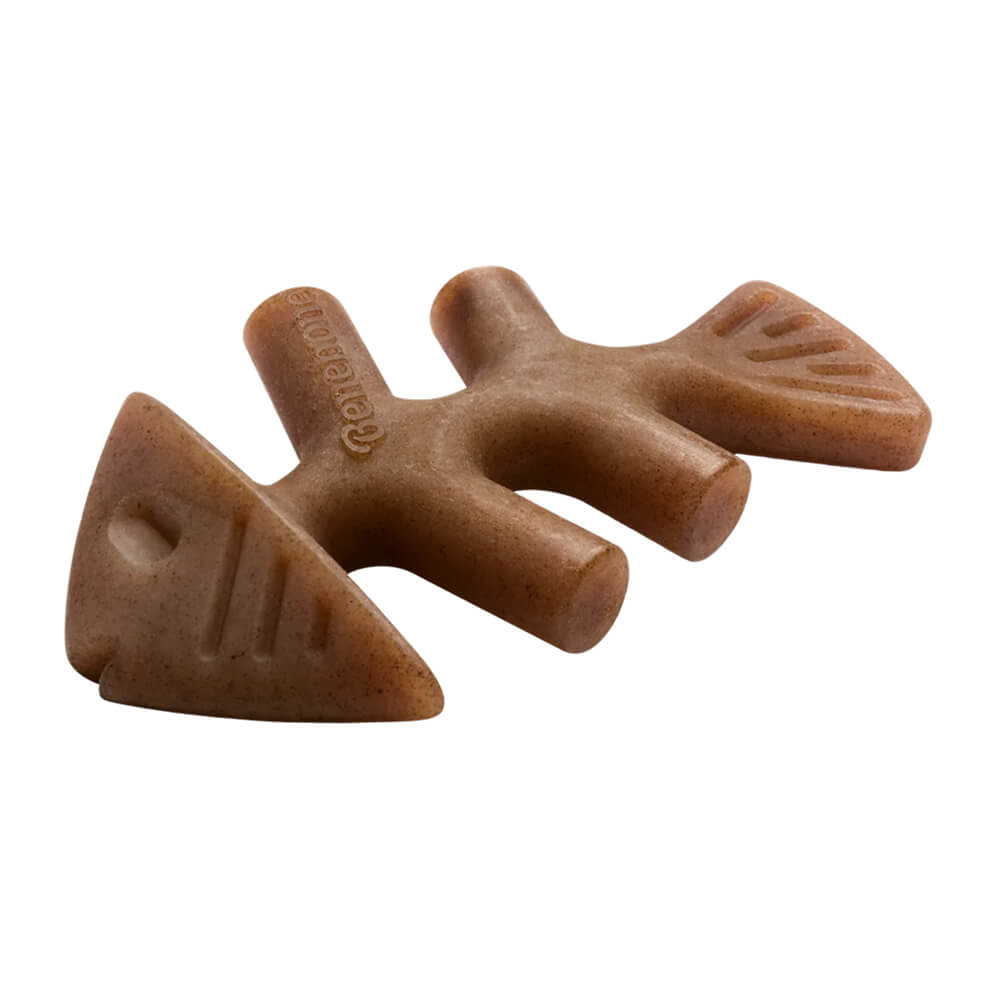
Rottweilers need a high-quality, protein-rich diet formulated for large breeds. Controlled growth is critical during puppyhood — large-breed puppy formulas with appropriate calcium and phosphorus ratios help prevent skeletal issues. Joint supplements (glucosamine, omega-3 fatty acids) are a smart addition given the breed’s orthopaedic predispositions. Monitor weight carefully; Rottweilers gain fat easily and excess weight accelerates joint degeneration and increases cruciate ligament strain. See our recommended foods for Rottweilers below.


Training
Rottweilers are highly trainable when handled with confidence and consistency. They respond well to positive reinforcement and enjoy structured work. The key is early, firm (not harsh) leadership — a Rottweiler needs to respect its handler. Poorly trained or unsocialised Rottweilers can become dominant and difficult to manage at 50+ kilograms. Start training and socialisation from day one. Expose puppies to a wide range of people, dogs and environments before 16 weeks. The breed’s guardian instinct must be channelled through training, not left unchecked.


Suitability
Rottweilers suit experienced, confident dog owners with the space and time to raise a large, powerful breed properly. A house with a secure yard is essential. They’re well-suited to active families with older children, individuals looking for a loyal guardian, and owners with prior experience managing large breeds.
This breed is not for first-time owners, sedentary households or anyone unwilling to commit to ongoing training and socialisation. An untrained Rottweiler is a liability — not because the breed is inherently dangerous, but because a 50kg dog with guardian instincts needs clear boundaries. Australian buyers should check their state or territory’s restricted breed legislation before purchasing, as ownership requirements vary and may include additional fencing, signage and insurance.
Frequently Asked Questions
How much does a Rottweiler cost in Australia?
Are Rottweilers dangerous?
Are Rottweilers restricted in Australia?
How long do Rottweilers live?
Do Rottweilers get along with other dogs?


Comments
0 comments
Login to Join the Conversation 💬