






Air Dried Turkey Dry Food

Overview
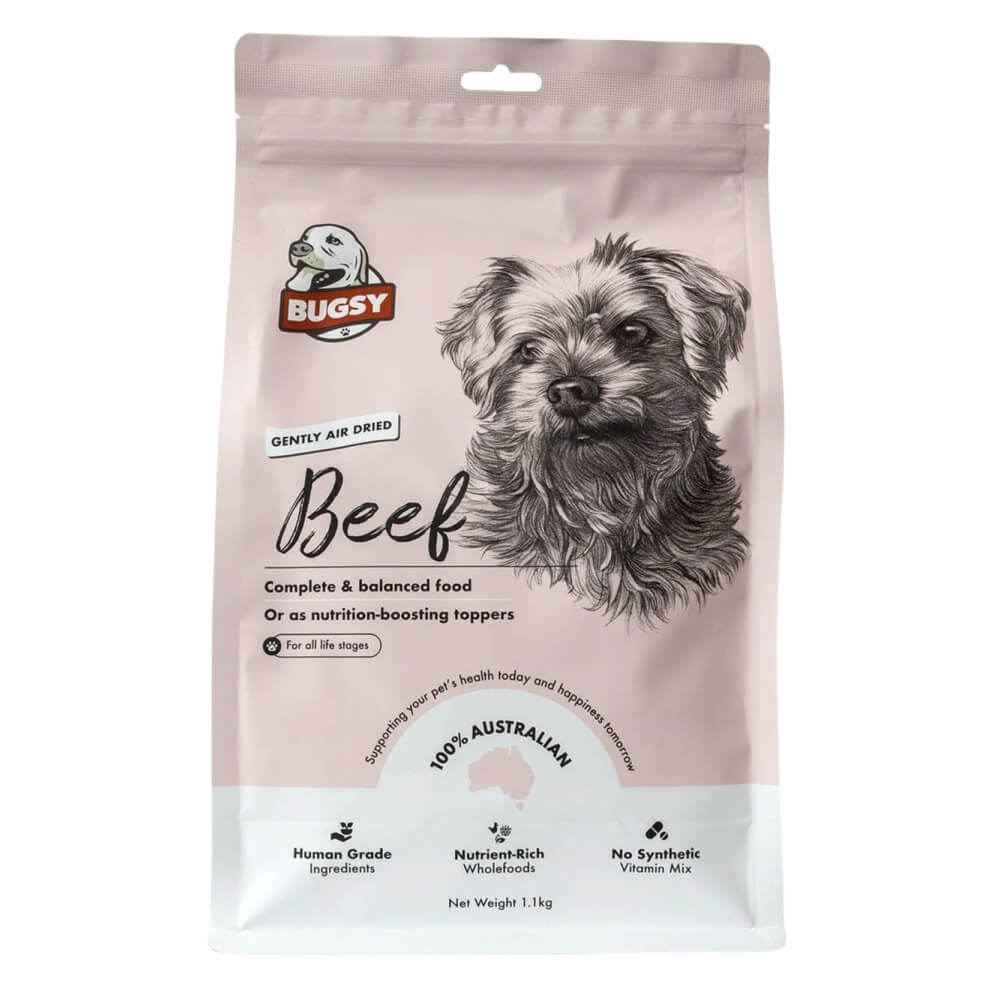
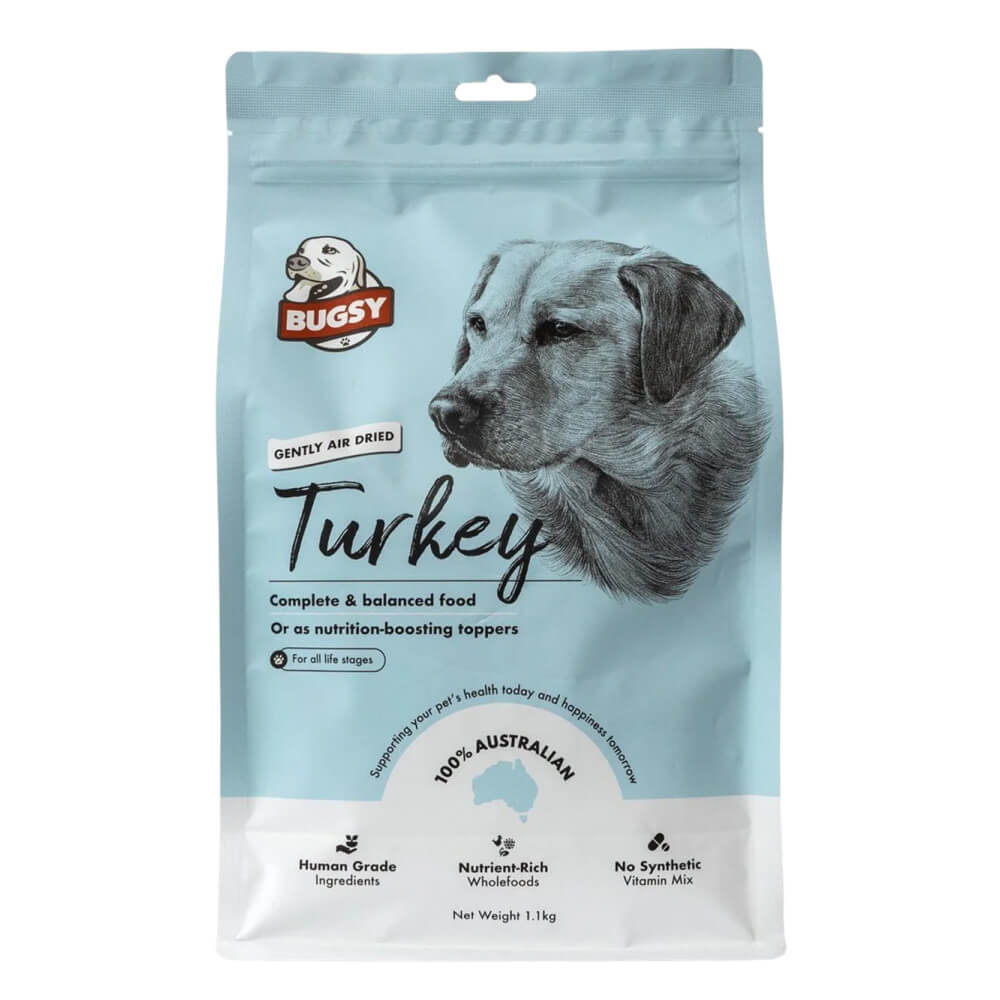
Bugsy's Air-Dried Turkey is an air-dried raw dog food made with 98% human-grade Australian turkey, bones and organs. Leaner than chicken and rich in protein, this single-protein recipe is a good alternative for dogs sensitive to chicken or beef, and suits all life stages as a meal or topper.
Nutritional Analysis
Ingredients
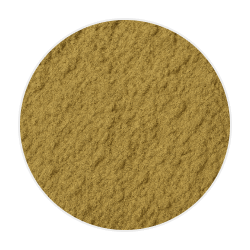
Turkey (Meat, Bones and Organs), Yeast, Pumpkin, Carrot Fibre, Camelina Oil, Wild Marine Algae, Sunflower Lecithin, Maitake Mushroom, Olive Extract, Green Lipped Mussel, Blueberries, Parsley, Organic Kelp (Ascophyllum Nodosum), Vinegar & Beetroot.

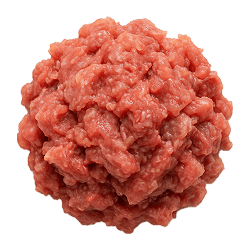
Meleagris Gallopavo, Turkey Muscle, Turkey Flesh, Meleagris Gallopavo Meat
Turkey meat is a high-quality animal-derived protein sourced from domesticated turkeys. It is included in pet food primarily to provide essential amino acids, supporting muscle maintenance and overall health. Turkey meat is used in its natural form, typically as fresh or dehydrated meat, ensuring optimal nutrient availability and palatability for pets. This ingredient also supplies important vitamins and minerals.
Turkey meat is included as a high-quality animal protein source to support muscle maintenance and overall health in pets. It also serves as a label-friendly ingredient that appeals to consumers seeking premium or novel protein options.

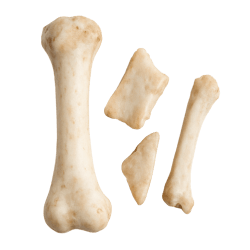
Meleagris Gallopavo Bone, Meleagris Gallopavo Skeleton, Turkey Skeletal Tissue, Meleagris Gallopavo Os
Turkey bone is an animal-derived ingredient sourced from the skeletal remains of turkeys. It is primarily included in pet food for its role in providing essential minerals such as calcium and phosphorus, which support healthy bone development and maintenance. Turkey bone is used in its natural, ground form, allowing for safe consumption and optimal nutrient absorption by pets.
Turkey bone is included as a natural source of minerals such as calcium and phosphorus, supporting nutritional balance in pet food formulations. It may also be used to enhance product labelling by highlighting whole-prey or natural ingredient claims.

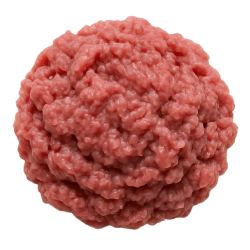
Turkey Giblets, Meleagris Gallopavo Offal, Meleagris Gallopavo Giblets, Poultry Offal (Meleagris Gallopavo)
Turkey offal refers to the edible internal organs and by-products of turkeys, such as liver, heart, and gizzard, sourced from animals. It is included in pet food primarily for its rich protein content and essential vitamins and minerals, supporting overall health. Turkey offal is used in its natural, whole-food form, providing a highly digestible and nutrient-dense ingredient for pets.
Turkey offal is included as a cost-effective source of animal protein, vitamins, and minerals, utilising parts of the turkey that are highly nutritious but less in demand for human consumption. Its inclusion supports nutrient density while optimising ingredient utilisation and production costs.

Saccharomyces Cerevisiae, Baker’s Yeast, Brewer’s Yeast, E620
Yeast is a single-celled fungus of microbial origin commonly derived from Saccharomyces cerevisiae. It is included in pet food primarily as a source of high-quality protein, B vitamins, and functional compounds that support digestive and immune health. Yeast is utilised in its deactivated, dried form rather than as a live organism, ensuring safety and optimal nutrient availability for pets.
Yeast is included as a palatability enhancer and natural flavour source to improve the taste and aroma of pet food, encouraging consumption. It may also serve as a cost-effective source of protein and B vitamins, supporting nutritional labelling claims.

Cucurbita Pepo, Cucurbita Maxima, Cucurbita Moschata, Pepo
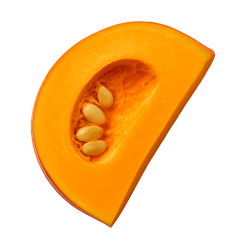
Pumpkin is a plant-derived ingredient sourced from the fruit of the Cucurbita pepo species. It is primarily included in pet food for its dietary fibre content, which supports digestive health and regularity. Pumpkin is used in its natural form, either as fresh, cooked, or dehydrated flesh, providing a source of vitamins, minerals, and antioxidants beneficial to overall wellbeing.
Pumpkin is included as a label-friendly ingredient that appeals to consumers seeking natural and recognisable components, while also serving as a cost-effective source of fibre and moisture to support digestive health and product texture. Its inclusion can enhance marketing appeal without significantly increasing formulation costs.

Daucus Carota Fibre, E499, Carrot Dietary Fibre, Daucus Carota Spp. Fibre
Carrot fibre is a plant-derived ingredient sourced from the fibrous parts of carrots. It is primarily included in pet food to enhance dietary fibre content, supporting digestive health and stool quality. Carrot fibre is used in its natural form, retaining its functional properties without chemical alteration. Its inclusion helps optimise gut function and contributes to the overall texture and structure of the finished product.
Carrot fibre is included as a cost-effective, label-friendly source of dietary fibre that helps improve stool quality and product texture. It also appeals to consumers seeking recognisable, natural ingredients in pet food formulations.

False Flax Oil, Gold Of Pleasure Oil, Camelina Sativa Seed Oil, Camelina Sativa Oil
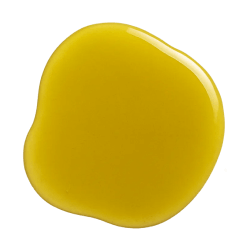
Camelina oil is a plant-derived oil extracted from the seeds of Camelina sativa, commonly known as false flax. It is primarily included in pet food for its rich content of omega-3 and omega-6 fatty acids, which support skin and coat health. Camelina oil is used in its natural, cold-pressed form to optimise nutrient retention and bioavailability for pets.
Camelina oil is included as a source of omega-3 and omega-6 fatty acids to support skin and coat health, offering a plant-based alternative to fish oils. Its presence also allows manufacturers to market the product as containing novel or sustainable ingredients.

Seaweed, Macroalgae, Algae Extract, Algae Spp.
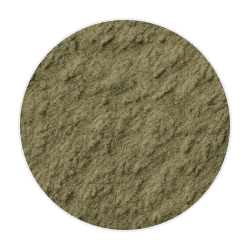
Marine algae is a plant-derived ingredient sourced from various seaweed species. It is primarily included in pet food for its rich content of essential minerals, trace elements, and natural antioxidants, supporting overall health and immune function. Marine algae is used in its natural, dried form, ensuring bioavailability of nutrients while maintaining safety and digestibility for pets.
Marine algae is included as a sustainable source of omega-3 fatty acids and micronutrients, supporting nutritional claims and marketing appeal. It also serves as a label-friendly ingredient that aligns with consumer demand for natural and environmentally conscious pet food components.

Lecithin (Helianthus Annuus), E322 (Helianthus Annuus), Helianthus Annuus Lecithin, Sunflower Phospholipids
Sunflower lecithin is a plant-derived ingredient extracted from sunflower seeds. It serves primarily as an emulsifier, helping to blend fats and water in pet food formulations, and also provides a source of phospholipids that support cellular health. Sunflower lecithin is not used in its raw seed form but is processed and utilised as a purified lecithin extract to optimise functionality and digestibility.
Sunflower lecithin is included as an emulsifier to improve the texture and consistency of pet food, ensuring fats and water-based ingredients remain blended. It also serves as a label-friendly alternative to synthetic emulsifiers, appealing to consumers seeking natural-sounding ingredients.

Grifola Frondosa, Hen Of The Woods, Dancing Mushroom, Ram's Head
Maitake mushroom is an edible fungus originating from the Grifola frondosa species, valued for its nutritional and functional properties. Sourced from plants, it is rich in beta-glucans, which support immune health and provide dietary fibre. Maitake mushroom is used in its natural, whole form in pet food, ensuring optimal nutrient availability and bioactive compound retention for health benefits.
Maitake mushroom is included as a label-friendly ingredient to appeal to health-conscious consumers, leveraging its reputation for potential immune-supporting properties. Its addition may also serve a marketing function by differentiating the product in a competitive market.

Olea Europaea Extract, Olive Leaf Extract, Olea Europaea Leaf Extract, Olea Europaea Fruit Extract
Olive extract is a plant-derived ingredient obtained from the leaves or fruit of the olive tree (Olea europaea). It is primarily included in pet food for its antioxidant properties, supporting cellular health and immune function. Olive extract is not used in its whole form; instead, concentrated extracts are utilised to optimise the delivery of beneficial polyphenols such as oleuropein.
Olive extract is included as a natural antioxidant to help preserve the freshness and stability of the product, potentially extending shelf life. It may also serve as a label-friendly ingredient, appealing to consumers seeking natural additives.

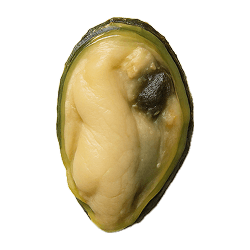
Perna Canaliculus, New Zealand Green Mussel, Greenshell Mussel, Kuku
Green lipped mussel is a marine animal ingredient sourced from the coastal waters of New Zealand. It is primarily included in pet food for its rich content of omega-3 fatty acids, glucosamine, and chondroitin, which support joint health and reduce inflammation. Green lipped mussel is used in its natural, whole form, ensuring optimal nutrient availability and bioactivity for pets.
Green lipped mussel is included as a functional ingredient to provide natural sources of omega-3 fatty acids and joint-supporting nutrients, supporting product differentiation and marketing claims related to joint health. Its presence also appeals to consumers seeking premium or holistic pet food formulations.

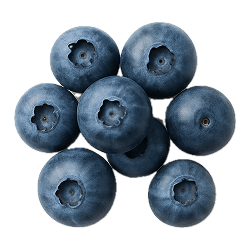
Vaccinium Corymbosum, Vaccinium Angustifolium, Bilberry, E163
Blueberry is a small, nutrient-rich fruit of plant origin, commonly sourced from the Vaccinium genus. It is included in pet food primarily for its antioxidant properties, supporting immune health and cellular protection. Blueberry is used in its natural, whole form, ensuring pets benefit from its full spectrum of vitamins, fibre, and phytonutrients as found in fresh fruit.
Blueberry is included as a label-friendly ingredient to appeal to health-conscious consumers, leveraging its reputation as a source of antioxidants. Its presence supports marketing claims of added nutritional benefits, though it is typically used in small quantities with minimal impact on the overall nutritional profile for pets.

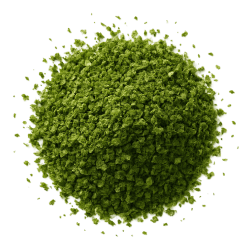
Petroselinum Crispum, Garden Parsley, Common Parsley, E461
Parsley is a leafy herb of plant origin, commonly used in pet food for its natural antioxidant properties and as a source of vitamins such as vitamin K and C. It is primarily included to support immune health and freshen breath. In pet food formulations, parsley is used in its natural, whole form, ensuring the retention of its beneficial phytonutrients and fibre content.
Parsley is included as a label-friendly ingredient to appeal to pet owners seeking natural or recognisable components in pet food. It may also be added for its perceived breath-freshening properties, though its functional impact on canine nutrition is minimal.

Knotted Wrack, Rockweed, Egg Wrack, Brown Seaweed
Ascophyllum nodosum is a species of brown seaweed harvested from cold North Atlantic waters, making it a marine plant ingredient. It is primarily included in pet food for its natural source of dietary fibre, antioxidants, and trace minerals, supporting oral health and immune function. Ascophyllum nodosum is used in its dried, powdered natural form to optimise nutrient availability and palatability.
Ascophyllum nodosum is included as a functional ingredient primarily for its perceived dental health benefits and as a source of natural minerals, supporting marketing claims of oral care and holistic nutrition. Its presence can enhance product appeal to health-conscious consumers seeking natural additives.

Acetic Acid, E260, Spirit of Acetic Acid, Ethanoic Acid
Vinegar is a liquid ingredient derived from the fermentation of plant-based sources such as grains or fruits. It is primarily included in pet food for its natural preservative properties, helping to inhibit microbial growth and extend shelf life. Vinegar is used in its natural liquid form, ensuring safety and palatability while contributing to the overall stability of the finished product.
Vinegar is included as a natural preservative to help inhibit the growth of bacteria and mould, thereby extending the product’s shelf life. It may also be used to enhance palatability by subtly improving flavour.

Beta Vulgaris, Table Beet, Garden Beet, Red Beet
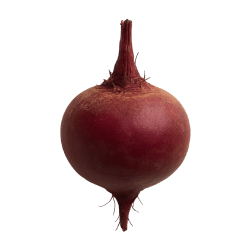
Beetroot is a root vegetable derived from the plant Beta vulgaris, commonly cultivated for its deep red, nutrient-rich taproot. It is included in pet food primarily for its dietary fibre content and natural antioxidants, supporting digestive health and immune function. Beetroot is used in its natural, whole form, ensuring pets benefit from its full spectrum of phytonutrients and micronutrients.
Beetroot is included as a natural colourant to enhance the visual appeal of the product for pet owners and as a label-friendly ingredient that supports marketing claims of natural or wholesome content. It may also provide a cost-effective source of fibre and micronutrients.
.png)


Comments
0 comments
Login to Join the Conversation 💬