












Fresh dog food has gone from niche to mainstream in Australia. Subscription boxes, chilled meal packs, and gently cooked options are now stocked by major retailers and delivered to front doors across the country. But the category is broad, the marketing is loud, and the quality varies. This guide breaks down what fresh dog food actually is, what separates a good product from a dressed-up one, and how to decide whether it's the right choice for your dog.
In Short:
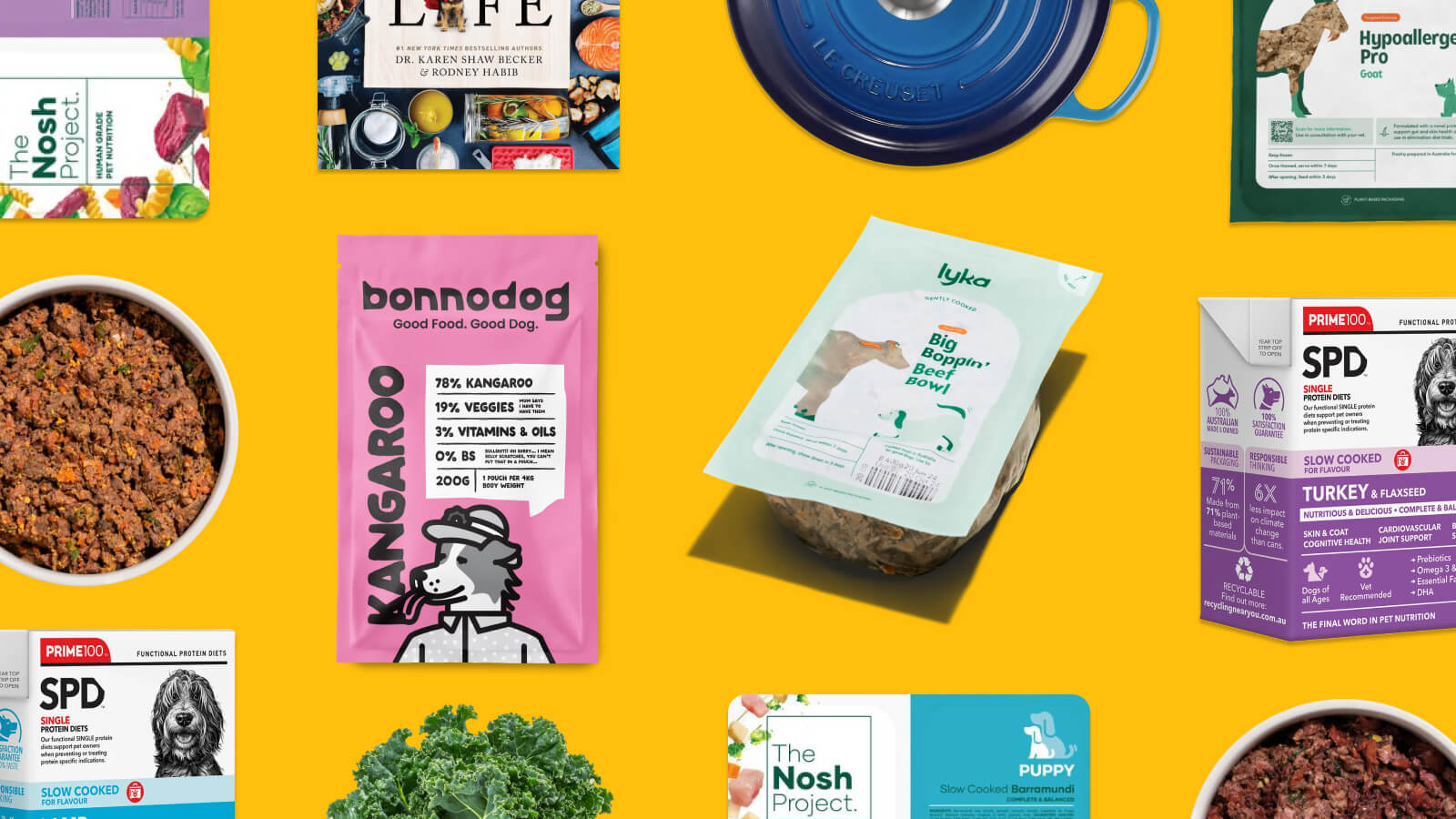
The best fresh dog food in Australia uses human-grade meat, whole vegetables, and minimal processing to deliver a nutritionally complete meal that's closer to home-cooked food than traditional kibble. Fresh dog food is typically sold chilled or frozen, often on a subscription basis, and formulated to meet Australian pet food standards. It suits dogs with digestive sensitivities, fussy eaters, and owners who want more transparency over what goes into their dog's bowl.
Choose based on your dog's weight, life stage, and any dietary requirements — and check that the product is labelled as complete and balanced, not just a topper or supplement.
What is fresh dog food
Fresh dog food is exactly what it sounds like — minimally processed dog food made from whole, recognisable ingredients and sold in a chilled or frozen state rather than as shelf-stable kibble or canned wet food.
Most fresh dog food products in Australia are gently cooked at low temperatures, then rapidly chilled or frozen to preserve nutrients without the need for artificial preservatives. This sits between raw feeding and traditional kibble on the processing spectrum — the food is cooked enough to eliminate bacterial risk, but not subjected to the high-heat extrusion process used to manufacture dry dog food.
The ingredients list on a quality fresh dog food product reads more like a home-cooked meal than an industrial formulation: chicken breast, sweet potato, peas, carrots, flaxseed oil. You can see and identify the components, which is part of the appeal for owners who want transparency in their dog's diet.
Fresh dog food is distinct from raw dog food. Raw diets use uncooked meat, bones, and organs — the BARF model. Fresh food is cooked, just gently. It's also distinct from traditional wet food in cans or pouches, which is typically cooked at much higher temperatures and contains more water, fillers, and stabilisers.
The category has grown rapidly in Australia over the past three to four years, driven largely by direct-to-consumer subscription services that deliver portioned meals to your door. Major pet retailers have also started stocking chilled and frozen fresh food options in-store, making the format more accessible than ever.
Why are owners switching to fresh dog food
The shift toward fresh feeding is driven by a few consistent motivations, and they're not all about nutrition.
Ingredient Transparency — The single biggest reason owners give for switching is wanting to know exactly what's in their dog's food. Fresh dog food brands tend to list every ingredient clearly and use language that's easy to understand — no ambiguous terms, no long lists of chemical additives. For owners who've started reading kibble labels and been put off by what they found, fresh food offers a level of clarity that most traditional products don't.
Digestive Improvements — Many owners report that their dogs have better digestion on fresh food — firmer stools, less gas, reduced bloating, and fewer episodes of vomiting or regurgitation. Gently cooked food is generally easier to digest than highly processed kibble because the proteins haven't been denatured by extreme heat, and the fibre comes from whole food sources rather than added cellulose or beet pulp.
Fussy Eaters — Fresh dog food is significantly more palatable than kibble for most dogs. The smell, texture, and moisture content are all more appealing. If you have a dog that picks at dry food, leaves half the bowl, or needs toppers and mix-ins to finish a meal, fresh food often solves the problem outright.
Skin and Coat Condition — Owners frequently report improvements in coat quality — shinier, softer fur with less shedding — within a few weeks of switching. This is likely driven by the higher bioavailability of nutrients in gently cooked food compared to heavily processed alternatives, particularly omega fatty acids and zinc.
Portion Control and Weight Management — Fresh dog food subscriptions typically portion meals to your dog's exact weight and activity level. This takes the guesswork out of feeding and makes it easier to manage weight — particularly useful for breeds prone to obesity or dogs on a vet-directed weight loss plan.
What to look for in a fresh dog food
The fresh dog food market in Australia is growing fast, and not every product that calls itself "fresh" meets the same standard. Here's what separates a genuinely good product from one that's mostly marketing.
- Human-Grade Ingredients
The best fresh dog food brands use meat and produce sourced from the same supply chain as human food. This isn't just a marketing claim — it reflects higher standards for ingredient quality, handling, and traceability. Products that don't specify "human grade" may use pet-grade meat from rendering or lower-quality sources. - Nutritionally Complete and Balanced
This is the most important thing to check on the label. A product labelled as "complete and balanced" has been formulated to meet all of your dog's nutritional needs as a sole diet. Products labelled as "complementary," "topper," or "mixer" are designed to be added to another food — they're not a complete meal on their own. This distinction matters, and it's one of the most common mistakes owners make when switching to fresh food. - Named Protein Sources
The product should clearly state which proteins are used — chicken, beef, lamb, turkey, kangaroo. Avoid products that use generic terms like "meat" or "animal derivatives" without specifying the source. - Compliance with Australian Standards
Look for products manufactured under the Australian Standard for the Manufacturing and Marketing of Pet Food (AS 5812). This covers formulation, ingredient sourcing, labelling, and recall procedures. Not all fresh food brands comply, but those that do offer an extra layer of assurance. - Minimal Processing and No Unnecessary Additives
The ingredients list should be short and recognisable. Gently cooked fresh food shouldn't need artificial colours, flavours, or preservatives. Some products include functional ingredients like fish oil (for omega-3), turmeric (anti-inflammatory), or chia seeds (fibre and omega-3) — these are fine and often beneficial. - Clear Feeding Guidelines
A good fresh food product will provide feeding recommendations based on your dog's weight, and ideally, their life stage and activity level. Subscription services typically calculate portions for you, which is one of their practical advantages.
Best Overall Fresh Dog Food
Choosing a fresh dog food that works as a genuine everyday meal — not just a topper or occasional treat — means finding a recipe that's nutritionally complete across all life stages, uses high-quality protein as its foundation, and includes functional whole food ingredients that support long-term health.
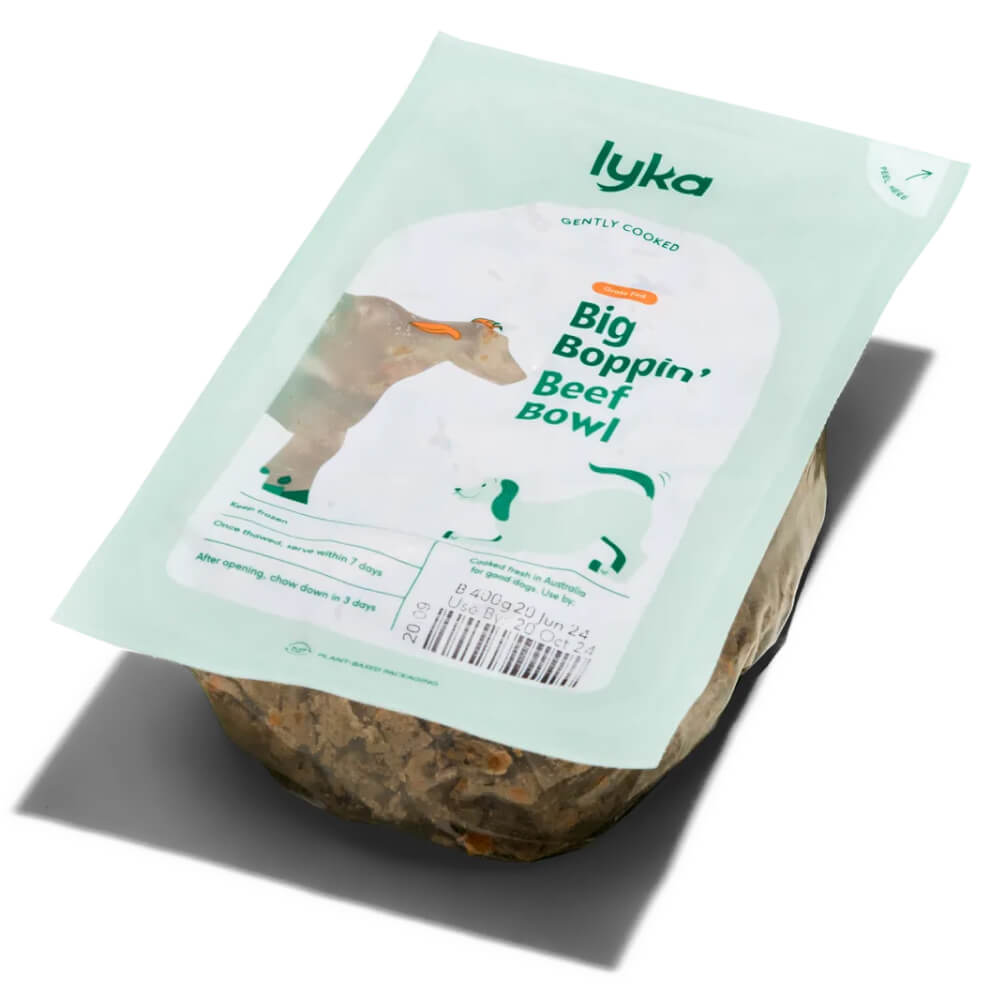
Grass Fed Beef Cooked Dog Food
LykaLyka's Grass Fed Beef Bowl is a gently cooked, human-grade meal built around Australian grass-fed beef mince, beef heart, and beef liver — delivering 55% crude protein on a dry matter basis. The recipe is AAFCO formulated for all life stages, meaning it works as a complete diet for puppies, adults, and seniors without needing any supplementation.Beyond the protein, functional ingredients like psyllium seed husk for digestive fibre, wild-caught sardines for Omega-3s, kelp for dental health, and ginger for antioxidant support make this more than just a meat-and-veg meal.
Lyka operates on a direct-to-consumer subscription model with free delivery, and each pouch is pre-portioned to your dog's specific calorie needs based on breed, weight, age, and activity level.
Pros
- Vet-formulated by an in-house integrative veterinarian and board-certified veterinary nutritionists, exceeding AAFCO standards for all life stages
- Human-grade, Australian-sourced ingredients including grass-fed beef and wild-caught sardines, gently cooked below 90°C to retain nutrients
- Functional superfoods built into the recipe — kelp, spirulina, ginger, flaxseed oil — providing antioxidant, anti-inflammatory, and dental support without needing separate supplements
- Pre-portioned pouches customised to your dog's individual needs, removing guesswork from feeding
Cons
- Only available through Lyka's own subscription service — not stocked at any retail pet stores
- Moderate-high fat content means it may not suit dogs with a history of pancreatitis or those requiring a lower-fat diet
- Contains sardines alongside beef, so it's a limited-protein rather than true single-protein meal — not ideal for dogs needing strict elimination diets
Best Vet-Founded Boutique Fresh Dog Food
With so many fresh dog food brands now available in Australia, it can be hard to tell which ones are genuinely formulated by qualified professionals and which are simply riding the "human-grade" marketing trend. A vet-founded brand that also controls its ingredient sourcing — right down to relationships with individual farming partners — offers an extra layer of credibility that most competitors can't match.
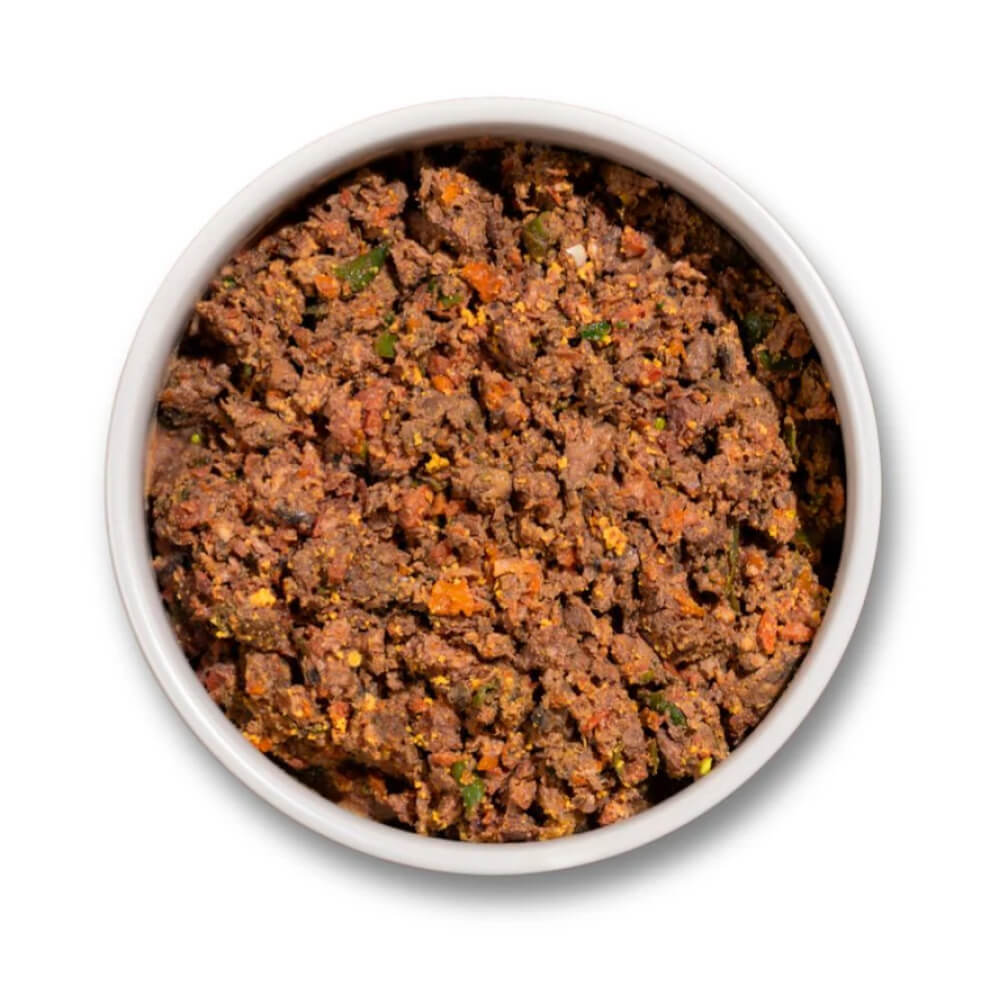
Beef and Vegetable Fresh Dog Food
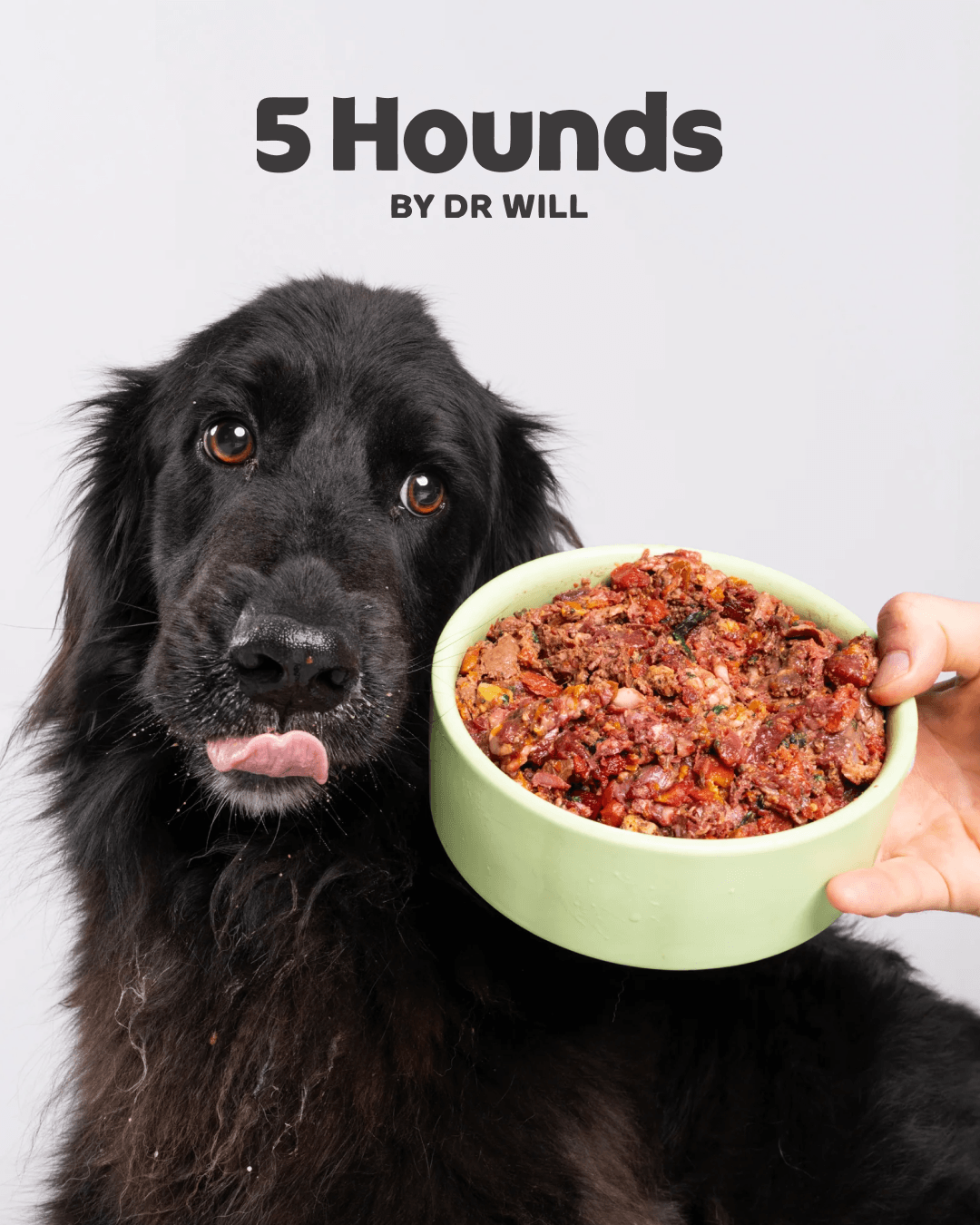
5 Hounds by Dr Will5 Hounds was founded by Australian veterinarian and farmer Dr. Will Maginness, and the Beef and Vegetable recipe reflects that dual expertise. Built around grass-fed, free-range beef mince, beef heart, and beef liver with grass-fed beef bone broth for added joint and gut support, it delivers 54% crude protein on a dry matter basis. The recipe is completely poultry-free and uses walnut oil for Omega-3s instead of fish, making it a strong option for dogs with poultry or fish sensitivities.
Every meal is gently cooked at 75°C using a sous vide method — lower than most competitors — to retain maximum nutrient integrity while still meeting food safety standards. The recipe is formulated to meet both AAFCO and FEDIAF guidelines, with a separate puppy-specific formulation also available.
Pros
- Founded and formulated by a practising Australian veterinarian who also farms, giving direct oversight of both nutrition science and ingredient sourcing
- Includes grass-fed beef bone broth as a functional ingredient for joint, gut lining, and hydration support — a feature most fresh food competitors don't offer
- Completely poultry-free and fish-free, making it suitable for dogs with common protein sensitivities
- Cooked at 75°C via sous vide — one of the lowest cooking temperatures in the category — to preserve nutrient bioavailability
Cons
- Only available via direct subscription through the 5 Hounds website — not stocked at any retail pet stores
- Smaller, newer brand with more limited delivery coverage than established competitors like Lyka — courier delivery is available across VIC, QLD, NSW, ACT, SA, and TAS but not all postcodes
- No transparent per-kilogram pricing on the website — cost is only revealed after completing the meal plan quiz, making it harder to compare value against competitors upfront
Best Retail-Available Fresh Dog Food
Not every dog owner wants to commit to a subscription service with a direct-to-consumer brand. For owners who prefer to order fresh food through a trusted online pet retailer — with the option of same-day metro delivery and no lock-in commitment — having a gently cooked option readily available outside of the subscription model makes the switch to fresh far more accessible.
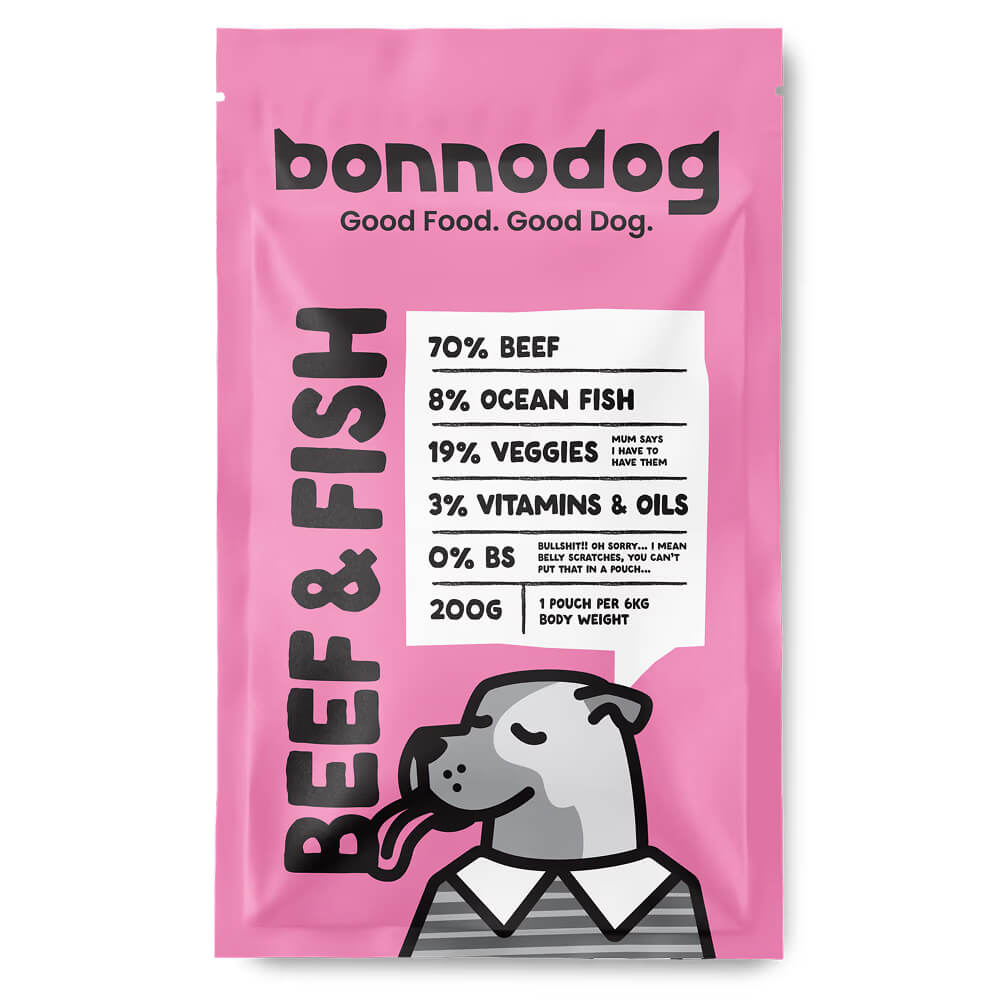
Gently Cooked Frozen Beef and Fish Dog Food
BonnodogBonnodog is Pet Circle's own-brand fresh dog food line, made with 98% Australian ingredients and gently cooked in NSW. The Beef and Fish recipe is poultry-free, grain-free, and formulated by vets and pet nutritionists to be complete and balanced for all life stages. It comes in three size options tailored to your dog — 18x125g for small dogs, 15x200g for medium dogs, and 8x400g for large dogs — and is designed to work as either a full meal or a mixer alongside kibble.
Pros
- Available through Pet Circle with same-day metro delivery — no subscription lock-in required, order only when you need it
- Poultry-free and grain-free, suitable for dogs with common protein and grain sensitivities
- Dual protein recipe combining beef and fish, providing a broader amino acid and fatty acid profile in a single meal
- Backed by a clean-bowl guarantee — if your dog doesn't eat it, you get your money back
Cons
- Exclusively available through Pet Circle — not stocked at Pet Barn, Pet Stock, or other retailers
- Meets PFIAA standards rather than AAFCO, which is less commonly referenced in international nutritional benchmarking
Best Fresh Dog Food for Puppies
Growing puppies have significantly higher demands for protein, DHA, calcium, and essential vitamins than adult dogs — and getting the balance right during the first 12 months is critical for healthy skeletal, cognitive, and immune development. A purpose-formulated puppy fresh food removes the guesswork from meeting those elevated requirements.

Slow Cooked Chicken Puppy Food
The Nosh ProjectThe Nosh Project Chicken Puppy meal is a single-protein recipe built around chicken breast and chicken liver, with rice, potato, and seasonal vegetables. Every meal includes the proprietary Puppy Nourish²⁷ Balance — a blend of 27 essential vitamins, minerals, and DHA developed in conjunction with the Greencross Vet Nutrition Panel and independently tested by Massey University. It's AAFCO formulated for growth and development, suitable for puppies aged 2–12 months (excluding large breed puppies).
Pros
- Purpose-built puppy formulation with 27 essential vitamins, minerals, and DHA specifically calibrated for growth and development
- Stocked at Pet Barn stores and available for same-day delivery in metro areas — no subscription required
- Single animal protein (chicken) makes it easier to identify sensitivities during the early feeding stages
- Developed by pet nutritionists with the Greencross Vet Nutrition Panel and independently tested by Massey University
Cons
- Not suitable for large breed puppies, whose specific growth rate and calcium requirements aren't addressed by this formulation
- Higher proportion of rice and potato relative to meat than some premium competitors — the carbohydrate-to-protein ratio leans toward starches
- Contains grains (rice), so not suitable for owners specifically seeking a grain-free puppy diet
Best Fresh Dog Food for Allergies
For dogs suffering from food allergies or chronic skin and gut issues, identifying the trigger protein is the first step — and that requires a strict elimination diet using a novel protein the dog has never been exposed to. A true hypoallergenic fresh food needs to be single-protein, free from all common allergens, and nutritionally complete enough to sustain the dog through an 8–12 week trial period.
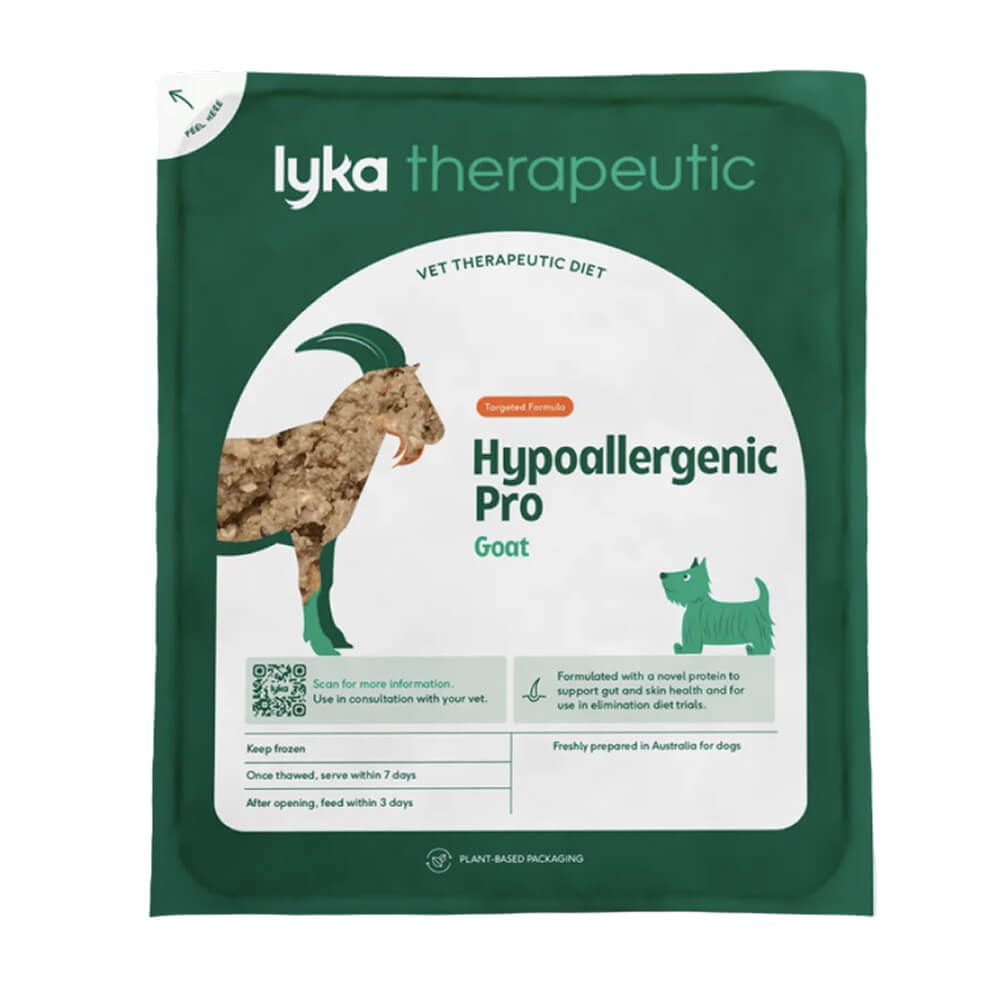
Goat Hypoallergenic Pro Cooked Dog Food
LykaLyka's Hypoallergenic Pro is a therapeutic-grade fresh food formulated with goat as a single novel protein — free from beef, chicken, fish, egg, wheat, soy, corn, and dairy. It uses algae oil instead of fish oil for Omega-3s, and includes prebiotic fibres, antioxidant-rich berries, and hemp seeds to actively support skin barrier function and gut microbiome health. It meets both AAFCO and FEDIAF standards for all life stages, making it suitable for elimination diet trials as well as long-term feeding.
Pros
- True single novel protein (goat) with zero common allergens — purpose-built for veterinary elimination diet trials
- Uses algae oil as the Omega-3 source instead of fish oil, avoiding a common allergen while still delivering EPA and DHA for anti-inflammatory support
- Formulated as a therapeutic diet by Lyka's in-house integrative veterinarian and board-certified veterinary nutritionists
- Complete and balanced for all life stages, including puppies — unlike many hypoallergenic diets that are adult-only
Cons
- Only available through Lyka's subscription service — not stocked at any retail pet stores
- Premium pricing reflects the therapeutic positioning — significantly more expensive per kilogram than standard fresh food options
- As a therapeutic diet, Lyka recommends veterinary consultation before starting, which adds a step before you can begin feeding
Best Fresh Dog Food for Sensitive Stomachs
Dogs with sensitive stomachs, food intolerances, or conditions like IBD and food-responsive enteropathy often do best on a single-protein diet with added digestive support ingredients. A recipe that combines a lean, easily digestible protein with prebiotics, postbiotics, and natural fibre can help settle chronic digestive issues without sacrificing nutritional completeness.
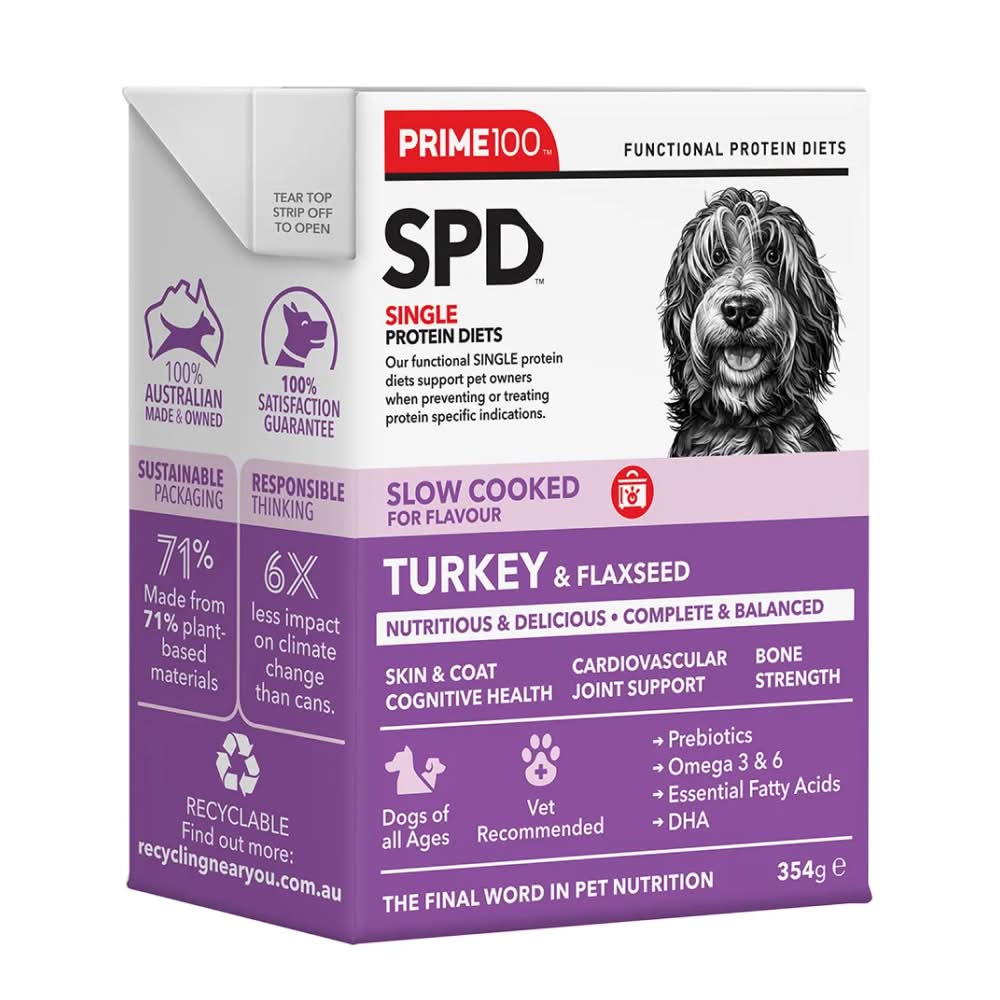
SPD™ Slow Cooked Turkey and Flaxseed
Prime100PRIME100's SPD (Single Protein Diet) Turkey and Flaxseed is a functional fresh food built around Australian turkey as its sole protein source, combined with sweet potato, quinoa, bamboo fibre, flaxseed, chicory root extract (a prebiotic), and Trumune® postbiotics. It also includes glucosamine, chondroitin, and taurine as standard. The slow-cooked format is shelf-stable prior to opening — no freezer space required — and is AAFCO formulated for all life stages (excluding large and giant breed puppies).
Pros
- True single protein diet specifically designed for food intolerances, dermatitis, and digestive conditions — vet recommended for elimination protocols
- Includes prebiotics (chicory root extract), postbiotics (Trumune®), and natural fibre (bamboo fibre, flaxseed) for comprehensive digestive support
- Shelf-stable before opening in eco-friendly carton packaging — no freezer required, making it the most convenient fresh food option on this list
- Widely available through Pet Barn, Pet Circle, Pet Stock, and Vets Love Pets
Cons
- While listed under fresh dog food, the shelf-stable format means it doesn't require refrigeration until opened — unlike truly fresh frozen options, the extended shelf life raises questions about the level of processing involved
- Not suitable for large or giant breed puppies
- Contains quinoa, which while gluten-free is technically a grain — not a true grain-free option for owners who need to avoid all grains
Fresh dog food formats available in Australia
The fresh dog food category in Australia now includes several distinct formats, each with different practical trade-offs.
Chilled meal packs (subscription delivery)
This is the fastest-growing format. Brands prepare portioned meals customised to your dog's profile — weight, breed, age, activity level — and deliver them to your door on a regular schedule. Meals arrive chilled or frozen and are stored in the fridge or freezer until serving. The convenience is the main draw: you don't have to think about portioning, and the food is formulated specifically for your dog.
Frozen fresh meals (retail)
Some fresh food brands sell their products through major pet retailers like Petstock and Petbarn as frozen meal packs. These are typically not customised to your individual dog but offer the same ingredient quality and gentle cooking process as subscription products. You buy in bulk, store in the freezer, and thaw portions as needed.
Fresh food rolls
Chilled rolls — sliced and served — are one of the older formats in the fresh food space. They're widely available, affordable, and convenient, but the ingredient quality varies significantly between brands. Some are genuinely high-quality products with named proteins and minimal additives. Others are closer to processed luncheon meat for dogs. Read the label carefully.
Gently cooked toppers and mixers
Not a complete diet, but a growing sub-category. These products are designed to be added to kibble or another base food to boost palatability and nutrition. They're a practical entry point for owners who aren't ready to switch fully to fresh but want to improve what their dog is eating.
Home-cooked meals (DIY)
Some owners prefer to cook their dog's meals themselves using whole ingredients from the supermarket or butcher. This gives you full control but requires careful nutritional planning. If you go this route, work with a veterinary nutritionist to formulate a balanced recipe — cooking chicken and rice every night is not a complete diet, and long-term nutritional deficiencies are the most common problem with DIY fresh feeding.
How to transition your dog to fresh food
Switching from kibble to fresh food is generally easier than switching to raw, because the food is cooked and closer in digestibility to what your dog's gut is already processing. But a gradual transition still produces the best results.
The standard approach is seven to ten days. Start by replacing about 25 percent of your dog's kibble with fresh food for the first two to three days. Move to 50/50 for the next two to three days, then 75 percent fresh, before switching fully.
Most dogs take to fresh food immediately because it's more palatable and aromatic than kibble. The challenge is rarely getting them to eat it — it's managing the digestive adjustment. Expect slightly softer stools during the transition as the gut microbiome adapts to the higher moisture content and different fibre profile. This usually resolves within a few days.
If your dog has a history of digestive sensitivity, extend the transition to two weeks and introduce the new food more gradually. If persistent diarrhoea or vomiting occurs beyond the first few days, slow down the transition or consult your vet.
One thing owners often notice immediately is that their dog drinks less water after switching to fresh food. This is normal — fresh food typically contains 60 to 70 percent moisture, compared to around 10 percent in kibble. Your dog is getting a significant amount of hydration from the food itself.
Storage, shelf life, and handling
Fresh dog food requires more care than kibble when it comes to storage, but the handling is straightforward.
Chilled fresh food should be stored in the fridge at or below four degrees Celsius and used within the timeframe specified on the packaging — typically three to five days once opened or thawed. Sealed packs may last longer; check the use-by date.
Frozen fresh food should be stored at minus 18 degrees Celsius or below. Thaw portions in the fridge overnight — not on the bench or in warm water. Once thawed, use within 48 hours and never refreeze.
Subscription services generally deliver with insulated packaging and ice packs to maintain cold chain. Check that the food is still cold when it arrives. Most brands design their packaging to remain safe in transit for up to 24 hours, but in Australian summer heat, it's worth bringing the delivery inside promptly.
Unlike kibble, fresh dog food doesn't have a long ambient shelf life. This is actually a feature, not a bug — it reflects the absence of artificial preservatives. Think of it the same way you'd think about fresh food for yourself: fridge, use-by date, common sense.
How much does fresh dog food cost in Australia
Fresh dog food is more expensive than kibble. That's the reality, and any brand that suggests otherwise is being creative with the comparison.
Subscription fresh dog food services in Australia typically cost between $2 and $6 per day for a medium-sized dog (15 to 25 kg), depending on the brand, protein source, and your dog's calorie needs. That works out to roughly $14 to $42 per week. Smaller dogs cost less; larger dogs cost more.
For comparison, feeding the same dog on premium dry kibble costs roughly $8 to $15 per week. Mid-range wet food sits around $15 to $25 per week. Fresh food is at the top of the price range, though it's not as far above premium kibble as many owners assume.
Frozen fresh food from retail stores tends to be slightly cheaper than subscription services because there's no delivery cost built in. Fresh food rolls are the most affordable option in the fresh category — often comparable in price to mid-range wet food.
Some owners manage costs by feeding fresh food as part of a mixed diet — fresh for one meal, quality kibble for the other. This gives your dog many of the benefits of fresh food while keeping the weekly cost closer to a premium kibble budget.
The cost conversation is ultimately about priorities. Fresh dog food costs more than processed alternatives, but many owners find the improvements in digestion, coat condition, and overall health reduce their vet bills over time. That's hard to quantify precisely, but it's a consistent theme in owner feedback.
How to choose: a quick decision guide
Not sure which direction to go? These scenarios cover the most common starting points.
I want the best nutrition I can get for my dog and I'm happy to pay for it. Look for a subscription fresh food service that customises meals to your dog's weight, age, and activity level. These are the most nutritionally precise option and take all the guesswork out of portioning. Check that the product is labelled as complete and balanced.
My dog is a fussy eater and won't finish kibble. Fresh food is the single most effective solution for picky eaters. The aroma, texture, and moisture content are dramatically more appealing than dry food. Start with a subscription trial or a frozen meal pack from your local pet retailer and see how your dog responds — most fussy dogs eat fresh food without hesitation.
My dog has digestive issues — loose stools, gas, or sensitive stomach. Gently cooked fresh food is easier to digest than kibble for most dogs. Look for a single-protein formula (chicken or turkey are the gentlest) and transition gradually over ten to fourteen days. If your dog has a diagnosed condition, talk to your vet about whether fresh food is appropriate.
I want to improve my dog's diet but can't afford full fresh feeding. Use fresh food as a topper or mix it into your dog's current kibble. Even replacing 25 to 50 percent of kibble with fresh food makes a meaningful nutritional difference. Fresh food rolls from the retail chiller are the most affordable way to add fresh food to the bowl.
I have a large or giant breed dog and the cost of fresh food is a concern. Larger dogs cost more to feed regardless of the food type. Consider a mixed feeding approach — fresh food for one meal, quality kibble for the other — to balance nutrition and budget. Frozen bulk packs from retail stores are also more cost-effective than subscription services for big dogs.
My dog has food allergies or intolerances. Fresh dog food makes ingredient control much easier because the ingredients list is short and transparent. Look for a single-protein, limited-ingredient formula and avoid products with common allergens (beef, dairy, wheat, soy) if your dog has confirmed sensitivities. Some subscription services let you customise the recipe to exclude specific ingredients.
I'm feeding raw but want something easier to handle. Fresh cooked food offers similar ingredient quality and nutritional benefits to raw with none of the bacterial handling concerns. It's the closest alternative to raw for owners who want whole-food nutrition without the hygiene management that comes with uncooked meat.
Frequently Asked Questions
Is fresh dog food better than kibble?
What is the difference between fresh dog food and raw dog food?
How long does fresh dog food last in the fridge?
Can puppies eat fresh dog food?
Is fresh dog food worth the cost?
Can I mix fresh dog food with kibble?
Do I need to add supplements to fresh dog food?
How do fresh dog food subscriptions work in Australia?
Is fresh dog food suitable for dogs with allergies?
Where can I buy fresh dog food in Australia?


Comments
0 comments
Login to Join the Conversation 💬