




.png)


Pork Raw Freeze Dried Dog Food
Overview
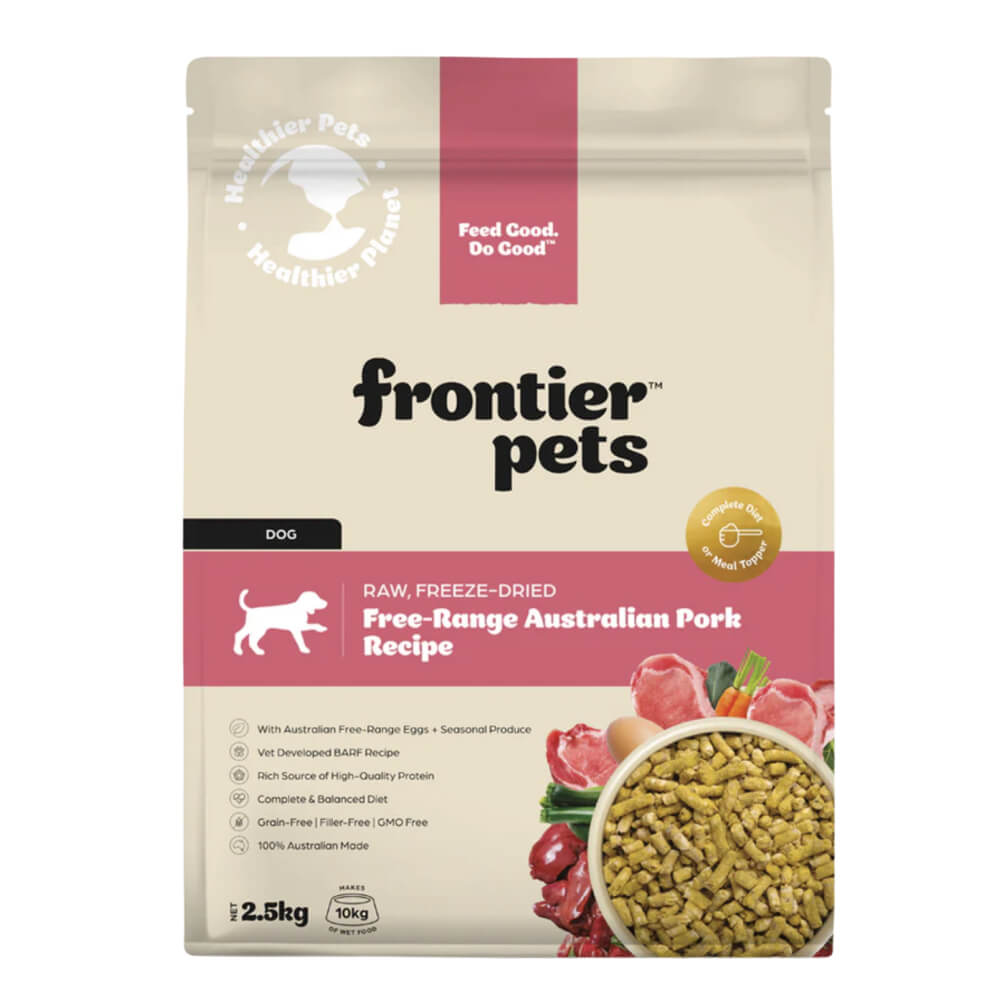
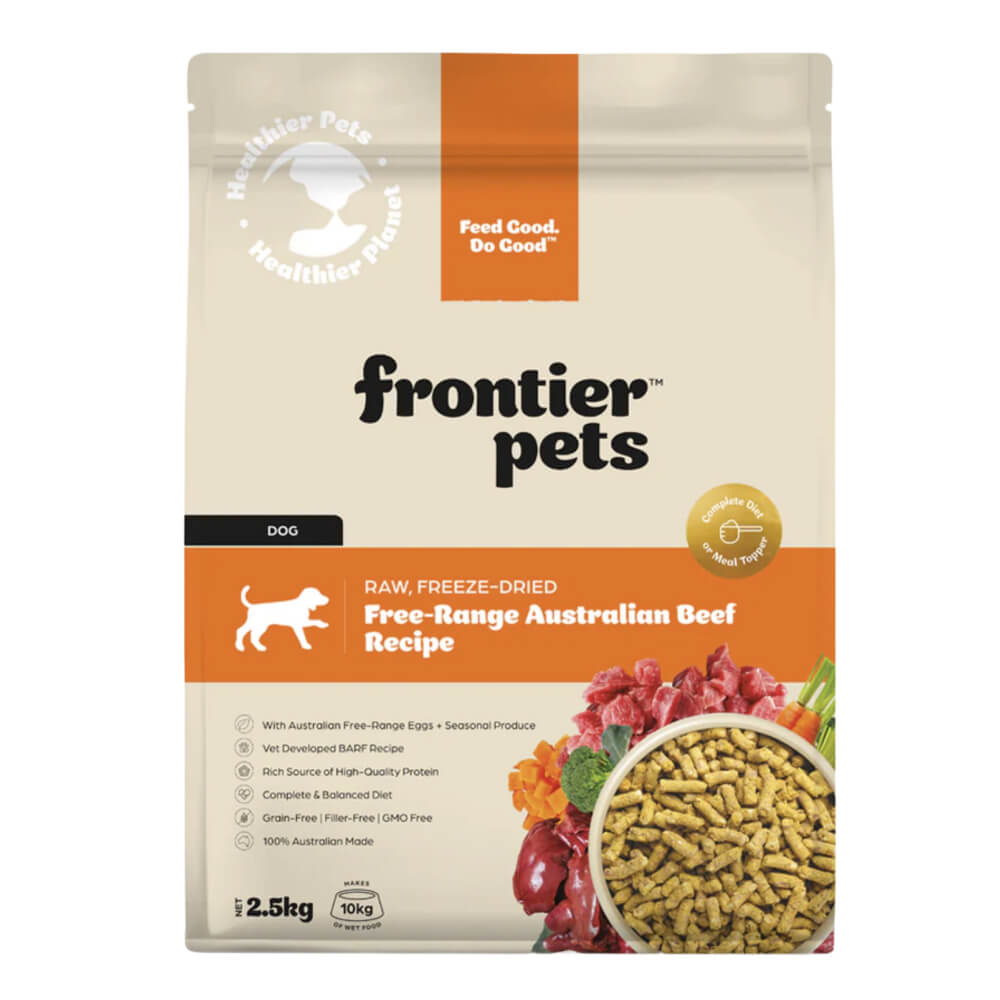
Frontier Pets Free-Range Pork is a raw freeze-dried dog food using free-range pork meat alongside pork and/or beef offal and free-range egg — meaning this is not a single-protein recipe. Carrot, broccoli, apple, almond meal and seaweed meal provide the plant inputs. The freeze-drying process preserves the nutritional profile of raw ingredients, and the food can be served dry or rehydrated with warm water. The recipe is presented as complete and balanced and meets AAFCO and NRC profiles for adult maintenance. The variable beef inclusion may not suit dogs with a known beef sensitivity.
Nutritional Analysis
Ingredients
Free-Range Pork, Free-Range Pork or Beef Tripe, Free-Range Pork and Beef Offal (Tongue, Liver, Kidney, Heart), Free-Range Egg, Seasonal Vegetables (Carrot, Sweet Potato, Broccoli), Apple, Almond Meal, Safflower Oil, Turmeric, Flaxseed Oil, Seaweed, Natural Fibre, Natural Antioxidant, Vitamins (Vitamin B1, Vitamin B2, Vitamin B6, Vitamin B12, Vitamin D, Vitamin E), Minerals (Trace Minerals, Calcium, Phosphate).

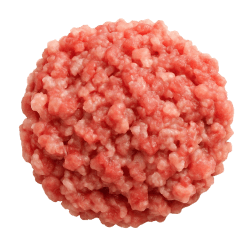
Sus Scrofa Domesticus, Domestic Pig, Swine, Porcine
Pork is the meat derived from domesticated pigs and is classified as an animal-based ingredient. It serves as a high-quality source of protein and essential amino acids, supporting muscle maintenance and overall health in pets. In pet food, pork is typically used in its natural, whole form, providing both palatability and nutritional value for dogs and cats.
Pork is included as a primary animal protein source to support muscle maintenance and overall nutrition in pet food formulations. It also serves as a palatable ingredient that can enhance flavour and appeal for pets.
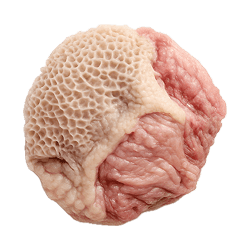
Cattle Stomach, Bovine Stomach, Bovine Tripe, Bos Taurus Stomach
Beef tripe is the edible stomach lining of cattle, classified as an animal-derived ingredient. It is valued in pet food for its high protein content and rich supply of essential nutrients, including vitamins and minerals that support overall health. Beef tripe is incorporated in its natural, whole-food form, providing both palatability and nutritional benefits to companion animals.
Beef tripe is included as a highly palatable animal protein source to enhance flavour and encourage consumption. It also serves as a label-friendly ingredient that appeals to consumers seeking natural, meat-based components in pet food.

Swine Offal, Sus Scrofa Domesticus Offal, Pig Offal, Porcine Offal
Pork offal refers to the edible internal organs and by-products derived from pigs, such as liver, kidney, and heart. Sourced from animals, pork offal is included in pet food for its rich supply of protein, essential vitamins, and minerals, supporting overall health. It is used in its natural, whole-food form, providing a highly digestible and nutrient-dense ingredient for pets.
Pork offal is included as a cost-effective source of animal protein, vitamins, and minerals, utilising parts of the animal that might otherwise go to waste. Its inclusion supports nutritional value while optimising ingredient costs for the manufacturer.
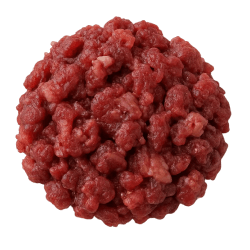
Bovine Offal, Bos Taurus Offal, Cattle Offal, Bovine Variety Meats
Beef offal refers to the edible internal organs and by-products derived from cattle, such as liver, kidney, and heart. Sourced from animal origin, beef offal is included in pet food for its rich supply of essential nutrients, including protein, vitamins, and minerals. It is used in its natural, whole food form, providing highly bioavailable nutrients to support overall pet health.
Beef offal is included as a cost-effective source of animal protein, vitamins, and minerals, utilising parts of the animal that are highly nutritious but less in demand for human consumption. Its inclusion also supports label appeal by highlighting the use of whole-animal ingredients.

Hen Egg, Chicken Egg, Gallus Gallus Domesticus Egg, Avian Egg
Egg is an animal-derived ingredient sourced from poultry, commonly used in pet food for its high-quality protein and essential amino acids. It provides vital nutrients that support muscle development and overall health. In pet food, egg is typically included in its natural, whole form—either as dried or fresh egg—ensuring optimal digestibility and nutrient availability for pets.
Egg is included as a high-quality, bioavailable protein source to support muscle development and overall nutrition. It also enhances the product’s nutritional profile, appealing to consumers seeking premium or natural pet food options.
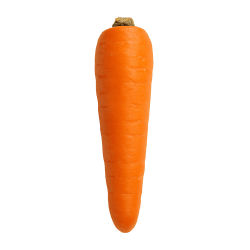
Daucus Carota, Daucus Carota Root, Daucus Carota Sativa, Wild Carrot
Carrot is a root vegetable of plant origin, widely recognised for its vibrant orange colour and natural sweetness. In pet food, carrot is included in its natural, whole form to provide dietary fibre, beta-carotene (a precursor to vitamin A), and antioxidants. Its primary benefit is supporting digestive health and immune function, while also contributing to overall palatability and nutritional diversity.
Carrot is included as a label-friendly ingredient to appeal to consumers seeking recognisable, natural components and to enhance the product’s perceived nutritional value. It may also provide a modest source of fibre and vitamins, supporting marketing claims of added health benefits.
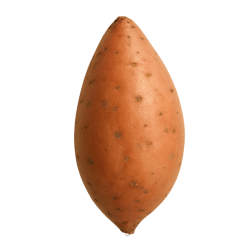
Ipomoea Batatas, Kumara, Batata, Camote
Sweet potato is a root vegetable of plant origin, valued for its rich content of complex carbohydrates, dietary fibre, and essential micronutrients such as vitamin A. In pet food, sweet potato serves primarily as a digestible energy source and supports digestive health. It is incorporated in its natural, whole form, ensuring optimal nutrient retention and palatability for companion animals.
Sweet potato is included as a cost-effective, highly digestible carbohydrate source that provides energy and dietary fibre. It also serves as a label-friendly ingredient appealing to consumers seeking natural, whole-food components in pet food.
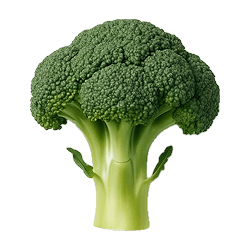
Brassica Oleracea Italica, Calabrese, Sprouting Broccoli, EATME Broccoli
Broccoli is a nutrient-rich vegetable derived from the plant species Brassica oleracea. As a plant-based ingredient, it is included in pet food primarily for its dietary fibre, vitamins, and antioxidant content, supporting digestive health and immune function. Broccoli is used in its natural form, ensuring pets benefit from its whole-food nutritional profile without synthetic alteration.
Broccoli is included as a label-friendly ingredient to appeal to health-conscious consumers and enhance the perceived nutritional value of the product. It may also contribute small amounts of fibre, vitamins, and antioxidants, supporting marketing claims of added health benefits.

Malus Domestica, Pyrus Malus, Malus Pumila, E Malus
Apple is a fruit derived from the Malus domestica tree, classified as a plant-based ingredient. It is primarily included in pet food for its dietary fibre, natural antioxidants, and vitamins, supporting digestive health and immune function. Apple is used in its natural, whole form, ensuring pets benefit from its inherent nutrients without synthetic alteration or processing into extracts or concentrates.
Apple is included as a label-friendly ingredient to appeal to consumers seeking recognisable, natural components in pet food. It may also provide a modest source of fibre and natural sweetness to enhance palatability.
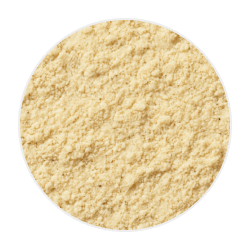
Ground Almonds, Almond Flour, Prunus Dulcis Flour, Prunus Dulcis Meal
Almond meal is a finely ground product made from whole almonds, a plant-based ingredient. It is primarily included in pet food as a source of protein, healthy fats, and dietary fibre, supporting energy and digestive health. Almond meal is used in its natural form, retaining the nutritional profile of whole almonds, and offers a nutrient-dense alternative to traditional grain-based fillers.
Almond meal is included as a novel protein and fat source to differentiate the product and appeal to consumers seeking alternative or premium ingredients. It may also serve as a label-friendly addition to enhance perceived nutritional value for marketing purposes.

Carthamus Tinctorius Oil, Carthamus Tinctorius Seed Oil, E471, Vegetable Oil (Carthamus Tinctorius)
Safflower oil is a plant-derived oil extracted from the seeds of the safflower (Carthamus tinctorius). It is primarily included in pet food as a source of unsaturated fatty acids, particularly linoleic acid, which supports skin and coat health. Safflower oil is used in its refined liquid form, not as whole seeds, to optimise digestibility and nutrient availability for pets.
Safflower oil is included as a cost-effective source of unsaturated fatty acids, particularly linoleic acid, to support skin and coat health in pets. It also serves as a label-friendly ingredient that appeals to consumers seeking plant-based oils in pet food formulations.

Curcuma Longa, Indian Saffron, Jiang Huang, E100
Turmeric is a vibrant yellow spice derived from the root of the Curcuma longa plant, making it a plant-based ingredient. It is primarily included in pet food for its natural antioxidant and anti-inflammatory properties, supporting overall health and wellbeing. Turmeric is used in its natural powdered form, ensuring pets benefit from its active compound, curcumin, in a safe and bioavailable manner.
Turmeric is included as a label-friendly ingredient to appeal to health-conscious consumers due to its association with natural antioxidants and anti-inflammatory properties. Its presence may also support marketing claims related to holistic or functional pet foods, despite being used in small quantities with minimal direct nutritional impact for pets.
Flaxseed Oil, Oleum Lini, E401, Linum Usitatissimum Oil
Linseed oil, derived from the seeds of the flax plant (Linum usitatissimum), is a plant-based ingredient valued for its high content of omega-3 fatty acids, particularly alpha-linolenic acid (ALA), which supports skin and coat health in pets. In pet food, linseed oil is utilised in its natural, cold-pressed form to optimise nutrient retention and bioavailability.
Linseed oil is included as a source of omega-3 fatty acids to support skin and coat health, providing a plant-based alternative to fish oils. Its presence also allows manufacturers to market the product as containing beneficial oils for overall wellbeing.

Marine Algae, Macroalgae, Sea Vegetables, Algae Spp.
Seaweed is a marine plant ingredient sourced from various species of edible algae. It is primarily included in pet food for its rich content of natural vitamins, minerals, and dietary fibre, supporting overall health and digestive function. Seaweed is used in its natural, dried form, ensuring pets benefit from its bioavailable nutrients without the need for synthetic processing or chemical alteration.
Seaweed is included as a natural source of vitamins, minerals, and trace elements, supporting marketing claims of nutritional enhancement. It also serves as a label-friendly ingredient that appeals to health-conscious consumers seeking natural additives.

Dietary Fibre, Fibre, Crude Fibre, Plant Fibre
Natural fibre is a plant-derived ingredient commonly sourced from vegetables, fruits, or grains. It is included in pet food to support healthy digestion, regulate bowel movements, and promote optimal gut health. Natural fibre is used in its whole or minimally processed form, ensuring pets receive the benefits of its original structure rather than a synthetic or isolated compound.
Natural fibre is included as a cost-effective source of dietary fibre to support digestive health and stool quality in pets. It may also serve as a bulk-adding agent to optimise product texture and satiety.

Tocopherol, Mixed Tocopherols, E306, Rosemary Extract
Natural antioxidant refers to a substance, typically derived from plant sources, that helps protect pet food from oxidative damage and spoilage. Its primary function is to preserve freshness and extend shelf life by inhibiting the oxidation of fats and oils. In pet food, natural antioxidants are used in their natural form, ensuring safety and effective absorption without the need for chemical modification.
Natural antioxidants are included to help preserve the freshness and stability of pet food by slowing the oxidation of fats and oils, thereby extending shelf life. They also serve as a label-friendly alternative to synthetic preservatives, appealing to consumers seeking more natural ingredients.
Thiamine, Thiamin, Aneurin, E101
Vitamin B1, also known as thiamine, is a water-soluble vitamin of synthetic or plant origin. It plays a crucial role in energy metabolism and supports healthy nerve and muscle function in pets. In pet food, thiamine is not used in its natural raw form but is typically utilised as thiamine mononitrate or thiamine hydrochloride to optimise stability, safety, and absorption.
Vitamin B1 (thiamine) is included as an essential nutrient to meet regulatory requirements for canine health and to prevent deficiency-related disorders. Its addition ensures nutritional adequacy and supports normal metabolic function in pets.

Riboflavin, E101, Lactoflavin, Vitamin G
Vitamin B2, also known as riboflavin, is a water-soluble vitamin of synthetic or microbial origin commonly added to pet foods. It plays a crucial role in energy metabolism and supports healthy skin, eyes, and nervous system function. Vitamin B2 is not used in its natural raw form but is instead utilised as riboflavin, a stable compound, to optimise safety and bioavailability in pet diets.
Vitamin B2 is included as an essential nutrient to meet dogs’ dietary requirements and support metabolic functions. Its addition ensures nutritional adequacy and compliance with regulatory labelling standards.
Pyridoxine, Pyridoxol, Pyridoxine Hydrochloride, E101a
Vitamin B6 is a water-soluble vitamin of synthetic or natural origin, commonly derived from plant or animal sources. It plays a crucial role in protein metabolism, red blood cell formation, and nervous system function. In pet food, Vitamin B6 is not used in its raw form but is typically included as a stable compound, such as pyridoxine hydrochloride, to optimise safety and bioavailability.
Vitamin B6 is included as an essential nutrient to support metabolic and neurological functions in pets, ensuring the product meets established nutritional standards. Its addition helps manufacturers achieve complete and balanced labelling claims required for commercial pet foods.

Cobalamin, Cyanocobalamin, Hydroxocobalamin, Methylcobalamin
Vitamin B12 is a water-soluble vitamin of animal origin, essential for nerve function and red blood cell formation in pets. It is primarily included in pet food to support energy metabolism and overall vitality. Vitamin B12 is not used in its natural, raw form but is instead utilised as a specific compound, such as cyanocobalamin, to ensure stability, safety, and optimal absorption.
Vitamin B12 is included as an essential nutrient to support metabolic and neurological functions in pets, ensuring the product meets established nutritional standards. Its addition helps manufacturers achieve complete and balanced labelling claims.
Cholecalciferol, Ergocalciferol, Calciferol, E671
Vitamin D is a fat-soluble vitamin of animal origin, commonly sourced from fish liver oils or synthesised for inclusion in pet foods. Its primary role is to regulate calcium and phosphorus balance, supporting healthy bones and teeth. Vitamin D is not used in its natural form but is instead utilised as a specific compound, such as cholecalciferol, to ensure safety and optimal absorption.
Vitamin D is included to ensure the finished product meets established nutritional requirements for canine health, supporting bone development and calcium regulation. Its addition helps manufacturers achieve complete and balanced labelling claims in accordance with regulatory standards.

Tocopherol, Alpha-Tocopherol, E307, D-Alpha-Tocopherol
Vitamin E is a fat-soluble vitamin derived from plant sources such as vegetable oils, nuts, and seeds. It functions primarily as an antioxidant, helping to protect cell membranes from oxidative damage and supporting immune health. In pet food, Vitamin E is not used in its natural raw form but is typically utilised as a stabilised compound, such as tocopherol acetate, to optimise safety and absorption.
Vitamin E is included as a natural antioxidant to help preserve the freshness and stability of fats and oils in the product, thereby extending shelf life. It also serves as a label-friendly nutrient that appeals to consumers seeking added health benefits for their pets.

Microminerals, Essential Trace Elements, Oligoelements, Oligominerals
Trace minerals are essential inorganic nutrients derived from natural mineral sources, required by pets in minute amounts for optimal physiological function. They support processes such as enzyme activity, immune health, and bone development. In pet food, trace minerals are not used in their raw or metallic state; instead, they are incorporated as safe, bioavailable compounds like chelates or sulphates to maximise absorption and efficacy.
Trace minerals are included to ensure the product meets the nutritional requirements for essential micronutrients, supporting overall pet health. Their addition allows manufacturers to guarantee consistent and complete nutrient profiles regardless of natural ingredient variability.
E170, Elemental Calcium, Ca, Calcium Metal
Calcium is an essential mineral derived from natural sources such as limestone or marine shells. It plays a critical role in supporting healthy bone and teeth development, nerve transmission, and muscle function in pets. Calcium is not used in its raw or metallic state; instead, it is utilised in pet food as safe, bioavailable compounds like calcium carbonate or calcium phosphate to optimise absorption.
Calcium is included as an essential mineral to support bone development and maintenance in pets, ensuring nutritional adequacy according to regulatory standards. It may also serve as a functional additive to optimise product texture and stability.

Orthophosphate, E339, Inorganic Phosphate, PO4
Phosphate is a mineral compound derived from phosphorus, an essential element found naturally in rocks and living organisms. In pet food, phosphate is utilised not in its raw or metallic state, but as a safe, bioavailable compound such as calcium phosphate. Its primary purpose is to support healthy bone development, energy metabolism, and cellular function in pets.
Phosphate is included as a mineral additive to ensure adequate phosphorus levels for pet health and to support bone development. It also functions as a processing aid, helping to maintain product texture and stability during manufacturing and storage.
About


PRODUCT TAGS
Most Tracked This Week










About the Brand




Comments
0 comments
Login to Join the Conversation 💬