























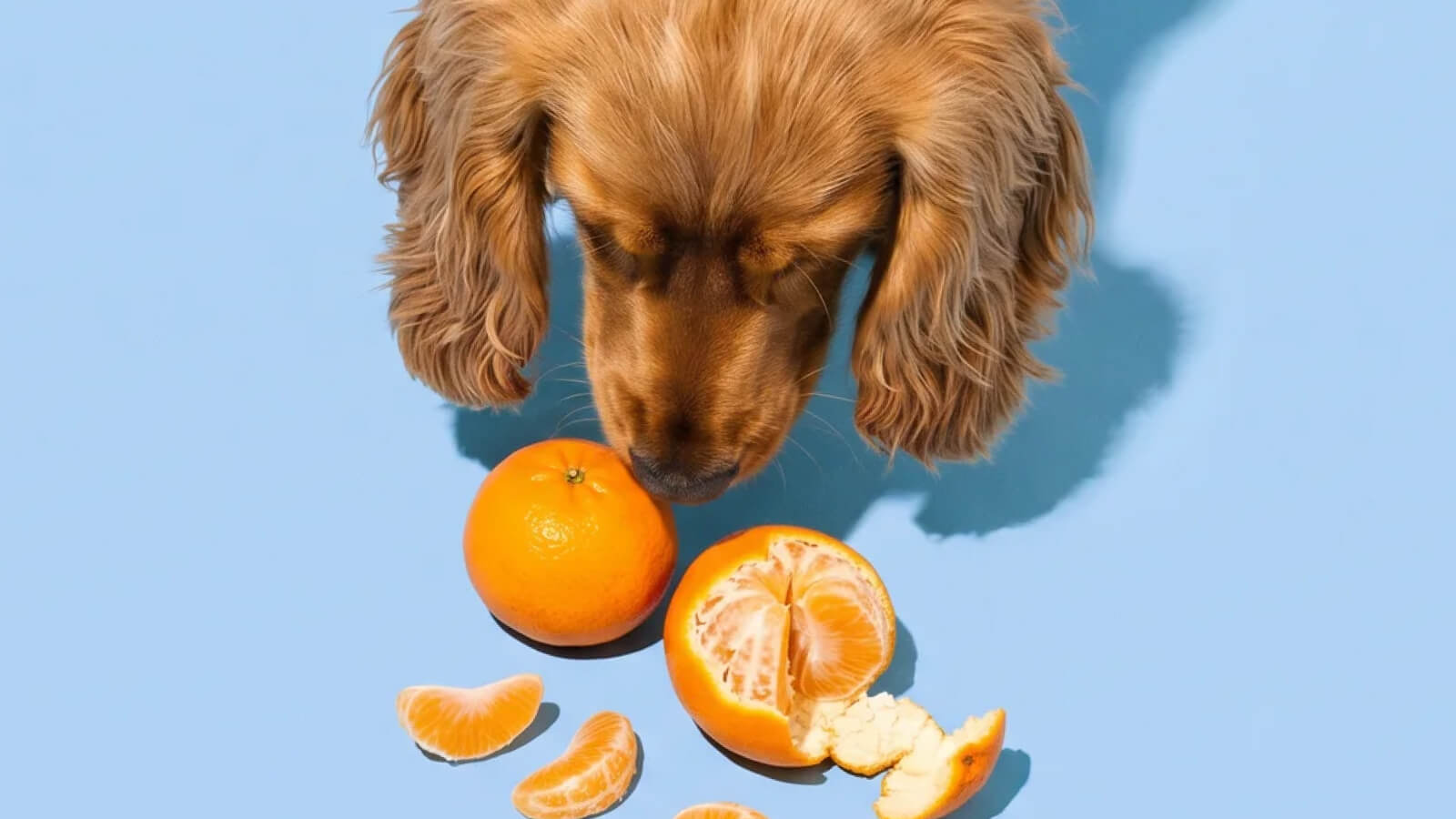
Mandarins are a lunchbox staple in Australian households. If your dog has swiped a segment, here's whether you should be worried.
In Short:
Yes, dogs can eat mandarin flesh in small amounts — one to two segments is enough for most dogs. Peel it, remove any seeds, and serve plain. Mandarins are high in natural sugar and citric acid, so too much can cause stomach upset.
Avoid giving the peel, as it's tough to digest and the essential oils can irritate the gut.

The Short Answer
Yes, dogs can eat mandarin. The flesh is safe and non-toxic. It contains vitamin C, fibre, and water, which can be a refreshing treat on a warm day.
But mandarins are high in natural sugar and citric acid, which means too much can cause stomach upset. A couple of segments is enough for most dogs.
How Much Mandarin Can a Dog Have?
One to two segments is a reasonable amount for a medium to large dog. For small dogs, one segment is plenty.
Mandarins contain around 10 to 12 grams of sugar per fruit. While this is natural sugar, it still adds calories and can contribute to weight gain if given frequently. For dogs with diabetes or weight issues, citrus fruits should be avoided or given very sparingly.
The citric acid can also cause digestive discomfort in some dogs, particularly those with sensitive stomachs. If your dog gets loose stools or vomits after eating mandarin, it's best to skip it in future.

What Parts to Avoid
The peel should be removed. Mandarin peel isn't toxic, but it's tough, difficult to digest, and can contain pesticide residue. The oils in citrus peel can also irritate a dog's digestive system.
Seeds should be removed too. While mandarin seeds aren't poisonous in small quantities, they can be a mild choking hazard and aren't worth the risk.
The white pith is safe but bitter. Most dogs won't eat it willingly, and that's fine.
Always peel the mandarin, remove seeds, and separate it into individual segments before offering to your dog.
Can Dogs Eat Other Citrus Fruits?
Most citrus fruits follow the same rules. Small amounts of the flesh are generally safe, but the peel, seeds, and high acidity make them a "moderation only" treat.
Oranges are safe in small amounts, similar to mandarins. Lemons and limes are very acidic and most dogs won't want them anyway. Grapefruit is best avoided — it's more acidic and can interact with certain medications.
If your dog enjoys citrus, mandarin is one of the better options because it's milder, sweeter, and easier to peel and segment.
For balanced everyday nutrition, a quality dry food has everything your dog needs. Check out our guide to the Best Dry Dog Food in Australia.
Frequently Asked Questions
Can mandarin make my dog sick?
Can dogs eat mandarin peel?
Is vitamin C in mandarin good for dogs?
Can puppies eat mandarin?
Are mandarins better than oranges for dogs?









Comments
0 comments
Login to Join the Conversation 💬