























Mushrooms are one of those foods where the answer is "it depends." Here's what's safe, what's deadly, and how to tell the difference.
In Short:
Store-bought mushrooms — button, cremini, portobello, shiitake — are safe for dogs served plain and cooked. Wild mushrooms can be lethal. Australia is home to several highly toxic species, including the death cap mushroom, which causes fatal liver failure.
If your dog eats any wild mushroom, treat it as an emergency — contact your vet immediately and bring a sample if possible.

The Short Answer
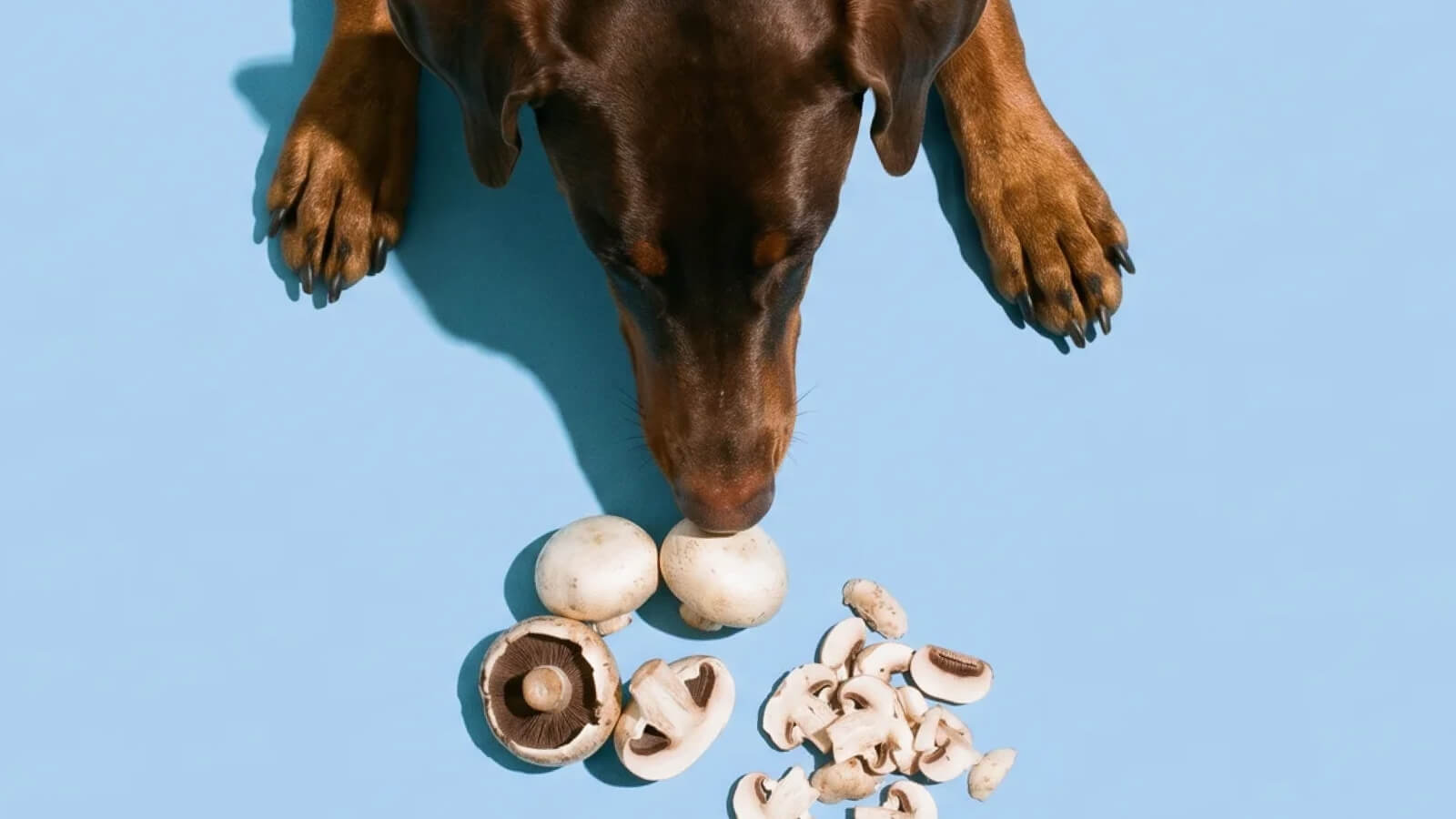
Store-bought mushrooms from the supermarket are safe for dogs. White button, cremini, portobello, shiitake, and oyster mushrooms are all non-toxic and can be shared in small amounts.
Wild mushrooms are a completely different story. Some species are extremely toxic and can cause organ failure and death in dogs within hours. The safest approach is to never let your dog eat any mushroom you haven't bought from a shop.
Store-Bought Mushrooms: How to Serve Them
Plain and cooked is the way to go. Sautéed mushrooms cooked in garlic, butter, or onion are off-limits — garlic and onion are toxic to dogs, and butter adds unnecessary fat.
Boiled, steamed, or lightly pan-cooked mushrooms without seasoning are all fine. Raw mushrooms are also safe, though cooked ones are easier for dogs to digest.
Chop them into small pieces to prevent choking. A few pieces as an occasional treat or mixed into their meal is enough. Mushrooms shouldn't be a significant part of their diet.
Mushrooms offer some nutritional benefits. They contain B vitamins, potassium, selenium, and antioxidants. They're low in calories and fat, making them a reasonable snack for dogs on a weight management plan.
Wild Mushrooms: The Serious Danger
This is where mushroom advice for dog owners gets critical.
Australia is home to several highly toxic wild mushroom species. The death cap mushroom (Amanita phalloides) is one of the most dangerous and is found across south-eastern Australia, particularly in autumn. It's responsible for most fatal mushroom poisonings in both humans and dogs.
Other toxic species found in Australia include the yellow-staining mushroom, the ghost mushroom, and various Amanita and Galerina species.
The problem is identification. Toxic mushrooms can look remarkably similar to edible ones. Even experienced foragers make mistakes. For dogs, who don't discriminate based on appearance, any mushroom in the garden, park, or bush is a potential risk.
The safest rule: if your dog has access to outdoor areas where mushrooms grow, remove them immediately. Don't wait to identify them. Pull them out and dispose of them where your dog can't reach.
What to Do If Your Dog Eats a Wild Mushroom
Treat it as an emergency. Don't wait for symptoms to appear.
Contact your vet or an emergency animal hospital immediately. If possible, take a photo of the mushroom or bring a sample wrapped in a paper towel. This helps with identification and guides treatment.
Symptoms of mushroom poisoning can vary depending on the species but may include vomiting, diarrhoea, excessive drooling, lethargy, jaundice (yellowing of the gums or eyes), seizures, and collapse. Some toxic mushrooms cause symptoms within 30 minutes; others take 6 to 24 hours, by which point serious organ damage may have already begun.
Do not induce vomiting unless specifically instructed to by a vet. Some toxins can cause more damage on the way back up.
For safe, balanced everyday feeding, a quality dry food takes the guesswork out of nutrition. Check out our guide to the Best Dry Dog Food in Australia.
Frequently Asked Questions
Can dogs eat button mushrooms?
Are all wild mushrooms toxic to dogs?
How quickly do symptoms of mushroom poisoning appear?
Can mushroom poisoning kill a dog?
Should I remove mushrooms from my garden?




Comments
0 comments
Login to Join the Conversation 💬