


















Fresh dog food is everywhere right now — in fridges at pet stores, in subscription boxes on doorsteps, and all over your Instagram feed. Here's what it actually is, how it differs from kibble and raw, and how to tell whether it belongs in your dog's bowl.
In Short:
Fresh dog food is minimally processed, whole-ingredient food for dogs — typically gently cooked at low temperatures and sold chilled or frozen.
Unlike kibble, which is extruded at high heat and dried to around 10% moisture, fresh food retains 60–70% moisture and uses recognisable ingredients like real meat, vegetables, and organs. It is designed to be nutritionally complete and is available in Australia through subscription services, frozen retail packs, and fresh food rolls.

What fresh dog food actually is
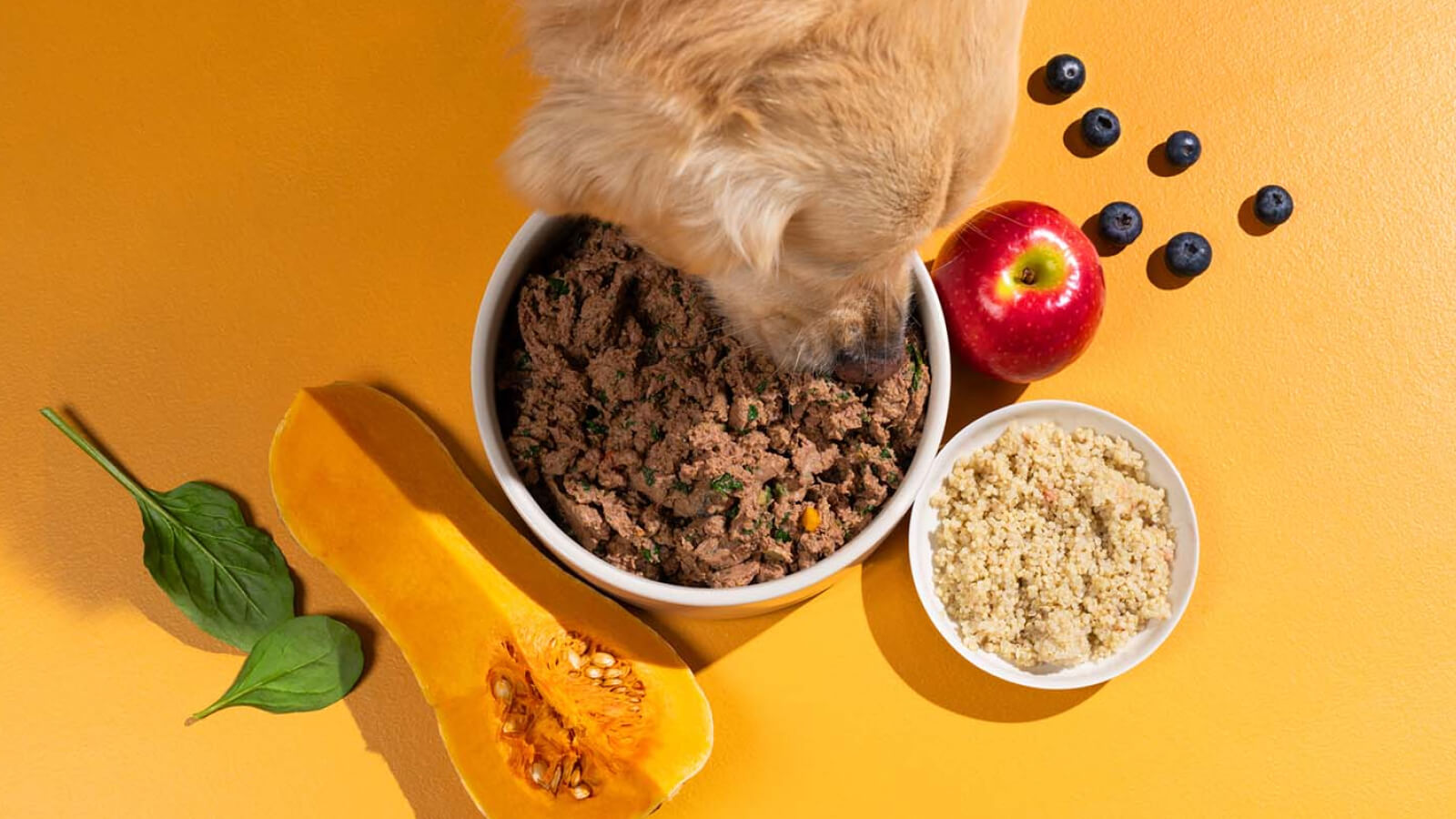
Fresh dog food is made from whole ingredients — real meat, vegetables, organs, and sometimes grains or legumes — cooked at low temperatures and sold either chilled or frozen. Think of it as the closest thing to a home-cooked meal your dog can get without you standing over a stove every night.
The key difference from kibble is processing. Kibble is extruded at temperatures above 150°C, then dried to roughly 10% moisture so it can sit on a shelf for months. Fresh food is gently cooked — usually between 70°C and 90°C — and retains around 60–70% moisture. That moisture difference means your dog gets more hydration from their meals, and the lower cooking temperature preserves more of the natural nutrients in the ingredients.
Fresh dog food sold in Australia must comply with Australian Standard AS 5812 for the manufacture and marketing of pet food. Reputable brands also formulate to meet AAFCO or FEDIAF nutritional guidelines, which means the food is designed to be your dog's sole diet — not just a topper or treat.
How it differs from raw and kibble
Fresh, raw, and kibble are three fundamentally different approaches to feeding your dog. Understanding what separates them helps you pick the right fit.
Kibble is the most processed option. Ingredients are ground, mixed, cooked at high heat, extruded into pellets, dried, and then coated with fats and flavour enhancers. It is shelf-stable, affordable, and convenient. The trade-off is heavy processing and low moisture content.
Raw dog food (sometimes called BARF) uses uncooked meat, bones, and organs. Supporters argue this preserves enzymes and nutrients that cooking destroys. The trade-off is food safety — raw diets carry a higher bacterial risk (Salmonella, E. coli) for both dogs and the humans handling the food. If you're interested in the raw approach, our Best Raw (BARF) Dog Food in Australia guide covers it in detail.
Fresh dog food sits between the two. It is cooked — which eliminates most bacterial risk — but at temperatures low enough to retain more nutrients than kibble. You get the food-safety benefit of cooking without the heavy processing of extrusion.
Each approach has legitimate advantages depending on your dog's health, your household setup, and your budget. For a detailed look at how the top fresh brands compare, see our Best Fresh Dog Food in Australia guide.

Formats available in Australia
Fresh dog food comes in several formats in Australia, and they vary in how they are stored, served, and purchased.
Subscription meal packs are the most recognised format. Brands deliver pre-portioned, frozen or chilled packs directly to your door. Portions are calculated based on your dog's weight, age, and activity level. You store them in the freezer and thaw as needed.
Frozen retail packs are available at pet stores and some supermarkets. These are pre-made fresh meals sold in tubs or rolls that you keep frozen at home and portion yourself.
Fresh food rolls are chilled logs of gently cooked food, sliced and served. They are stocked in the fridge section at pet retailers and are a good entry point if you want to try fresh food without committing to a subscription.
Toppers and mixers are smaller-format fresh foods designed to be added on top of kibble or another base diet. They do not replace a full meal but can improve palatability and add moisture — particularly useful if your dog drinks less water than they should.
Who fresh food suits
Fresh dog food works for most healthy dogs at any life stage, but certain dogs benefit noticeably more than others.
Picky eaters are often the first dogs to be switched. Fresh food smells and tastes significantly more appealing than kibble because it contains real, recognisable ingredients at higher moisture levels. If your dog sniffs their bowl and walks away, fresh food usually changes that behaviour fast.
Dogs with sensitive stomachs tend to do well on fresh diets. The simpler ingredient lists and gentler processing make the food easier to digest than heavily processed kibble. If your dog regularly has loose stools, gas, or bloating on their current food, a fresh diet is worth trialling.
Dogs with skin or coat issues sometimes improve on fresh diets, particularly those higher in omega-3 fatty acids from fish or flaxseed. If your dog has dull coat, excessive shedding, or recurring skin irritation, the connection between diet and skin health is well documented in veterinary nutrition.
Puppies can eat fresh food, provided the formula is specifically designed for growth. Puppy formulations need different calcium-to-phosphorus ratios and higher protein levels than adult maintenance food. Always check that the product states it is suitable for "all life stages" or "growth."
Senior dogs also benefit from the higher moisture content and easier digestibility. Older dogs are more prone to dehydration and dental issues that make chewing hard kibble difficult.
If your dog has a diagnosed condition, speak to your vet before making dietary changes. Fresh food is nutrition, not medicine.
What to look for on the label
Not all fresh dog food is equal. Here's what to check before you hand over your money.
Named protein sources. The first ingredient should be a specific meat — chicken, beef, kangaroo — not "meat" or "animal derivatives." If the label is vague about what is in it, move on.
Complete and balanced statement. The packaging should say the food is formulated to meet AAFCO or FEDIAF standards for your dog's life stage. AAFCO's consumer guide explains that the nutritional adequacy statement is the single most important line on any pet food label — it tells you whether the food is complete or supplementary. Without this, the food may not provide everything your dog needs as a sole diet. You would need to supplement, and most owners do not realise that.
Transparent ingredient list. You should be able to read every ingredient and know exactly what it is. Fresh food's biggest advantage over kibble is ingredient transparency — if a brand is not delivering that, the premium price is harder to justify.
Australian Standard compliance. Look for reference to AS 5812 or manufacturing in an Australian facility that follows these guidelines. This standard covers safety, labelling accuracy, and nutritional adequacy. The PFIAA's guide to understanding pet food labels breaks down exactly what each element on the label means under Australian law.
No unnecessary fillers. Some fresh brands pad their recipes with cheap starches or excessive vegetable content to reduce cost. Your dog's food should be predominantly meat-based, with vegetables and carbohydrates playing a supporting role.
For a breakdown of how specific brands stack up on these criteria, our fresh dog food guide covers ingredient quality across every product we reviewed.
Cost and practicalities
Fresh dog food costs more than kibble — there is no way around that. For a medium-sized dog (around 15 kg), expect to pay between $14 and $42 per week depending on the brand and format. Premium kibble for the same dog sits around $8–$15 per week.
The price gap is real, but it has narrowed over the past few years as more brands have entered the Australian market and competition has increased. Subscription services often offer discounts for multi-dog households or larger order sizes.
Storage is the main practical consideration. Fresh food needs fridge or freezer space. Subscription packs typically arrive frozen and need to go straight into the freezer. Once thawed, most brands last three to five days in the fridge. If your freezer is already packed, this is worth thinking about before you commit.
Mixed feeding is a common way to manage cost. Many owners feed one fresh meal and one kibble meal per day rather than switching entirely. This keeps costs down while still giving your dog the benefits of whole-food nutrition at least once a day. Both meals should be individually complete and balanced — adjust portion sizes so you are not overfeeding.
Transition time is something to plan for. If your dog has been on kibble their whole life, switch gradually over 7–14 days. Start with 25% fresh and 75% of their current food, then increase the fresh portion every few days. This gives your dog's gut time to adjust and reduces the chance of loose stools during the changeover.
For a detailed cost comparison across brands and formats, see our full fresh dog food guide.
References
- Pet Food Industry Association of Australia (PFIAA), Pet Food Standards — Overview of Australian Standard AS 5812:2023 for the manufacture and marketing of pet food in Australia.
- Pet Food Industry Association of Australia (PFIAA), Understanding Pet Food Labels — Consumer guide to reading ingredient lists, nutritional adequacy statements, and date labelling on Australian pet food.
- Association of American Feed Control Officials (AAFCO), Selecting the Right Pet Food — Official guide on nutritional adequacy statements, life-stage claims, and how to evaluate whether a pet food is complete and balanced.
Frequently Asked Questions
Is fresh dog food better than kibble?
How do I store fresh dog food?
Can I mix fresh food with kibble?
Is fresh dog food safe?
How much fresh food should I feed my dog?
What is the difference between fresh and raw dog food?
Is fresh dog food worth the extra cost?









Comments
0 comments
Login to Join the Conversation 💬