


























Rice is the go-to when your dog has an upset stomach. But is it actually good for them, and should it be part of their regular diet?
In Short:
Yes, plain cooked rice is safe and one of the most dog-friendly human foods. White rice mixed with plain boiled chicken is the go-to bland diet vets recommend for upset stomachs. White rice is easier to digest; brown rice has more nutrients but is harder on sensitive stomachs.
Keep portions small — a tablespoon or two for small dogs, up to half a cup for large dogs.

The Short Answer
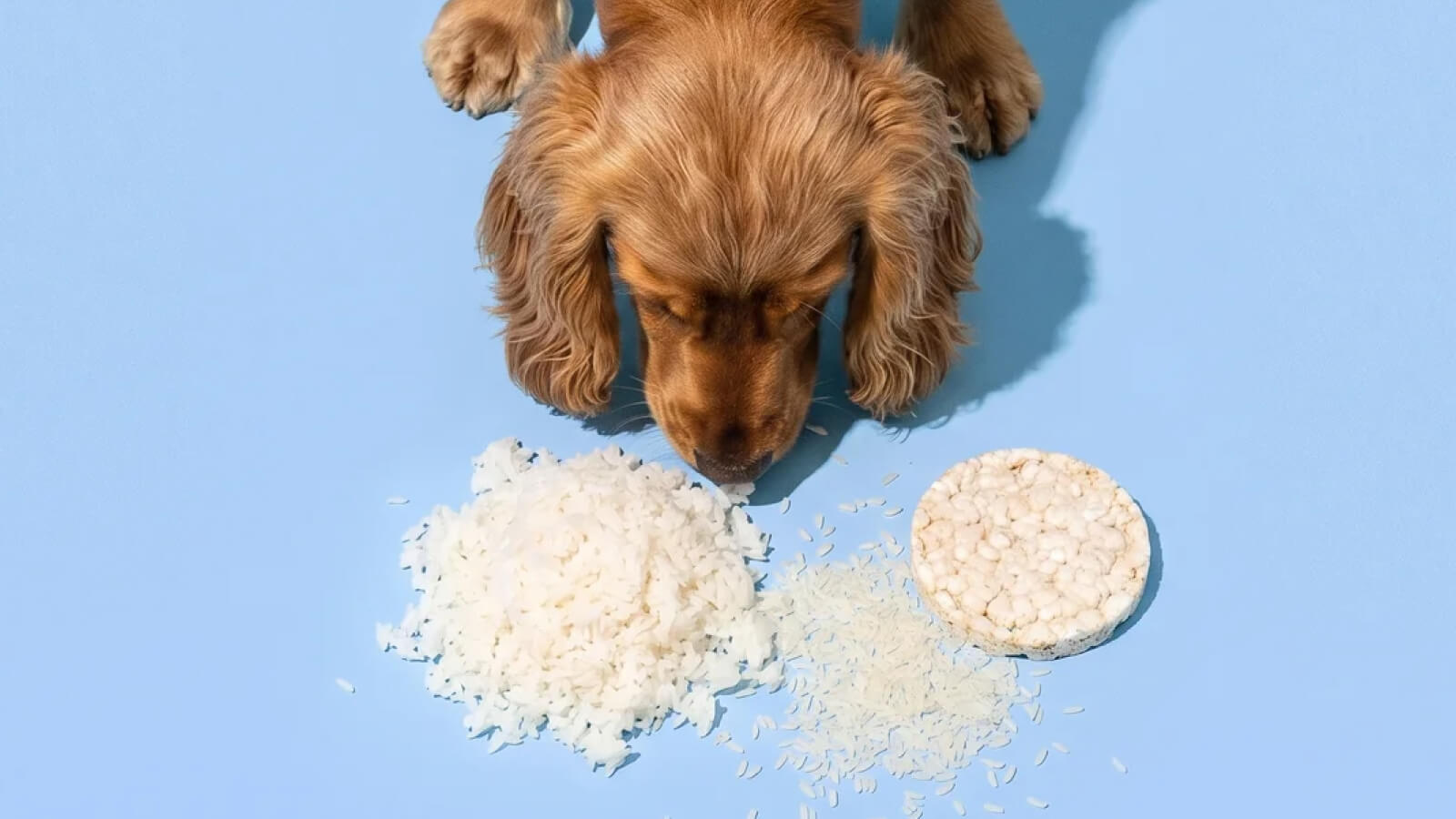
Yes, dogs can eat rice. Plain, cooked white rice is safe, easy to digest, and commonly used as a home remedy for dogs with upset stomachs.
Rice is a staple ingredient in many commercial dog foods too. It's a digestible source of carbohydrates and is generally well tolerated by dogs, including those with sensitive stomachs.
The key is keeping it plain. Rice cooked with butter, oil, garlic, onion, soy sauce, or seasoning is not safe for dogs.
Rice for Upset Stomachs
The classic bland diet for a dog with diarrhoea or vomiting is boiled white rice mixed with plain boiled chicken. Vets have been recommending this combination for decades because it's gentle on the digestive system.
White rice works here because it's low in fibre and easy to digest. It helps firm up loose stools and provides a simple energy source while the gut recovers.
The typical ratio is roughly two parts rice to one part chicken. Feed small amounts every few hours rather than one large meal. Most dogs can return to their normal food within 2 to 3 days once symptoms resolve.
If your dog's vomiting or diarrhoea doesn't improve within 24 to 48 hours on the bland diet, see your vet.

White Rice vs Brown Rice for Dogs
White rice is easier to digest and better for dogs with stomach issues. It's processed to remove the bran and germ, which makes it gentler on the gut.
Brown rice has more fibre, vitamins, and minerals because the outer layers are intact. It's a healthier option for dogs that tolerate it well, but the higher fibre content can be harder on sensitive stomachs.
For everyday use as an occasional food topper, either is fine. For a dog with digestive problems, white rice is the better choice.
How Much Rice Can You Give a Dog?
Rice should be a supplement, not the main course. Too much rice without enough protein and fat will leave your dog short on essential nutrients.
As a treat or food topper, a tablespoon or two for a small dog and up to half a cup for a large dog is reasonable. If you're feeding the bland diet during illness, your vet can advise on specific amounts based on your dog's weight.
Dogs with diabetes or weight issues should have rice in limited quantities. It's a carbohydrate-heavy food that can spike blood sugar, especially white rice.
For a balanced everyday diet, check out our guide to the Best Dry Dog Food in Australia.
Frequently Asked Questions
Can I feed my dog rice every day?
Is rice better than pasta for dogs?
Can rice cause constipation in dogs?
Can puppies eat rice?
Should I rinse rice before cooking it for my dog?










Comments
0 comments
Login to Join the Conversation 💬