




















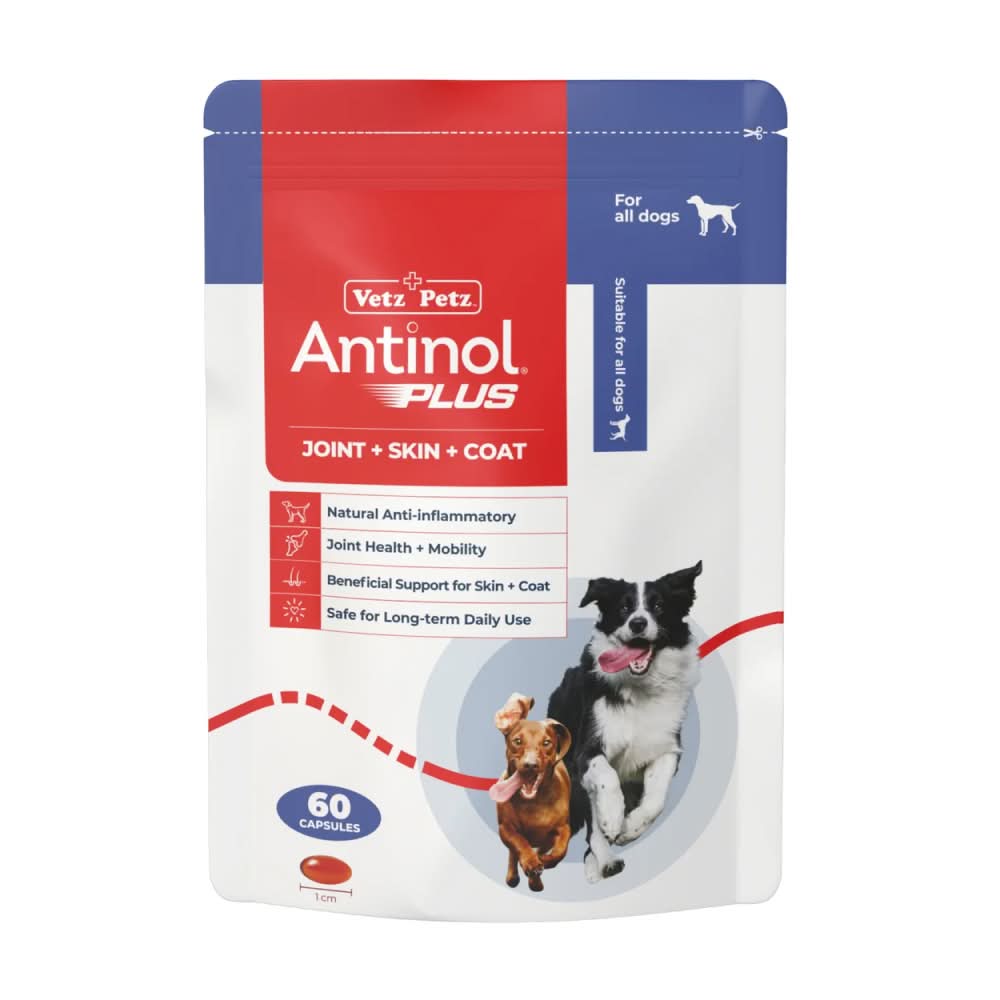
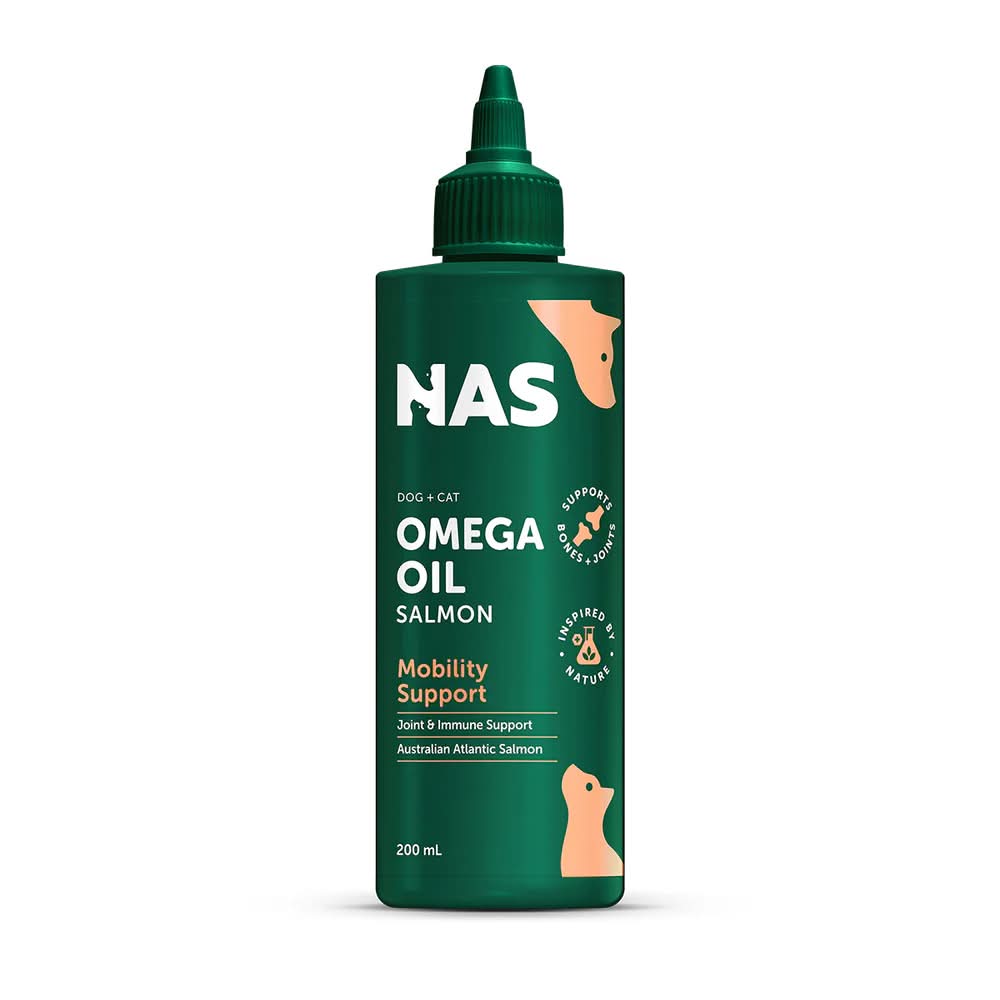



It's a fair question — the pet supplement market is crowded, and not everything on the shelf is worth your money. The honest answer is that it depends entirely on the ingredient. Some have strong clinical evidence behind them. Others are riding on marketing. Here's how to tell the difference.
In Short:
Yes — but only for certain ingredients at appropriate doses.
Omega-3 fatty acids (EPA and DHA) from marine sources have the strongest clinical evidence for reducing joint inflammation and pain in dogs. Green-lipped mussel extract has also shown consistent results across multiple studies. Glucosamine and chondroitin have weaker but supportive evidence for long-term cartilage maintenance.
All three work best when given consistently over weeks and months, not days.

Why This Question Is Worth Asking
Australians spend hundreds of millions of dollars annually on pet supplements, and joint health products represent one of the largest categories. Yet the regulatory requirements for pet supplements in Australia are considerably less stringent than for human medications — meaning a product can be sold without rigorous clinical trials proving it does what it claims.
That doesn't mean joint supplements don't work. It means you need to look at the specific ingredients and the quality of evidence behind them, rather than trusting label claims at face value. Some ingredients are very well studied. Others have little more than anecdote supporting them.
The Ingredients With Strong Evidence
Omega-3 Fatty Acids (EPA and DHA)
This is the standout category. Multiple randomised controlled trials in dogs have demonstrated that EPA and DHA from marine sources — fish oil and green-lipped mussel — produce measurable reductions in joint pain, stiffness, and lameness. A 2023 review in Frontiers in Veterinary Science concluded that omega-3 supplementation improved pain scores and gait in dogs with osteoarthritis, and that the anti-inflammatory effect was both statistically and clinically significant.
The mechanism is well understood: EPA and DHA compete with arachidonic acid in inflammatory pathways, reducing the production of prostaglandins and leukotrienes that drive joint inflammation. This is the same pathway targeted by NSAIDs, but without the gastric side effects at supplemental doses.
Dose matters. The therapeutic dose for a 25 kg dog is approximately 2,000 to 3,000 mg of combined EPA and DHA daily. Many products on the market significantly underdose — check the label for specific EPA/DHA quantities, not total fish oil content.
Green-Lipped Mussel Extract
Green-lipped mussel (Perna canaliculus) has a distinct profile from regular fish oil. It contains ETA (eicosatetraenoic acid), a unique omega-3 fatty acid with particularly potent anti-inflammatory properties, along with glycosaminoglycans that directly support cartilage. Multiple canine studies support its use, and it is one of the few ingredients with both anti-inflammatory and structural benefits in a single source.
Epitalis (Plant Sterols)
A newer category with a growing body of veterinary clinical data, primarily from Australian studies. Epitalis works differently from anti-inflammatory ingredients — it stimulates chondrocytes (the cells that produce cartilage) to generate new tissue. Several published studies have demonstrated improved cartilage health scores in dogs given Epitalis over a 12-week period. It is best suited for dogs with diagnosed joint damage, rather than healthy dogs on prevention.

The Ingredients With Moderate or Mixed Evidence
Glucosamine and Chondroitin
These are the most commonly found ingredients in joint supplements, and the evidence is genuinely mixed. Some studies show meaningful benefit; others show no significant difference from placebo. The most comprehensive human review (the GAIT trial) found modest benefits for moderate-to-severe joint pain but not mild pain — and canine studies broadly echo this.
That said, glucosamine and chondroitin are widely considered safe for long-term use, they are affordable, and the majority of vets still recommend them as part of a maintenance protocol. The current consensus is that they are unlikely to produce dramatic results on their own but contribute meaningfully as part of a broader supplement approach.
Boswellia Serrata
A herbal anti-inflammatory with a reasonable evidence base in dogs. It inhibits 5-LOX inflammatory pathways without the gastric effects of NSAIDs, and several studies have shown meaningful reductions in pain scores when used alone or in combination with other joint ingredients. It is more commonly found in combination products.
The Ingredients With Weak or No Evidence
MSM (Methylsulfonylmethane)
MSM is a sulphur compound often included in joint products for its purported anti-inflammatory properties. Human evidence is mixed and canine-specific data is limited. It appears safe at typical supplemental doses but there is insufficient evidence to justify selecting a product primarily for its MSM content.
Collagen (Unspecified Types)
Collagen supplementation is increasingly popular but the research in dogs is less developed than in humans. Type II collagen has some evidence for joint benefit in dogs; hydrolysed collagen has emerging data. Products that list "collagen" generically without specifying source or type are difficult to evaluate. It is not a reason to avoid a product, but should not be the primary reason to choose one.
The Bottom Line
Joint supplements work — when they contain evidence-backed ingredients at therapeutic doses, and when given consistently over time. Omega-3 (EPA/DHA), green-lipped mussel, and Epitalis have the strongest clinical backing. Glucosamine and chondroitin are reasonable maintenance additions. The rest are variable.
The most common reason supplements fail to work is underdosing or inconsistency. Read the label, confirm the dose is appropriate for your dog's weight, and give it at least six to eight weeks before evaluating results.
Frequently Asked Questions
How long before I see results from joint supplements in my dog?
Anti-inflammatory ingredients like omega-3 and green-lipped mussel typically produce noticeable improvement within two to four weeks of consistent daily use. Structural ingredients like glucosamine work over a longer timeframe — four to eight weeks. If you see no improvement after eight weeks at the correct dose, the product may not be the right fit for your dog's specific condition, and a vet consultation is worthwhile.
Are more expensive joint supplements better?
Not necessarily, but price is sometimes a signal of ingredient quality and concentration. Cheaper products often underdose key ingredients, use lower-grade sources, or rely on ingredient combinations with weaker evidence. The most important thing is to read the label and verify the quantities of EPA/DHA or other active ingredients against therapeutic dose guidelines for your dog's weight.
Can joint supplements replace prescription medication for arthritis?
No. Dogs diagnosed with moderate to severe osteoarthritis typically require prescription pain management — NSAIDs or other veterinary medications — in addition to supplementation. Joint supplements are most effective as a complement to medical treatment, or as preventative support in dogs not yet requiring medication. Never stop or reduce prescribed medication without veterinary guidance.
Do joint supplements work for all breeds?
The evidence supports their use across breeds, but the urgency and timing differ. Large and giant breeds are at higher risk earlier in life, so they benefit most from early preventative supplementation. Smaller breeds generally develop joint issues later and at lower severity, though exceptions exist — French Bulldogs and Dachshunds in particular have notable joint and spinal vulnerability.
Is there a risk of giving too much joint supplement?
At typical supplemental doses, most joint ingredients are very safe. The main risk with overdosing is digestive upset — particularly with omega-3 at very high doses, which can cause loose stools. Very high doses of omega-3 also have mild blood-thinning properties, which is relevant if your dog is on anticoagulant medication. Always follow the label dose based on your dog's current weight.











Comments
0 comments
Login to Join the Conversation 💬