































In Short:
Noise anxiety — particularly around thunderstorms and fireworks — affects almost half of all dogs. Their heightened hearing means loud, sudden sounds can be overwhelming and even physically uncomfortable.
Dogs may pant, pace, tremble, hide, bark, or try to escape. The fear often worsens over time without intervention. Helping your dog involves creating a safe space, desensitisation training, keeping calm yourself, and avoiding punishment.
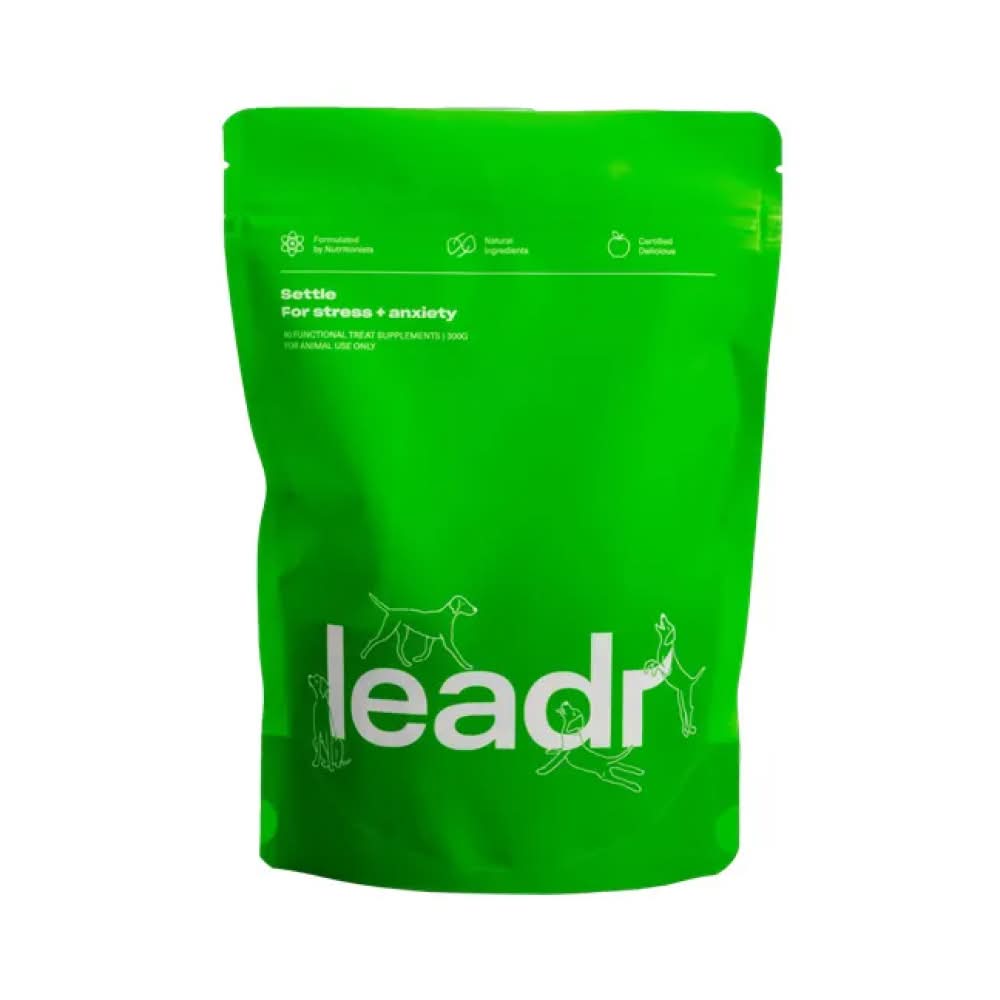
A daily calming supplement like the Leadr Settle Chew, formulated with clinically studied ingredients like ashwagandha and L-tryptophan, can help support your dog's nervous system during high-stress periods.

Featured Products:
Why Are Dogs So Afraid of Loud Noises?
To understand why your dog panics during a storm, it helps to understand how differently they experience the world compared to us.
They Hear Far More Than We Do
Dogs can detect sounds at frequencies and distances well beyond human capability — roughly four times the distance we can hear from. Noises that are loud to us, like thunder or fireworks, can be physically overwhelming for a dog. The sheer volume alone can trigger a fight-or-flight response.
They Can't Understand Where the Noise Is Coming From
Fireworks and thunder are unpredictable. They come from no identifiable source, they don't follow a pattern, and there's no visible threat to respond to. For a dog, this is deeply unsettling. Research suggests that the inability to locate the source of a sound makes the experience significantly more frightening — which is a key reason fireworks are often harder on dogs than other loud noises.
Storms Involve More Than Just Sound
Thunderstorms are a multisensory event for dogs. Beyond the noise, dogs can sense drops in barometric pressure before a storm arrives, detect the scent of ozone produced by lightning, and experience uncomfortable static electricity buildup in their coat. This is why some dogs begin to show anxiety well before the first clap of thunder — they're already sensing the storm approaching.
The Fear Can Generalise Over Time
One of the most concerning aspects of noise anxiety is that it tends to worsen with repeated exposure rather than improve. A dog that starts with a mild fear of thunder can gradually develop a phobia that extends to fireworks, then rain, then any sudden loud noise. Veterinary behaviourists call this generalisation, and it's a strong reason to address noise anxiety early rather than hoping your dog will grow out of it.
Breed, Age and Genetics Play a Role
Certain breeds appear to be more genetically predisposed to noise anxiety — Border Collies, Australian Shepherds, and German Shepherds are commonly cited. Fear of loud noises also tends to increase with age, partly due to age-related changes in hearing that make it harder for dogs to locate sounds. Research has also shown that a dog's temperament — shaped by genetics and early development — can influence their baseline susceptibility to anxiety.

Signs Your Dog Has Noise Anxiety
Some signs are obvious, while others are easy to miss. Noise anxiety doesn't always look like full-blown panic.
Clear Signs
- Trembling or shaking
- Panting and drooling (unrelated to heat or exercise)
- Barking, howling or whining
- Hiding — under beds, in bathrooms, behind furniture
- Destructive behaviour — scratching at doors and windows, chewing frames
- Escape attempts — jumping fences, breaking through screens, bolting out doors
Subtle Signs
- Pacing — repetitive, back-and-forth movement
- Excessive yawning (a stress signal, not tiredness)
- Lip licking or nose licking when there's no food around
- Refusing to eat during or after a noise event
- Clinging — following you from room to room, pressing against you
- Dilated pupils
- Tucked tail and flattened ears
If your dog shows any of these behaviours during storms or fireworks, they're experiencing genuine fear — not just mild discomfort.
When Should You See a Vet?
Not every noise-sensitive dog needs veterinary intervention, but there are situations where professional help is important.
See your vet if:
- Your dog is injuring themselves during escape attempts (broken nails, cuts, dental damage from chewing)
- The anxiety is getting worse each time rather than staying the same
- Your dog's fear has generalised to everyday sounds like rain, trucks or household appliances
- The panic is severe — sustained, uncontrollable distress lasting well beyond the noise event
- Your dog has gone missing during a storm or fireworks event
- Basic management strategies aren't making a difference
Your vet can assess whether medication is appropriate — either short-term for predictable events like New Year's Eve, or longer-term for dogs with generalised anxiety. If medication is recommended, it works best alongside behavioural training rather than as a standalone solution.
Tip: If your vet prescribes anti-anxiety medication, always trial it on a calm day first to see how your dog responds before relying on it during an actual storm or fireworks event.
How to Help Your Dog During Storms and Fireworks
There are practical steps you can take both in the moment and in the longer term to help your dog cope with noise events.
In the Moment
Create a safe den - Many dogs instinctively seek out a small, dark, enclosed space when frightened. Help them by setting up a den area — this could be a covered crate (left open, never locked), a walk-in wardrobe, a bathroom, or an internal room with no windows. Line it with their bed and familiar blankets. Introduce this space on calm days so it already feels safe before it's needed.
Block out noise and light - Close all curtains and blinds to reduce lightning flashes and muffle sound. Turn on the TV, radio, or a white noise machine to help mask the thunder or fireworks. Background noise that your dog is already familiar with works best.
Stay calm yourself - Dogs are incredibly attuned to your emotional state. If you're tense or anxious, your dog will pick up on it. Carry on with your normal routine as much as possible. Your calm presence is one of the most reassuring things you can offer.
Comfort your dog (calmly) - There's a persistent myth that comforting a scared dog reinforces the fear. This isn't true — fear is an emotion, not a learned behaviour, and you can't reinforce an emotion by responding to it. If your dog seeks you out, gentle physical comfort is absolutely fine. Just keep it calm and steady rather than frantic or overly emotional.
Offer distractions - A stuffed Kong, a long-lasting chew, a lick mat, or a favourite toy can help redirect your dog's focus. Some dogs are too anxious to engage with food during a noise event, but for those that will, it creates a positive association.
Don't force them outside - If a storm is happening, keep your dog indoors. If they need a toilet break, use a lead even in a fenced yard — panicked dogs can and do escape over or through fences they'd normally never attempt.
Longer-Term Strategies
Desensitisation training - This involves playing recorded storm or firework sounds at a very low volume while your dog is relaxed, then gradually increasing the volume over days and weeks. The goal is to teach your dog that the noise isn't a threat. This works best during off-season when real storms or fireworks aren't likely. It requires patience and must be done at your dog's pace — if they show any stress, reduce the volume and progress more slowly.
Counterconditioning - Pair the sound of storms or fireworks (at a manageable volume) with something your dog loves — high-value treats, a favourite game, dinner time. Over time, the negative emotional association weakens and is replaced by a more positive one. Research has found that counterconditioning combined with desensitisation can be effective for the majority of dogs with noise fears.
Exercise and routine - If storms are forecast, walk your dog earlier in the day so they've had their exercise and are more likely to rest. Maintaining a consistent daily routine also provides a sense of stability that helps anxious dogs feel more grounded.
Pressure wraps - Products like Thundershirts apply gentle, constant pressure to a dog's torso — similar to the calming effect of swaddling an infant. They don't work for every dog, but many owners report noticeable improvements.
Pheromone products - Synthetic pheromone diffusers and sprays (such as Adaptil) release calming signals that mimic the pheromones a mother dog produces to comfort her puppies. These can be used in your dog's safe space or applied to their bedding.

Supporting Your Dog With a Calming Supplement
For dogs that experience regular noise anxiety — particularly during Australia's storm season or around fireworks events — a daily calming supplement can provide ongoing support for the nervous system.
We recommend the Leadr Settle Chew.
What Is Leadr Settle?
Settle is a daily soft chew designed to soothe canine stress and anxiety. It's not a sedative and won't zonk your dog out — it works by supporting your dog's nervous system over time, helping them maintain calmer baseline behaviour so they're better equipped to handle stressful events when they occur.
What's In It
Settle combines clinically studied natural ingredients that target anxiety through multiple pathways:
- KSM-66® Ashwagandha — An organic, standardised root extract used in Ayurvedic medicine for thousands of years. A randomised, placebo-controlled study found that ashwagandha supplementation in dogs led to significant reductions in cortisol (the primary stress hormone) compared to placebo. KSM-66® is the most clinically studied form of ashwagandha on the market.
- L-Tryptophan — An essential amino acid and precursor to serotonin, which helps regulate mood and nervous system function. Studies have demonstrated that L-tryptophan supplementation can decrease anxiety signals and stress-related behaviours in dogs.
- Relora® (Magnolia Bark and Phellodendron) — A patented extract combination that has been clinically trialled and shown to reduce fear and anxiety in dogs. Magnolia bark has been used in traditional herbal medicine for centuries.
- Hemp Seed Powder — Rich in omega fatty acids and nutrients that support overall health and wellbeing.
- Vitamin B6 and B12 — Essential for neurotransmitter synthesis and healthy nervous system function.
- Kelp — A natural source of iodine, minerals and trace elements.

Why We Recommend It for Noise Anxiety
Settle is designed for consistent, daily use — and that's what makes it particularly useful for noise anxiety. Rather than scrambling for a solution when a storm hits, daily use helps keep your dog's nervous system regulated so they're starting from a calmer baseline when stressful events occur.
- Clinically studied, natural active ingredients
- Australian-made with human-grade ingredients
- Kangaroo-based chew — hypoallergenic and suitable for dogs with food sensitivities
- Free from artificial colours, flavours, grains, soy, fillers and preservatives
- Sustainable, refillable packaging
- 30-day money-back guarantee
Leadr recommends three to four months of consistent daily use for optimal results, which makes sense given that adaptogenic ingredients like ashwagandha work cumulatively rather than as a one-off intervention.
Important: A calming supplement works best as part of a broader anxiety management plan that includes safe spaces, desensitisation, routine and veterinary guidance. Always consult your vet before introducing a new supplement, especially if your dog is already taking medication.
Frequently Asked Questions
How do I know if my dog has noise anxiety or is just startled?
A brief startle response — looking toward the noise, pausing momentarily — is normal and healthy. Noise anxiety is more sustained and disproportionate: your dog can't settle, they pace or hide for extended periods, they pant or drool excessively, or they attempt to escape. If the fear lasts well beyond the noise event, prevents your dog from eating or functioning normally, or worsens with each exposure, it's likely a genuine anxiety issue rather than a normal reaction.
Will my dog grow out of being scared of storms?
Unfortunately, noise anxiety typically gets worse with age and repeated exposure rather than better. Without intervention, a dog with a mild storm fear can develop a full phobia that generalises to other sounds. Early action — even for mild cases — is the best approach to prevent escalation.
Should I comfort my dog during a storm or will that reinforce the fear?
You should absolutely comfort your dog. The idea that comforting a scared dog reinforces the fear is a widespread myth. Fear is an emotional response, not a learnable behaviour — you cannot make it worse by providing reassurance. If your dog seeks you out during a storm, offer calm, steady physical comfort. What you should avoid is matching their panic with your own anxious energy.
Can I give my dog medication before fireworks?
Yes, but this should always be discussed with your vet first. Short-acting anti-anxiety medications can be prescribed for predictable noise events like New Year's Eve fireworks. Your vet will advise on the appropriate medication, dosage and timing. It's important to do a trial run on a calm day to check how your dog responds before relying on it during an actual event. Natural calming supplements can also be used alongside veterinary-prescribed medication — just confirm with your vet first.
What should I do if my dog goes missing during a storm?
Contact your local council and nearest animal shelters immediately, as many lost dogs are picked up quickly during storm events. Check with neighbours and post on local community social media groups. Ensure your dog's microchip details are always up to date — this is the single most effective way to be reunited. For future events, secure your property in advance, keep your dog indoors, and always use a lead for toilet breaks during storms.
Looking for products to help your anxious dog? Browse our product directory to compare calming supplements, enrichment toys and anxiety aids for Australian dogs.






Comments
0 comments
Login to Join the Conversation 💬