












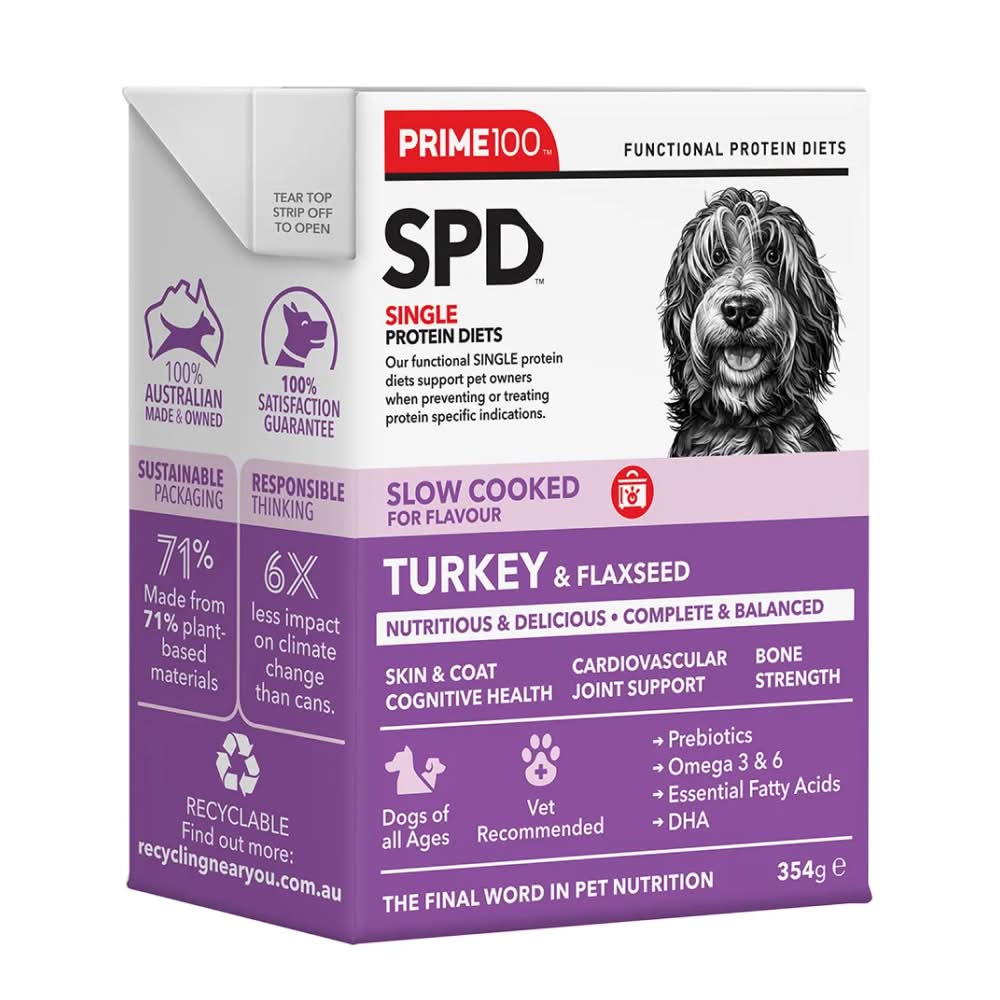
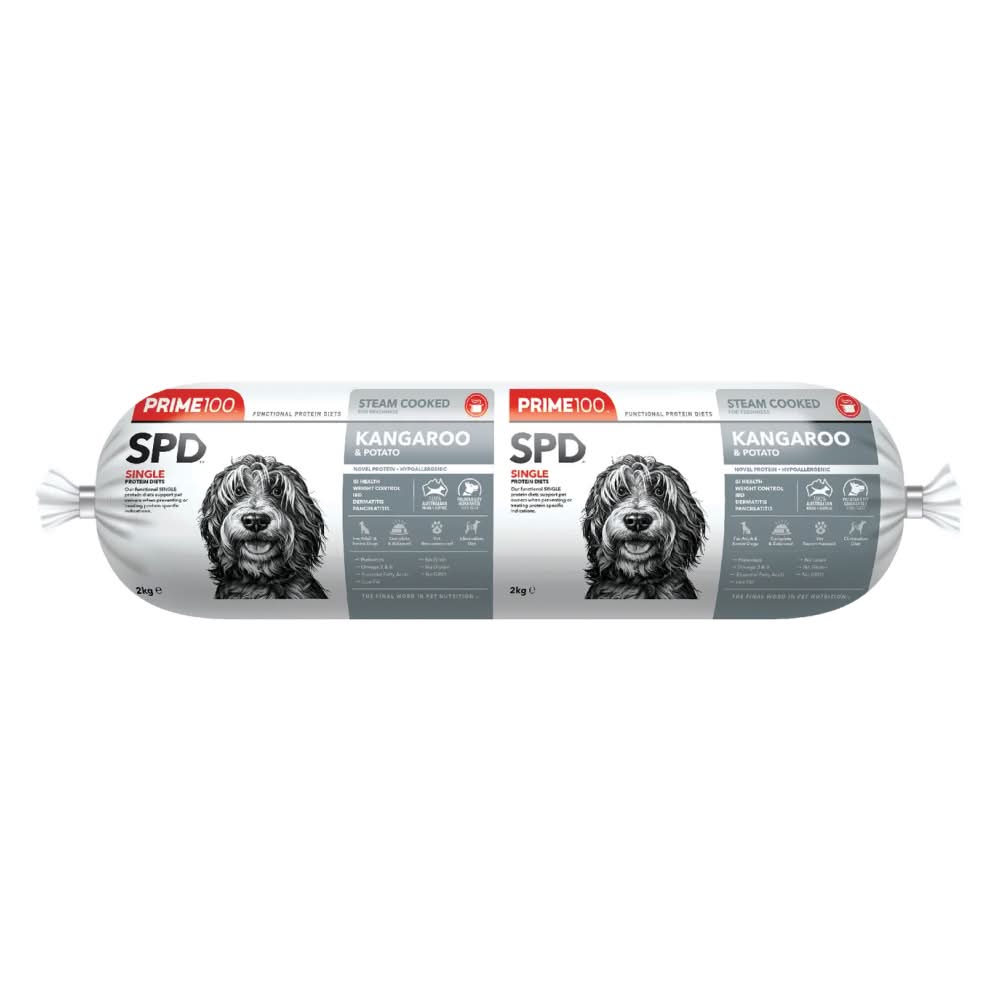
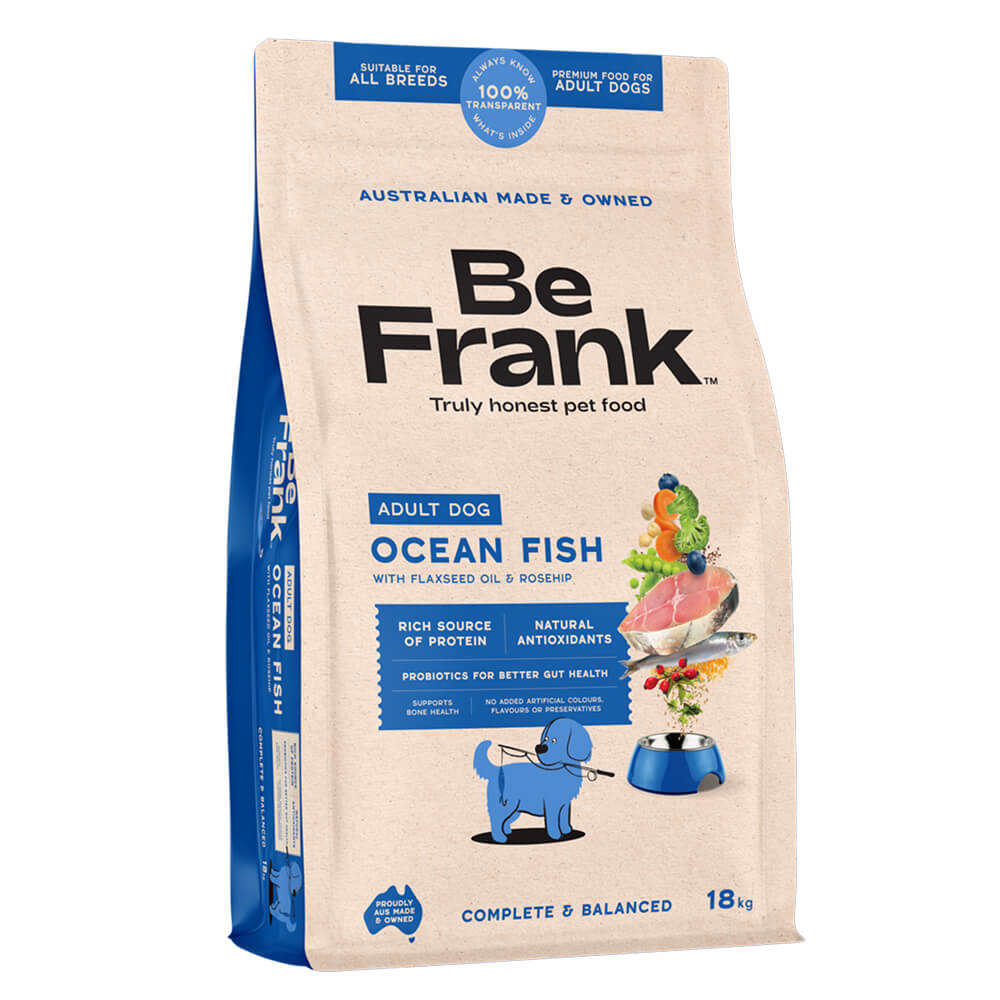








Fresh and kibble are fundamentally different in how they are made, what nutrients they retain, and what they cost. Here is an honest comparison of both — and how to choose the right one for your dog.
In Short:
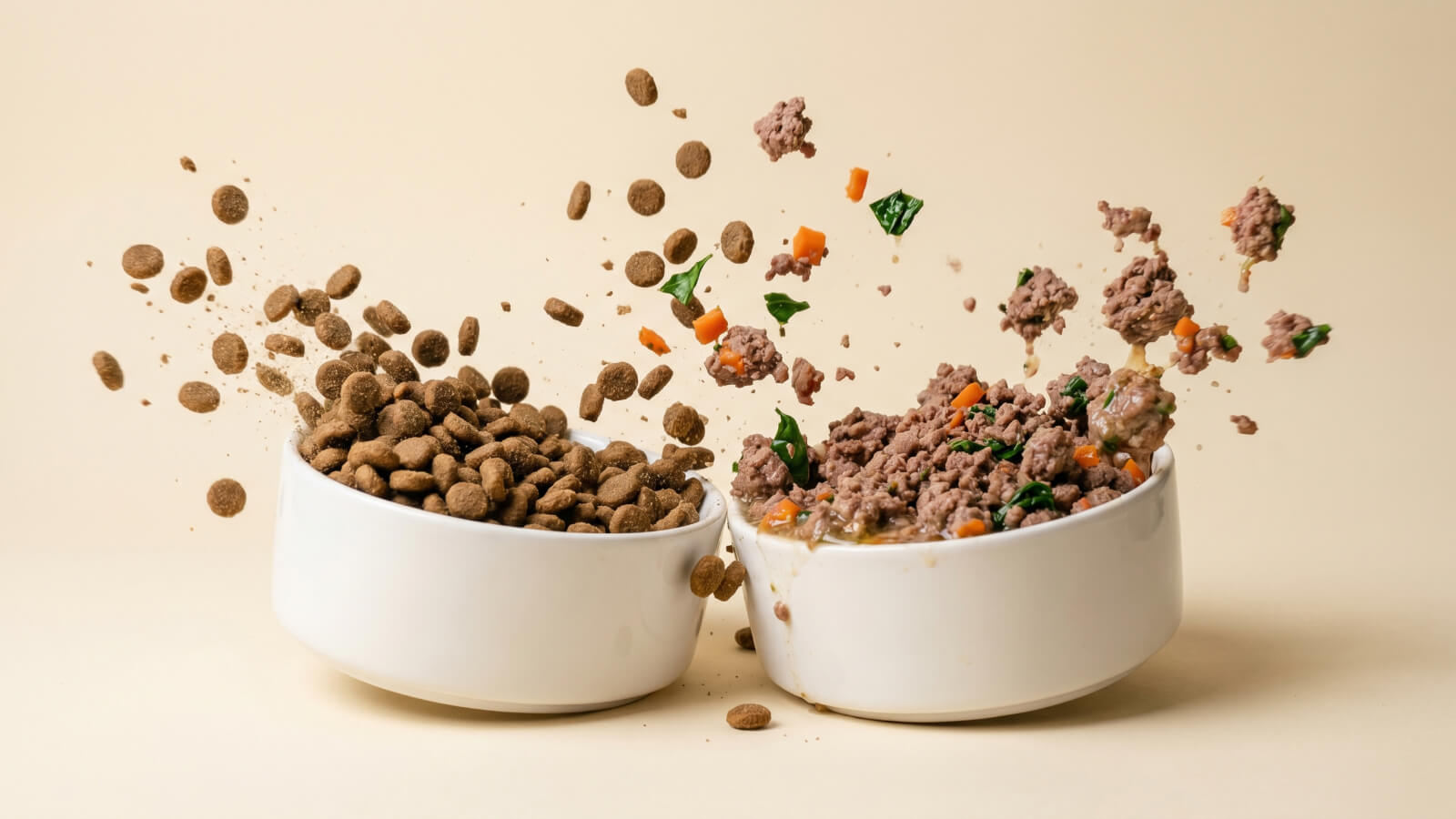
Fresh dog food is gently cooked at low temperatures, retains 60–70% moisture, and uses whole, recognisable ingredients. Kibble is extruded at high heat, dried to around 10% moisture, and is shelf-stable for months. Both can be nutritionally complete.
The trade-offs come down to processing, ingredient transparency, cost, and convenience.

How kibble is made
Kibble goes through a process called extrusion. Raw ingredients — meat meals, grains or legumes, fats, vitamins — are ground together into a dough, then pushed through an extruder at temperatures typically above 150°C. The resulting pellets are dried to around 10% moisture and coated with fats and flavour enhancers to improve palatability.
This process is efficient. It produces a shelf-stable product that lasts months without refrigeration, can be manufactured at scale, and keeps costs low. The trade-off is that high-heat extrusion degrades certain nutrients — particularly heat-sensitive vitamins, amino acids, and fatty acids — which are then added back as synthetic supplements after cooking.
Kibble's low moisture content also means your dog gets almost no hydration from their food. A dog eating only kibble relies entirely on their water bowl for fluid intake.
How fresh dog food is made
Fresh cooked dog food uses whole ingredients — real cuts of meat, vegetables, organs — gently cooked at lower temperatures, typically between 70°C and 90°C. The food is then sealed and sold either chilled or frozen.
Because the cooking temperatures are significantly lower than extrusion, more of the naturally occurring nutrients survive the process. Fresh food also retains around 60–70% moisture, which means your dog gets a meaningful amount of hydration from every meal.
The ingredients in fresh dog food are recognisable. You can look at the food and identify the meat, the vegetables, the grains. That is not the case with kibble, where everything has been ground, extruded, and dried into uniform brown pellets.
Fresh food must be refrigerated or frozen and has a much shorter shelf life — typically three to five days once thawed. It costs more to produce, store, and transport, and that cost is passed on to you.
Where kibble holds its ground
Kibble is not inherently bad for dogs. A well-formulated kibble that meets AAFCO or FEDIAF nutritional standards provides complete and balanced nutrition. Millions of dogs live long, healthy lives on kibble.
The advantages of kibble are practical. It is affordable — a medium-sized dog costs roughly $8–15 per week on premium kibble. It is convenient — no thawing, no fridge space, no three-day use-by window. It is portable — easy to travel with, easy to leave with a pet sitter.
For owners whose dogs are healthy, eating well, and showing no signs of digestive issues, skin problems, or food refusal, kibble is a perfectly reasonable choice. The key is choosing a quality product: named protein sources, no vague ingredients, and an AAFCO or FEDIAF nutritional adequacy statement on the label.
Where fresh food pulls ahead
Fresh cooked dog food has advantages that kibble cannot match, regardless of how premium the kibble is.
Ingredient transparency. You can see what is in the food. The ingredient list reads like a recipe, not a chemistry set. For dogs with allergies or sensitivities, this makes identifying and avoiding trigger ingredients far easier.
Digestibility. Less processing means the nutrients in fresh food are more bioavailable — your dog's body can absorb and use more of what it takes in. Many owners report firmer stools, less gas, and reduced bloating after switching from kibble to fresh.
Moisture content. At 60–70% moisture compared to kibble's 10%, fresh food contributes meaningfully to your dog's daily hydration. This is particularly beneficial for dogs that do not drink enough water, dogs on medication, or dogs in hot Australian climates.
Palatability. Fresh food smells and tastes like real food because it is real food. Dogs that refuse kibble — sniffing the bowl and walking away — will eat fresh food without hesitation.
For a detailed look at the top fresh food options available in Australia, see our Best Fresh Dog Food in Australia guide. If you are also weighing up raw feeding, our Best Raw (BARF) Dog Food in Australia guide covers that comparison.
The cost difference
Fresh dog food is more expensive. For a medium-sized dog (around 15 kg), fresh food runs $14–$42 per week depending on the brand. Premium kibble costs $8–$15 per week for the same dog.
That price difference reflects the cost of whole ingredients, low-temperature cooking, cold-chain logistics, and shorter shelf life. You are paying for less processing and better ingredients — not just a fancier label.
Mixed feeding is how many owners manage the gap. One fresh meal and one kibble meal per day gives your dog the digestibility and hydration benefits of fresh food at roughly half the full fresh-food cost. Both meals need to be individually complete and balanced, and you will need to adjust portion sizes accordingly.
If your dog has specific health issues — chronic digestive problems, skin allergies, persistent food refusal — the cost of fresh food is often offset by fewer vet visits and less wasted food from a dog that actually eats their meals.
Is kibble bad for dogs?
No. Kibble is not bad for dogs. A quality kibble provides complete nutrition, and the vast majority of dogs in Australia eat kibble without issue.
What kibble is, though, is heavily processed. The extrusion process subjects ingredients to high heat and pressure, which degrades some nutrients. Manufacturers add synthetic vitamins and minerals back to meet nutritional standards, but the bioavailability of those synthetic nutrients is generally lower than whole-food sources. The final product also has very low moisture. For most healthy dogs, this works. For dogs with digestive sensitivities, allergies, or specific health conditions, the processing can be a contributing factor.
The real question is whether your individual dog could be doing better on something less processed. If your dog has persistent loose stools, dull coat, itchy skin, or refuses their food regularly, the answer is worth exploring.
How to decide
This is not an either-or choice. Many owners feed both, and that is a perfectly valid approach.
Stick with kibble if your dog is healthy, eating enthusiastically, has good digestion, a shiny coat, and steady energy levels. A quality kibble is doing its job. Spend your money on something else your dog enjoys.
Consider fresh food if your dog has digestive issues, skin problems, food allergies, or is a picky eater. Also consider it if ingredient transparency matters to you — if you want to know exactly what your dog is consuming at every meal.
Try mixed feeding if you want the benefits of fresh food without the full cost. This is the most common entry point for owners switching from kibble, and it works well for most dogs.
Whatever you feed, the label matters more than the format. A named protein, a complete-and-balanced statement, and a transparent ingredient list are non-negotiable — whether the food comes in a bag or a box.
References
- Pet Food Industry Association of Australia (PFIAA), Understanding Pet Food Labels — Consumer guide to reading ingredient lists, nutritional claims, and date labelling on Australian pet food.
- Association of American Feed Control Officials (AAFCO), Selecting the Right Pet Food — Official consumer guide to nutritional adequacy statements and how to evaluate whether a pet food is complete and balanced.
Frequently Asked Questions
Is fresh dog food healthier than kibble?
Is kibble bad for dogs?
Can I feed my dog both fresh food and kibble?
Why is fresh dog food so much more expensive?
Is kibble good for dogs?
How long does fresh dog food last compared to kibble?






Comments
0 comments
Login to Join the Conversation 💬